


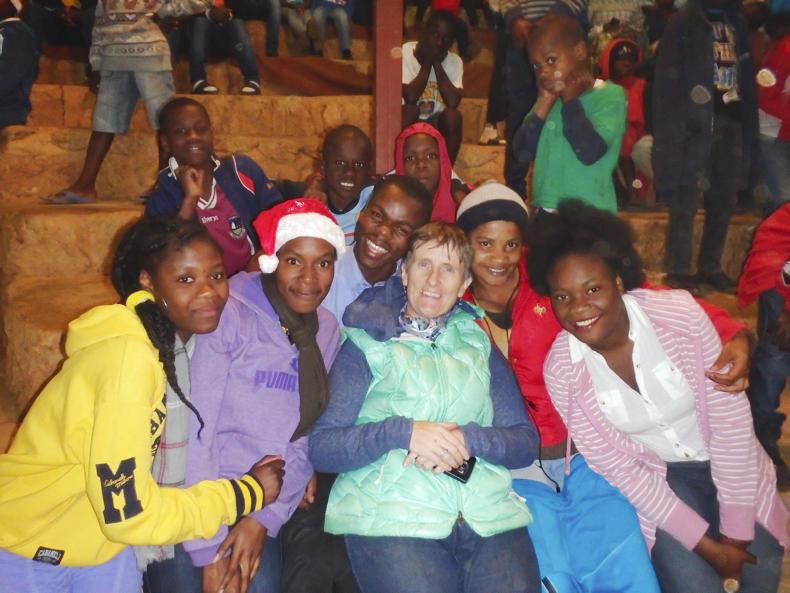
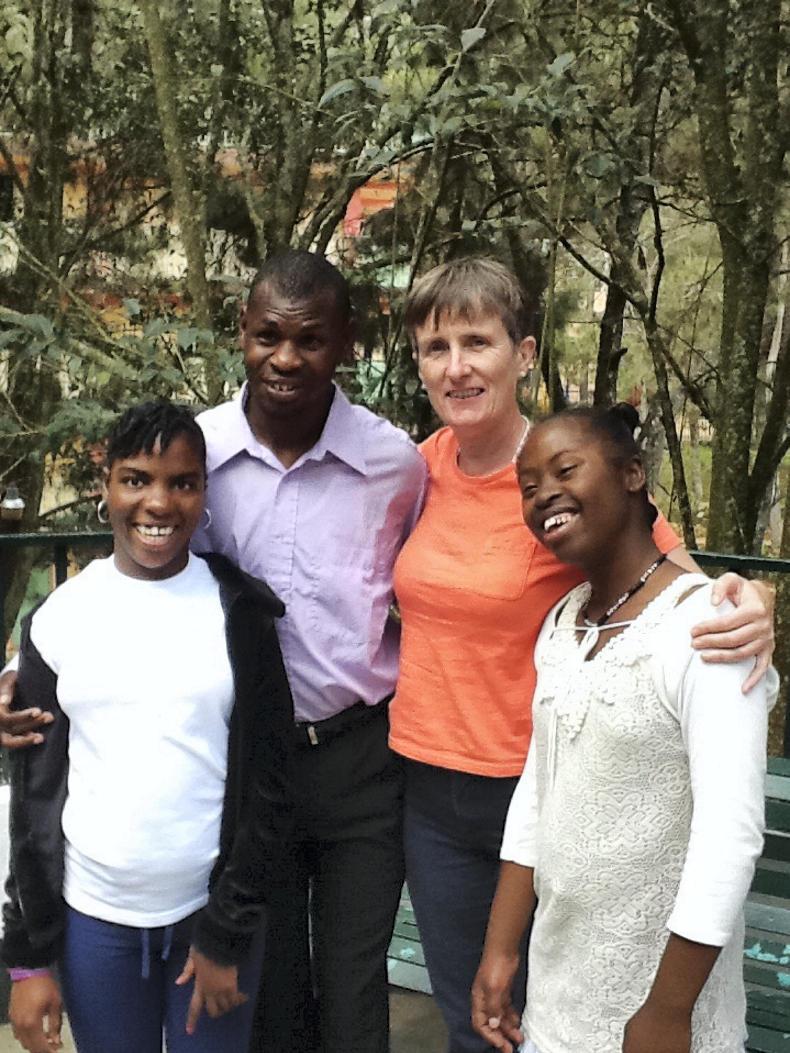

Through green grass and forest cover, Gena Heraty reached the orphanage in the mountains that lie above Kenscoff, 5,000m above sea level. It was evening time in St Helene, Haiti, and all the children were on the grass. They had slept out for two nights in a row now. The temperature was around 7°C, but felt so much colder at that altitude.
Gena made the decision that the children should sleep inside that night. Some of them had respiratory problems and the weather would make them ill. The staff were apprehensive. “What if the building falls?” they asked.
“That night we moved everybody downstairs. We got all the boys in the dining room and the girls in the therapy room and they were asleep in no time. I had a picture of the Sacred Heart that I had brought from home.
“I looked at it and said: ‘Do you know what, God? I have no idea if this building is going to fall or not, but I’m telling you now that if it does it’s your responsibility and not mine. Because I’m only doing what I feel I should be doing and this is my limit. This is the limit to my knowledge and I’m not taking responsibility if this building falls on us. You’re responsible,’” Gena confides.
This decision was made on 14 January 2010, two days after an earthquake that reached point 7 on the Richter Scale hit Haiti. The country was still suffering from aftershocks and the collapse of poorly built buildings. By March of that year, the death toll would reach 222,570 and much of the country’s infrastructure was destroyed.
But running the special-needs section, Kay Christine, at St Helene’s orphanage in Haiti for NPH – or Our Little Brothers and Sisters, as it is known in English – Gena is faced with making decisions like this every day.
For her dedication to the children she cares for and the work she has done in Haiti over the past 23 years, she recently won the Óireachtas Human Dignity Award.
A woman who can only be described as humble, her outlook is the same as it was seven years ago: she sees herself as a small piece in a much larger puzzle.
“I think sometimes we feel we are all-powerful and we are not. For me it works,” she says.
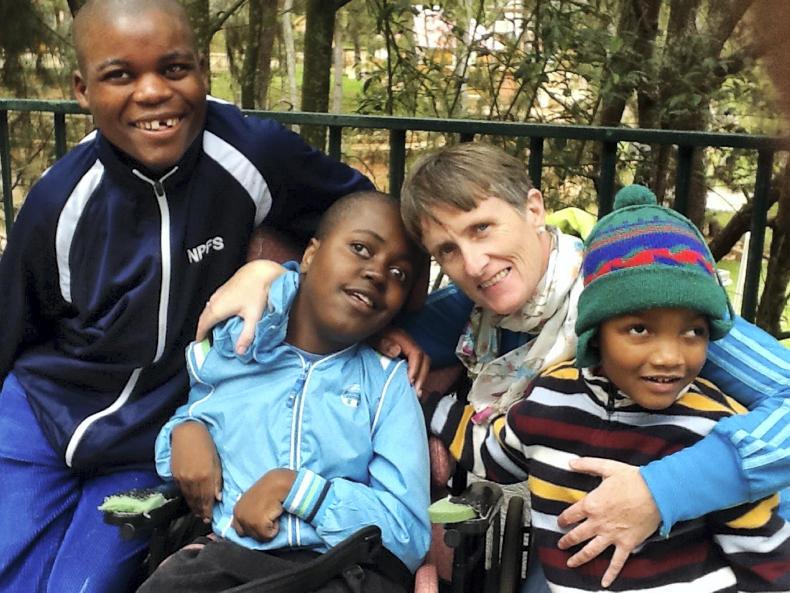
Caring for 28 special-needs children with disabilities like cerebral palsy and spina bifida hydrocephalus is Gena’s everyday life and a path she decided to follow when she was 24, but had her heart set on long before.
“When I was in primary school, we used to deliver mission magazines and they always had stories of nuns and priests who were working in the missions in Africa and other places. I always found their stories fascinating, and from a young age I thought: ‘Hmm, I’d like to do that,’” Gena enthuses.
While in her final year of business studies in Limerick, she discovered an organisation called Viatores Christi that ran workshops in Dublin and found placements for people who would like to do volunteer work abroad.
She signed up and began attending workshops and volunteering in the Simon Community. Through someone she worked with, she heard of an orphanage in Haiti that was looking to set up a special-needs centre and decided she would go there.
“I used to have a constant conversation with God from a young age, and I would ask him: ‘You find me something to do. You know me better than anyone and know what I would be good at.’ So when I heard about Haiti, I thought I finally had my job,” Gena says.
When Gena arrived at the orphanage in 1993, there were 150 kids – nine of whom had special needs – and she had no experience.
Now, 23 years later, there are 320 children living on the property and over 400 coming to school every day from outside. The special-needs section of the orphanage houses 28 children with space for one more (a child passed away last year) and the programmes of the charity have expanded outside St Helene’s Orphanage.
Our Little Brothers and Sisters has a paediatric hospital in Port au Prince, the capital, and in 2004 Gena and her colleagues started going into the slums, where they shared their knowledge with mothers of disabled children. In 2008, they opened a therapy centre.
In order to run the orphanage, school, special-needs facility and the hospital, the charity needs €900,000 a year. Last year they worked off €650,000.
“You make it work but it’s not enough, because you are not growing and developing. We used to do micro credit loans for the mothers, but we couldn’t do it anymore because we didn’t have the funding,” Gena explains.
Shunned by society
Life in Haiti is tough for children with disabilities and their families. There is a huge stigma surrounding special needs children and they are shunned within Haitian society. This is complicated by the fact that Haiti is a third-world country with 80% unemployment and no social services.
Mothers of special-needs children struggle and often the father doesn’t hang around. “A lot of the time these mothers are market sellers, so they might buy a case of garlic, divide it into small bags and sell it to make money. They are often out all day, and children with special needs do not have access to schools, so they will be left on their own, locked inside a small one bedroom house.
”The child wouldn’t have a wheelchair and would be lying on the ground on their back surrounded by mosquitos and other creepy crawlies, unable to move. This is the reality in Haiti,” Gena says.
Gena lives in the same building as the children she takes care of, and considers each of them her own: “I believe my main role in life is to be a mother to those kids. Everything else I do – the rehab and all the outreach work – that’s extra. I guard my role very closely.
“The one thing I am absolutely qualified to do is to love people.”
Farm start
Growing up on a small farm near Westport was the best education that Gena received for the role she now finds herself in.
“I remember one springtime, this bird had made her nest in the hay. My father was very careful that we would take hay from the other side, so as not to disturb it and its nest. It was that automatic respect for animals and those who are more vulnerable than you that was such a great foundation for any childhood,” Gena says.
Life and death
Death is something Gena is familiar with, mentioning a child who died last year: “We say in Haiti that grief is a luxury we don’t have. You have so many kids in need around you, that you feel like falling to pieces but cannot.
“The challenge, then, is to transform that sadness and grief, to put it into something positive in your heart and give it to another child who needs it.”
It’s Gena’s positive outlook that has guided her life in Haiti.
“In Haiti we try and look at the small picture, because if you look at the big picture you can easily get discouraged.
“I will never solve the problems of Haiti, but I will hopefully make a change in the people’s lives I come across and they will in mine.”
For further information or to donate, visit www.nph.org/haiti.


SHARING OPTIONS