



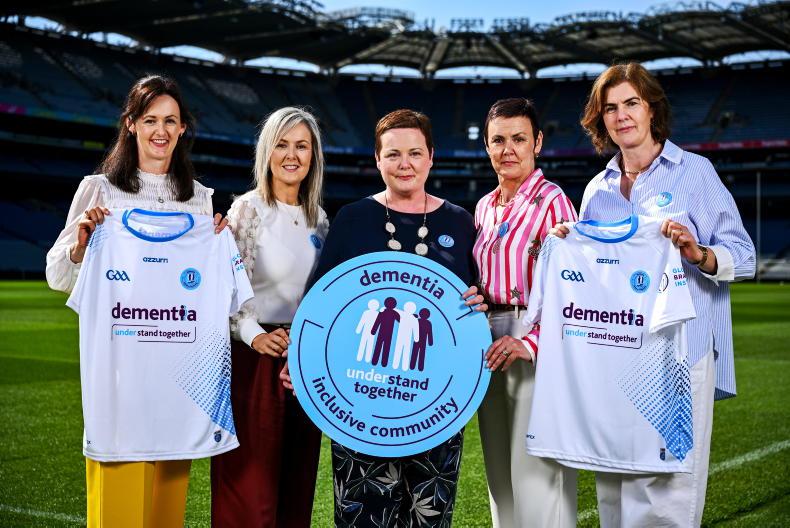
A Monaghan family are spearheading a new initiative launched by the GAA to raise awareness of the growing number of people living with dementia and the need to support them and their families.
Former president of the association, the late Sean McCague, managed his native Monaghan in the 1980s and was a proud Scotstown club man.
He passed away in 2022, 10 years after he received a dementia diagnosis at the age of 67.
Now, his five adult daughters have joined the GAA and the HSE’s Understanding Dementia inclusive community campaign to highlight the unique role the GAA community has in supporting those living with the condition.
Nuala Smyth, Paula McGonnell, Emma Flanagan, Martha MacCinna and Freda McCague attended a launch at Croke Park on Thursday where Minister for Older People and Housing, Kieran McDonnell praised the family for their honesty in sharing their story.
Martha told Irish Country Living that while the diagnosis was a huge shock for the family, they enjoyed many more happy years and made special memories with their father right up to his death.
“We now have friends whose parents are being diagnosed with dementia and we are able to help them by sharing our journey and offering support because your world just stops when you hear the word dementia,” she says.
“But life does go on and while it took Daddy time to come to terms with his diagnosis, once he did, he was determined to continue living his life.
"A huge part of that was Scotstown GAA club where he loved going down and sitting on a chair by the sideline and watching all that was going on. He had a friend Liam, who would call to our house and take him off to matches around the county and Liam was amazing, as he would stay by his side the whole time.
Social isolation
“So many people knew Daddy and would come up to him for a chat. Liam would whisper in Daddy’s ear who the person was as they approached and then he could greet them by name. It took the stress out of the situation and preserved him in the moment. We were so blessed that Liam was there for him. That social interaction and connection sustained him.
“Mammy was very strong and independent but every time someone would come to bring Daddy for a spin or to a match or over to the pub for a pint, it meant she had that time to focus on herself and that is hugely important.
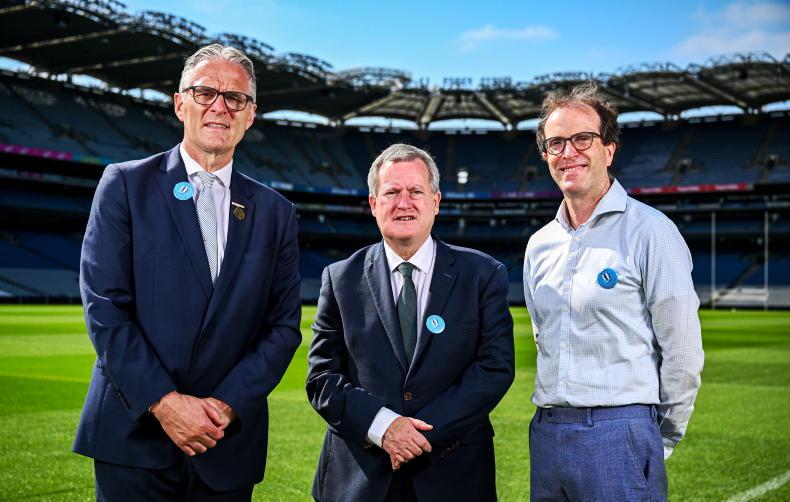
“This is a wonderful opportunity to reach out [to families] all over the country and we think Daddy would be delighted to know that he has inspired this.”
Dr Sean O’Dowd, clinical lead, HSE National Dementia Services and consultant neurologist, Tallaght University Hospital says the importance of dementia patients being involved in their local communities cannot be underestimated.
“Dementia is a really prevalent condition, one in every two of us will have someone in our close circle who is affected by it. This campaign can raise awareness and reduce stigma because the GAA is an organisation that is at the heart of every community,” he says.
“Dementia is a syndrome that describes cognitive difficulties and within that there are various different underlying conditions that may be causing it, such as Alzheimer’s, vascular dementia, or Lewy Body Dementia.
“It’s a very individual experience and we have to be careful in trying to tease out the symptoms and get the diagnosis as accurate as we can for the person and for the family, because management is tailored to the underlying condition.
“One of the risk factors for dementia is social isolation and the same is true for people with established symptoms who have a diagnosis of dementia; social connectedness is very protective in terms of the course of their illness.
Society-wide approach
“So much of our existence is wrapped up in interactions with other human beings in terms of our mental health – so it stands to reason that connectivity and trying to nurture it in communities is very important.
“At an individual level, it is huge for the person themselves to remain involved, to feel they’re valued and to continue to contribute to their community. Ultimately, the person will still enjoy the things they’ve always enjoyed, they’ll have the same sense of humour and the banter, so it’s really important that they continue to do the things they enjoy.
“While there are a lot of formal supports in place for people living with dementia, the informal support within a community is inestimably valuable and adds so much more to the quality of life of the person affected.”
Liam would whisper in Daddy’s ear who the person was as they approached and then he could greet them by name. It took the stress out of the situation and preserved him in the moment.
A huge part of post-diagnostic care is the partnerships in the community.
With entities such as the Alzheimer’s Society of Ireland and Family Carers Ireland, along with organisations like the GAA, Park Run, Men’s Sheds and Tidy Towns, it really is a society-wide approach.
“Families are getting smaller and not everyone has that wraparound support available to them anymore, so community involvement will become more and more important,” says Dr O’Dowd.
Dr Kevin Quaid, chairperson of the European Working Group of People with Dementia, has Lewy Body Dementia. He says farmers and those living in rural areas are particularly vulnerable to social isolation, which can cause huge issues for those living with a dementia diagnosis.
Positive statement
“Farmers are the worst at admitting there’s a problem in the first place and many will mask their symptoms for as long as they can,” he says.
“But living in rural areas, where social isolation is already a problem, can compound the situation for those with dementia and their families. The help and support is there but they have to ask for it.”
Cathryn O’Leary, national community engagement manager with The Alzheimer Society of Ireland says many families in rural Ireland are of the mistaken belief that supports and services are beyond their means.
“I know of several families in my native Wexford who have delayed seeking help because they think they won’t qualify for support if there’s a means test. But there is no means test. Our services are available to everyone, free of charge, and we need people to reach out to ask for that support as it will help both them and their families to navigate an incredibly difficult time in their lives,” she says.
Minister for Older People and Housing, Kieran O’Donnell says the Government is committed to supporting people with dementia to live in their communities with the right supports for as long as possible.
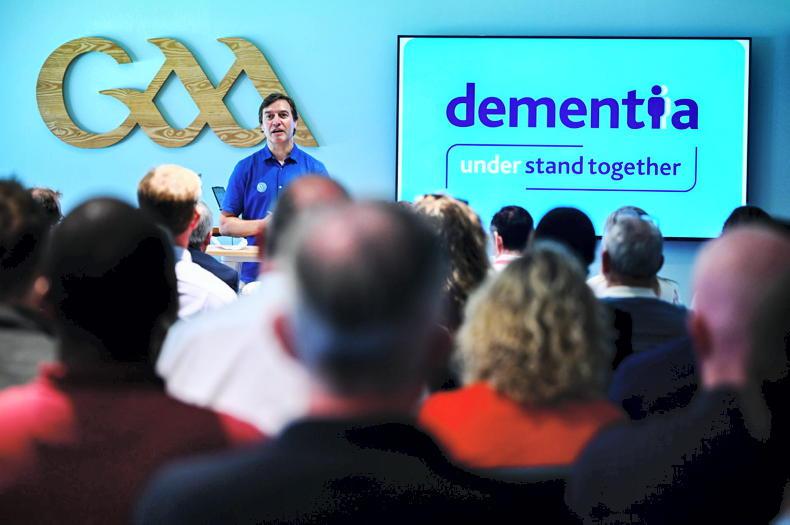
“What we have here today, on the hallowed turf of Croke Park, is the GAA, in collaboration with the HSE’s Dementia Understanding Together initiative along with the five McCague sisters, promoting the idea that people with dementia can and will continue to be involved in their clubs, to have a role, and that their families are involved as well,” he says.
“It’s a very positive statement for something that is very difficult for those living with dementia and their families on a daily basis.
“I don’t think there’s anyone in Ireland that isn’t affected by dementia. I’m also conscious of the fact that the care being provided by family members is something we want to continue to support.
“We want to put in place a sustainable model, but in my role as minister first and foremost, how can I improve the lives of older people, whether that’s those living at home, those living with dementia or those in nursing homes.
“This partnership between the GAA and the HSE gives the broader GAA community the opportunity to stand together on and off the pitch.”


SHARING OPTIONS