


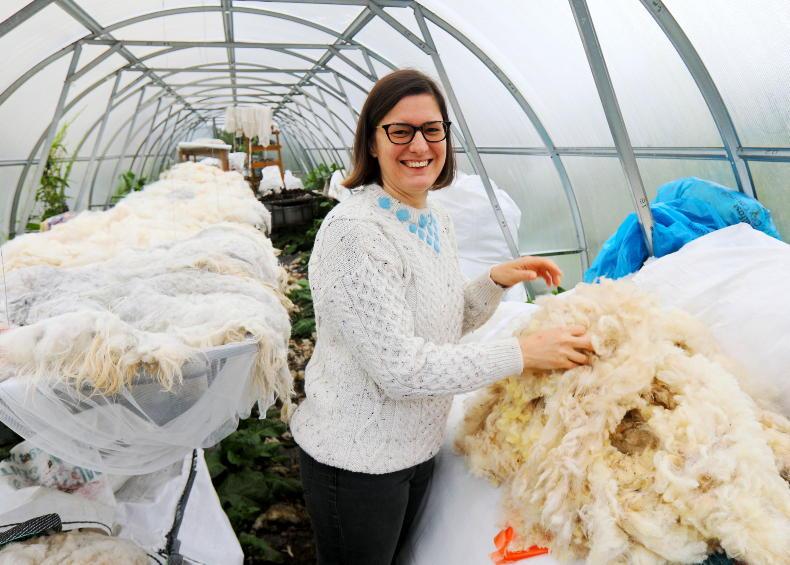
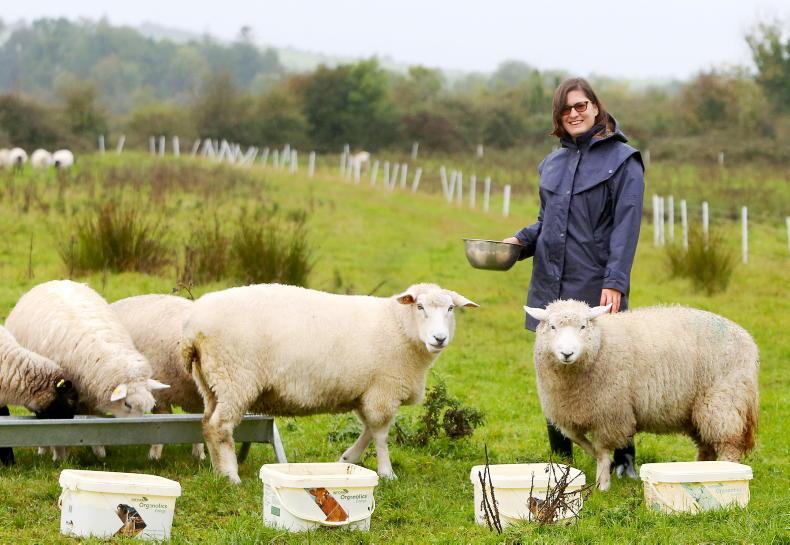
A Galway-based farmer originally from Slovakia is on a mission to change the perception that Irish wool is worthless and has so far convinced a sizeable cohort of the farming community to invest in her vision.
Katarina Hruskova came to Ireland 20 years ago to learn English on what was initially planned as a two-month stay. Fast forward two decades and she is now living and farming a smallholding near Belclare in north Galway, from where she is running a micro mill.
Having graduated with a civil engineering degree in 2006, she came to Galway city with friends to improve her employment prospects. But life had other plans. While a career in retail and manufacturing management took up a sizeable chunk of her early years in the country, she took the plunge five years ago to become a full-time farmer.
“I had wanted to find a way to live off the land for many years, as I grew up on my father’s and grandfather’s farm, so we had our own meat and vegetables when I was a child,” she tells Irish Country Living.
“My partner Keith is from Tubber in Co Clare and also grew up on a farm, so when the opportunity presented itself, we bought a house here in Belclare that came with an acre of land and also had the chance to buy a small farm nearby.”
Crowd funding campaign
Having secured her herd number, Katarina set out with a small herd of Dexter cattle along with a contingent of Galway ewes and Suffolk crosses. A childhood love of knitting and crocheting left her wanting to resume the hobby, but when she could only find acrylic wool to work with, she began looking at the options for processing Irish wool.
Working out of sheds in her back garden, Katarina was resolved to build her mill from the ground up. She now has ambitious plans to help sheep farmers expand into other markets with a product they already have cost-free.
“I got my first wool-washing machine in 2022, which came from China and didn’t have any instructions, so when it started to break down, I had to learn how to fix it. The first batch of wool I worked with came from Keith’s uncle TJ, who sent me up a huge load from his farm and I learned a lot on that. I made a fair few mistakes figuring out how to work with it, but I love Irish wool because it is so resilient.
“I started out Woolstore by offering washing, picking and carding services to small farms and textile enthusiasts and it’s taken off. Fibreshed Ireland has been a great support, it was their encouragement that kick-started the crowd-funding campaign.”
Alongside the hard work of washing and carding wool, Katarina has also undertaken various courses through Teagasc (organic farming) and Galway Roscommon Education Training Board (kickstart your own business) to arm herself with the necessary skills to make a living from her new enterprise.
“I was the only one who could produce carded wool in the country, so as people started looking for more and more wool, I decided to scale up. That’s when I launched the crowdfunding initiative as I was approved for €119,000 in LEADER funding, but I had to match that with the same amount and the bank wouldn’t lend it to me,” adds Katarina.
That initial crowdfunding effort amounted to over €70,000 which although falling short of her goal, has encouraged Katarina to continue her fundraising efforts to realise her entrepreneurial dream.
“Red tape is the hardest part of what I am trying to do, I’m still waiting on my certification for processing from the Department of Agriculture. While you are small no one really bothers you and while I want to grow much bigger, I want to know they’re happy for me to scale up before I make the investment in new sheds.
“I wasn’t able to draw down the LEADER funding, because I hadn’t reached the target, but the response to the crowd funding has encouraged me to keep going.
“I’m chipping away, but I still have so much to learn and I would rather do it step by step. I need to be able to increase my washing capacity, and that requires new machines, so it is a slow process.
“Processing costs are high and I believe there is a monopoly in existence within the Irish and UK wool market, but to be able to provide Irish wool for sale, fully processed, that is yielding a fair price for farmers is my motivation to keep ploughing on.”
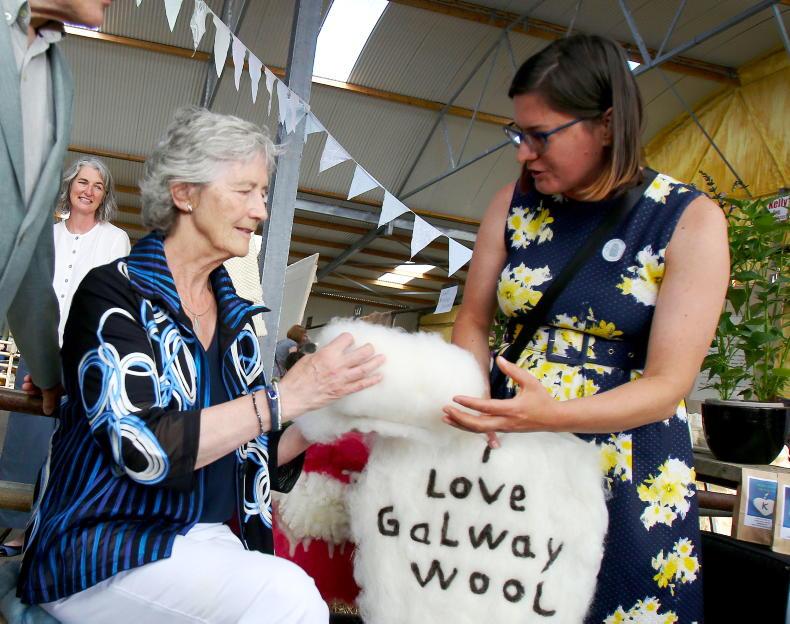
Galway Wool Co-op
Blátnaid Gallagher, founder of the wool producers co-op Galway Wool, says Katarina’s mill has the potential to restore Irish wool as a premium product.
“What Katarina is doing through the Woolstore is momentous because it is allowing farmers to do something with their own wool, which hasn’t been an option for a very long time,” she explains.
“It is also bringing back the trust into the Irish wool sector, by giving transparency and traceability to Irish wool, along with the certification to prove that this is a premium, authentic product.
“Katarina’s project has the potential to be a benchmark for wool here in Ireland, as is being done so well in the UK and New Zealand, which both have the same farming processes as we do here in Ireland yet we are lagging behind when it comes to the promotion and protection of our unique Irish wool.
“There’s a lot of naivety that wool is a worthless waste product, but that isn’t the case. The problem is that there are no facilities in Ireland doing what Katarina is doing, processing this product into workable yarn.”
Blátnaid, who was selected as one of the Food and Agriculture Organisation of the United Nations (FAO) 100 women heroes for the UN International Year of the Woman Farmer 2026, says that the two biggest beneficiaries from the processing mill Katarina is aiming to develop, are wool growers and customers, who can benefit from a thriving Irish wool market.
“The price of wool is rising, but we’ve still a long way to go to achieve the prices being paid in other countries, yet, if we support Katarina and the co-ops within Ireland we have a really strong opportunity to reintroduce Irish wool to the international market,” she adds.
“While Katarina is small-scale, what she is doing should be flashing an amber light to the wool industry that it needs to be more honest with consumers and less vague about the origins.”
Katarina says her motivation to keep going to realise her entrepreneurial dream is rooted in a belief that helping farmers help themselves is the way to support sustainable farming.
“If you give farmers greater options to diversify, they are less dependent on schemes that are constantly changing,” she adds.
“Wool is a hugely undervalued agricultural resource that appears to be a waste product until you consider the possibilities once it is washed and processed.
“Woolstore is the only mill in Ireland where small farmers, crafters, makers, or, independent designers can bring small amounts of wool to be washed and carded. By increasing capacity and adding spinning to the offerings, we’ll give farmers more opportunities to market their wool through high-value applications.”

