


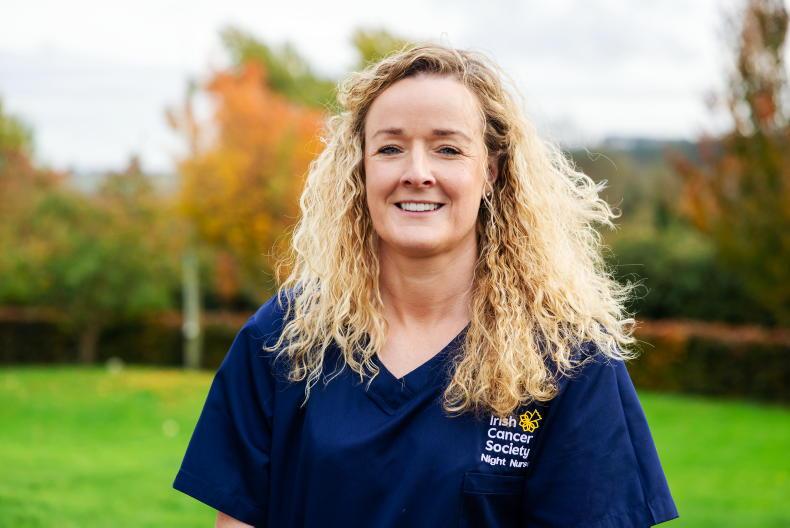
Therese McCann is obsessed with daffodils. She muses whether she was always destined to work for the Irish Cancer Society (ICS).
“If you’re here in the springtime, there are daffodils everywhere. I planted two sacks of daffodils this year already,” she says, smiling in her home surrounded by rolling countryside in Wolfhill, Co Laois.
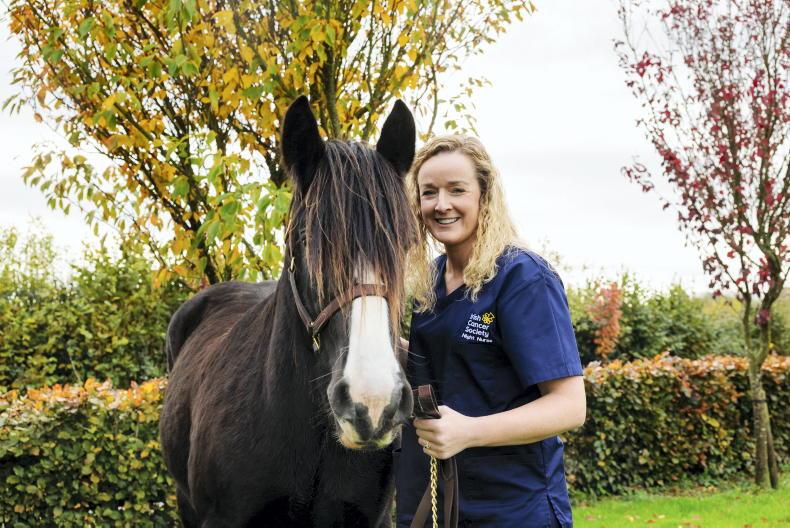
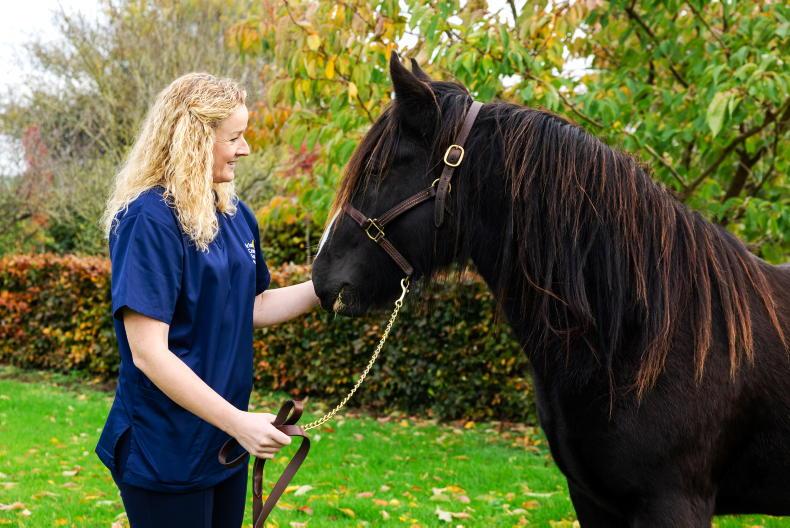
The outdoors, the garden, and her beloved Connemara and traditional Irish cob horses that she breeds are Therese’s sanctuary away from her work role as a night nurse for end-of-life patients.
It’s a vital job she is proud to do, providing comfort to patients to remain at home in the final days of their lives. At the same time, Therese is also there for the family, offering peace of mind and practical support during, what can be, a very stressful period.
40 years of service
While the rest of us are heading for bed, the mother-of-two is only starting work at 11pm, normally travelling within an hour of her home, and she is there right through to 7am.
Therese is one of 170 night nurses around Ireland funded by the Irish Cancer Society, who care for end-of-life patients in their own surroundings. The service, which is free for families, cost €3m to run last year.
“My job is to be there to support the patient and the family, not just for medication; it’s a holistic approach,” she tells Irish Country Living.
“We provide comfort to the family and the patient to ensure they are not in any distress or discomfort.
“We don’t always have to be right by the patient’s bedside; we can blend into the background too. Every house is different. It’s what each family needs,” she says of her role.
During 2025, the Irish Cancer Society Night Nursing service cared for almost 1,800 patients around the country.
“Over the last 40 years, ICS night nurses have delivered 200,000 nights of nursing,” explains Deirdre Carroll, head of night nursing at the Irish Cancer Society. The charity relies on fundraising for 95% of its income to fund services.
While Therese admits many of her friends and family don’t understand how she deals with death being so close every night, for her, there is satisfaction in following through on a person’s wish to pass away at home.
“They just think it’s bizarre that you’re going into a house knowing that someone may die tonight, or if not tonight, in the very near future. People are always asking, “How do you do that?”
For Therese, it’s simply about making everyone’s time easier.
“In a hospital, the majority of time you’re fighting to keep someone alive, so it’s a very different type of nursing. That stress of fighting to keep someone alive is gone, and all of a sudden, you’re just fighting to keep somebody as comfortable and make them as relaxed as possible. It’s a whole holistic approach. It’s not just medication; that could be having music playing in the background or candles or a dog beside them, or a cat, whatever it may be.
“I’m a firm believer that they can hear us [even in deep sleep]. So if I’m with a patient, I’m constantly telling them what I’m doing. I’m constantly talking to them, even when they pass,” she says.
Having worked in A&E in the past, this caring role is different in that it’s totally one-to-one.
“I love that the patient gets my undivided attention. I feel like when I’m leaving the house in the morning, I have given them 100%. There is no other patient taking my time, and it’s such a privilege to be able to provide the service.
“It’s not everyone who wants to die at home, but when they do, I think it’s very important that they are not anxious or worried. We’re there to support the family too,” she points out.
“It can be very tiring [for families] depending on how long the person has been sick, and it’s just a relief when we come in and they can go to bed and sleep.”
Growing up on a sheep and cattle farm near Carlingford, Co Louth, Therese felt a calling to nursing in her teenage years when her dad’s mother Teasie McCann had a stroke, and they cared for her at home.
She subsequently trained in Chelmsford in Essex, spending five years in England. It was also here she met her tillage farmer husband, Leonard Hovenden from Co Laois, who was working with New Holland. He’s now with Kverneland.
When the pair later returned home, her other grandmother Treasa Donnelly was diagnosed with cancer and was a patient of the palliative care community team with a night nurse.
“I just thought what they did was fantastic,” recalls Therese, saying that for both her grandmothers it was an extremely important thing they were able to pass away surrounded by their loved ones in their homeplace. “We come from a large family, and it just meant everybody could be there. People could come and go.”
From this point, Therese knew that palliative care or night nursing was an area she wanted to work in, but only in her mid-20s, there was a lot of travel to do first. She and Leonard later travelled all around Australia, as she points to a map on the wall with a plethora of photos.
After getting married and moving to Laois, she worked in Naas Hospital in the busy A&E for several years. However, after the arrival of Harry (9) and Sean (7) she was looking for a different pace, later moving into palliative care for five years and, latterly, the night nursing service. She finds this works well with family life as she can give her availability a week beforehand.
Life experience and lessons learned from dealing with stressful situations in A&E make her a better night nurse, according to Therese, and more attuned to the needs of the patient and family dynamics.
Therese concedes, however, that there are cases that stay with her.
“I suppose for me personally, the cases I find hard are the young parents. If you’re going into a house and you have a mum or a dad who is of a similar age to myself with young kids, I find that very difficult because I can relate to that. I’m coming home. I have a young family. They’re the cases I’d find difficult to deal with.”
Nine-to-five
It’s her love of the outdoors, her animals and support from ICS that helps process those more difficult situations.
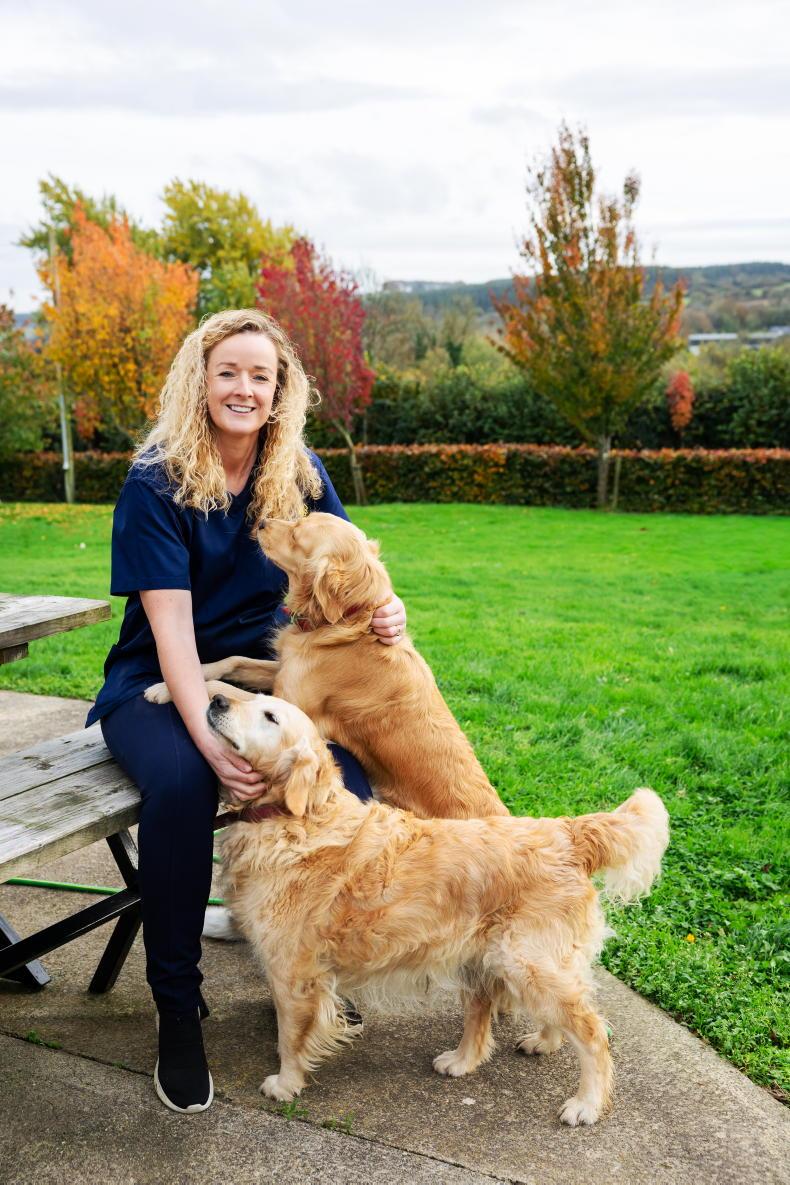
“I have plenty of animals,” she says, smiling. There are three dogs bounding around her outside when the photos were being taken alongside Rip, a beautiful black and white cob named after Rip Wheeler in the television show Yellowstone.
“Whether it’s the horses or the dogs, I love the outdoors. If there’s something annoying me, I’m out in the garden.”
A nine-to-five job five days a week was never for her, admits Therese, but knowing she is helping someone end their days with everything and everybody that’s important to them in their own home is the reward for her.

