



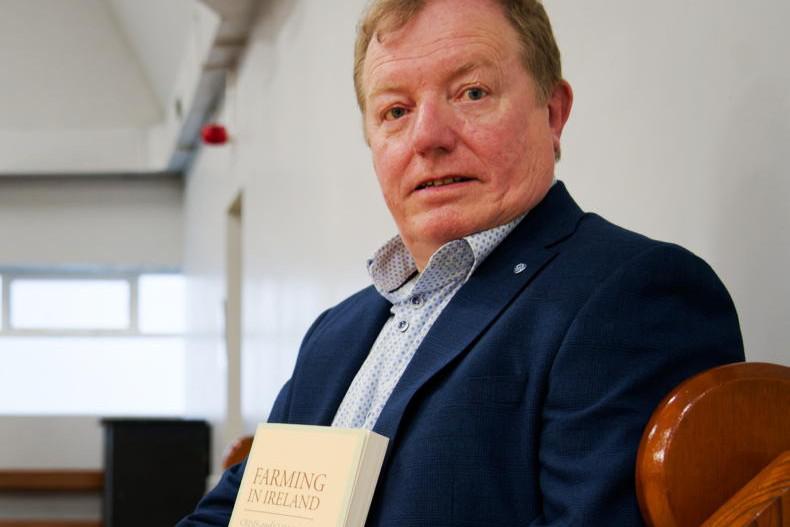
Pat Brereton’s first farming memory is weeding mangels and turnips in the fields in his bare feet as a young child during the summer. He jokingly remembers being so envious of the village children enjoying themselves when they were outside doing back-breaking work.
But helping out and mucking in was all part and parcel of growing up on a farm near Cloghan, Co Offaly in decades past, he acknowledges, an experience which gave him an enduring connection with and love of the land to this day. On another level, it was also at the heart of his decision to pursue research interests as an environmental communication specialist, mainly in film, during his working life as a scholar and academic in DCU.
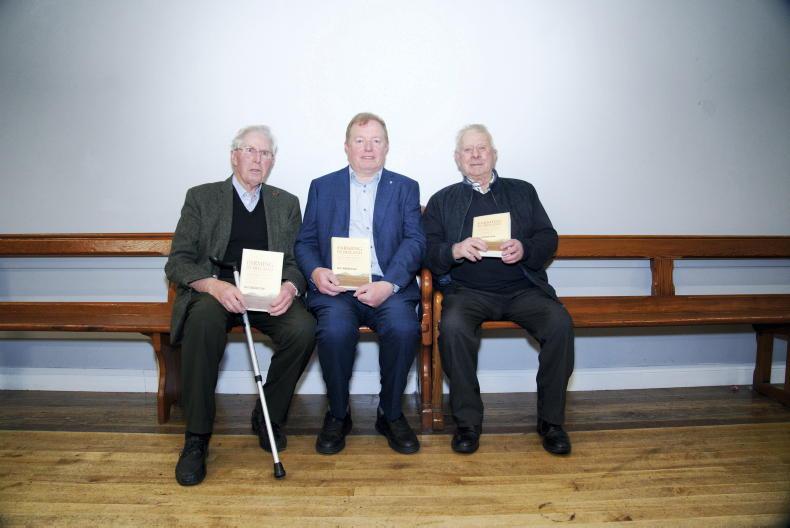
Now retired, Pat believes his love of the environment came from his homeplace, where his brother Tommy continues to farm. He went back to his roots recently to launch his book Farming in Ireland – Crisis and Climate – An Oral History from the Irish Midlands on April 30 in Cloghan Hall.
While he has penned several academic books in the past, this was a “labour of love” for him to talk to the farmers on the ground through the lens of environmentalism.
He’s an expert on the representation of farmers on TV and film, which he has written extensively about in the past and dubs as “mixed”.
“The simple way of representation is that they are either stewards or spoilers of the land,” points out Pat, before referring to something RTÉ’s Philip Boucher-Hayes said at his Dublin launch: that we all need to listen to farmers more.
“I would agree with that. I think the problem we have in Ireland is that we environmentalists tend to preach to farmers and point the finger. And they tend to be urban types telling farmers what to do, and they really don’t like that, and I don’t blame them,” says Pat. “Farmers have more knowledge of environmental issues than a lot of environmentalists,” he adds candidly.
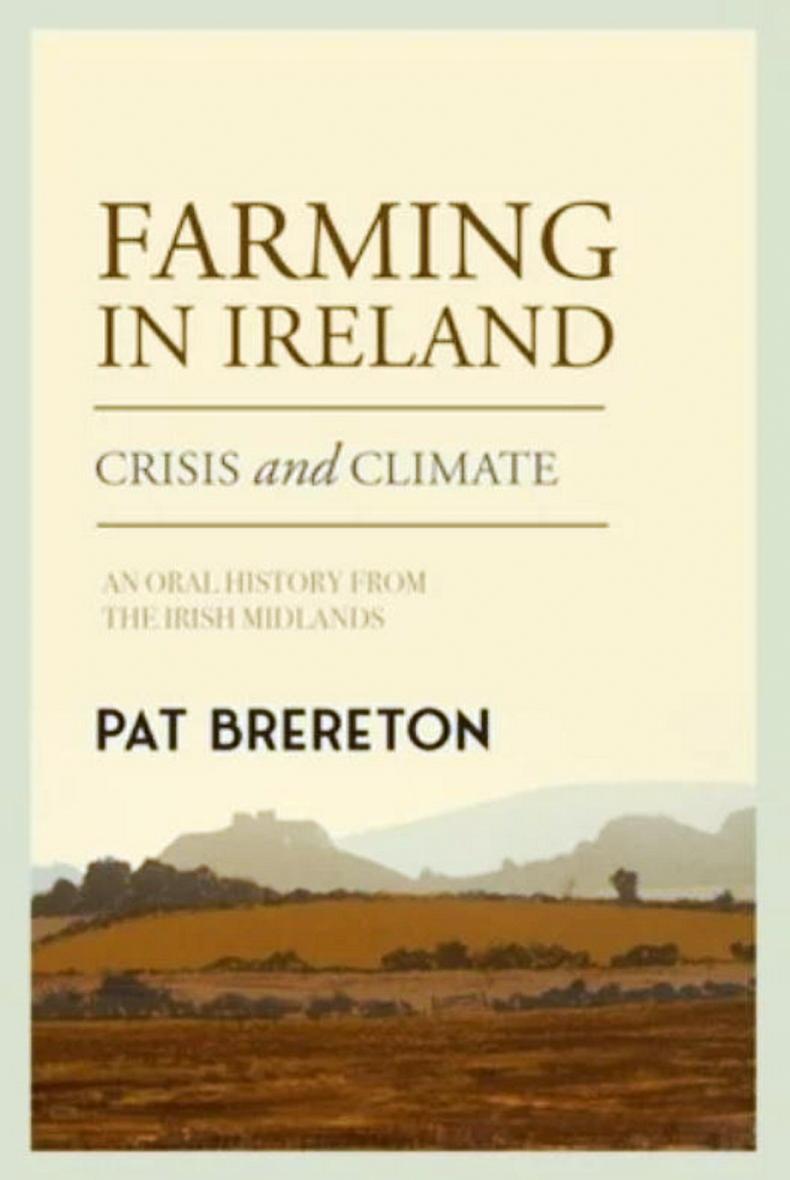
After completing oral history training, Pat sought interviewees with the help of his brother, Tommy, and was delighted to get over 20 male and female farmers from both sides of the Shannon, in Offaly, Westmeath and Galway to take part.
On average, he spoke to each person for one and a half hours, covering topics like earliest farm memories, favourite type of farming, succession issues, how farmers are represented in the media and political affiliations and seeing where the conversation went from there. There were also questions about climate change and the urban/rural divide. Each interview was recorded, and they are available to listen to in the DCU Library, with shortened version used in the book.
Standout features
One thing that stood out for him immediately was that there is no such thing as a typical farmer, and there is a real tension between big and small farmers or different types of farmers.
“I think the older farmers that I interviewed tend to be a bit nostalgic looking back to the halcyon days when things were better. They very much feel the lack of community and the lack of time to do stuff. So even the middle-aged farmers felt that they had no time to do anything because everything was on a very tight schedule.
“I tried to get them to reminisce about meitheal and how they did things in the old days a little bit. But some of them said today we wouldn’t be able to afford to do that. So, there was nostalgia, but also acceptance that things have to change. I mean, if I had the one key theme that I was trying to get at, it was looking back to my father’s time; it was all mixed farming. Now it’s monocultural.”
However, by and large, farmers cannot go back to mixed farming which is preferable for climate issues because it is not viable, according to Pat. The EU or Government would have to do things differently for this to happen, he adds.
“They [farmers] admitted that we’re not food secure, and farming is becoming overly export-driven, and they’re worried about the dangers of that. They are very worried about the financial implications of a huge investment in farms, and then if something goes wrong, they’re going to be caught in the middle,” he tells Irish Country Living.
Other striking features Pat identified were that almost all wanted to leave their farm debt-free when they retire and most had issues with succession.
“Nearly every one of them had tensions over someone half-interested in taking the farm, but most of them didn’t want to do the hard work and just didn’t see it as viable. And that really upset them, because they see farming as a vocation, not about making money, per se. A lot of these are the older farmers. Some of the younger farmers might accuse them [older farmers] of being hobbyist farmers because of this. And so, there’s a tension over how sustainable farming is in certain areas and what’s viable and what is not. And the whole mantra that’s often used by farmers is ‘get big or get out’. That annoys them, but that’s the reality.”
Other recurring themes were memories of sugar beet, how important a crop it was for an income and the annoyance at the end of the industry. Tensions with Bord na Móna arise despite the acceptance of the employment it provided in the past, and flooding issues along the Shannon come up again and again too.
Climate questions
The retired academic says he didn’t shy away from asking difficult questions about how the sector tackles the climate crisis and meets the cuts in emissions needed. For him, the response or solution has to be “highly localised” rather than edicts from on high which do not work.
Most farmers had no answers on how it can be done, he conceded. However, one told him: “Well, if you make a decision, we’ll follow it. Just the EU needs to make the call and monetise it [making environmental changes]. The big thing is the farmers need to have security of knowing where the future is and not be just bounced into something with no sort of return. It’s a business. They need to know how they are going to get paid if they have to give up something [or change to other types of farming],” he believes.
Asked what he’d like people to take from the book, Pat is keen that people read the farmer’s stories and be aware of the “complexities of the situation”. A lot of farmers he spoke to felt that climate change is focused solely on farmers rather than any other sectors or society as a whole.
“There’s a feeling that they’re being pushed too much and that needs to be accepted and understood and listened to and not just saying they are wrong.
“I would think that that dialogue needs to happen, but knowing that there needs to be solutions – we can’t just all put our heads in the sand and say we don’t need to do this. There are things we need to do. We all have to. We’re all in this together,” Pat concludes.
On historical events...
“I remember ration books being given out after the war [WWII]. Everyone got one. Things were very scarce at the time. ’Eat to survive’ was the motto, as Ireland was so poor then.”
– Alo Horan
On legacy…
“I went from milking cows by hand when I was going to school. Then I went on to farming cattle with nine or 10 cows, rearing calves and making butter. I went into pigs, I suppose and sheep before that. I’ve seen it all. As well as milking 35 and 40 cows, the biggest change I’ve seen today: farmers have a lot of cows and a great living. But then again there were not the expenses we had before.”
– Frank Clarke
On urban-rural tensions...
“Farm organisations have failed to point out the importance of farming; there is no point in shouting at each other. All aspects of Irish life have to change the meet climate crisis. Other areas of business including transport, etc also have to change. But farmers are always targeted the most.”
– Tom Loonam


SHARING OPTIONS