As families all over rural Ireland anxiously await confirmation of a school bus ticket for the coming academic year, there are many more for whom this form of public transport is not an option, regardless of eligibility for the scheme.
A review of the School Transport Scheme, published in February 2024, committed to expanding the scheme to carry upwards of 260,000 pupils and students by 2030.
Bus Éireann operates the School Transport Scheme on behalf of the Department of Education and Youth.
The review identified the potential for the scheme to reduce carbon emissions by reducing the number of students being driven to school by parents. It also highlighted the important role it plays in supporting rural connectivity and tackling rural deprivation.
Yet many families who are eligible for a school bus ticket say they can’t use the service as the buses will not collect or drop off their young children from their homes.
Mayo Fine Gael TD Keira Keogh says she has been inundated with calls from constituents over the summer months who are pleading for flexibility when it comes to pick up and drop off points in rural Ireland.
“I’m a new TD, having been elected for the first time last November but I have been aware of the issue of school transport in rural Ireland for some time, as my predecessor Michael Ring had flagged it with me,” she says.
“I put a post up on Instagram earlier this year [about school transport] and the response I got from parents was incredible. They all complain of how rigid and outdated the current system is.
“I have met with the Education Minister, Helen McEntee who is seeking more funding for school transport in the budget. However, I think we need to start looking at other ways to make the system work for those families who need it most.”
Seamus O’Hara is a beef farmer from Doolough, near Belmullet in Co Mayo. His seven-year-old daughter Zoe has qualified for a school bus ticket, as the family home is within the required distance (not less than 3.2km) from Geesala National School in the village.
However, Zoe has been unable to use her ticket as the bus stop from where she would be collected and dropped off is on a busy main road, which is over 3km away from her home.
We need to look at other solutions to the wider issue of a school transport scheme that is not delivering in rural Ireland to the extent it should be
“I fought for a year to get the concessionary status they had given us overturned, as they argued my daughter wasn’t going to the closest school from where we live,” says Seamus.
“I won that battle eventually and we are now eligible for a bus ticket but we cannot use it. They want me to drop my daughter to the bus stop and collect her again, which completely defeats the point of having school transport in the first place.
“I’m a farmer, things crop up during the day and if I can’t be there to collect her, she is dropped off on a main road and left there. She’s seven years old.
“I know there are guidelines in place which may work in towns or cities where children could walk home on footpaths, but they simply aren’t feasible in rural Ireland.
“If the whole point of expanding the school transport scheme is to take cars off the road, then surely the buses should be making the extra journeys to collect and drop children from their front doors.
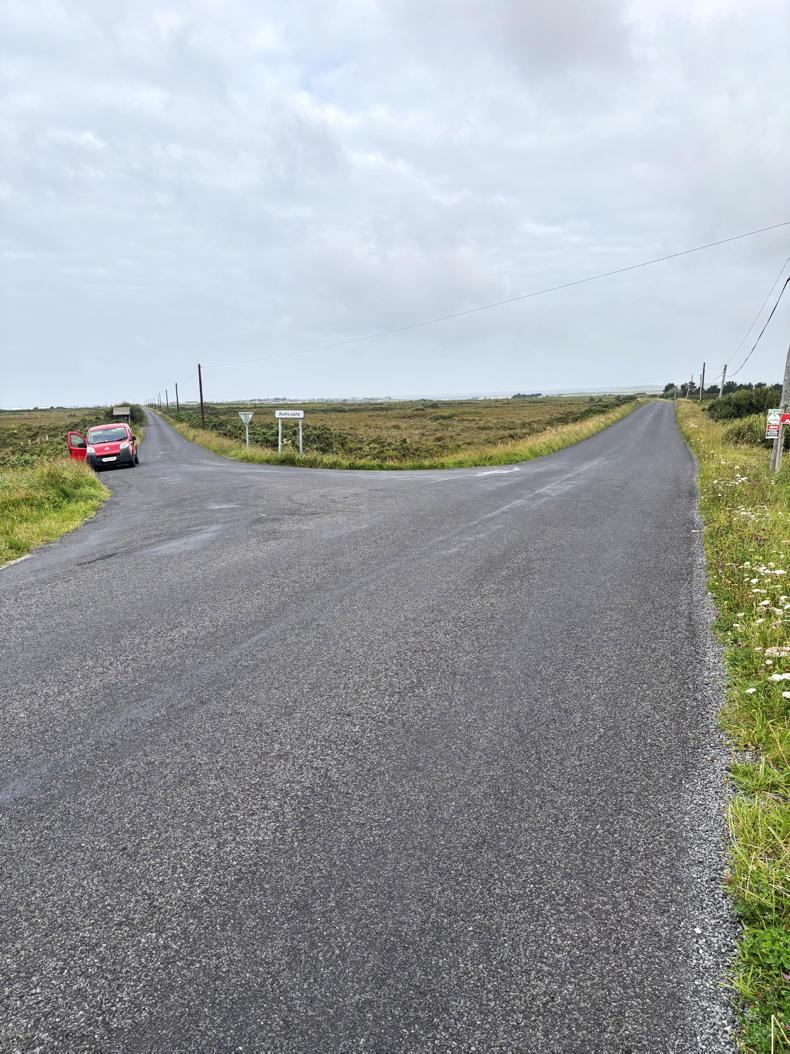
The school bus stop from where children are dropped and collected from near Belmullet, Co Mayo.
“If these guidelines aren’t changed to facilitate those who need rural school transport, then we’ll be in the same boat when our younger daughter starts school in a few years’ time.”
A route supervisor for Bus Éireann visited the bus stop, at Seamus’ request, but confirmed that the service could not be extended to the O’Hara home under the guidelines issued by the Department of Education and Youth.
The review conducted by the department, which started in 2021 and took two years to complete, was the largest review of the School Transport Scheme since it was established in 1967.
Conducted over three phases, it highlighted the lack of public transport, safe walking or cycling routes street lighting or footpaths as ‘an imperative reason to facilitate access to education for children living considerable distances from schools’.
Deputy Keogh has made representations on behalf of the O’Hara family and a number of other families in her constituency to Bus Éireann and the Minister of State at the Department of Education, Michael Moynihan TD.
“Many families were being refused eligible school bus tickets because they weren’t going to the school deemed closest to them and in these cases the families were either having to drive to and from the school themselves, or arrange private bus transport,” she says.
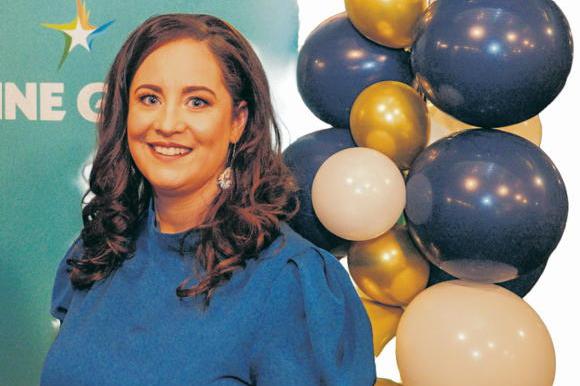
Fine Gael Mayo TD Keira Keogh.
“In Zoe’s case, I’ve been informed by Bus Éireann that a home pick up isn’t possible under the guidelines.
“We need to look at other solutions to the wider issue of a school transport scheme that is not delivering in rural Ireland to the extent it should be.
“There have been logistical issues in terms of school buses accessing smaller rural roads but I think it’s time we looked outside the box to find a solution to this problem that comes around every year for rural families.
“We have a wonderful pilot scheme in Achill running at the moment where the Local Link service is providing demand responsive transport and we should be looking at existing resources like this to increase flexibility in the school transport scheme.”
Vital service
Seamus said the national school Zoe is attending had seven children due to start Junior Infants next month, but that issues with school transport means this number had now fallen to four.
“The families due to start their children in our school have now gone to other schools further away as they can get them on Local Link services that will pick them up outside their front door,” he explains.
“This is a complete failure on the part of the Department of Education and one of the reasons rural schools are closing. We know several families who have chosen national schools based on where they work simply to solve the transport issue. If this keeps happening then there won’t be many rural schools left and rural Ireland will be lost.”
A spokesperson for the Department of Education and Youth confirmed the O’Hara family are currently being offered transport within the guidelines of the school transport scheme.
“The School Transport Scheme is a vital service, that supports access, to primary and post-primary education for 173,000 children who might otherwise face significant barriers due to where they live,” the spokesperson says.
“Where practicable, and subject to considerations of cost and logistics, routes are planned to avoid an eligible child having to travel more than 3.2 kms to or from a pick-up/set down point. Routes are planned on the basis of the locations of children who are eligible for school transport only.
“The Bus Éireann Local Area Inspector has reviewed the existing pick-up point and has deemed this pick-up point as safe.
Parents/guardians are responsible for ensuring that children are brought safely to and collected safely from Bus Éireann designated pick-up and set-down points.
There is an onus of responsibility on parents/guardians to arrange to bring their children to and from the pick-up point of a school bus service, taking whatever safety precautions, they consider sufficient in doing so, and accompanying the children to ensure their safety and allay any concern, if necessary.”
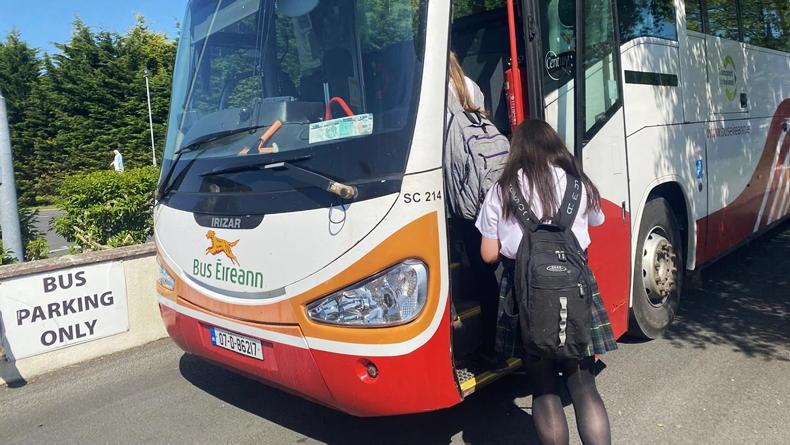
Bus Éireann operates the School Transport Scheme on behalf of the Department of Education and Youth. \Image Bus Éireann
The review of the School Transport Scheme found that expanding the scheme to carry an additional 100,000 pupils will increase the cost from €444m to €672m in 2030. There are changes being made to improve the efficiency of the scheme. Without these improvements, the operational costs of delivering the scheme in its current capacity, to the existing number of pupils, would rise to €678m in five years’ time. Essentially, it would cost more to run and less children would benefit if these changes aren’t made.
Under the terms of the School Transport Schemes, children are eligible for transport at primary level where they reside no less than 3.2km from and are attending their nearest national school.
At post-primary level, they are eligible where they reside no less than 4.8km from and are attending their nearest post-primary school. Distance is determined by the Department/Bus Éireann.
Bus Éireann is responsible for the planning and timetabling of school transport routes. Bus Éireann endeavours, within available resources, to ensure that each eligible child has a reasonable level of school transport service in the context of the scheme nationally.
As families all over rural Ireland anxiously await confirmation of a school bus ticket for the coming academic year, there are many more for whom this form of public transport is not an option, regardless of eligibility for the scheme.
A review of the School Transport Scheme, published in February 2024, committed to expanding the scheme to carry upwards of 260,000 pupils and students by 2030.
Bus Éireann operates the School Transport Scheme on behalf of the Department of Education and Youth.
The review identified the potential for the scheme to reduce carbon emissions by reducing the number of students being driven to school by parents. It also highlighted the important role it plays in supporting rural connectivity and tackling rural deprivation.
Yet many families who are eligible for a school bus ticket say they can’t use the service as the buses will not collect or drop off their young children from their homes.
Mayo Fine Gael TD Keira Keogh says she has been inundated with calls from constituents over the summer months who are pleading for flexibility when it comes to pick up and drop off points in rural Ireland.
“I’m a new TD, having been elected for the first time last November but I have been aware of the issue of school transport in rural Ireland for some time, as my predecessor Michael Ring had flagged it with me,” she says.
“I put a post up on Instagram earlier this year [about school transport] and the response I got from parents was incredible. They all complain of how rigid and outdated the current system is.
“I have met with the Education Minister, Helen McEntee who is seeking more funding for school transport in the budget. However, I think we need to start looking at other ways to make the system work for those families who need it most.”
Seamus O’Hara is a beef farmer from Doolough, near Belmullet in Co Mayo. His seven-year-old daughter Zoe has qualified for a school bus ticket, as the family home is within the required distance (not less than 3.2km) from Geesala National School in the village.
However, Zoe has been unable to use her ticket as the bus stop from where she would be collected and dropped off is on a busy main road, which is over 3km away from her home.
We need to look at other solutions to the wider issue of a school transport scheme that is not delivering in rural Ireland to the extent it should be
“I fought for a year to get the concessionary status they had given us overturned, as they argued my daughter wasn’t going to the closest school from where we live,” says Seamus.
“I won that battle eventually and we are now eligible for a bus ticket but we cannot use it. They want me to drop my daughter to the bus stop and collect her again, which completely defeats the point of having school transport in the first place.
“I’m a farmer, things crop up during the day and if I can’t be there to collect her, she is dropped off on a main road and left there. She’s seven years old.
“I know there are guidelines in place which may work in towns or cities where children could walk home on footpaths, but they simply aren’t feasible in rural Ireland.
“If the whole point of expanding the school transport scheme is to take cars off the road, then surely the buses should be making the extra journeys to collect and drop children from their front doors.
The school bus stop from where children are dropped and collected from near Belmullet, Co Mayo.
“If these guidelines aren’t changed to facilitate those who need rural school transport, then we’ll be in the same boat when our younger daughter starts school in a few years’ time.”
A route supervisor for Bus Éireann visited the bus stop, at Seamus’ request, but confirmed that the service could not be extended to the O’Hara home under the guidelines issued by the Department of Education and Youth.
The review conducted by the department, which started in 2021 and took two years to complete, was the largest review of the School Transport Scheme since it was established in 1967.
Conducted over three phases, it highlighted the lack of public transport, safe walking or cycling routes street lighting or footpaths as ‘an imperative reason to facilitate access to education for children living considerable distances from schools’.
Deputy Keogh has made representations on behalf of the O’Hara family and a number of other families in her constituency to Bus Éireann and the Minister of State at the Department of Education, Michael Moynihan TD.
“Many families were being refused eligible school bus tickets because they weren’t going to the school deemed closest to them and in these cases the families were either having to drive to and from the school themselves, or arrange private bus transport,” she says.
Fine Gael Mayo TD Keira Keogh.
“In Zoe’s case, I’ve been informed by Bus Éireann that a home pick up isn’t possible under the guidelines.
“We need to look at other solutions to the wider issue of a school transport scheme that is not delivering in rural Ireland to the extent it should be.
“There have been logistical issues in terms of school buses accessing smaller rural roads but I think it’s time we looked outside the box to find a solution to this problem that comes around every year for rural families.
“We have a wonderful pilot scheme in Achill running at the moment where the Local Link service is providing demand responsive transport and we should be looking at existing resources like this to increase flexibility in the school transport scheme.”
Vital service
Seamus said the national school Zoe is attending had seven children due to start Junior Infants next month, but that issues with school transport means this number had now fallen to four.
“The families due to start their children in our school have now gone to other schools further away as they can get them on Local Link services that will pick them up outside their front door,” he explains.
“This is a complete failure on the part of the Department of Education and one of the reasons rural schools are closing. We know several families who have chosen national schools based on where they work simply to solve the transport issue. If this keeps happening then there won’t be many rural schools left and rural Ireland will be lost.”
A spokesperson for the Department of Education and Youth confirmed the O’Hara family are currently being offered transport within the guidelines of the school transport scheme.
“The School Transport Scheme is a vital service, that supports access, to primary and post-primary education for 173,000 children who might otherwise face significant barriers due to where they live,” the spokesperson says.
“Where practicable, and subject to considerations of cost and logistics, routes are planned to avoid an eligible child having to travel more than 3.2 kms to or from a pick-up/set down point. Routes are planned on the basis of the locations of children who are eligible for school transport only.
“The Bus Éireann Local Area Inspector has reviewed the existing pick-up point and has deemed this pick-up point as safe.
Parents/guardians are responsible for ensuring that children are brought safely to and collected safely from Bus Éireann designated pick-up and set-down points.
There is an onus of responsibility on parents/guardians to arrange to bring their children to and from the pick-up point of a school bus service, taking whatever safety precautions, they consider sufficient in doing so, and accompanying the children to ensure their safety and allay any concern, if necessary.”
Bus Éireann operates the School Transport Scheme on behalf of the Department of Education and Youth. \Image Bus Éireann
The review of the School Transport Scheme found that expanding the scheme to carry an additional 100,000 pupils will increase the cost from €444m to €672m in 2030. There are changes being made to improve the efficiency of the scheme. Without these improvements, the operational costs of delivering the scheme in its current capacity, to the existing number of pupils, would rise to €678m in five years’ time. Essentially, it would cost more to run and less children would benefit if these changes aren’t made.
Under the terms of the School Transport Schemes, children are eligible for transport at primary level where they reside no less than 3.2km from and are attending their nearest national school.
At post-primary level, they are eligible where they reside no less than 4.8km from and are attending their nearest post-primary school. Distance is determined by the Department/Bus Éireann.
Bus Éireann is responsible for the planning and timetabling of school transport routes. Bus Éireann endeavours, within available resources, to ensure that each eligible child has a reasonable level of school transport service in the context of the scheme nationally.





SHARING OPTIONS