A century ago, horses acted as man’s support in agriculture, road transport, industry and military affairs. When the Land Acts of the early 20th century left the land in the ownership of former tenants, the horse became central in reclamation and tillage.
Farmers began to improve their holdings by building better houses and farmyards, draining and improving the land, building access roads, improving the quality of their livestock and purchasing farm machinery.
Horses helped these new, small farmers plough, harrow, till and clear their land. The horse also provided transport between the shafts of either the cart, the sidecar or tub trap.
Donkeys were particularly important on smaller farms, where they were used to take turnips or mangolds and hay to cattle in the fields when horses were busy ploughing or tilling.
They were also used to take barrels of water from the well or river to cattle during the summer when horses were mowing, and were the animal of choice in the bogs to collect turf, as they could travel over soft ground where horses would sink.
Almost all horse work necessitated the use of a team of horses. In the early part of the century, few farmers could afford to own two horses. Therefore horses were shared with a relative or neighbour.
These partnerships of exchanging labour, and lending and borrowing horses or machinery built up long-term relationships known as comhar, morrowing, neighbouring, working-in-means, joining and swapping.
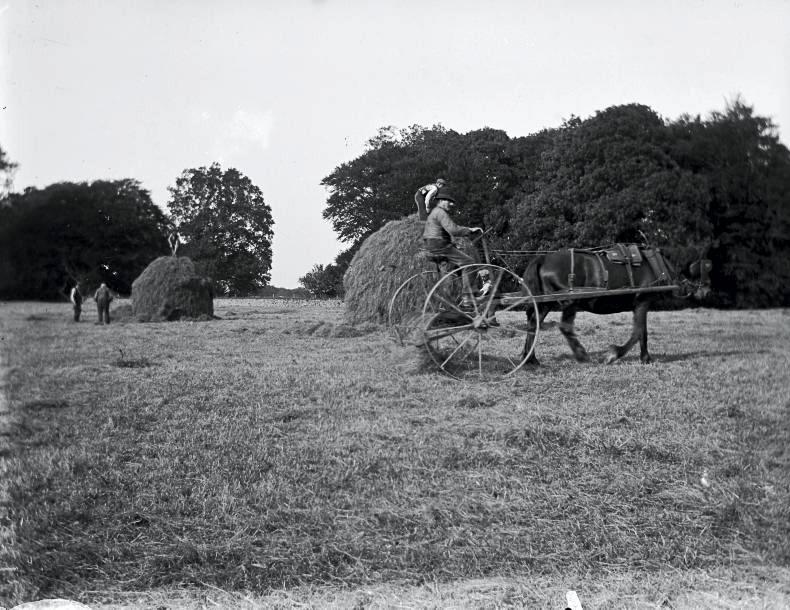
The horse could be collected in the morning and returned in the evening when the job was completed. This was usually an on-going arrangement for spring work, haymaking and harvesting.
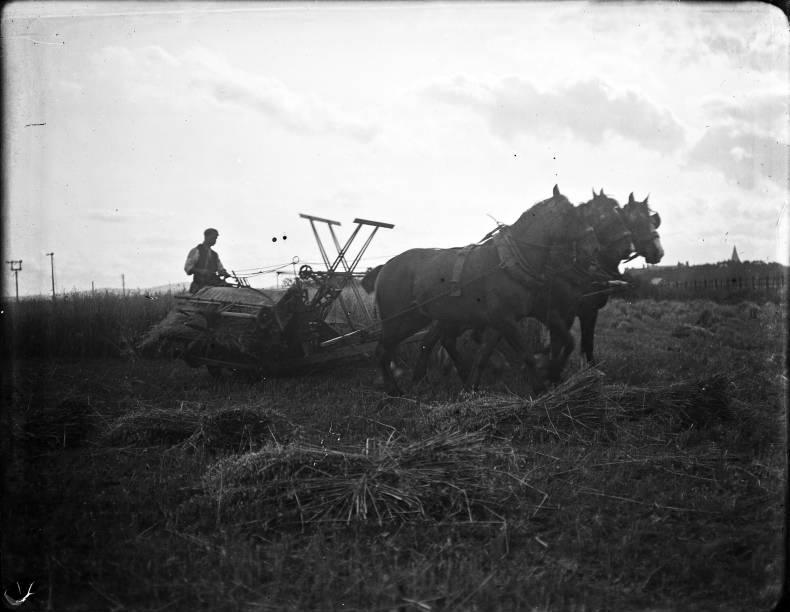
During the first half of the 20th century, horse power was the mode of power on all farms. The horse was used for transport of goods on and off the farm – including turf, timber, hay, bags of corn, eggs, butter, milk, geese, pigs, calves, and other produce.
The horse was also crucial for mowing, threshing, cultivation of crops, and provided transportation of the farmer and his family.
As time progressed, the three-point linkage system increased the safety and manoeuvrability of tractors and finally enabled it to compete with the horse in small fields and narrow roads around the country.
The rise in popularity of the tractor was inevitable, and the horse began to slip out of fashion on farms.
Between the end of World War II (1945) and 1951 there was a rapid decrease in the number of working horses, and the rate of decrease accelerated during the decades of the 1950s and early 1960s. From 1939 to 1948 the number of horses dropped from 442,000 to 420,700 and the number of tractors increased from 1,176 to 9,211.
By 1955 horse and pony numbers had come down to 300,000 and in 1962 to 200,000. Numbers continued to fall as the century drew to a close.
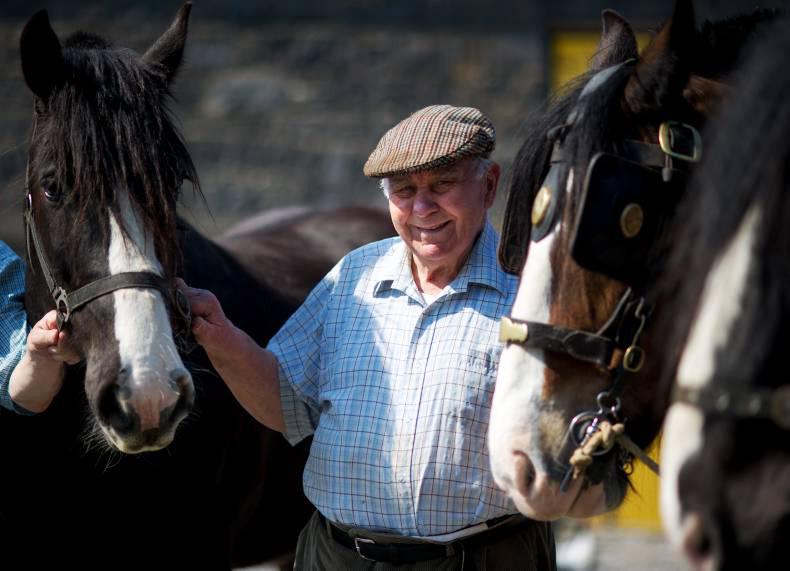
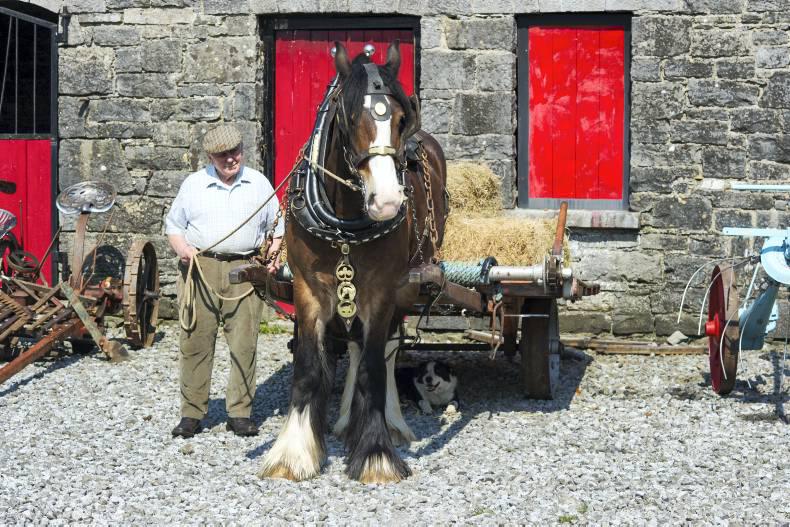
Today, it is rare to find a farmer who works the land as his ancestors would have done in the early 1900s. One such farmer will exhibit at Farming and Country Life 1916, and others who have retained the various skills will exhibit alongside him. CL
A century ago, horses acted as man’s support in agriculture, road transport, industry and military affairs. When the Land Acts of the early 20th century left the land in the ownership of former tenants, the horse became central in reclamation and tillage.
Farmers began to improve their holdings by building better houses and farmyards, draining and improving the land, building access roads, improving the quality of their livestock and purchasing farm machinery.
Horses helped these new, small farmers plough, harrow, till and clear their land. The horse also provided transport between the shafts of either the cart, the sidecar or tub trap.
Donkeys were particularly important on smaller farms, where they were used to take turnips or mangolds and hay to cattle in the fields when horses were busy ploughing or tilling.
They were also used to take barrels of water from the well or river to cattle during the summer when horses were mowing, and were the animal of choice in the bogs to collect turf, as they could travel over soft ground where horses would sink.
Almost all horse work necessitated the use of a team of horses. In the early part of the century, few farmers could afford to own two horses. Therefore horses were shared with a relative or neighbour.
These partnerships of exchanging labour, and lending and borrowing horses or machinery built up long-term relationships known as comhar, morrowing, neighbouring, working-in-means, joining and swapping.
The horse could be collected in the morning and returned in the evening when the job was completed. This was usually an on-going arrangement for spring work, haymaking and harvesting.
During the first half of the 20th century, horse power was the mode of power on all farms. The horse was used for transport of goods on and off the farm – including turf, timber, hay, bags of corn, eggs, butter, milk, geese, pigs, calves, and other produce.
The horse was also crucial for mowing, threshing, cultivation of crops, and provided transportation of the farmer and his family.
As time progressed, the three-point linkage system increased the safety and manoeuvrability of tractors and finally enabled it to compete with the horse in small fields and narrow roads around the country.
The rise in popularity of the tractor was inevitable, and the horse began to slip out of fashion on farms.
Between the end of World War II (1945) and 1951 there was a rapid decrease in the number of working horses, and the rate of decrease accelerated during the decades of the 1950s and early 1960s. From 1939 to 1948 the number of horses dropped from 442,000 to 420,700 and the number of tractors increased from 1,176 to 9,211.
By 1955 horse and pony numbers had come down to 300,000 and in 1962 to 200,000. Numbers continued to fall as the century drew to a close.
Today, it is rare to find a farmer who works the land as his ancestors would have done in the early 1900s. One such farmer will exhibit at Farming and Country Life 1916, and others who have retained the various skills will exhibit alongside him. CL





SHARING OPTIONS