



‘Lavender is the soul of Provence,’ wrote the great French poet and author Jean Giono, who nurtured many of his works among the deep purple fields spreading across the countryside, to create a magical sea of blooming colour and fragrance. A great celebrant of nature, he described in vivid detail a peaceful, rural idyll where waves of lavender quivered in the summer sun amidst the humming of the bees feasting on nectar of the flowers.
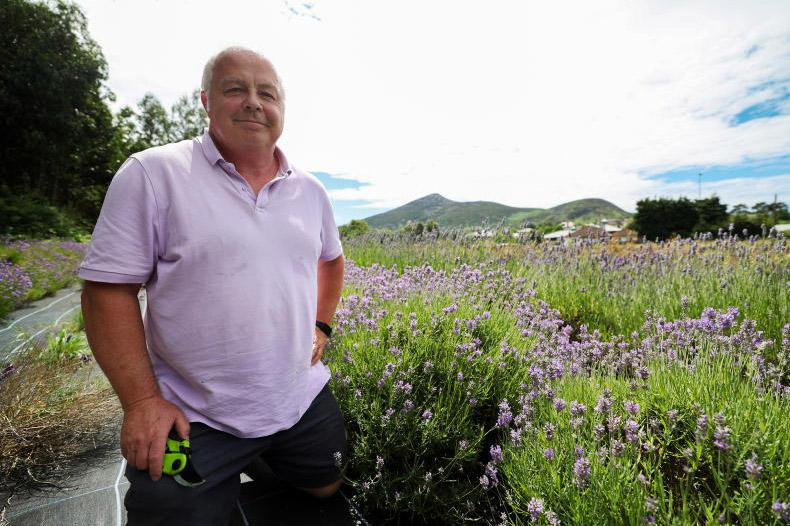
It might be a sea crossing and more than 1,500km away, but just off the busy N11, in the shadow of the mountains at Kilmacanogue, Co Wicklow, that essence of summer in the south of France has been recreated across two acres by LAVÓ. Harvesting by hand has been underway over the last few weeks for their popular harvest sale market in their yard, with many of their products also available online at lavender.ie.
While their main business is perfumes through Fragrances of Ireland, David Cox says this connected sideline is a bit of fun and brings summer cheer to a lot of people. “It’s a nice, natural, local thing, a bit of a celebration of summer and summer flowers. It’s a bit of a purple haze in July,” he says, smiling widely.
It’s an evocative scent and view in the fields, he agrees. “It’s shimmering purple, and you’ve never seen so many bees. They go absolutely bonkers. It’s thick with bees, and there’s a lovely smell, and on a summery day, it’s just really lovely.” The family keep beehives there, and their honey is popular with customers.
Back in the 1990s, having seen lavender farms in the UK, David harboured notions of developing a wholesale business here. Unfortunately, the economics didn’t stand up when he realised you’d need hundreds of acres, big machinery and a lot of labour. He pivoted his idea by planting two acres in 1996, mainly a variety of English lavender and a French lavender, or as they call it, lavandin, and selling it at their harvest sale and online through the LAVÓ range.
Lavender appeal
Asked why he thinks lavender is such an enduringly popular plant, he replies: “I think it’s the obvious appeal. It’s the colour and the scent. I think everyone loves the scent.
“I think people are always interested in something from the ground and something that’s pretty and smells nice. I think it’s particularly attractive.
“It’s amazing for a Mediterranean plant that’s probably not suited to our climate – how much it does grow here. But there are challenges. It doesn’t like continuously being wet, which means that in the winters we’re having now, particularly, we do get quite a lot of plants dying, so we have to replace quite a few.
“Otherwise, the plants would last 10 or 15 years if you look after them. They don’t need much care, to be honest. The main problem is weeding, keeping weeds down.”
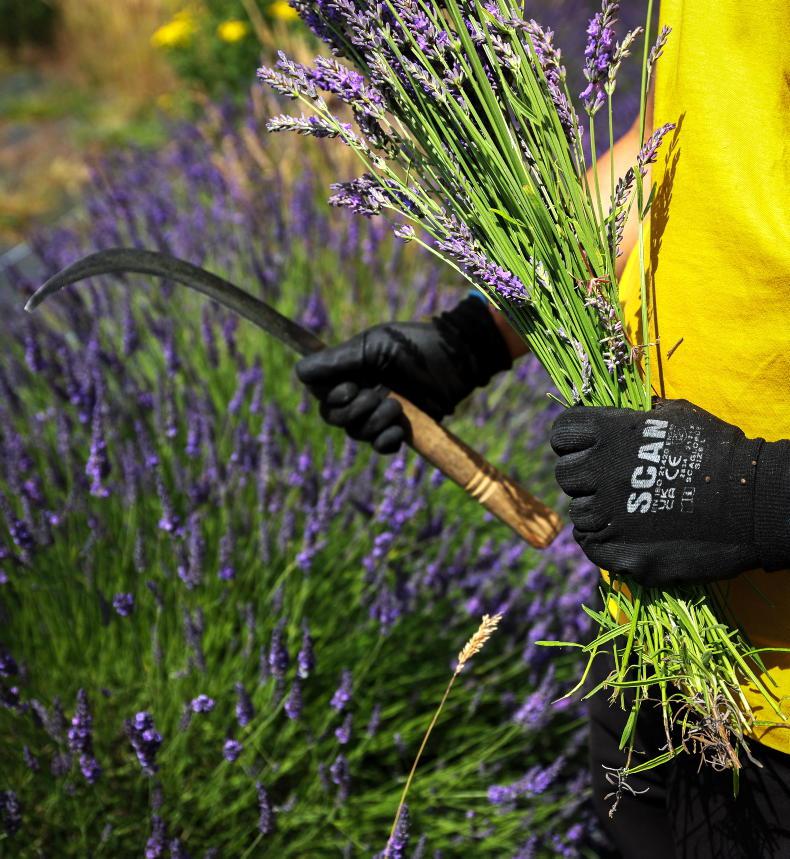
Two of his warehouse workers head out to the field after work to hand cut the lavender and put it into baskets from late June and throughout July. It is later bunched up for sale.
I think people are always interested in something from the ground and something that’s pretty and smells nice. I think it’s particularly attractive
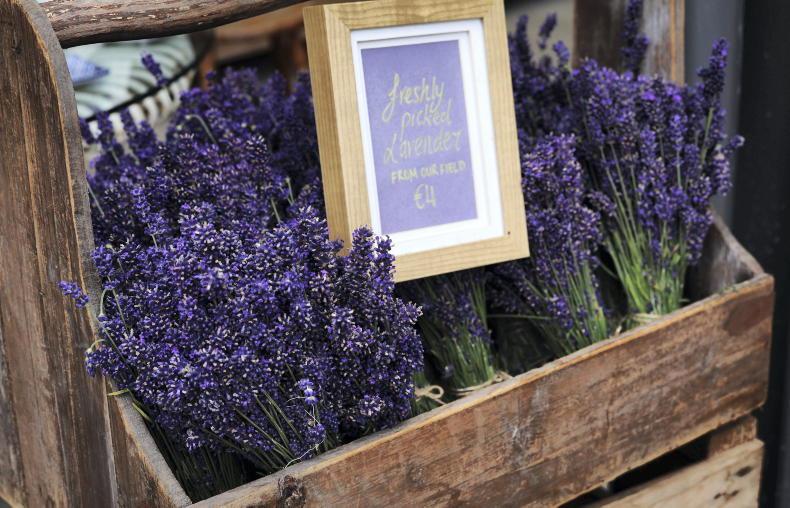
“Mainly we sell it in bunches; that’s what people want. If we have bunches left over, we dry them, so we sell dried bunches through the year. The other thing we do is we do make lavender oil. We would have a distillation [still] going most weekends.”
“It’s a commercial still, but it’s too small to be proper. It’s about six foot tall, and it takes about 50kg of cut lavender, and then we distil it for a few hours, and that makes only about 50 millilitres of lavender oil.”
From that, they blend it with another similar European oil for sale.
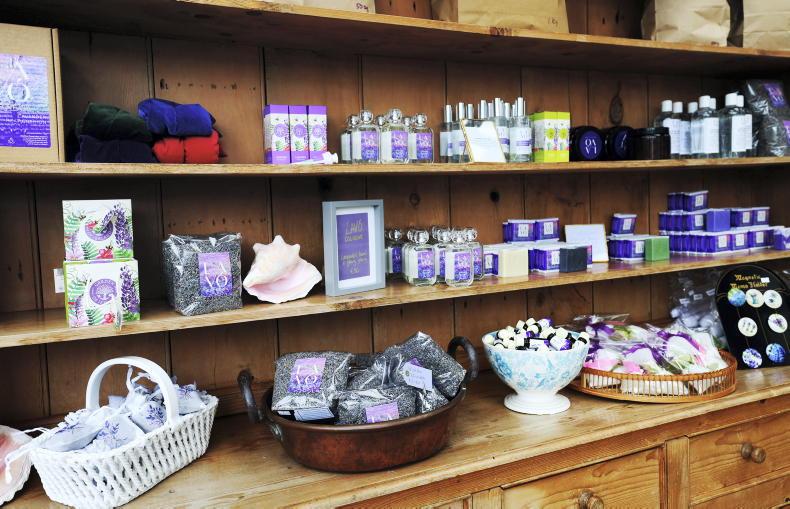
“My wife Orna makes soap from it at home as well. We have lavender handmade soaps.” Leaning into the medicinal and wellness properties that make lavender so popular, they also make lavender pillow mist to help people sleep, lavender hand cream, cologne, heat cushions for tired muscles and even their renowned lavender furniture polish.
Inis success
While they enjoy the lavender market in early summer, David is quick to point out that their main business is Fragrances of Ireland, which operates from a converted farmhouse and now employs 54 people. Inis, which means ‘island’, is the company’s signature scent range and is actually stocked in over 5,000 stores worldwide.
Like lots of successful businesses, it came about by accident back in the 1980s after a conversation between his father Brian and uncle Donald.
Mainly we sell it in bunches; that’s what people want. If we have bunches left over, we dry them, so we sell dried bunches through the year
“They were both married to sisters, my mother and my aunt, and one of them brought back a present from a holiday somewhere in Greece.
“They brought back something smelly, a little pot of some local perfume or something, and they started a discussion over dinner about why you can’t get anything like a scent of Ireland, because my uncle was involved with his family at that stage in retail. They actually ran Avoca Handweavers.”
With no background in perfume, the two kickstarted a new business while both had other ventures – his father had a printing business and started to build it up part-time – initially targeting the tourist market. Having qualified as a solicitor and decided it wasn’t for him, David became their first employee and never left. Now managing director, he reflects more than 40 years of the family business and Inis, their signature range’s popularity.
“Inis has been phenomenally successful for us. It’s not really connected with the lavender at all. We export 95% of what we do. We’ve big markets in the US, Canada, UK, Germany, France and Australia.
“We have fantastic people, and we’ve been lucky. You know, you need a bit of luck along the way, and we’ve developed a perfume that just people love,” he says, adding that the perfume is manufactured in a factory in Ireland using natural ingredients. “In business you tend to try a lot of things. They don’t work. You retreat and you try again in a different way.”
To illustrate his point further, he explains that rather than targeting department stores and perfumers in a crowded market, they moved into the gift store space, and this has worked a treat for them.
“We always set ourselves the goal that we’re an Irish company and that our perfumes should reflect the beauty and the magic of Ireland in some way or other. So, we started out with maybe much more obviously touristy things, like we had our first perfume, which was called Innisfree, after The Lake Isle of Innishfree or the Patrick range for men.
When they came to develop Inis, they decided to go for something more sort of mainstream, a scent like “a summer’s day at the beach” or “a summer day by the sea”. He took their perfumer to his favourite beach, Dog’s Bay in Connemara, for inspiration.
“He managed to capture the scent of that summer’s day using sort of citrus oils for the freshness, and then cloves for the saltiness, and then lily of the valley for sea-fresh notes. Anyway, it was just as I said; you need a bit of luck sometimes, and he developed a scent that people just love. It’s amazing. People just smell it and say, ‘I want to buy that’, which is all a perfume company can ever want.”
See lavender.ie and fragrancesofireland.ie


SHARING OPTIONS