


Back in those two very cold winters a few years ago, there was a very severe attrition of dahlia tubers in the ground.
The advice for years had always been to lift dahlia tubers and store them in a frost-free shed in winter. But that required a good deal of effort, and its necessity was undermined by a decade of mild winters when there were no bad consequences to leaving the tubers in the ground, with, perhaps, a layer of soil or ashes over the top as insurance against frost damage. But, of course, some conscientious gardeners still lifted their stock and they were rewarded by escaping losses.
In any case, the severe and widespread losses of dahlia plants led to a very considerable reduction in the presence of this superb plant in gardens and the reduction still has not been remedied. But it should. And it is not difficult to do. Dahlia tubers are widely available in garden outlets and are not particularly expensive. Even a few plants can make a massive difference to a garden in late summer and early autumn.
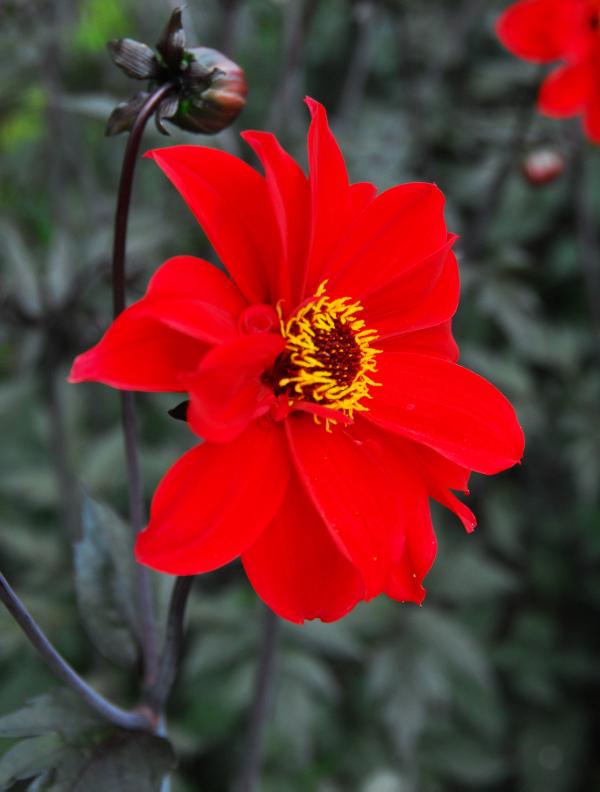
The dahlia types in question are not small bedding kinds but big border dahlias, about 90cm to 1.2m tall, with large flowers. These are known as border dahlias, for use in flower beds and mixed borders. A well-grown established plant can be as much as one metre across, covered in masses of flowers of exceptional quality and size. Few plants exhibit the range of colour of dahlias, in which the only missing colour is blue. And the flowers are mostly of intense shades with great vibrancy about even the paler tints.
If you want to get the benefit of dahlias this summer, buy a few tubers now and get them going around the middle of March or early April for planting out as established plants in late May or early June. The tubers are set out in a tray of moist, not wet, compost, or in individual five-litre pots.
Have the base of the old stem just at or slightly below the level of the compost surface.
Give a light watering after potting and then do not water much, or at all, unless the compost dries too much. It is easy to grow these tubers but they can rot if they’re kept too wet. Keep the pots in a reasonably warm spot, such as a sunny window indoors or a conservatory, porch or a frost-free greenhouse.
When the new shoots appear, gradually increase the watering as they need it, but still not wetting the compost. After four or five weeks of growth, give a liquid feed every two weeks to keep them moving, and give them space to grow. Watch for the greenfly as this pest likes the soft shoots. Slow down growth in the second half of May by easing back on watering and feeding and harden off before planting out by standing the plants outdoors on mild days for 10 days or so. But be sure to take them in at night.
Prepare the ground now where these dahlias will be planted later, giving a good space of one metre or so to each plant, digging in lots of well-rotted manure or garden compost.
Choose only one or two varieties, unless, of course, you like a multi-coloured effect. Be prepared to stake the plants from the time of planting out, especially in a wind-exposed garden, using strong bushy branches, such as hazel, that the shoots can grow up through, or use wire-hoops. Watch for snails when the plants are set out because they are very fond of the soft young leaves and stems.
Plant strawberries
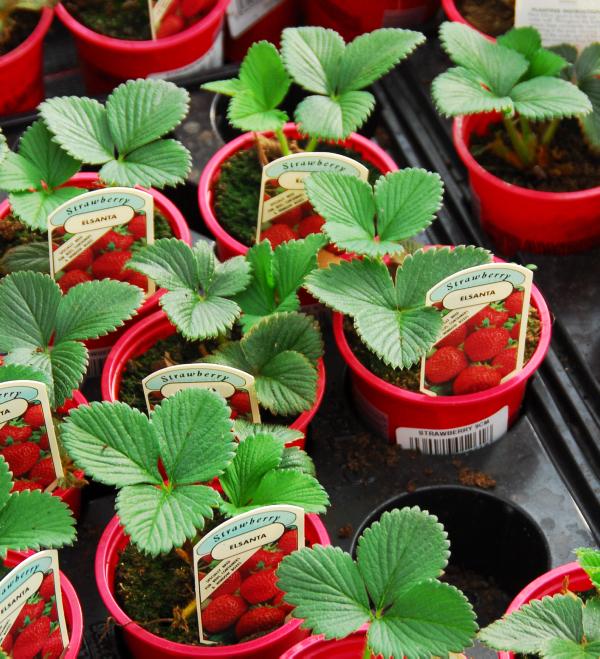
While it is best to plant young strawberry plants in autumn to give them a chance to get established before winter, often the opportunity is missed. However, they can be planted in spring too. The only difference is that the plants will be starting later and, unless they are big, multi-crown plants in pots, they will carry very little or no fruit in the first summer. However, it is much better to plant now at the start of the growing season and get a year’s growth rather than wait until autumn again.
Small potted plants are widely available in garden centres and can be planted up now. They need good, well-drained, but not too dry, soil and it should be reasonably fertile, not with a lot of compost or manure as this tends to spur leafy growth at the expense of flowers and fruit. A sunny position is essential, with no competition from weeds or the underground roots of trees or a hedge.
Trees, shrubs & roses
The ground has been too wet for planting in many parts so it is best to wait for it to dry out because planting into wet ground can lead to smearing on the sides of the planting hole with the spade and this can interfere with drainage. Bush roses and repeat-flowering climbers should be pruned immediately.
Fruit, veg & herbs
The ground has been very wet and will take a while to drain, but on lighter soils, at least, plant garlic and shallot sets as soon as possible. Until you can plant, keep the garlic bulbs in the fridge to give a cold period. It does not matter if they sprout there. Finish pruning of apple and pear trees and fruit bushes.
Flowers
Bedding flowers of many kinds, such as marigolds, petunias, impatiens and salvia, can be sown over the next 10 days or so. Start the seeds in warm conditions in a propagator or in a warm kitchen. Lifting and dividing of herbaceous flowers can continue if the soil is dry enough, but should be postponed unless completed soon.
Lawn
Lawns have been very wet and soggy recently, but if the ground has firmed up then take that opportunity to mow the lawn in order to reduce the effort required later. Moss has thrived in a relatively mild and very wet late winter and early spring. Apply sulphate of iron lawn mosskiller if there is heavy moss growth present.
Greenhouse & house plants
Heavily feed and water all greenhouse plants, if not already done. Sow seeds of tomatoes for greenhouse growing, also sweet peppers and chilli peppers. A sowing before mid-March will usually produce its first ripe tomato in mid-July. These are easy to grow and fill the greenhouse during the summer.


SHARING OPTIONS