


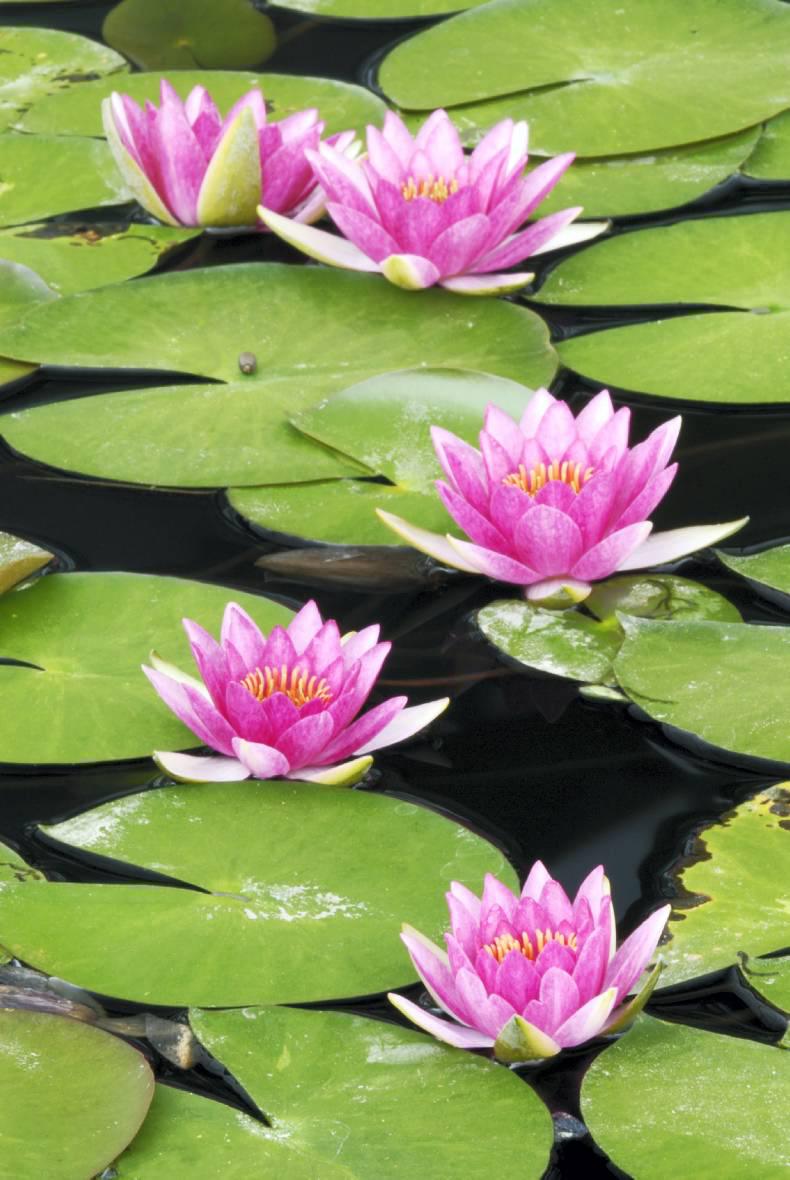
Everybody knows the water lily and it is easy to see how it got its common name. It is for all the world like a lily and, of course, grows in water. The cupped shape of the flower seems to just sit on the water surface and its waxy quality makes it look like it’s floating. In fact, the flower stem grows just to the surface and then stops.
The curved petals hold the central ring of yellow stamens, protecting them from the elements and creating a little haven for pollinating insects.
Pollination is the reason the plant produces its flowers on the water surface, just as it exposes its leaves on the surface to trap as much sunlight as possible. The leaves also shade out any water plant competitors underneath and this is a valuable service because it reduces algal growth, while providing shelter for pond fish.
A water lily is not only a beautiful plant for a pond, but it is also very functional in maintaining a good natural balance.
Water lilies can be planted at any time from May onwards, when the water has warmed up. You should be able to choose your colours, and not have to depend on the colour label, as most garden centres that stock water lilies put them on display when they are showing flowers. There are three main colours available: white, pale red and yellow. All of these are very pretty when seen floating on the water surface.
It is not generally realised that the wild water lily, Nymphaea alba, is a native plant that grows in some western bog lakes and ponds. It does not grow away from the shore, even in shallow lakes, as water lilies do not like choppy water.
The leaves of water lilies are large and easily upset by moving water. If the leaves are continually disturbed they cannot grow properly. Severe movement can cause physical damage to the leaves. The wild white water lily plant can be grown in a garden pond, but it likes about one metre of water depth and few ponds are deep enough to suit it.
The cultivated hybrids are better for garden use. Albida is a lovely white variety. Escarboucle is an excellent red-flowered kind. James Brydon is raspberry-red with pointed petals. Chromatella has canary-yellow flowers. Carnea has pale-pink flowers.
There are many other varieties too, but these are the ones that are most likely to be available. Most of these hybrids are knocking around for over a century, having been bred in France.
The plants are usually sold in plastic baskets or porous fibre pots and they can be expensive because they are slow to grow and difficult to propagate.
Most lilies stocked in garden centres will have been held in shallow ponds and the plant must be introduced to deeper water in stages. If the pond is very deep (more than one metre), a large variety such as Gladstoneana must be grown because it has the vigour to comfortably reach the surface and is used in large ponds and lakes.
Rich feeding is important for a water lily. A good layer of mud at the bottom of the pond is the natural rooting zone.
The plants can be kept in porous pots of soil and compost, but these need to be replenished every couple of years. It is much easier to let them get on with it in a layer of mud and they will grow all the better for it.
Sweetcorn strong
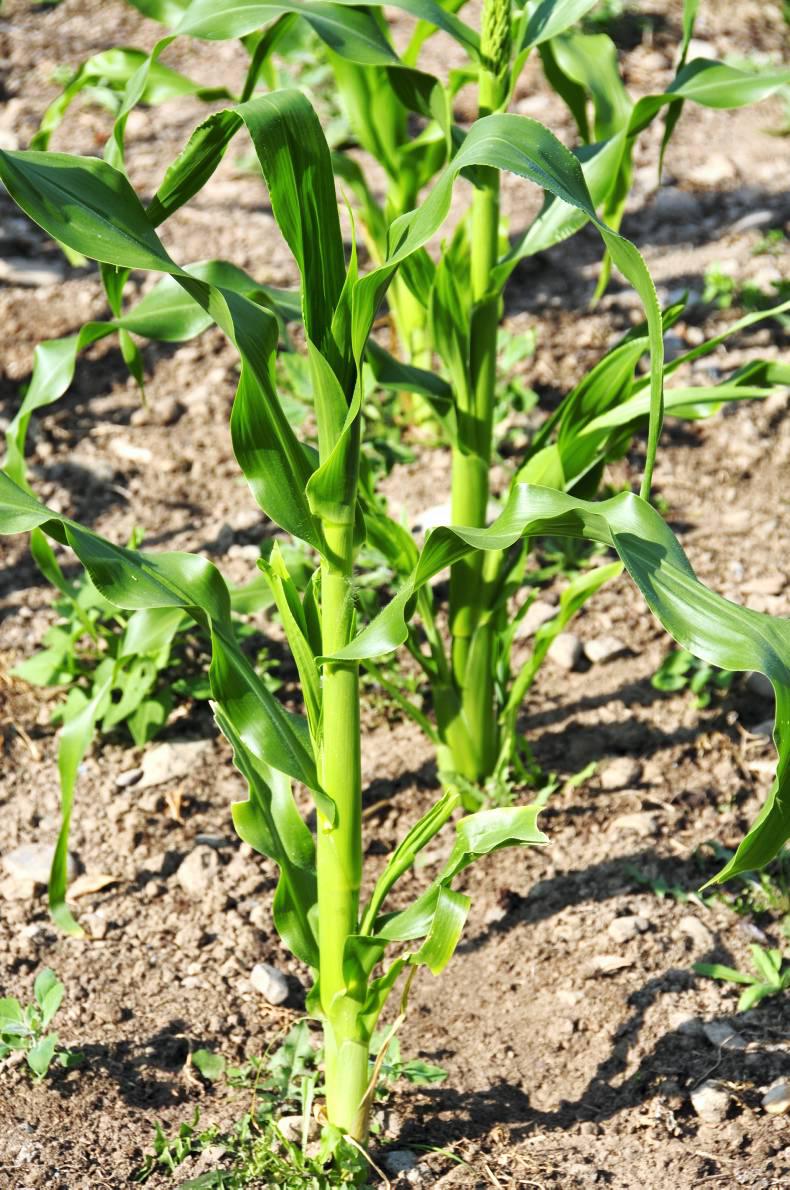
Although sweetcorn got off to a very slow start, and some people did not get it planted out until nearly the end of June, it has made very rapid growth since. There was a lot of cold weather and wind, and the delicate plants could not be risked.
Some people had to make a second sowing. But the almost daily rainfall has boosted the plants tremendously. They are behind the season, but are shooting out flowers and soon the cobs will form.
They will be late this year because of the cool summer. It remains to be seen how good the corn is with proper formation of cobs.
If pollination is poor, the seeds in the cobs may be patchy. Corn was excellent last year because the summer was so good.
Flowers
Bedding and container annuals will last longer if given some liquid feeding now – they still have a couple of months to go, but will run out of nutrients before that without feeding and regular watering. Spring bulbs are in the shops soon and it is a good time to choose new locations for bulbs.
Fruit, veg & herbs
Many vegetables have grown well this year, and cabbage, cauliflower, early carrots, French beans, broccoli and peas have been picked. Sweetcorn is slow this year and raspberries look to have a late show of fruit. It has been difficult to keep weeds down this year because of the frequent rain.
Trees, shrubs & roses
Trees and shrubs are mostly in good condition after the sunshine and summer showers. Young trees and shrubs got plenty of rain, but may be a little hungry and a liquid feed can help them finish the season well. Preparations for autumn and winter planting of trees can be made now.
Lawns
Lawns have been growing strongly, with plenty of rain all summer. Warm spells kept the soil temperatures up and the result is that lawns look well. Autumn lawn fertiliser could be applied from now on if the grass is a bit sluggish through lack of nutrients. Keep lawn edges trimmed.
Greenhouse plants
Keep picking greenhouse tomatoes, peppers and cucumbers as soon as they are ready, and do not allow any new green fruit to develop, otherwise cropping tails off quickly. Stop feeding most greenhouse plants now because they will have enough in the pot to keep them going.


SHARING OPTIONS