


It has been a most wonderful summer, full of long days with good sunshine and while we enjoyed it, gardens did suffer somewhat.
In our normal Irish climate, some gardens will be past their peak in late summer and autumn with colour fading in foliage and flower, so we may feel the gardening year is over.
However, this is not necessarily true as there are very many lovely perennials that perform well into autumn and the early days of winter. This extends the gardening season, creating added interest for us. Aster, a plant we have enjoyed over many years is now known as Symphyotrichum so look out for that on labels.
S. laeve ‘Orphaeus’ has beautiful rich blue flowers with a hint of purple.
Its dark, almost black stems highlight the flowers even more. S. ‘Pink Parfait’ with pink powder puff blooms on fresh green foliage is soft and mellow. They flower from late August into November. Both of these make excellent cut flowers too.
Rudbeckia fulgida ‘Goldsturm’ has striking yellow daisy-like flowers that brighten the autumn day nicely. It is low growing, barely achieving 1m in height so it doesn’t need staking.
On the other hand, R. laciniata ‘Herbstsonne’ is quite tall, growing to over 2m and making a statement with its large yellow flowers, where space allows. It is a plant that needs staking as the lightest breezes can unsettle it.
Salvia
I have long extoled the virtues of Salvia– there are many you can use to bring impact to your garden and will take you right into the first frosts.
One of our favourites is S. ‘Amistad’, an upright plant that grows to 1.5m with dark blue flowers. It has great presence, as does S. ‘Amante’ which is similar in terms of growth pattern, however it has bright pink flowers that usually last until the end of October.
Anemone x hybrida ‘Honorine Jobert’ is perennial with white saucer-shaped flowers held high above the dark green foliage through September until the end of October. They shine bright in the dim light of an autumn evening.
A. x hybrida ‘September Charm’ is similar in size with clear pink flowers that sit well in the border.
Aster x frikartii ‘Monch’ is low growing and taxonomists have deemed it fit to remain within the original genus. It starts producing its pale blue flowers in abundance from the end of July into August and September.
Dixter Orange
It wouldn’t be an autumn garden without planting some Sedum, a favourite of ours is Sedum ‘Autumn Joy’ which forms lovely neat clumps of grey green foliage through summer and flowers with pink flowers in autumn.
These fade to rusty brown seed heads for winter interest, it is spectacular with frost or snow on them. Sedum ‘Karfunkelstein’ is a summer long display of colour with metallic dark purple foliage. In late autumn it is covered with cherry red flowers crowning the plant beautifully.
Agastache foeniculum ‘Golden Jubilee’ bedecks itself with golden yellow scented foliage throughout summer, it is a spectacular border plant well before its flowering. It starts producing blue spikes of flowers in July that last until the beginning of October. It is of huge benefit to bees and butterflies.
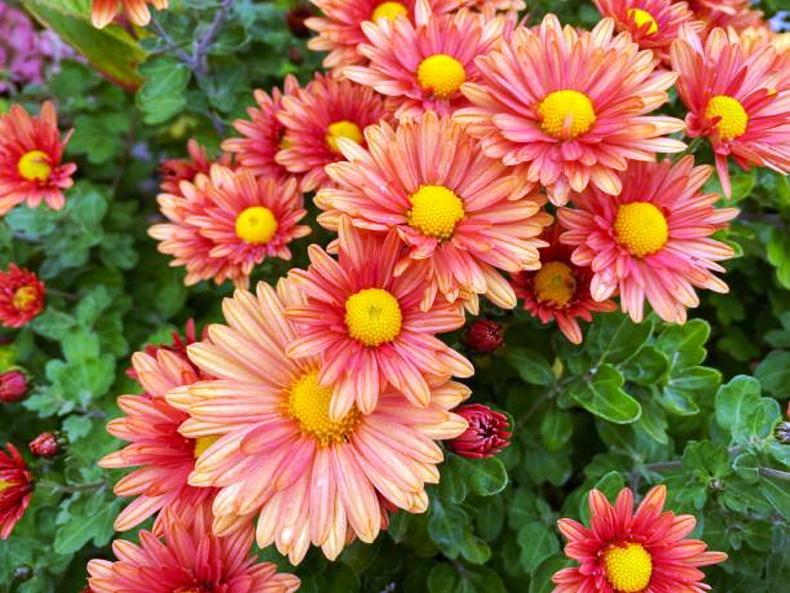
Of course, autumn is when we expect to see chrysanthemum in flower and they can produce well into winter. In fact, Chrysanthemum ‘Dixter Orange’ flowers from July until November with its rich orange flowers.
It is low growing achieving 60cm in height. C. ‘Emperor of China’ is a must grow plant that produces beautiful pink flowers late in the year flowering into December in milder gardens.
Early winter frosts turn the foliage a ruby red colour adding to its beauty. Unusually, both of these are hardy and do not need winter protection as we normally expect with many other decorative Chrysanthemums.
Penstemon are reliable for late autumn flowering, particularly the richer red colours. P. ‘Blackbird’ is a slender upright plant with deep red flowers over a long period, into late autumn. It grows to almost 1m high. P ‘Garnet’ is one of our favourites, again growing up to 1m. It blooms throughout summer with rich wine-red flowers continuing until the end of November. Penstemon is shrubby in nature but works well in either shrub or herbaceous settings.
The key to keeping plants looking well into autumn is to adopt a programme of removing all seed heads as they develop, to prevent seed being produced. This will keep plants flowering. It is worth the effort for a colourful autumn and early winter.
My gladiolus were beautiful this summer. Can I leave them in the ground to flower next year or do I have to store the bulbs? – Angela. Co Louth.
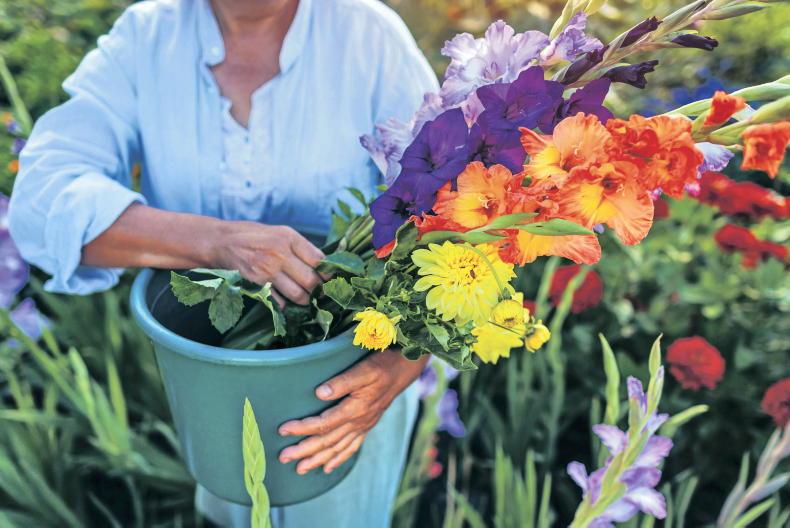
Gladiolus is certainly a great addition to our summer gardens with many new cultivars in a wonderful array of colours. They only survive outdoors in the mildest gardens with light free draining soil.
However, my advice is that you carefully lift them and store them over winter.
Wait until all green foliage has died down, then carefully ease them out of the ground thoroughly clearing off all soil. Allow them to dry in a garage or shed, then place them in a tray covered by dry fine bark mulch. Make sure you keep any labels with them. Plant them again next May.
Lawns: it is likely that all lawns have now got some rain and are starting to revive. It is possibly too soon to mow, however if you need to, keep the cutting height high.
Perennials: check all perennials as some have been reduced in height due to drought so remove all dead stems. Allow plants to grow back naturally – do not be tempted to feed them.
Bulbs: purchase spring bulbs early as they sell out quickly. Examine all last year’s pots and see what needs to be replaced.
Trees and shrubs: trees and shrubs have been through a stressful summer and growth will now start to emerge. Continue to use any waste water to support them.
Do you have a gardening question? Email icl@farmersjournal.ie or post to Irish Country Living, Irish Farm Centre, Bluebell, Dublin 12.

