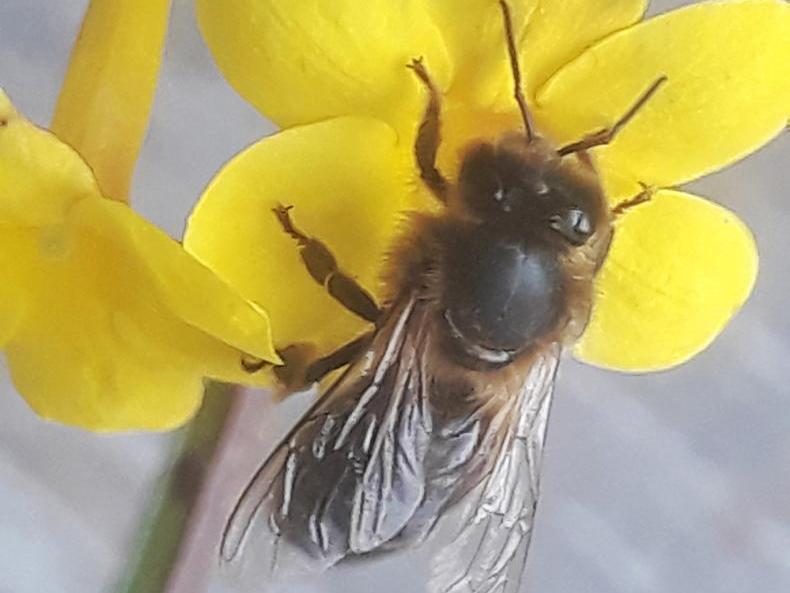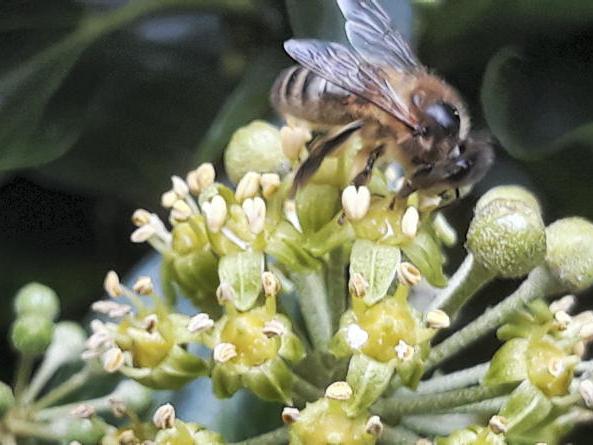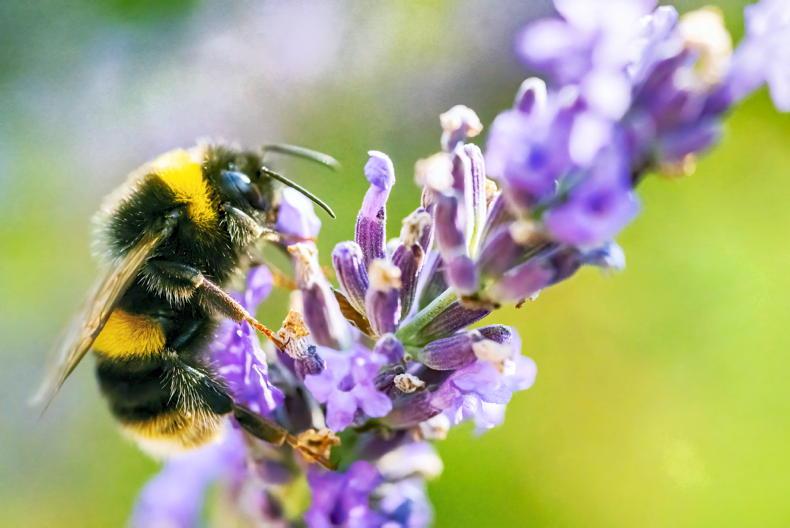
Now that summer is here, let’s consider how plants can help pollinators, particularly bees of all types.
Our wildlife has been out of their winter hibernation for a while now and busy looking for food. In untouched nature there is food aplenty, and they have been foraging voraciously, nourishing themselves and pollinating our native flora.
In recent times, there has been much focus on pollinator plants to help declining populations of bees. Some will talk of ‘No Mow May’ as a way to help, others will focus on the long-term, seeking permanent solutions whereby they can help nature and wildlife.
There are those who will say that at this stage they have missed the opportunity to make an impact, and promise to do it next year. However, it is not too late to start to help nature and there are things you can still do now. Much like ourselves bees need food and water. In a happy coexistence, bees need flowers for food and flowers need bees for pollination.
In the The Bee Garden, Maureen Little states that: “between 100 and 120mg of pollen is required to raise one worker bee. If a colony rears between 120,000 and 150,000 bees, up to 25kg of pollen is required”. That is a staggering figure.
There are many initiatives where new planting schemes are taking bee-friendly approaches into consideration and that certainly helps. But if you have not kept in line with the trend and feel you should, you can start today taking easy steps to nurture bees and keep your garden beautiful.
Many annuals and perennials hold the key to your bee friendly garden. In garden centres and supermarkets there are still many plants available that will provide food for bees. Simple or single flowers are best as their ‘doors’ are wide open, displaying an enticing buffet to passing bees.
Also look out for hardy annuals, available in seed packets, such as Centaurea, Calendula, Nigella, Phacelia and Papaver, which you sow directly on prepared bare soil either in early May or autumn. Purchase your seed now and sow this coming autumn – you will already be getting next year’s bee feast ready.
At this stage half-hardy annuals are your best choice and are still available on garden centre and supermarket shelves. Ground preparation is key, and make sure you provide a well-prepared weed free space in which to plant.
Best varieties
Look for varieties with single flowers, in other words where you can clearly see the centre of the flower. Cosmos for example have a single row of petals and a yellow centre where the nectar is and it will flower until first frosts.
Dahlia in its many varieties are available too, but again aim for the single flowered ones – bees are far too busy to be trying to get through large powderpuff type flowers. Mesembryanthemum criniflorum, the South African daisy has nectar and pollen and there are a variety of colours to choose from. Nicotiana sylvestri or any of its cultivars are especially good as is the single flowered Tagetes with its bright attractive colours.
If you prefer perennials as a long-term solution it might take a year for them to settle in. Start with Geranium ‘Rozanne’ with its pale blue flowers from June until September.
Nepeta musinii ‘Six Hills Giant’ again with delicate blue flowers and grey foliage, – both of these provide nectar. Eupatoriun purpureum is a tall perennial that establishes quickly and it is a butterfly feast.
Bees need water too. The simplest way to achieve this is to purchase a small bird bath and fill it with pebbles and top up with water – bees prefer to sip and that way there is no chance of drowning.
Early studies show that bees when foraging use a zig-zag flying pattern and when fully loaded, in the truest sense of the word, make a beeline back to the hive with remarkable directness.
So make a beeline to the garden centre and start your journey to feed the bees.
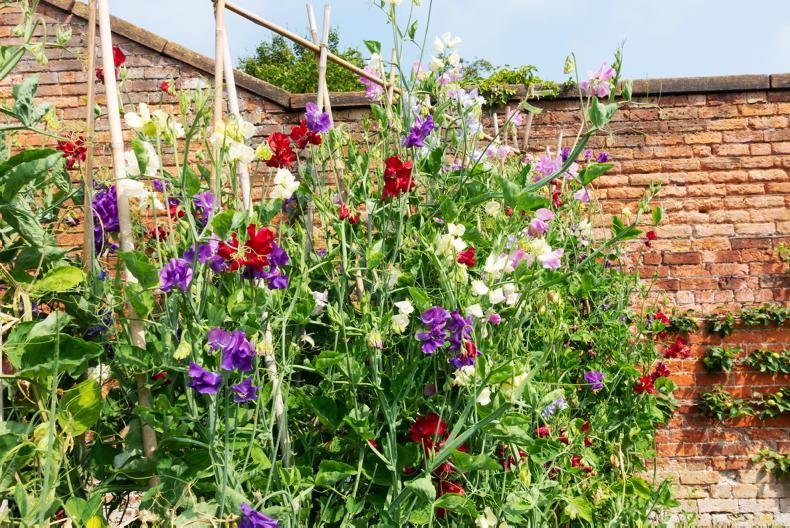
Can you give the name of a good annual climber, one that I can remove for the winter to do annual treatment on my trellis? – Gerry, Co Kerry.
It certainly is a problem when an expensive trellis gets ruined if it is not given an annual preservative treatment. There are many annual climbers you can use and my suggestion is that you aim for a flowering feature. Sweet pea will never fail to please. They are available in the garden centres now as small plants.
Prepare the ground well and give a little feed to start them off. You will need to tie them in and be sure to pick flowers often as this will give continuous flowering. Never let the pea pods form, so as flowers drop, snip off the pods – this could be a daily job, but one filled with scent and enjoyment.
Annuals: there is an abundance of half-hardy annuals available now. Prepare ground, removing weeds and after planting water thoroughly.
Vegetable Garden: sow beetroot, turnip, carrots and radish in prepared ground. Sow carrots thinly to avoid having to thin, this will help to deter carrot root fly.
Bulbs: keep removing spent flowers from your spring bulbs, allow green foliage to die back naturally.
Trees and shrubs: after much rain we are now in a dry spell. Examine all newly planted trees and shrubs, water with rainwater to help them establish properly.
Glasshouse: plants in the glasshouse can gradually be moved outside.