

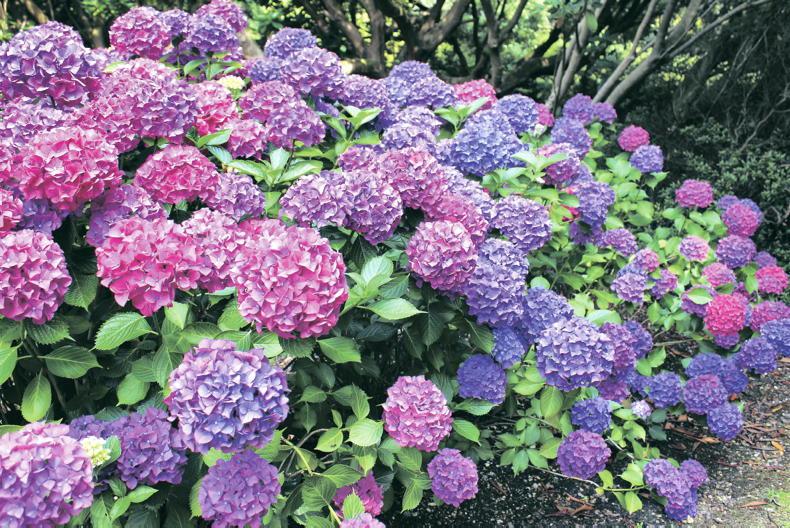
Many years ago, in my home garden we grew a magnificent pink hydrangea. We weren’t the only ones. The same plant grew in quite a few other gardens too. The popularity of the plant was such that cuttings were passed between families and friends. I believe that plant was Hydrangea macrophylla ‘Hamburg’ with its wonderful pink mop head flowers. Hydrangea has featured in Irish gardens for many years.
An interesting feature of the plant is that it was an indicator of soil type – on limey soil it was pink in colour and on peaty acid soil it was blue. All part of its charm.
Hydrangea macrophylla comes in two forms Hortensia or Mophead, and Lacecap. The Mophead type forms a ball of mainly sterile flowers while Lacecap have a flat ring of sterile flowers around a centre of fertile florets. H. macrophylla ‘Altona’ has rich pink sterile florets turning green, and later in the season taking on a russet autumn colour. It becomes a good blue colour in acid soils.
H. macrophylla ‘Madame Emile Moulliere’ is a very old white variety. It is a beautiful plant and grows well in pots and containers. Interestingly, white mophead hydrangeas retain their colour regardless of soil type.
H. macrophylla ‘Choco-Chic’ is a Lacecap type with white sterile florets encircling a centre of white fertile florets. It is a small plant growing to 1m with dark chocolate, almost black stems.
You cannot but be impressed with Hydrangea macrophylla ‘Runaway Bride’. It forms a shrub up to 1.2m in height and has a long flowering season with white lacecap flowers that age to a dusky pink colour. It gets its name from its flowing flowers which brings to mind a runaway bride.
Hydrangea paniculata edges into my favourite group of hydrangeas. It is an evolving performance through mid-summer into autumn with flowers that change colour over the period. The flower shape is different too being cone shaped, almost resembling an ice-cream cone. H. paniculata ‘Limelight’ is a large shrub growing to over 1.8m with flowers that emerge with a lime-green tinge, evolving into creamy-white and later in autumn to blush-pink. It is a non-stop show of colour.
H. paniculata ‘Vanille Fraise’ performs in the same way, but the flowers open white, changing to strawberry pink, then to raspberry-red in autumn.
Beautiful varieties
Hydrangea arborescens ‘Annabelle’ has an impressively large flower achieving 30cm across. It opens white with a tinge of green, eventually turning pure white. Then after summer it adopts a tan colour as it enters the autumn period. It grows to a height of 1.8m, and is truly beautiful. Of lesser stature is H. arborescens ‘Ruby Annabelle’ which is suitable for the smaller garden, growing to 1m and a similar width. The flower opens a silver pink colour edged ruby red, again growing to 30cm across.
Hydrangea quercifolia, commonly known as the oak-leaved hydrangea, is an oddity in so far as the foliage confuses and few would instantly consider it to be a hydrangea. In fact, one of its charms is the foliage as it is decorative and also produces magnificent autumn colours. The white flower is cone shaped.
Hydrangea petiolaris is a climbing hydrangea that is self-supporting, attaching itself to walls, trees and fences. It uses little rootlets which hold it in place. It also flowers producing lacecap flowers creating a beautiful vertical display. It will grow on north facing walls which are often difficult to cater for in terms of what will grow there.
Cultivation
Hydrangeas need good soil preparation before planting. They benefit from incorporating well-rotted compost of manure into the planting area and need constant monitoring during dry weather as they are prone to wilting.
Plant in an area where they will get morning sun and afternoon shade. Pruning is key and specific to the particular types. On mophead and lacecap types which flower on old wood, prune old flower heads back to fat buds after last frosts have passed. Paniculata types flower on new wood so prune to whatever shape you want to encourage new growth.
Mophead hydrangeas are greatly valued by flower arrangers especially for Christmas decoration. The heads are collected during dry weather and suspended upside sown in a dry shed. Flower arrangers choose to spray the dried flowers heads in silver and gold to brighten their Christmas displays.
Q&A: How can I improve my sweet peas?

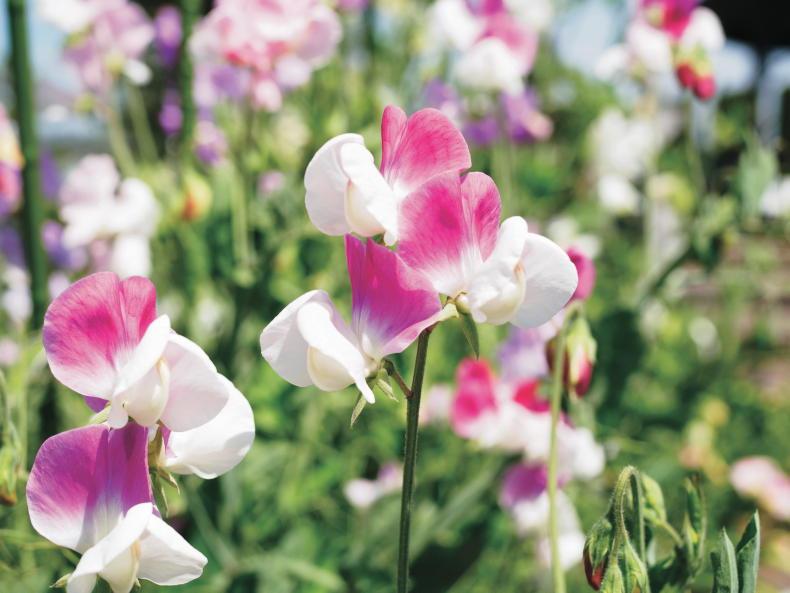
Cut sweet peas often and use them indoors. \iStock
It is our first attempt at growing sweet peas. We got lots of flowers, but all we have now are tiny pea pods. Where did we go wrong? Ann, Rathfarnham, Dublin.
Sweet peas grow best when they are harvested regularly as cut flowers. When they produce seed pods, they stop flowering. Remove all seed pods now and feed with tomato fertiliser.
When more seed pods appear, remove them also. That will keep them flowering consistently. A better plan is to cut your sweet peas often and use them indoors as cut flowers and enjoy the wonderful fragrance.
Sweet peas need full sun, and sturdy structures to grow up, so pick your site with this in mind.
Roses: Continue with dead-heading
and encouraging new flowers. Lightly prune and tie-in any wayward shoots of climbing roses finished flowering.
Cuttings: Cuttings can be taken now of
many woody shrubs such as lavender, rosemary, philadelphus, etc.
Vegetables: Cut back summer fruiting raspberries to encourage new canes. Harvest tomatoes and courgettes. Lift onions and shallots and store as soon as foliage dies back.
Bedding plants: Now is a good time to sow wallflowers for next spring’s bedding.
Sow in a patch of ground or in seed trays, potting them up when they germinate.
Many years ago, in my home garden we grew a magnificent pink hydrangea. We weren’t the only ones. The same plant grew in quite a few other gardens too. The popularity of the plant was such that cuttings were passed between families and friends. I believe that plant was Hydrangea macrophylla ‘Hamburg’ with its wonderful pink mop head flowers. Hydrangea has featured in Irish gardens for many years.
An interesting feature of the plant is that it was an indicator of soil type – on limey soil it was pink in colour and on peaty acid soil it was blue. All part of its charm.
Hydrangea macrophylla comes in two forms Hortensia or Mophead, and Lacecap. The Mophead type forms a ball of mainly sterile flowers while Lacecap have a flat ring of sterile flowers around a centre of fertile florets. H. macrophylla ‘Altona’ has rich pink sterile florets turning green, and later in the season taking on a russet autumn colour. It becomes a good blue colour in acid soils.
H. macrophylla ‘Madame Emile Moulliere’ is a very old white variety. It is a beautiful plant and grows well in pots and containers. Interestingly, white mophead hydrangeas retain their colour regardless of soil type.
H. macrophylla ‘Choco-Chic’ is a Lacecap type with white sterile florets encircling a centre of white fertile florets. It is a small plant growing to 1m with dark chocolate, almost black stems.
You cannot but be impressed with Hydrangea macrophylla ‘Runaway Bride’. It forms a shrub up to 1.2m in height and has a long flowering season with white lacecap flowers that age to a dusky pink colour. It gets its name from its flowing flowers which brings to mind a runaway bride.
Hydrangea paniculata edges into my favourite group of hydrangeas. It is an evolving performance through mid-summer into autumn with flowers that change colour over the period. The flower shape is different too being cone shaped, almost resembling an ice-cream cone. H. paniculata ‘Limelight’ is a large shrub growing to over 1.8m with flowers that emerge with a lime-green tinge, evolving into creamy-white and later in autumn to blush-pink. It is a non-stop show of colour.
H. paniculata ‘Vanille Fraise’ performs in the same way, but the flowers open white, changing to strawberry pink, then to raspberry-red in autumn.
Beautiful varieties
Hydrangea arborescens ‘Annabelle’ has an impressively large flower achieving 30cm across. It opens white with a tinge of green, eventually turning pure white. Then after summer it adopts a tan colour as it enters the autumn period. It grows to a height of 1.8m, and is truly beautiful. Of lesser stature is H. arborescens ‘Ruby Annabelle’ which is suitable for the smaller garden, growing to 1m and a similar width. The flower opens a silver pink colour edged ruby red, again growing to 30cm across.
Hydrangea quercifolia, commonly known as the oak-leaved hydrangea, is an oddity in so far as the foliage confuses and few would instantly consider it to be a hydrangea. In fact, one of its charms is the foliage as it is decorative and also produces magnificent autumn colours. The white flower is cone shaped.
Hydrangea petiolaris is a climbing hydrangea that is self-supporting, attaching itself to walls, trees and fences. It uses little rootlets which hold it in place. It also flowers producing lacecap flowers creating a beautiful vertical display. It will grow on north facing walls which are often difficult to cater for in terms of what will grow there.
Cultivation
Hydrangeas need good soil preparation before planting. They benefit from incorporating well-rotted compost of manure into the planting area and need constant monitoring during dry weather as they are prone to wilting.
Plant in an area where they will get morning sun and afternoon shade. Pruning is key and specific to the particular types. On mophead and lacecap types which flower on old wood, prune old flower heads back to fat buds after last frosts have passed. Paniculata types flower on new wood so prune to whatever shape you want to encourage new growth.
Mophead hydrangeas are greatly valued by flower arrangers especially for Christmas decoration. The heads are collected during dry weather and suspended upside sown in a dry shed. Flower arrangers choose to spray the dried flowers heads in silver and gold to brighten their Christmas displays.
Q&A: How can I improve my sweet peas?

Cut sweet peas often and use them indoors. \iStock
It is our first attempt at growing sweet peas. We got lots of flowers, but all we have now are tiny pea pods. Where did we go wrong? Ann, Rathfarnham, Dublin.
Sweet peas grow best when they are harvested regularly as cut flowers. When they produce seed pods, they stop flowering. Remove all seed pods now and feed with tomato fertiliser.
When more seed pods appear, remove them also. That will keep them flowering consistently. A better plan is to cut your sweet peas often and use them indoors as cut flowers and enjoy the wonderful fragrance.
Sweet peas need full sun, and sturdy structures to grow up, so pick your site with this in mind.
Roses: Continue with dead-heading
and encouraging new flowers. Lightly prune and tie-in any wayward shoots of climbing roses finished flowering.
Cuttings: Cuttings can be taken now of
many woody shrubs such as lavender, rosemary, philadelphus, etc.
Vegetables: Cut back summer fruiting raspberries to encourage new canes. Harvest tomatoes and courgettes. Lift onions and shallots and store as soon as foliage dies back.
Bedding plants: Now is a good time to sow wallflowers for next spring’s bedding.
Sow in a patch of ground or in seed trays, potting them up when they germinate.
SHARING OPTIONS