‘In meadows wide where breezes play, a thousand daisies greet the day, with golden hearts and petals bright, they chase the sun from morn to night...” – so begins the poem, evoking the gentle charm of this delicate flower.
Asteraceae, commonly known as the daisy plant family, is one of the largest with over 20,000 species. Their distinguishing feature is the flower, comprising of ray florets which are the outer showy ring of petals and a centre filled with tiny disc florets, which are the real flowers. Some however, do not have ray florets relying only on the disc florets.
We are all familiar with the common daisy, Bellis perennis of the field and garden and the daisy chains of children’s joy. The next time you see a daisy look at it closely and you will see the distinct difference. The white outer ring of petals is there to guide bees to the yellow flower centre.
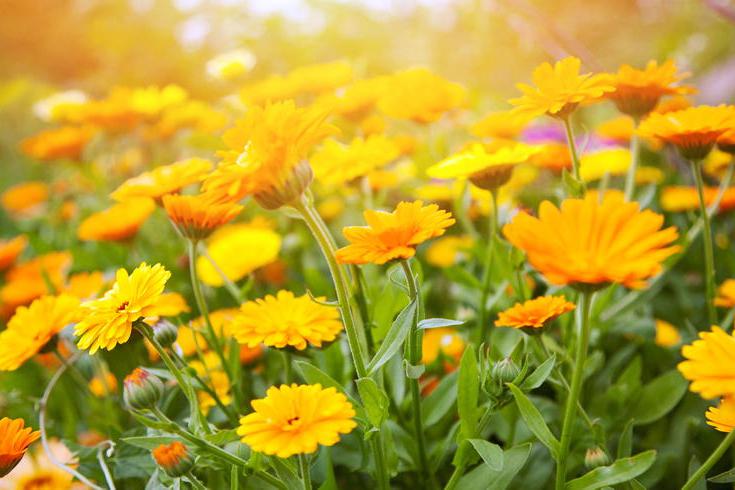
Calendula officinalis, commonly known as the Pot Marigold, with all its cultivars in various colours, is the epitome of summer. They are perfect for getting children interested in gardening, easily grown from seed and quick to flower once germinated. Another low growing example is Erigeron ‘Schneewittchen’, it has what I describe a loose shaggy white outer petals which are its main attraction. It is low growing and suitable for spilling out on to garden paths. Conversely, Helianthus annuus is the sunflower and can become the giant of the daisy family reaching 4m. It is a source of good summer fun for all, especially children.
Aster as we know it, has now been renamed Symphyotrichum, so look out for that on labels. However, some have remained such as Aster x frikartii ‘Monch’. It is well worth growing for its light blue flowers with yellow centres flowering from late summer into autumn. Its grey-green foliage, gives an airy feel to it. It grows to 70cm forming a loose clump. If planted among other perennials, it does not need staking.
Symphyotrichum laeve ‘Orpheus’ is taller growing to 1.5m with good dark green foliage. The flowers are lavender blue produced in abundance in autumn. It only needs staking in windy situations. Symphyotrichum ‘Little Carlow’ is an Irish cultivar discovered in Daisy Hill Nursery, Co Down. It is smaller, growing to 1.2m with lavender-blue flowers.
Rudbeckia laciniata ‘Herbstonne’ is a burst of sunshine when in flower – the yellow ray petals dominate the flower as they droop gracefully. As it grows to over 2m, it is a back of the border plant giving a profusion of flower in autumn. It does need staking for best effect.
Glowing embers
Nothing highlights late summer like Helenium ‘Moerheim Beauty’ growing to a height of 1m with its coppery red flowers like the glowing embers of a fire. Helenium ‘Butterpat’ is of similar height with rich yellow flowers held in profusion from early in the summer season.
Achillea filipendulina ‘Gold Plate’ has rich yellow flowers held in flat heads amplifying summer sunshine. The flowers are not typically daisy-like as they have no ray florets around the edges, comprised only of disc florets. Growing to 1.2m, the feathery foliage is grey green. All parts of the plant have an earthy smell, said to repel deer.
At first glance, we may not consider dahlia being daisy-like with its large blousy flowers. However, if you look at what we call the single-flowered dahlias you will see disc and ray florets and that is the key. Dahlia ‘Bishop of Llandaff’ is one example with its scarlet-red flowers held above dark purple foliage – a beautiful long flowering plant for the border. Another dahlia worth seeking out is Dahlia merckii which is a prolific flowerer beloved by bees.
There are some shrubs too that are members of the daisy family, in fact one has the common name Daisy Bush, it is Olearia macrodonta. Its foliage is grey-green and holly like.
The white flowers are produced in profusion during the summer months. It is a large shrub that needs space, perfect for coastal gardens. It grows to over 2m in height, and given time it can grow higher. Lower growing to 1m is Euryops pectinatus with bright yellow daisy flowers held over rich green foliage. They flower for a long period over summer and into autumn.
The Asteraceae family is so diverse, there is something there to delight every gardener and bees too.
Seed collecting: Many early flowering annuals are now setting seed. Collect these and store in old envelopes, make sure to label them for scattering in the garden next year.
Deadheading: Continue removing spent flowers off all plants especially roses.This promotes further flowering.
Vegetables: Continue sowing lettuce, beetroot and radish, lift and use
early potatoes.
Bulbs: Although we are still
contemplating summer, you need to
consider your spring bulb planting scheme and get your orders in.
Q&A: How to manage drought conditions?
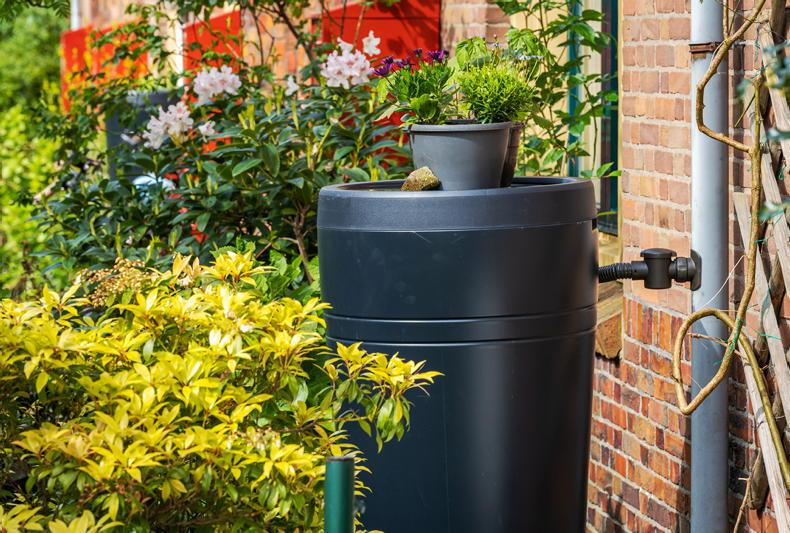
Store as much rainwater as possible. \iStock
My garden is a sorry state after the recent spell of good weather. What are the best drought-tolerant plants? – Angela, Co Carlow.
It is certainly a challenge when sunny weather arrives for an extended period. The answer lies in ground preparation in winter, applying a thick layer of mulch to retain water.
Plants that manage particularly well are Nepeta ‘Six Hills Giant’, Lavandula angustifolia ‘Hidcote’, Santolina chamaecyparissus, Anthemis tinctoria ´Hollandaise Sauce’ Caryopteris clandonensis, Agapanthus (any variety), Artemisia ‘Powys Castle’ Cistus x lenis ‘Grayswood Pink’, Dimorphotheca (all varieties), Geranium x oxonianum ‘Wargrave Pink’, Helleborus corsicus, and Stachys byzanthina ‘Silver Carpet’. I also advise gardeners to harvest and store as much rainwater as possible in water butts for use during dry weather.
‘In meadows wide where breezes play, a thousand daisies greet the day, with golden hearts and petals bright, they chase the sun from morn to night...” – so begins the poem, evoking the gentle charm of this delicate flower.
Asteraceae, commonly known as the daisy plant family, is one of the largest with over 20,000 species. Their distinguishing feature is the flower, comprising of ray florets which are the outer showy ring of petals and a centre filled with tiny disc florets, which are the real flowers. Some however, do not have ray florets relying only on the disc florets.
We are all familiar with the common daisy, Bellis perennis of the field and garden and the daisy chains of children’s joy. The next time you see a daisy look at it closely and you will see the distinct difference. The white outer ring of petals is there to guide bees to the yellow flower centre.
Calendula officinalis, commonly known as the Pot Marigold, with all its cultivars in various colours, is the epitome of summer. They are perfect for getting children interested in gardening, easily grown from seed and quick to flower once germinated. Another low growing example is Erigeron ‘Schneewittchen’, it has what I describe a loose shaggy white outer petals which are its main attraction. It is low growing and suitable for spilling out on to garden paths. Conversely, Helianthus annuus is the sunflower and can become the giant of the daisy family reaching 4m. It is a source of good summer fun for all, especially children.
Aster as we know it, has now been renamed Symphyotrichum, so look out for that on labels. However, some have remained such as Aster x frikartii ‘Monch’. It is well worth growing for its light blue flowers with yellow centres flowering from late summer into autumn. Its grey-green foliage, gives an airy feel to it. It grows to 70cm forming a loose clump. If planted among other perennials, it does not need staking.
Symphyotrichum laeve ‘Orpheus’ is taller growing to 1.5m with good dark green foliage. The flowers are lavender blue produced in abundance in autumn. It only needs staking in windy situations. Symphyotrichum ‘Little Carlow’ is an Irish cultivar discovered in Daisy Hill Nursery, Co Down. It is smaller, growing to 1.2m with lavender-blue flowers.
Rudbeckia laciniata ‘Herbstonne’ is a burst of sunshine when in flower – the yellow ray petals dominate the flower as they droop gracefully. As it grows to over 2m, it is a back of the border plant giving a profusion of flower in autumn. It does need staking for best effect.
Glowing embers
Nothing highlights late summer like Helenium ‘Moerheim Beauty’ growing to a height of 1m with its coppery red flowers like the glowing embers of a fire. Helenium ‘Butterpat’ is of similar height with rich yellow flowers held in profusion from early in the summer season.
Achillea filipendulina ‘Gold Plate’ has rich yellow flowers held in flat heads amplifying summer sunshine. The flowers are not typically daisy-like as they have no ray florets around the edges, comprised only of disc florets. Growing to 1.2m, the feathery foliage is grey green. All parts of the plant have an earthy smell, said to repel deer.
At first glance, we may not consider dahlia being daisy-like with its large blousy flowers. However, if you look at what we call the single-flowered dahlias you will see disc and ray florets and that is the key. Dahlia ‘Bishop of Llandaff’ is one example with its scarlet-red flowers held above dark purple foliage – a beautiful long flowering plant for the border. Another dahlia worth seeking out is Dahlia merckii which is a prolific flowerer beloved by bees.
There are some shrubs too that are members of the daisy family, in fact one has the common name Daisy Bush, it is Olearia macrodonta. Its foliage is grey-green and holly like.
The white flowers are produced in profusion during the summer months. It is a large shrub that needs space, perfect for coastal gardens. It grows to over 2m in height, and given time it can grow higher. Lower growing to 1m is Euryops pectinatus with bright yellow daisy flowers held over rich green foliage. They flower for a long period over summer and into autumn.
The Asteraceae family is so diverse, there is something there to delight every gardener and bees too.
Seed collecting: Many early flowering annuals are now setting seed. Collect these and store in old envelopes, make sure to label them for scattering in the garden next year.
Deadheading: Continue removing spent flowers off all plants especially roses.This promotes further flowering.
Vegetables: Continue sowing lettuce, beetroot and radish, lift and use
early potatoes.
Bulbs: Although we are still
contemplating summer, you need to
consider your spring bulb planting scheme and get your orders in.
Q&A: How to manage drought conditions?
Store as much rainwater as possible. \iStock
My garden is a sorry state after the recent spell of good weather. What are the best drought-tolerant plants? – Angela, Co Carlow.
It is certainly a challenge when sunny weather arrives for an extended period. The answer lies in ground preparation in winter, applying a thick layer of mulch to retain water.
Plants that manage particularly well are Nepeta ‘Six Hills Giant’, Lavandula angustifolia ‘Hidcote’, Santolina chamaecyparissus, Anthemis tinctoria ´Hollandaise Sauce’ Caryopteris clandonensis, Agapanthus (any variety), Artemisia ‘Powys Castle’ Cistus x lenis ‘Grayswood Pink’, Dimorphotheca (all varieties), Geranium x oxonianum ‘Wargrave Pink’, Helleborus corsicus, and Stachys byzanthina ‘Silver Carpet’. I also advise gardeners to harvest and store as much rainwater as possible in water butts for use during dry weather.





SHARING OPTIONS