Christmas is the season to be jolly or so the song goes – family and friends call by and presents are exchanged. Sometimes these gifts include a plant for your home and we need to consider how to care for it.
Garden centres and plant outlets are set ablaze with colour at the moment, with wonderful plants available for the Christmas season. Much skill and dedication is involved in the production of these plants and we must do our best to make them feel at home. Sometimes I’ve seen perfectly good plants discarded with the Christmas decorations and that is such a shame.
We maintain our homes as comfortably as we can and sometimes it may not suit the indoor plants we grow. It’s important to carefully assess their needs from information on the label. If this isn’t present, do research how to care for it best.
Euphorbia pulcherrima commonly known as the poinsettia is probably the most common Christmas house plant we grow. It is as synonymous with Christmas as the Christmas tree. It has bright red, sometimes pink coloured bracts.
These are modified leaves to attract pollinators, and the flowers are the tiny yellow florets in the centre. Some gardeners can maintain the plant after flowering and it does form an evergreen shrubby plant, however, it is unlikely the red bracts will be produced again. All Euphorbias produce a milky sap which can cause skin irritation, so care is needed.
The Christmas Cactus Schlumbergera x buckleyi has been grown for a long time in homes. Its low arching stems carry bright, scarlet-pink flowers at their tips and is easily managed. It can be maintained as a house plant throughout the year. Place it in a bright area and keep it moist over the spring and summer. When autumn arrives gradually move it to heavier shade as this promotes flowering.
Solanum capsicastrum commonly known as Christmas Cherry is very distinct in that what we see are its fruit at this time as opposed to flowers. They are very decorative and fit in well with Christmas decorations, having red bauble-shaped fruits. It can be maintained as a shrubby plant after Christmas by feeding and watering it.
Over the summer place it outdoors and flowering will occur followed by the production of green berries which will turn red for the Christmas period. However a word of warning; the berries are toxic, so I advise not to place them in your display where young inquisitive children can get at them.
Flowering period
Cyclamen now seem to be available throughout the year in a wide range of colours. The plant that really features at Christmas time is the larger flowered Cyclamen persicum. It has larger flowers and foliage and this is a plant for the long-term. They have a distinctive scent that I love and the flowers are held above green leaves mottled with grey.
Place on a north-facing windowsill and away from any direct heat. The cooler they are grown, the longer the flowering period. Leave it to dry out slowly after flowering and place the pot on its side in a frost free shed or conservatory.
Repot it around midsummer and it will start back into growth and flower again the following Christmas. Phalaenopsis, commonly known as moth orchids are very common nowadays on shopping centre shelves and are a wonderful addition to the Christmas sideboard with their exotic flowers in a variety of shades. It is one of the easiest orchids to grow, once placed on an east-facing window.
The soil, which is usually bark mulch and moss, should be kept moist and not soggy. Once flowering is finished, cut back the stem to where you find nodes or nodules, as these may produce more flowers.
Watering is always a conundrum, too much is as disastrous as too little. You need to get to know your plants and watch when wilting takes place, which could be as much from overwatering as underwatering.
One very simple tip is if the compost feels warm to your touch it more then likely needs water, if it is cooler it is probably fine. While it is alright to use plant trays under pots to protect surfaces, never allow water to stand there for too long.
Q&A: Should I plant a climbing tree?
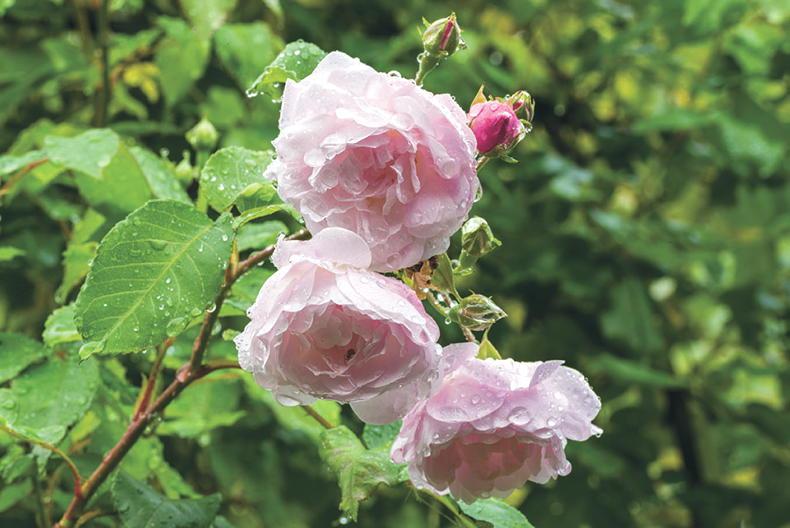
Blush Noisette, mirror the flowering of the Bramley tree. \iStock
My Bramley tree is dead. It is of sentimental value and I want to keep its presence. What do you suggest as a climber? – Kathleen, Clonmel.
What a lovely idea, Bramley apple trees featured in many old gardens. Firstly, make sure that the tree is not diseased at its base with no rot there.
My suggestion is to plant a climbing rose, something like Blush Noisette, or Compassion, Madame Alfred Carriere or Kathleen Harrop. All these are a shade of pink to mirror the flowering of the Bramley. They are repeat flowering as well. Move back from the base of the tree about 600mm and create a good planting hole. Wrap some chicken wire around the base of the tree to get it on its way.
Tender Plants: Check all tender plants outdoors especially ones you have wrapped. Make sure there is no rot present.
Greenhouse: Check all plants for disease, ventilate on bright sunny days for brief periods. Check watering, plants can still dry out.
Maintenance: Keep paths and patios clear of debris, scrub areas with moss or slime.
Pots and Planters: Lightly aerate surface of all planters, remove emerging weeds. Bulbs will soon be starting into growth.
Pruning: Examine trees and shrubs for cutting back or removing overgrowth. With larger trees – get professional help.
Do you have a gardening question? Email
icl@farmersjournal.ie or post to Irish Country Living, Irish Farm Centre, Bluebell, Dublin 12.
Christmas is the season to be jolly or so the song goes – family and friends call by and presents are exchanged. Sometimes these gifts include a plant for your home and we need to consider how to care for it.
Garden centres and plant outlets are set ablaze with colour at the moment, with wonderful plants available for the Christmas season. Much skill and dedication is involved in the production of these plants and we must do our best to make them feel at home. Sometimes I’ve seen perfectly good plants discarded with the Christmas decorations and that is such a shame.
We maintain our homes as comfortably as we can and sometimes it may not suit the indoor plants we grow. It’s important to carefully assess their needs from information on the label. If this isn’t present, do research how to care for it best.
Euphorbia pulcherrima commonly known as the poinsettia is probably the most common Christmas house plant we grow. It is as synonymous with Christmas as the Christmas tree. It has bright red, sometimes pink coloured bracts.
These are modified leaves to attract pollinators, and the flowers are the tiny yellow florets in the centre. Some gardeners can maintain the plant after flowering and it does form an evergreen shrubby plant, however, it is unlikely the red bracts will be produced again. All Euphorbias produce a milky sap which can cause skin irritation, so care is needed.
The Christmas Cactus Schlumbergera x buckleyi has been grown for a long time in homes. Its low arching stems carry bright, scarlet-pink flowers at their tips and is easily managed. It can be maintained as a house plant throughout the year. Place it in a bright area and keep it moist over the spring and summer. When autumn arrives gradually move it to heavier shade as this promotes flowering.
Solanum capsicastrum commonly known as Christmas Cherry is very distinct in that what we see are its fruit at this time as opposed to flowers. They are very decorative and fit in well with Christmas decorations, having red bauble-shaped fruits. It can be maintained as a shrubby plant after Christmas by feeding and watering it.
Over the summer place it outdoors and flowering will occur followed by the production of green berries which will turn red for the Christmas period. However a word of warning; the berries are toxic, so I advise not to place them in your display where young inquisitive children can get at them.
Flowering period
Cyclamen now seem to be available throughout the year in a wide range of colours. The plant that really features at Christmas time is the larger flowered Cyclamen persicum. It has larger flowers and foliage and this is a plant for the long-term. They have a distinctive scent that I love and the flowers are held above green leaves mottled with grey.
Place on a north-facing windowsill and away from any direct heat. The cooler they are grown, the longer the flowering period. Leave it to dry out slowly after flowering and place the pot on its side in a frost free shed or conservatory.
Repot it around midsummer and it will start back into growth and flower again the following Christmas. Phalaenopsis, commonly known as moth orchids are very common nowadays on shopping centre shelves and are a wonderful addition to the Christmas sideboard with their exotic flowers in a variety of shades. It is one of the easiest orchids to grow, once placed on an east-facing window.
The soil, which is usually bark mulch and moss, should be kept moist and not soggy. Once flowering is finished, cut back the stem to where you find nodes or nodules, as these may produce more flowers.
Watering is always a conundrum, too much is as disastrous as too little. You need to get to know your plants and watch when wilting takes place, which could be as much from overwatering as underwatering.
One very simple tip is if the compost feels warm to your touch it more then likely needs water, if it is cooler it is probably fine. While it is alright to use plant trays under pots to protect surfaces, never allow water to stand there for too long.
Q&A: Should I plant a climbing tree?
Blush Noisette, mirror the flowering of the Bramley tree. \iStock
My Bramley tree is dead. It is of sentimental value and I want to keep its presence. What do you suggest as a climber? – Kathleen, Clonmel.
What a lovely idea, Bramley apple trees featured in many old gardens. Firstly, make sure that the tree is not diseased at its base with no rot there.
My suggestion is to plant a climbing rose, something like Blush Noisette, or Compassion, Madame Alfred Carriere or Kathleen Harrop. All these are a shade of pink to mirror the flowering of the Bramley. They are repeat flowering as well. Move back from the base of the tree about 600mm and create a good planting hole. Wrap some chicken wire around the base of the tree to get it on its way.
Tender Plants: Check all tender plants outdoors especially ones you have wrapped. Make sure there is no rot present.
Greenhouse: Check all plants for disease, ventilate on bright sunny days for brief periods. Check watering, plants can still dry out.
Maintenance: Keep paths and patios clear of debris, scrub areas with moss or slime.
Pots and Planters: Lightly aerate surface of all planters, remove emerging weeds. Bulbs will soon be starting into growth.
Pruning: Examine trees and shrubs for cutting back or removing overgrowth. With larger trees – get professional help.
Do you have a gardening question? Email
icl@farmersjournal.ie or post to Irish Country Living, Irish Farm Centre, Bluebell, Dublin 12.






SHARING OPTIONS