


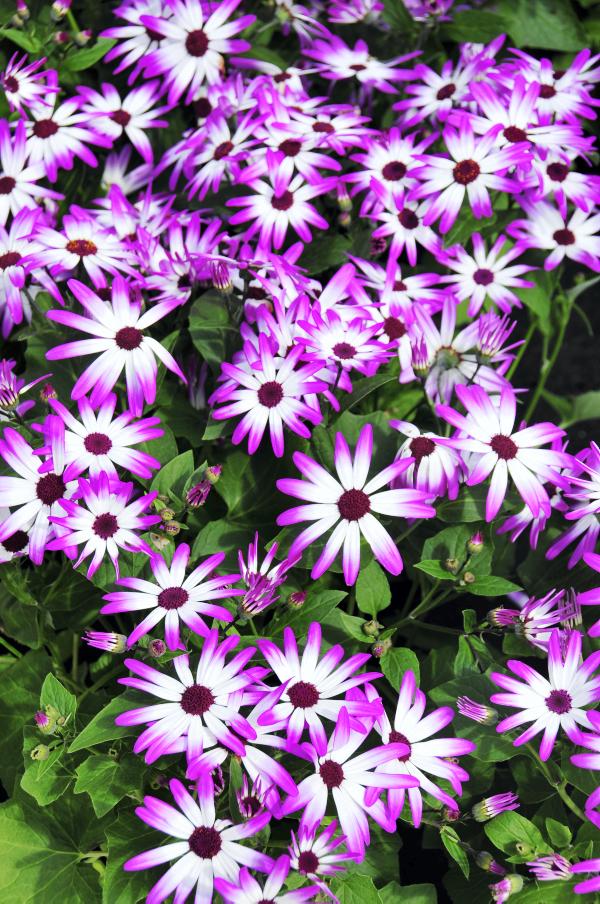
Every year about now, the brilliant flowers of Senetti cinerarias appear in containers and gardens, and are on large display in garden centres. This is a new hybrid form called Senetti pericallis and it has proved very popular as it is a very striking plant, larger than the traditional forms with a more open and larger head of bigger flowers.
Pericallis is the correct name for cineraria, which is also sometimes called senecio. This is a sizeable plant for a cineraria with a large open head of flowers. These are large daisy-type flowers, usually in shades of purple, blue, violet, pink, magenta and indigo. The intensity of the colour is extremely rich. There are versions with flowers banded with white – very eye-catching.
Senetti can be used in containers outdoors from May in a sheltered spot and when frost has passed. Lots of them are used outdoors during these weeks and seem to get by but a severe frost on fresh, unhardened plants can cause damage. This new hybrid lasts well in flower, especially if the spent flowers are deadheaded. It is a perennial, raised from cuttings, and, in theory, can be overwintered in a frost-protected greenhouse or conservatory but usually this plant is treated as an annual, and it is not easy to overwinter.
The older forms of cineraria or pericallis are also offered for sale, more for indoor use. These are smaller in size with a tighter rounded head of smaller flowers. Their colour range is greater that Senetti, with more pink and red shades as well as the purple and blues. While it is feasible to keep the old-fashioned cineraria going for a second year, it needs a good deal of skill with watering and feeding, and more often than not it succumbs to greenfly or root rot. The plants do not flower as well as the first time because the vigour is lost and the second-year flowers are much smaller. Both the older and new Senetti are best treated as a temporary colourful house plant, or outdoor container plant, much like a bunch of cut flowers.
You will get a longer flower period out of this plant if it is not infested by greenflies. Before buying, check the lowest leaves to see that it does not already have greenflies. Within a week or so, in a heated room, the numbers of insects build up on the leaves and flowers. When that happens, the flowers go over very quickly and the whole plant may collapse. Root rot or stem rot can invade the stem at the level of the compost and the whole top of the plant may fall off within a week or 10 days. Or the plant wilts suddenly. Look for signs of brown rot at the base of the stem before you buy. But do not let these problems put you off this lovely plant.
The older kinds of cineraria are quite easy to grow from seeds sown in May or June in a greenhouse or conservatory. Prick out the seedlings into seed trays, and then into individual small pots when they are about five or six centimetres tall. Late in summer move them into somewhat larger pots to grow on to flowering. During the growing season, keep the compost just moist but never wet, which is the cause of root rot. Feed every two weeks or so with a liquid feed to maintain vigorous growth. Watch closely for greenflies and control them if necessary. Increase the spacing of the plants as they grow, so there is plenty of air passing through to prevent rotting. The Senetti hybrid is not available as seed to home growers as it is a patented plant.
Hostas in danger
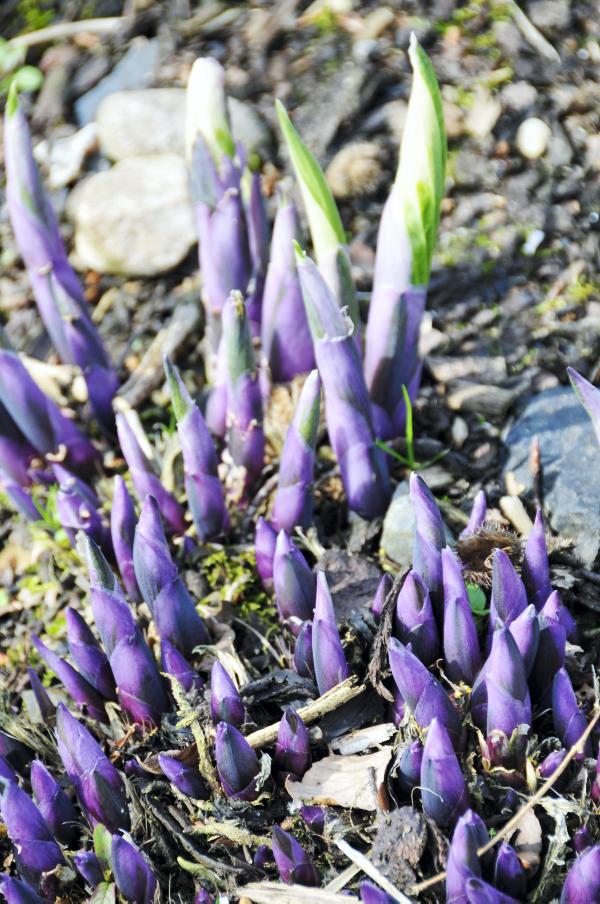
Anybody who has ever grown hostas for their magnificent foliage will know what damage slugs and snails can wreak on leaves, cutting them into a lace filigree of holes. Much of this damage is done in these few weeks as the new leaves are expanding from the buds. The snails are ravenous after winter and have a high requirement for food to facilitate egg-laying.
There are various ways to deter slugs and snails: orange rind halves, eggshells, pine needles, and some people pick the culprits off at night. Others use pellets, both organic, based on iron salts, and inorganic based on methaldehyde. Whichever method is chosen, it is essential that it is applied before the damage is done.
Fruit, veg and herbs
Seeds sown in good weather in recent weeks need thinning. It is always best to thin early so that the seedlings do not weaken each other. The normal sprays for apple scab should be kept up, especially following wet weather.
Flowers
It will soon be time to plant up containers. Assess the stock of pots you have, buy more if necessary, and compost, and plan the planting scheme. As spring flowers fade on bulbs, resist the temptation to cut away the foliage.
Trees, shrubs and roses
All young trees should be checked for water shortage in any dry spell. Drought can occur even with plenty of rain as the soil does not re-wet quickly under trees. Control weeds and grass at the base of young trees. Spray roses if blackspot has been a problem.
Lawns
Most lawns have grown strongly in recent weeks and hungry grass will only grow poorly and looks pale. Feeding with a high-nitrogen fertilizer will bring it on but do not to put on too much.
Greenhouse
Ensure all bedding plants and tender vegetables for planting out at the end of May are growing well. Keep up watering and feed occasionally. Space the pots adequately. If possible, plant out tomatoes now in the greenhouse.


SHARING OPTIONS