

Around 1.7% of the Irish population has coeliac disease, an autoimmune disease where the body’s immune system reacts to gluten, a protein found in wheat, barley and rye.
The Coeliac Society of Ireland cautions that 1.7% could be a conservative figure, estimating that 78,000 people in Ireland are living with the condition without knowing it.
This month of May is Coeliac Awareness Month and the Coeliac Society of Ireland is urging people not to ignore persistent symptoms. These range from digestive issues to less obvious signs such as chronic fatigue, mouth ulcers and brain fog.
Due to their wide-ranging nature, coeliac disease can be confused with other conditions like irritable bowel syndrome or lactose intolerance.
Sarah Keogh is the in-house dietician for the Coeliac Society of Ireland, and she wants the condition to be treated “more seriously”. Sarah cites Italy as a leading example of a European country addressing the prevalence of the condition.
The land of pizza and pasta is the first country in the world to mandate mass screening for coeliac disease for children under 18. Around 2.8% of children were diagnosed as coeliac, which is double the global average, suggesting that children elsewhere may be undiagnosed.
'Find it early'
“Right now, Italy are screening every single child for coeliac disease as we speak. They’re the first country that has said we have to stop pretending this is a rare disease or a minor disease. We really need to be finding this and finding it early.
“What’s happening in Ireland is we can’t get funding to do a proper screening and we need to be able to get the medical profession to take it more seriously.
“The problem is, because coeliac disease is treated by diet, it is seen as less of a condition. A condition that is treated by medicine is regarded as a real medical condition.”
One of the reasons why Sarah emphasises that coeliac disease should be diagnosed early is that “it causes stunted growth in children”. Poor growth is a common symptom of coeliac disease among children. She adds: “There’s actually a school of thought that everyone under 5’2 [in height] should be tested for coeliac disease. Really, that debate goes on.”
Undiagnosed coeliac disease
Sarah lists other potential complications of undiagnosed coeliac disease, including lower bone density “which sets them up for osteoporosis later on” as well as potential infertility in men and women.
Untreated or undiagnosed coeliac disease also increases the chance of miscarriage. “I’ve patients who had five or six miscarriages before anyone thought to actually check for coeliac disease.”
The average diagnosis time for coeliac disease in Ireland is between 10 and 14 years. One factor which can delay diagnosis is the perception that you have to be thin to be coeliac. “We are not seeing enough overweight people being diagnosed with coeliac disease. People think you have to be thin or you have to have lost weight. Only 13% of adults lose weight with coeliac disease,” Sarah says.
If treatment for coeliac disease was just about cutting out bread and pasta, as many believe it is, then it would be easy. The only treatment is a strict gluten-free diet.
“The problem is gluten triggers a full autoimmune reaction in the body. A really tiny amount of gluten triggers the whole reaction. If a 20 millionth of the food is gluten, that is enough to set off the autoimmune response,” Sarah explains.
“You need to have a butter dish that nobody else touches. You need a separate toaster. You can’t actually eat chips if they’ve been cooked in a fryer that previously cooked onion rings or chicken nuggets, because the oil is now full of gluten.”
Gluten-free diets started to emerge as a trend in the late 2000s and mid 2010s, and while the gain in popularity resulted in a “huge increase in gluten-free foods available”, it also reinforced the idea that gluten-free is a ‘fad diet’, according to Sarah. “It means that even now, 10 years later, lots of people think that if you go into a restaurant and you’re saying, I need gluten-free, that it is a fad.”

Sarah Keogh is the in-house dietician for the Coeliac Society of Ireland.
That being said, restaurants in Ireland are becoming much more proficient in catering for coeliac diets. “We do catering training at the Coeliac Society, and we’ve loads of restaurants, hotels, convention centres that get us to come in and do detailed training. If you’re having a wedding, and if there’s coeliacs in the family, what they don’t need is everybody complaining the following day because they consumed gluten at the wedding.”
Chronic conditions
Last year, the University of Oxford published new research that uncovered the genetic relationship between autoimmune conditions and endometriosis. The study revealed that women with endometriosis were found to have a 30-80% increased risk of developing autoimmune diseases, including coeliac disease.
One woman who related to the key findings of the research was Doireann Barrett. The Kerry woman was diagnosed with coeliac disease in 2004 after “a lifetime of symptoms from an infant”. Within 12 months, Doireann was also diagnosed with endometriosis. She tells Irish Country Living that, growing up, it was “very hard to know” if her symptoms were related to coeliac disease or endometriosis because they share very similar symptoms, such as chronic pelvic pain, and bowel problems.
“I went very strict with gluten-free and it was very difficult to navigate, especially in the restaurants, because flour was added to everything, even soup.”
Doireann’s diagnoses have shaped her business and advocacy; she founded The Gluten Free Kitchen Company in 2011, and Cneasú, a community wellness and advocacy platform.
“My symptoms were actually getting worse with endometriosis and I was literally being sent from specialist to specialist. In the meantime, I had to reduce my working hours. Because I was cooking for myself, I went to the local enterprise board to see how I could expand on that, because I couldn’t actually access a social welfare benefit.
“Endometriosis and coeliac disease weren’t falling under any State benefit. So I started my own business, and that’s how The Gluten Free Kitchen Company started.”
Doireann has had 15 surgeries for endometriosis and publicly campaigned for the first National Endometriosis Framework that was introduced in Ireland at the end of last year.
She is also one of the first women to qualify for the Endometriosis Surgery Abroad Interim Scheme.
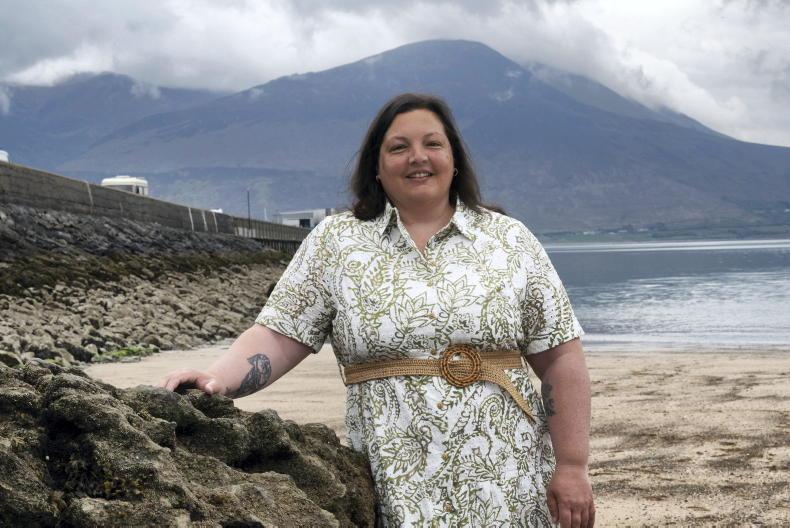
Doireann speaks to the links between chronic conditions, delayed diagnosis, and how this shaped her business and advocacy work. \ Domnick Walsh
Doireann is on a very strict gluten-free diet, and although the awareness of coeliac disease has increased over the years, she still can have a reaction “if I’ve eaten somewhere that is new”.
“We’re in 2026 and the legislation for allergens came in 2014 and I still walk into places and I’m horrified at how they’re defining their menus.
“I was in a place recently where they had GF written on two options on the whole menu. And when I queried it, because there were chips, they said it just depends if the oil is clean or not. That’s shocking. It’s 2026. And if you mention it, you’re [considered] a difficult customer.”
If you are experiencing symptoms and suspect you may have coeliac disease, you can request a screening (tTG-IgA) test through your doctor. This is a first step in screening for coeliac disease, and all adults should have a biopsy if they have a positive blood test.
See coeliac.ie and thegfkitchenco.ie
Coeliac disease is a lifelong autoimmune disease. The body’s reaction to gluten causes damage to the lining of the intestine, preventing the body from absorbing important nutrients. The condition affects around 85,000 Irish people or 1.7% of the population. Some 78,000 children and adults living with the condition in Ireland are undiagnosed. Untreated, coeliac disease can lead to complications like osteoporosis, infertility and increased risk of certain cancers. There are a wide range of symptoms associated with coeliac disease that affect different people in different ways. Symptoms can include mouth ulcers, crippling fatigue, stomach pain, bouts of diarrhoea and weight loss.If you are experiencing symptoms of coeliac disease, you can request a blood-based genetic test through your GP.
Around 1.7% of the Irish population has coeliac disease, an autoimmune disease where the body’s immune system reacts to gluten, a protein found in wheat, barley and rye.
The Coeliac Society of Ireland cautions that 1.7% could be a conservative figure, estimating that 78,000 people in Ireland are living with the condition without knowing it.
This month of May is Coeliac Awareness Month and the Coeliac Society of Ireland is urging people not to ignore persistent symptoms. These range from digestive issues to less obvious signs such as chronic fatigue, mouth ulcers and brain fog.
Due to their wide-ranging nature, coeliac disease can be confused with other conditions like irritable bowel syndrome or lactose intolerance.
Sarah Keogh is the in-house dietician for the Coeliac Society of Ireland, and she wants the condition to be treated “more seriously”. Sarah cites Italy as a leading example of a European country addressing the prevalence of the condition.
The land of pizza and pasta is the first country in the world to mandate mass screening for coeliac disease for children under 18. Around 2.8% of children were diagnosed as coeliac, which is double the global average, suggesting that children elsewhere may be undiagnosed.
'Find it early'
“Right now, Italy are screening every single child for coeliac disease as we speak. They’re the first country that has said we have to stop pretending this is a rare disease or a minor disease. We really need to be finding this and finding it early.
“What’s happening in Ireland is we can’t get funding to do a proper screening and we need to be able to get the medical profession to take it more seriously.
“The problem is, because coeliac disease is treated by diet, it is seen as less of a condition. A condition that is treated by medicine is regarded as a real medical condition.”
One of the reasons why Sarah emphasises that coeliac disease should be diagnosed early is that “it causes stunted growth in children”. Poor growth is a common symptom of coeliac disease among children. She adds: “There’s actually a school of thought that everyone under 5’2 [in height] should be tested for coeliac disease. Really, that debate goes on.”
Undiagnosed coeliac disease
Sarah lists other potential complications of undiagnosed coeliac disease, including lower bone density “which sets them up for osteoporosis later on” as well as potential infertility in men and women.
Untreated or undiagnosed coeliac disease also increases the chance of miscarriage. “I’ve patients who had five or six miscarriages before anyone thought to actually check for coeliac disease.”
The average diagnosis time for coeliac disease in Ireland is between 10 and 14 years. One factor which can delay diagnosis is the perception that you have to be thin to be coeliac. “We are not seeing enough overweight people being diagnosed with coeliac disease. People think you have to be thin or you have to have lost weight. Only 13% of adults lose weight with coeliac disease,” Sarah says.
If treatment for coeliac disease was just about cutting out bread and pasta, as many believe it is, then it would be easy. The only treatment is a strict gluten-free diet.
“The problem is gluten triggers a full autoimmune reaction in the body. A really tiny amount of gluten triggers the whole reaction. If a 20 millionth of the food is gluten, that is enough to set off the autoimmune response,” Sarah explains.
“You need to have a butter dish that nobody else touches. You need a separate toaster. You can’t actually eat chips if they’ve been cooked in a fryer that previously cooked onion rings or chicken nuggets, because the oil is now full of gluten.”
Gluten-free diets started to emerge as a trend in the late 2000s and mid 2010s, and while the gain in popularity resulted in a “huge increase in gluten-free foods available”, it also reinforced the idea that gluten-free is a ‘fad diet’, according to Sarah. “It means that even now, 10 years later, lots of people think that if you go into a restaurant and you’re saying, I need gluten-free, that it is a fad.”

Sarah Keogh is the in-house dietician for the Coeliac Society of Ireland.
That being said, restaurants in Ireland are becoming much more proficient in catering for coeliac diets. “We do catering training at the Coeliac Society, and we’ve loads of restaurants, hotels, convention centres that get us to come in and do detailed training. If you’re having a wedding, and if there’s coeliacs in the family, what they don’t need is everybody complaining the following day because they consumed gluten at the wedding.”
Chronic conditions
Last year, the University of Oxford published new research that uncovered the genetic relationship between autoimmune conditions and endometriosis. The study revealed that women with endometriosis were found to have a 30-80% increased risk of developing autoimmune diseases, including coeliac disease.
One woman who related to the key findings of the research was Doireann Barrett. The Kerry woman was diagnosed with coeliac disease in 2004 after “a lifetime of symptoms from an infant”. Within 12 months, Doireann was also diagnosed with endometriosis. She tells Irish Country Living that, growing up, it was “very hard to know” if her symptoms were related to coeliac disease or endometriosis because they share very similar symptoms, such as chronic pelvic pain, and bowel problems.
“I went very strict with gluten-free and it was very difficult to navigate, especially in the restaurants, because flour was added to everything, even soup.”
Doireann’s diagnoses have shaped her business and advocacy; she founded The Gluten Free Kitchen Company in 2011, and Cneasú, a community wellness and advocacy platform.
“My symptoms were actually getting worse with endometriosis and I was literally being sent from specialist to specialist. In the meantime, I had to reduce my working hours. Because I was cooking for myself, I went to the local enterprise board to see how I could expand on that, because I couldn’t actually access a social welfare benefit.
“Endometriosis and coeliac disease weren’t falling under any State benefit. So I started my own business, and that’s how The Gluten Free Kitchen Company started.”
Doireann has had 15 surgeries for endometriosis and publicly campaigned for the first National Endometriosis Framework that was introduced in Ireland at the end of last year.
She is also one of the first women to qualify for the Endometriosis Surgery Abroad Interim Scheme.

Doireann speaks to the links between chronic conditions, delayed diagnosis, and how this shaped her business and advocacy work. \ Domnick Walsh
Doireann is on a very strict gluten-free diet, and although the awareness of coeliac disease has increased over the years, she still can have a reaction “if I’ve eaten somewhere that is new”.
“We’re in 2026 and the legislation for allergens came in 2014 and I still walk into places and I’m horrified at how they’re defining their menus.
“I was in a place recently where they had GF written on two options on the whole menu. And when I queried it, because there were chips, they said it just depends if the oil is clean or not. That’s shocking. It’s 2026. And if you mention it, you’re [considered] a difficult customer.”
If you are experiencing symptoms and suspect you may have coeliac disease, you can request a screening (tTG-IgA) test through your doctor. This is a first step in screening for coeliac disease, and all adults should have a biopsy if they have a positive blood test.
See coeliac.ie and thegfkitchenco.ie
Coeliac disease is a lifelong autoimmune disease. The body’s reaction to gluten causes damage to the lining of the intestine, preventing the body from absorbing important nutrients. The condition affects around 85,000 Irish people or 1.7% of the population. Some 78,000 children and adults living with the condition in Ireland are undiagnosed. Untreated, coeliac disease can lead to complications like osteoporosis, infertility and increased risk of certain cancers. There are a wide range of symptoms associated with coeliac disease that affect different people in different ways. Symptoms can include mouth ulcers, crippling fatigue, stomach pain, bouts of diarrhoea and weight loss.If you are experiencing symptoms of coeliac disease, you can request a blood-based genetic test through your GP.
SHARING OPTIONS