


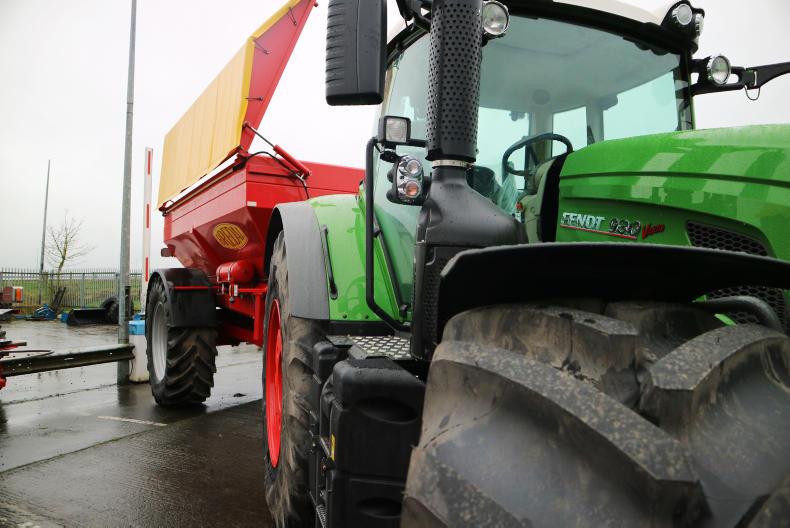
Bredal spreaders have a strong presence in the Irish contracting and large tillage sectors. The latest arrival to Bredal’s lineup is the F10 trailed spreader, a machine that is at the upper end of the market and comes with all the bells and whistles. This machine is similar to the ground-breaking F8 model but comes with far greater capacity. The tank size having gone from the F8’s 5,700l to 9,000l in the F10’s fully extended form.
One major change from previous models is that the F10 is fully controlled using a TeeJet system. This allows the machine to alter its spread rate depending on forward speed.
Forward speed can be monitored in three different ways using either the radar on the spreader, GPS signal or from the tractor’s own speedometer. The spread pattern and rate to each disc can be altered – this is done by the new hydraulically-controlled dual belt system.
Feed rate
Having a dual belt system allows for the feed rate of the fertiliser to be controlled so as to avoid a backlog of material when a lower rate is being spread on one side of the machine.
Section control on this machine is controlled by the adjustment of the drop zone on to the disc. One of the big differences between this machine and its competitors is that the fertiliser drops on to the disc in a rectangular shape, giving a more precise spread pattern. The spread can be split into 12 different sections. This gives the machine excellent accuracy when spreading in a wedge shape and also the capability to spread precisely to yield maps and other data that can be used to alter spread rates. This capability is also used to achieve the most accurate headland spreading possible.
Bredal claim that the machine can produce coefficient of variation (CV) values of less than 8%, up to a spread width of 30m. This is very impressive if it can be consistently reproduced in the field.
The F10 on display at the open day at Flynn’s of Mullingar was attached to a Fendt 930 which was fitted with the latest Muller Track Guide III GPS system antenna.
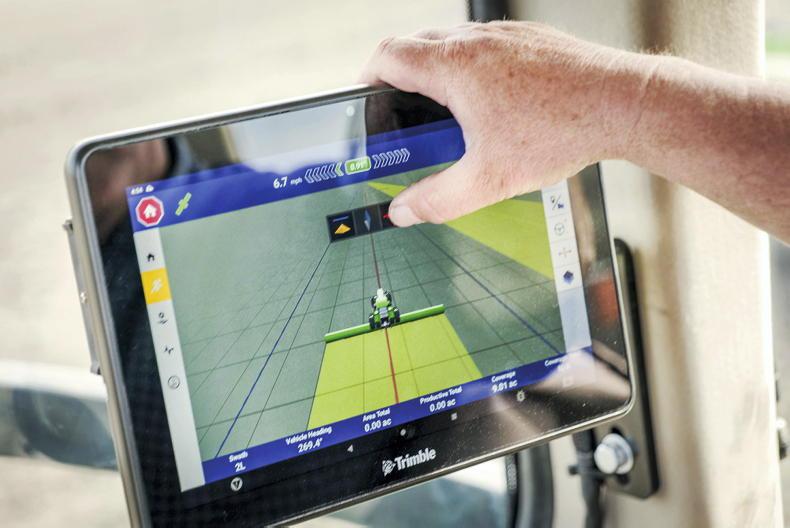
TRACK-Guide III is the latest in GPS technology and can be upgraded to include auto steer and also to function as an isobus controller for different implements. In order to keep up with the requirements of modern machines, this controller allows the operator to control multiple isobus-controlled functions on implements at the same time. It is the only isobus system currently with this level of functionality.
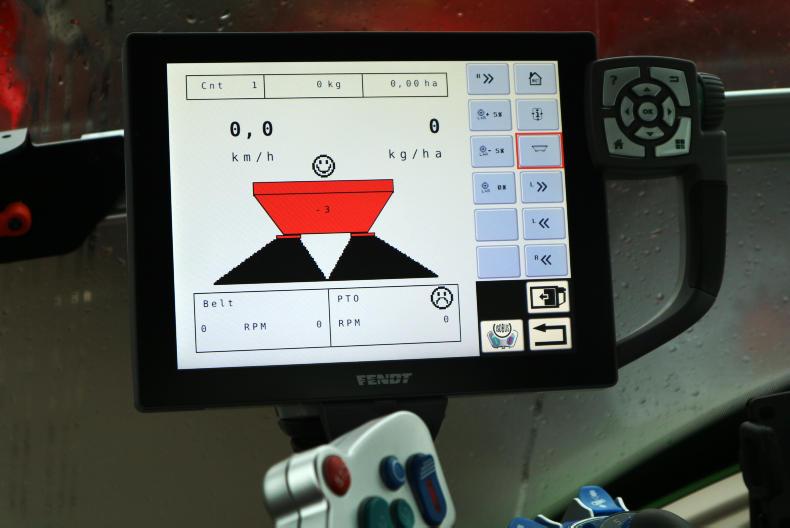
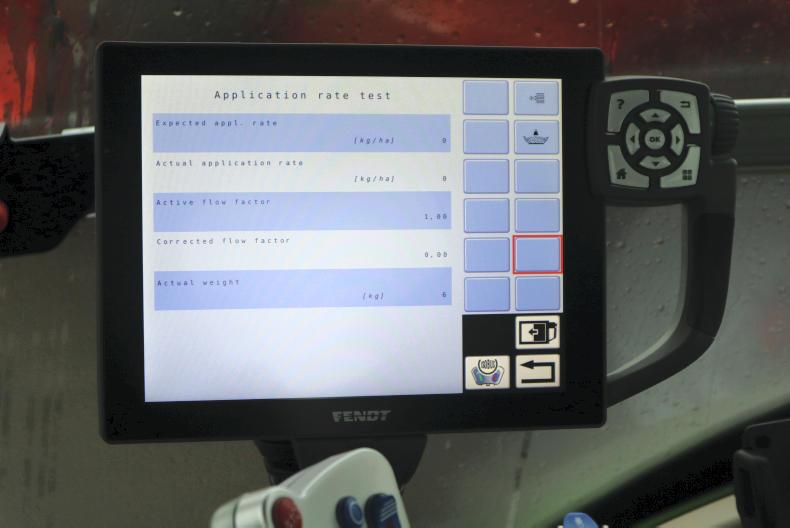
If the F10 spreader was to be kept on the same tractor constantly it can be connected to the tractor’s own isobus control monitor – removing the need for a second screen as all the functions could be monitored in one place. This monitor also shows the operator the current spread pattern and spread rate from each disc. This machine is also fitted with weight cells as standard. These are monitored constantly and the system adjusts the feed to the discs constantly on the move to guarantee constant calibration.
Spreading options
The GPS system controls all the spreading options on the machine such as headland stop and start function, variable rate spreading and sectional control.
None of this technology and output comes cheap though, with the F10 coming in at €85,000 plus VAT for the top of the range model and another €6,000 for the Muller GPS antenna.
The F10 and Fendt 930 make for an impressive looking combination and if the precision of the GPS and the accuracy of the spread pattern can work in perfect harmony then not only will they look impressive but will do the work to match.





SHARING OPTIONS