



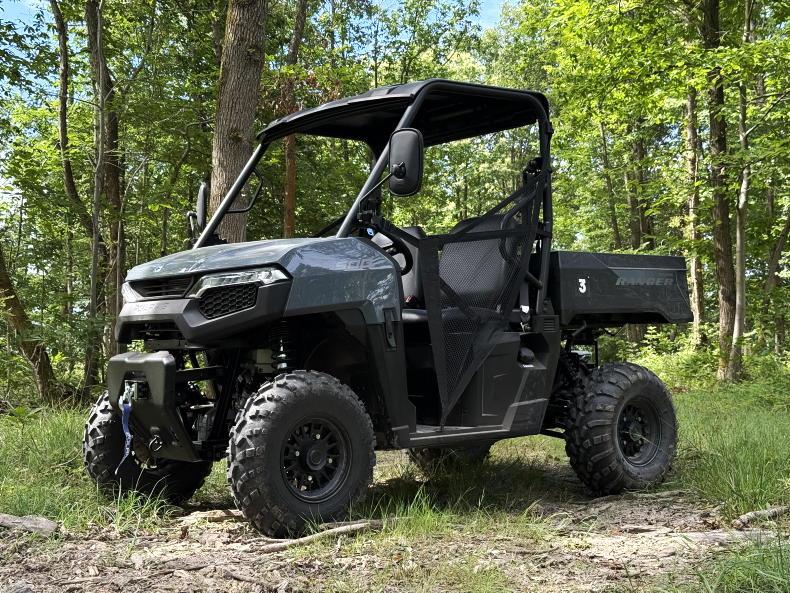
The utility terrain vehicle (UTV) or side by side market is one that continues to grow steadily across Europe.
According to Polaris, this growth is not only driven by new customers, but also ATV customers making the transition to UTVs for improved safety and comfort.
In line with this growth, a lot of Asian players have entered the UTV/ATV market with competitively priced machines – often a fraction of the cost of the so-called well established premium-brand machines.
Many of the well-established brands haven’t changed their approach to the market; offering what they consider as premium product in the hope that customers will continue to remain loyal based on quality, brand reputation and resale value.
Polaris is one of the few premium brands that has expanded its portfolio to now offer a more value-focused alternative, taking the ‘if you can’t beat them, join them’ approach.
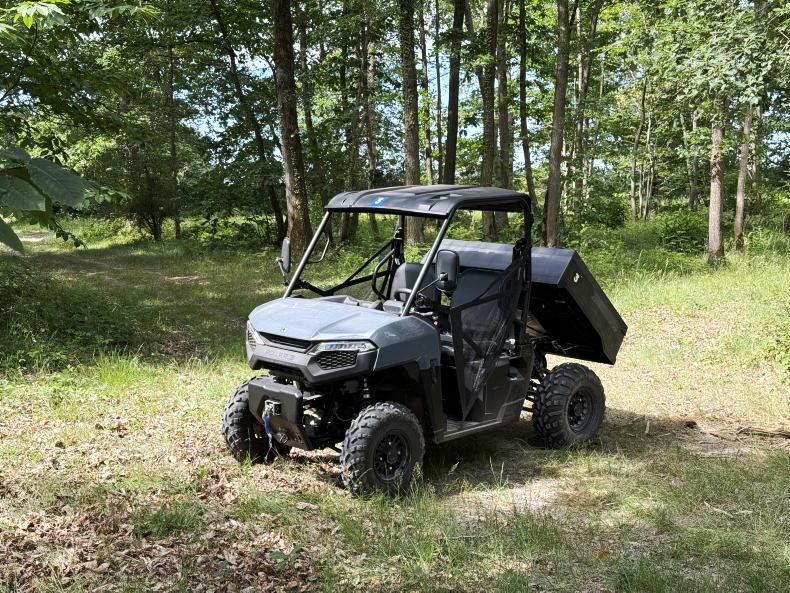
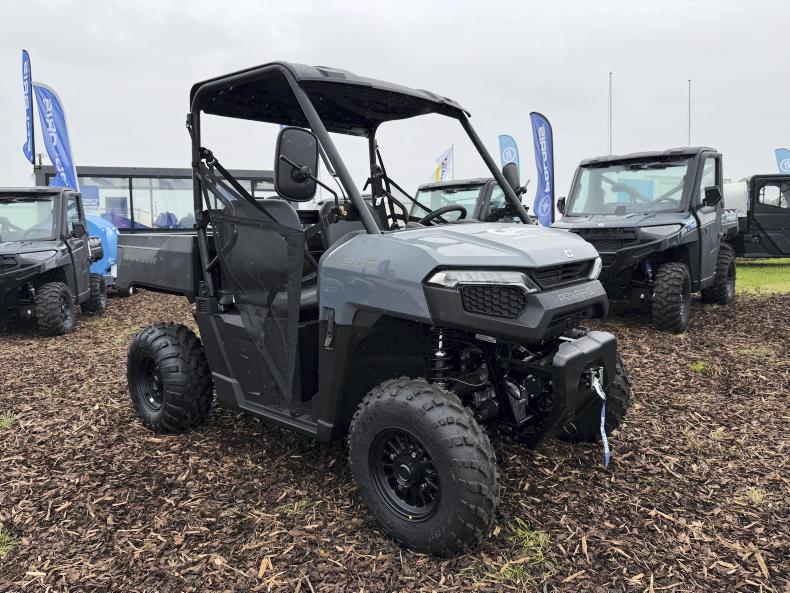
With this approach, the new Ranger 500 UTV was born. Having attended its recent European launch, Irish Farmers Journal had the opportunity to spend some time behind the wheel.
Currently, Polaris offers an extensive range of UTVs which, until now, comprised the mid-sized two-seater Ranger 570, before moving into the larger three-seater Ranger 1000, available in several versions alongside the Ranger Diesel and the electric Ranger Kinetic model. Interestingly, production of the latter has now wound up due to low market demand.
The Ranger 500 and 570 are both conveniently sized, compact two-seater models measuring just under 1.5m wide. This leaves the platform well suited for those thinking of transitioning from an ATV but not wanting to loose the compact nature and manoeuvrability. At the same time, it serves as a good stepping stone to introduce more users to the Polaris side-by-side platform with the hope of upselling them into a 570 or 1000 model down the line.
Pricing was a major consideration for Polaris when developing the Ranger 500, the aim was to offer a machine below £10,000 or $10,000 plus VAT.
Ranger 500 v Ranger 570
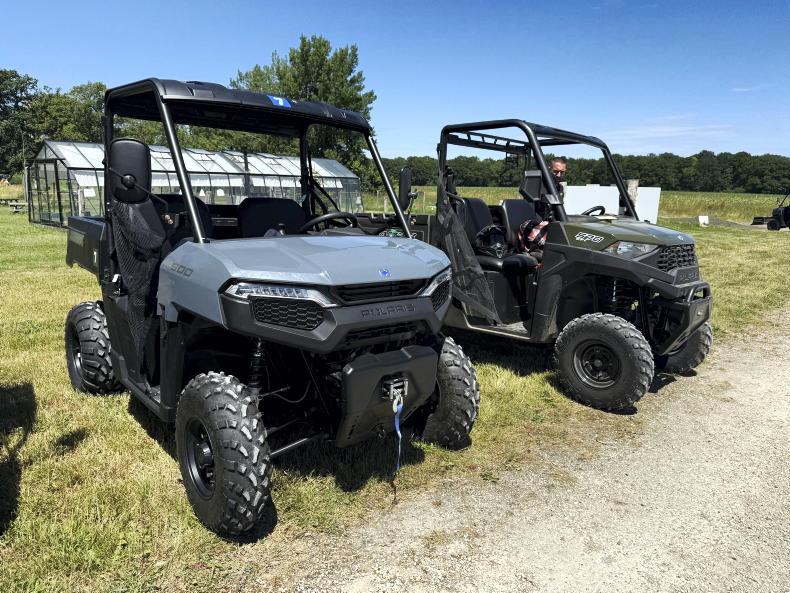
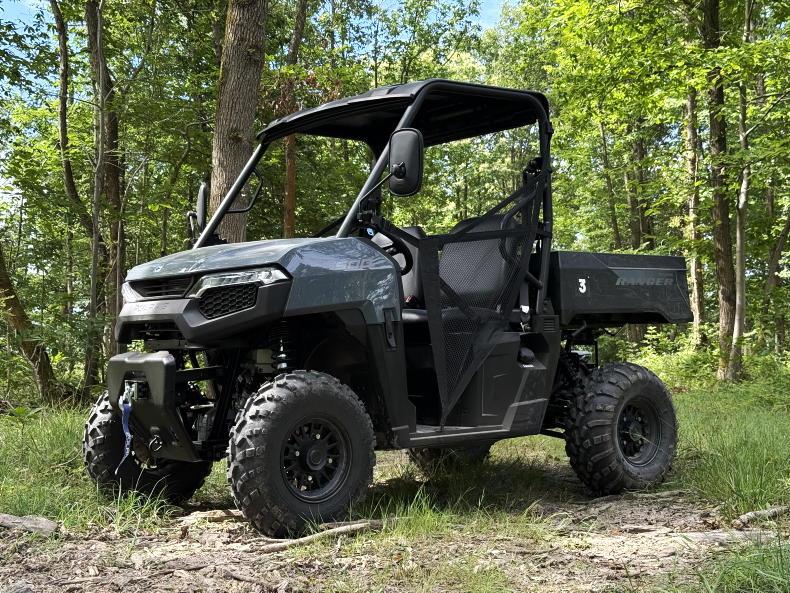
With the exception of a newly designed, more modern and slightly lower front end, it’s quite hard to tell the Ranger 500 apart from the 570 model. Undeniably, a large percentage of componentry has been shared – including the engine, transmission and chassis.
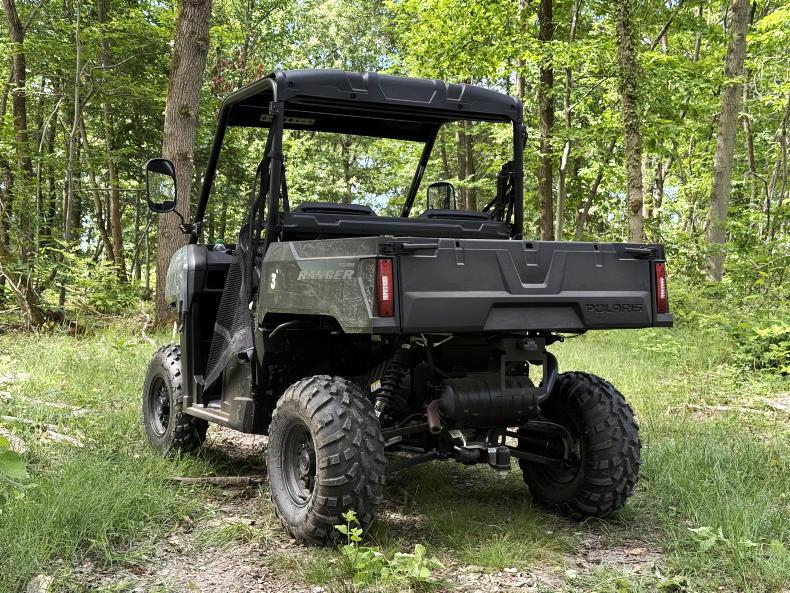
One major differences is that the Ranger 570 features selectable 4WD where as the 500 is AWD with an auto locking front differential. Secondly, the 570 cab offers further customisation in that it comes with the option of being full enclosed with a heater. The Ranger 500 is only offered with the option of a polycarbonate windshield. However, a roof is fitted as standard.
Engine and transmission
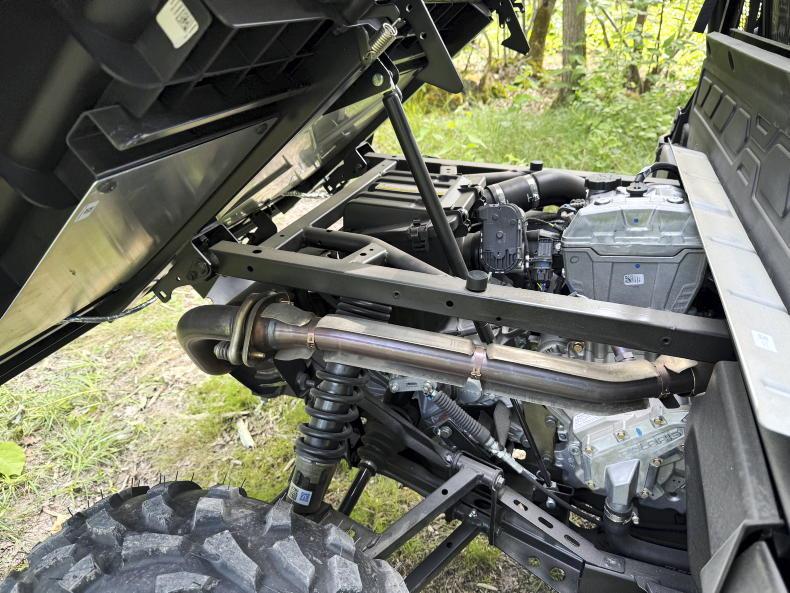
Polaris has fitted the Ranger 500 with its proven 567cc single-cylinder ProStar engine out of the Ranger 570, albeit the engine has been detuned from 44hp to just 28hp.
Although the power difference is noticeable, it felt sufficient for a compact UTV and the market that Polaris is trying to target. A change to the exhaust system is believed to have reduced vibrations and sound, something which we didn’t have the opportunity to compare with the ranger 570.
Married up to the engine is the manufacturer’s own belt-driven transmission, which it calls the PVT (Polaris variable transmission). It offers all the usual functionality through high, low, reverse and neutral gears. On the brief test drive, top speed was 63km/h which is perfectly adequate for the majority of farm tasks.
Features and capacities
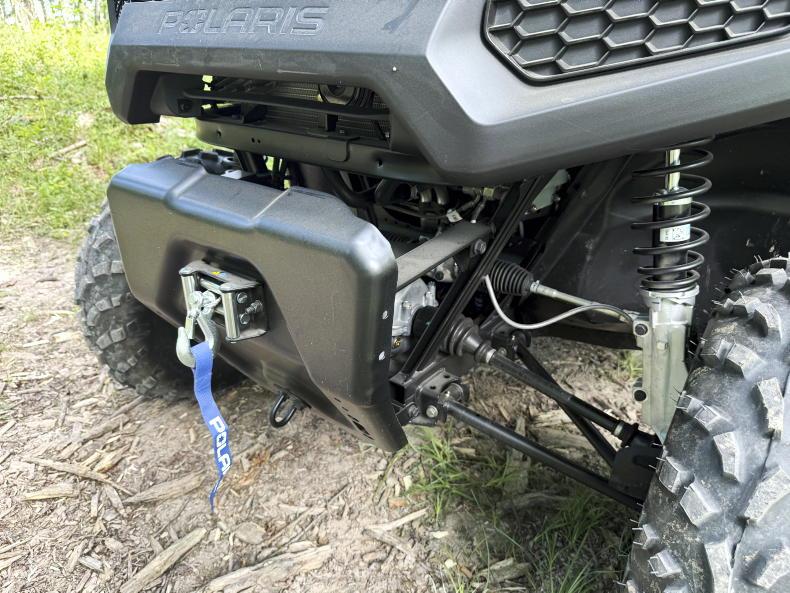
In terms of standard features and capacities, the Ranger 500 does disappoint. Standard equipment includes a plastic roof liner, a sturdy steel front bumper with an integrated 1,134kg (2,500lb) electric winch, LED headlights, the Polaris on-demand all-wheel drive (AWD) system and a switchable ‘turf mode’ for a tighter turning radius.
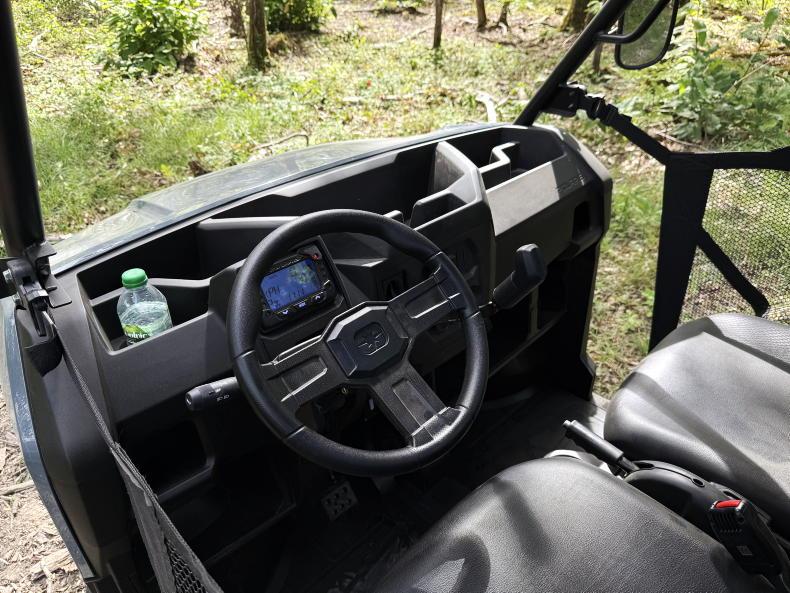
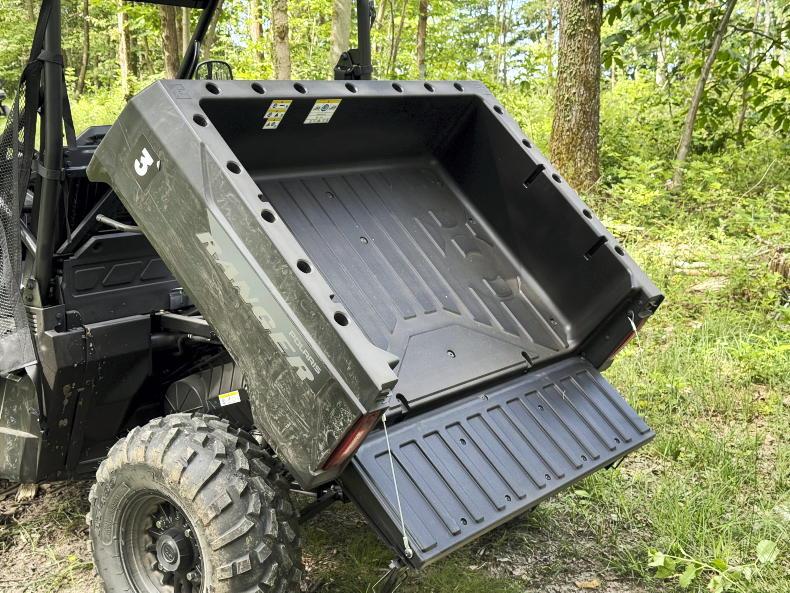
In terms of suspension, the Ranger 500 doesn’t lack either. Up front it uses MacPherson struts, offering 9in travel and a dual A-arm setup at the rear, offering 10in of independent travel on either side. As standard, 15 x 8 -12 front and 25 x 10-12 rear tyres are fitted. The rear gas assisted tipping cargo box is rated to carry 227kg (500lb). The unladen weight of the Ranger 500 is 579kg, but it is rated to tow 680kg comfortably. Inside the cab, there is no shortage of storage, with plenty of cubby holes across the dash and under the front bonnet. The passenger seat is also hinged, doubling up as a large storage bin. However, the front driveshaft does pass through the lower corner and is unprotected.
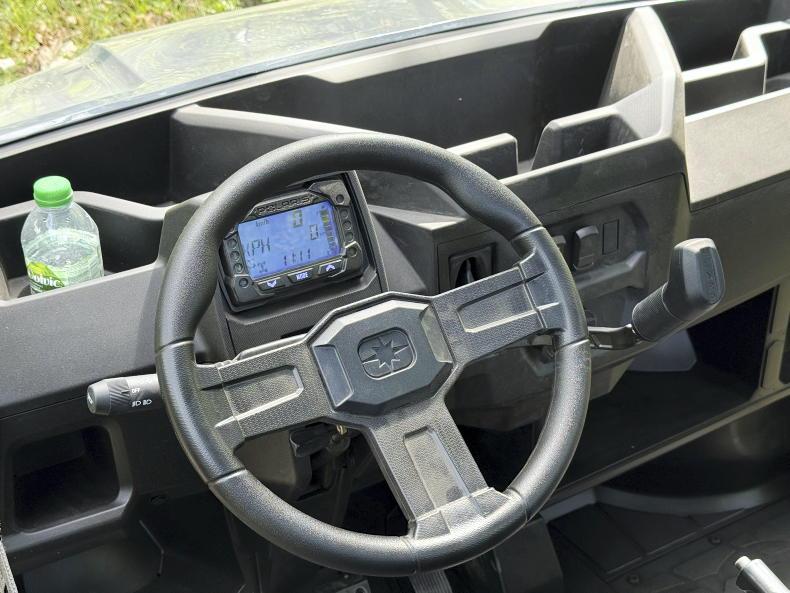
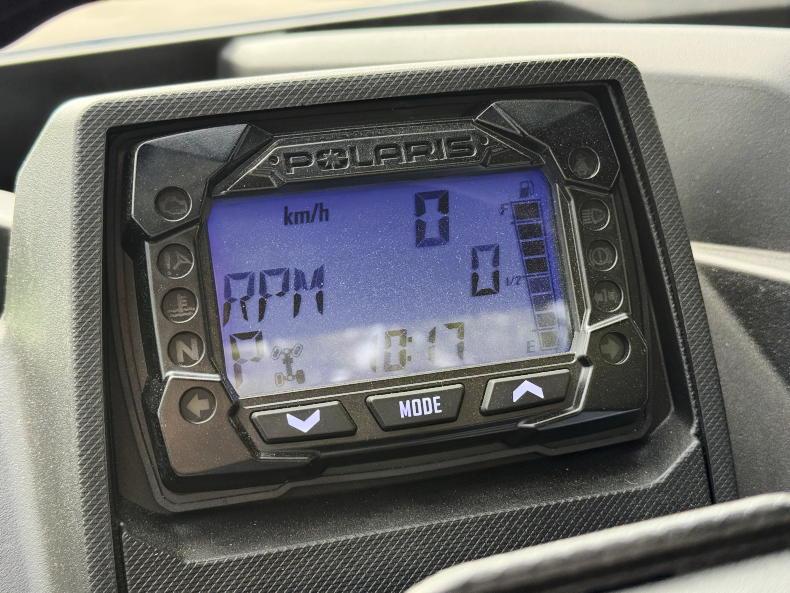
A 4in LCD dash displays all one would expect it to including speed, an hour meter, trip meter, fuel gauge, coolant temperature, service intervals and more.
At an initial glance, the new Ranger 500 looks like a facelifted version of the Ranger 570 and leaves one wondering what Polaris’s intentions were by offering a more modern-looking model at a more competitive price point. However, to give credit where it is due, the 570 does offer more power, more creature comforts and more accessories, including a fully enclosed cab and heater system.
Although pricing does differ in Europe with exchange rates, the Ranger doesn’t come in sub-€10,000, but is still highly competitive at €12,000, plus VAT, which leaves it well able to go head-to-head with brands that have flocked onto the market over the past decade such as CF Moto, Aodes and Loncin.
Having spent a brief amount of time behind the wheel, first impressions of the Ranger 500 are positive. Having navigated through a mix of forestry and gravel trackways, it handled well and proved more agile than expected for a machine churning out 28hp. Even though it’s positioned at the lower-end of the range, build quality certainly hasn’t been skimped on – as you would expect from a brand like Polaris.
All in all, what Polaris has done here is impressive, offering more budget-conscious customers an opportunity to move into a so-called premium brand. The Ranger 500 has the potential to replace a considerable number of ATVs and early market feedback from Polaris’s dealer network in the US has shown this.
While Polaris may not have the strongest presence in the Irish market at the moment, this is something that it is working hard to change and something that the new Ranger 500 should certainly help with.
That said, Polaris is the market leader for side-by-sides and ATVs in the US, where over 80% of Polaris’s revenue is generated. The brand is headquartered in Medina, Minnesota and employs over 12,700 people globally.
There are 15 manufacturing sites worldwide including one in Opole, Poland which manufactures the majority of products sold on the European, Middle Eastern and African markets.
The Polaris brand can be broken down into three divisions: Polaris Powersports, Marine (Bennington, Godfrey and Hurricane brands), and Axiam and Goupil electric vehicles.
In 2025, Powersports accounted for $5,854m worth of sales or 87% of the brands total sales followed by $512m (8%) worth of Marine sales and $323m (5%) worth of sales through its French subsidiaries Axiam and Goupil.
Polaris sales volume peaked in 2023 at $8.9bn on the back of record sales during the Covid-19 years, before dropping bar to $7.2bn in 2025.
That said, Polaris supplies considerable number of off-road vehicles to the military, a part of the business which has seen considerable demand since war broke out in the Middle East.


SHARING OPTIONS