


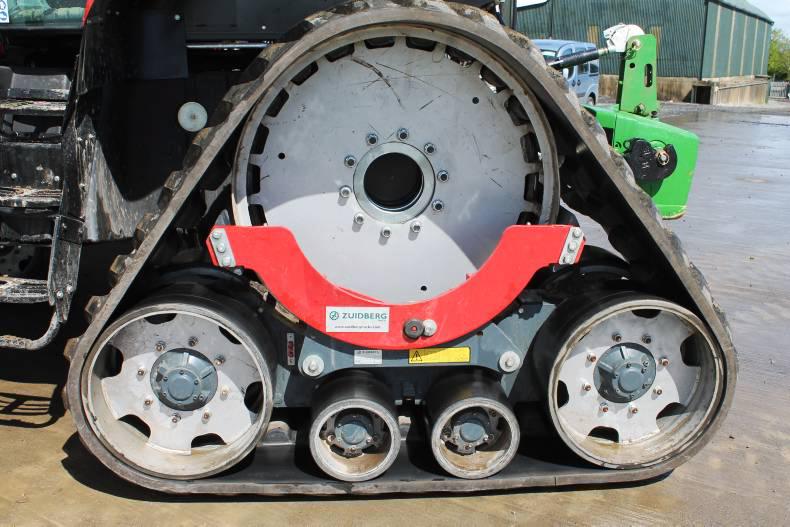
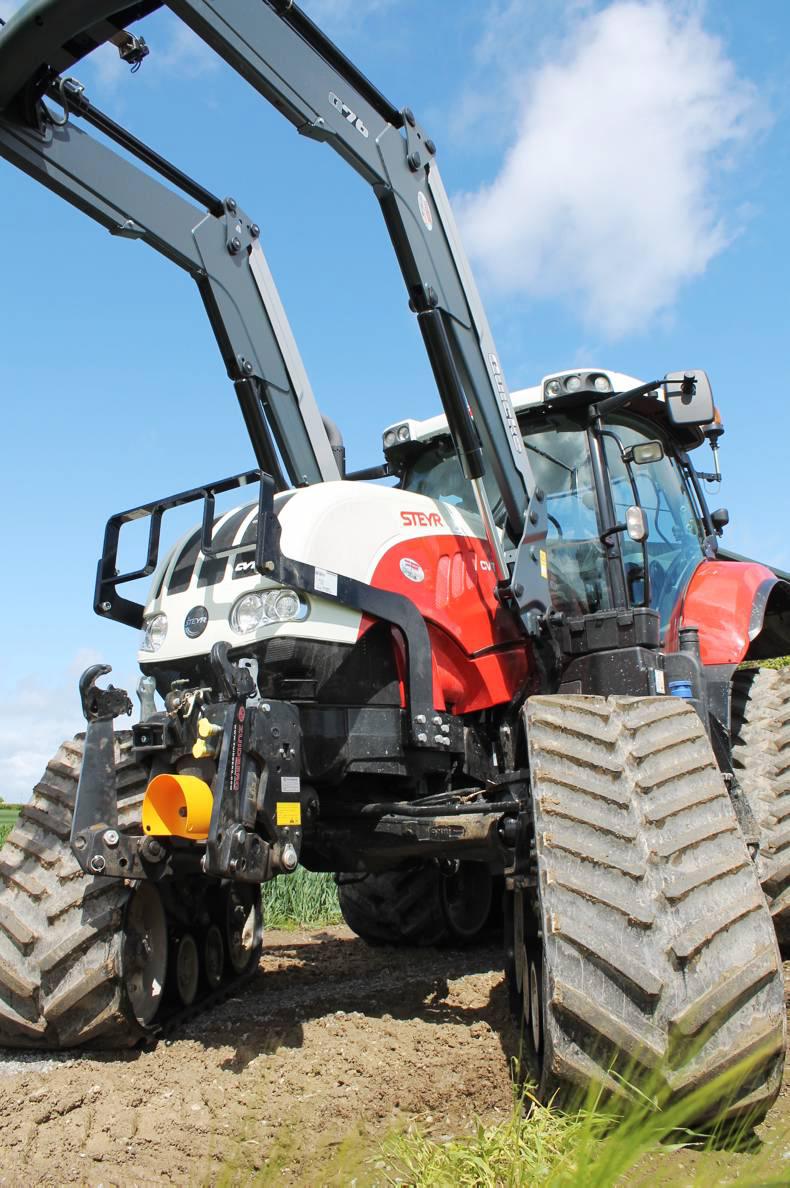
This machine was unusual for two reasons, in that it was a Steyr 6230 CVT and that it was kitted out with Zuidberg tracks on all four corners.
The tractor in question was Dutch firm Zuidberg’s own demo unit fitted with its track system. It was being demonstrated to a number of farmers in the region who specialise in growing vegetables and have problems handling their produce in less than ideal conditions.
Demonstrating it was Neil Butterly of Leinster Hydraulics Agri, based at Balcunnin, Skerries, Co Dublin.
Neil is a Zuidberg agent through Irish importer Farmhand Ltd. He has considerable experience with Zuidberg’s track system, which he and Farmhand fitted to a self-propelled leek harvester.
“A lot of farmers in this area grow parsnips, turnips, leeks and other root crops,” explained Neil. “We fitted tracks to a leek harvester a couple of years ago and in mucky conditions, it does no damage at all.”
The harvesters generally load into 6ftx4ftx4ft potato boxes carried on the machine. When these are full, they are dropped off and another box brought to the harvester. The loader that brought the empty box then brings away the full one.
The loaded potato boxes could weigh as much as 1.2t. When conditions are poor, the loader or tractor handling these boxes can make a mess.
Neil’s solution to this sticky situation was to kit a tractor out with tracks and put a loader on it capable of carefully handling the valuable produce.
Neil has a number of customers very interested in the concept, but “customers wanted to see the tractor on tracks with a loader in operation” he said. So Zuidberg’s demo tractor with tracks duly arrived in Skerries.
Neil fitted a Quicke Q76 loader on board and the Irish Farmers Journal got to try out this very unusual tracked machine.
Tracks
Dutch firm Zuidberg manufactures rubber track systems to suit a huge variety of applications, including tractors, self-propelled harvesters, trailed harvesters and more. These can be mechanically driven or hydraulically driven machines (wheel motors).
With plenty of options available, Zuidberg can also custom-build its track system to suit unusual circumstances.
Depending on the weight of the tractor or harvester and what it is used for, customers can choose from a variety of track systems.
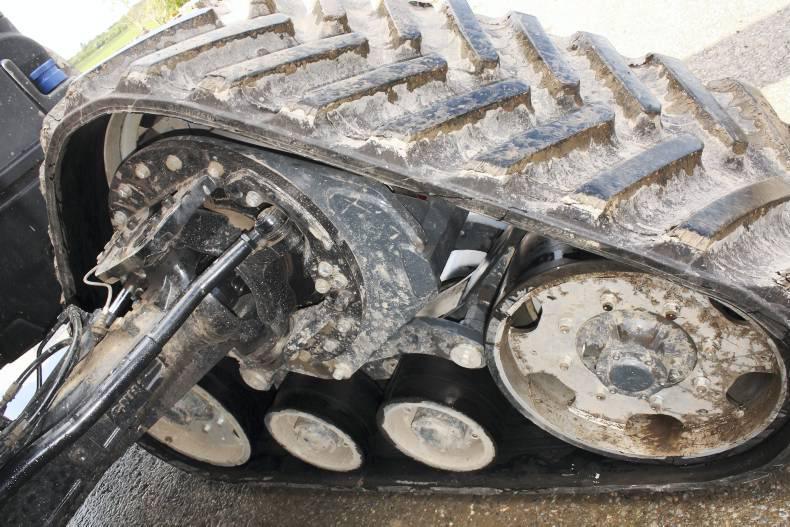
The rubber tracks feature drive cleats on their inside track. These slot into the recesses in the drive wheel, making the tracks positively driven, which cannot slip on the drive wheel.
Zuidberg claims less force is required to tension the tracks. With less force required, the tensioning system and frame can be relatively light.
Zuidberg also claims that the design of its rubber track drive system makes the system low-noise. One downside is that the maximum speed is restricted to 20km/h.
In the field, it reduces ground pressure by up to 75%. This helps conserve a field’s soil structure by increasing the machine’s footprint in comparison with a conventional tyre and wheel.
The large footprint of the track system also allows it to travel more effectively over wet or undulating ground, or over ground that would not support a similar machine with conventional tyres without doing damage.
Zuidberg claims that fitting of its track system requires minimal modification to the tractor or machine they are being fitted to.
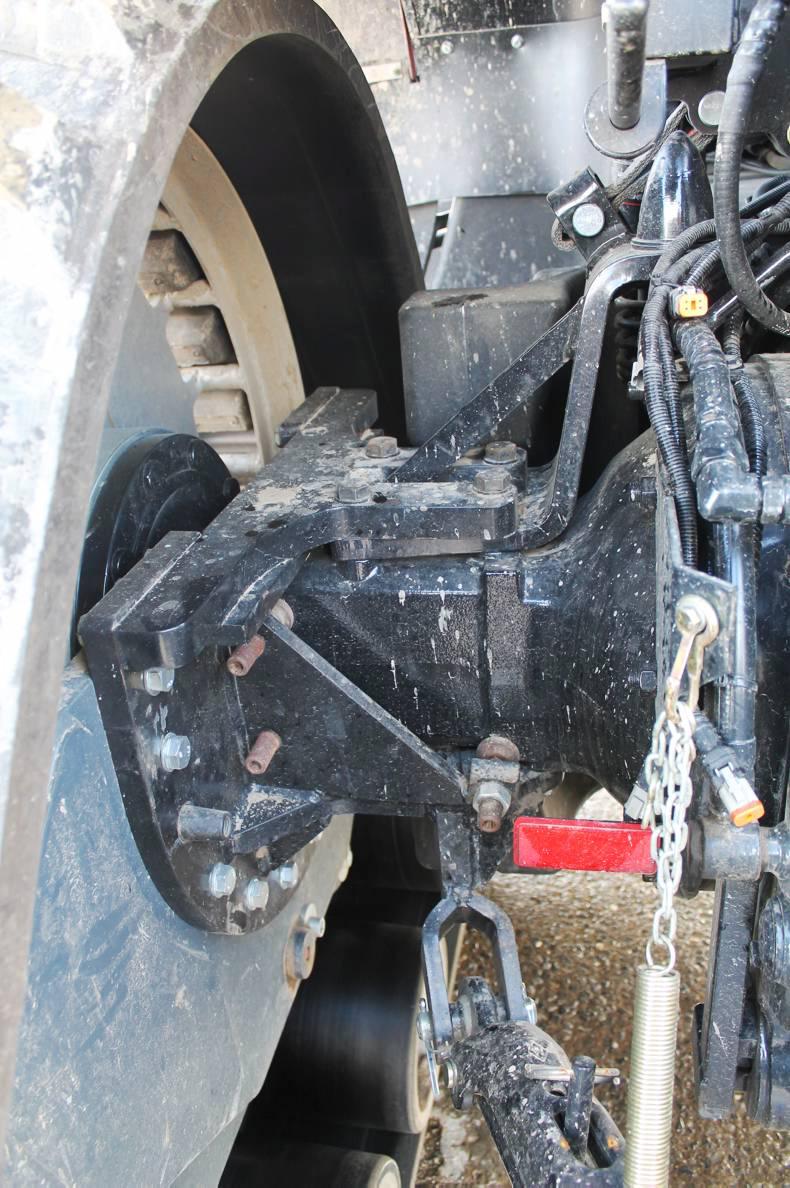
The Steyr 6230CVT at Leinster Hydraulics has four brackets installed at each wheel to support the fixed element of the track. Its design still allows the track to nose up or nose down over undulating ground or obstacles.
The design of the track system allows for the tracks to be removed and the conventional wheel to be reinstalled as the seasons or work demands change. They are not a permanent fixture and do not restrict the usage of the tractor.
Neil reckons that it takes about a day to remove or reinstall the tracks.
Not something you would be doing on a weekly basis, but certainly doable as seasons require.
Mounting brackets stay in place at each wheel, but do not get in the way of wheel installation, according to Neil.
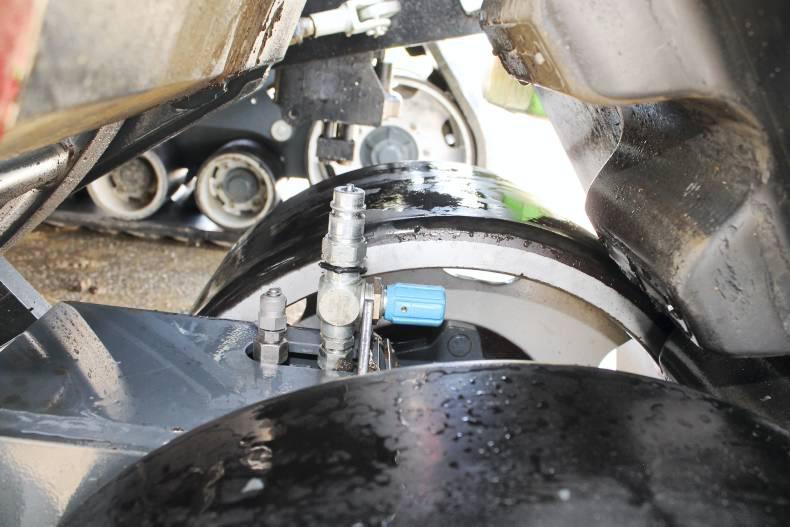
From a service perspective, there are four grease nipples at each track unit. The tracks are hydraulically tensioned to approximately 100 bar and the manufacturer recommends this is checked annually. So a little extra greasing, but nothing too serious.
Drive
The Steyr 6230CVT is a big tractor. In fact, it is the largest in the Steyr CVT range and the equivalent of sister brands in CaseIH Puma CVX and New Holland T7 Autocommand.
Powering it is a Tier 4A, FPT 6.7-litre engine which develops 228hp before boost. Before tracks and loader were fitted, it clocked in around 7.3t.
The width of the Zuidberg tracks fitted on the Steyr 6230CVT measure 610mm on the front and 760mm on the rear. It’s quite an impressive-looking combination with the Quicke Q76 loader added by Neil.
Overall width of the Steyr equipped with tracks as per its brochure is 2.96m at the rear and 2.81m at the front. In the flesh, the 6230 somehow does not appear as big with the tracks fitted as with tyres fitted. Perhaps because of the unoccupied space above the tracks, particularly at the rear.
Driving the 6230CVT is no different than sister brand CaseIH – the controls are identical. The tractor is incredibly steady, with tracks on all four corners, ideal for loader work.
The large footprint makes steering a bit more of a challenge. The tractor has to be moving to steer because of the grip the tracks have on the ground. But once moving, there are no issues.
Steering lock is not too bad either, despite the assemblies out front.
On the road, the Steyr is rock steady and the sight of it rumbling down the road on tracks certainly makes an impression on fellow motorists.
With a maximum speed of just 20km/h, it’s not fast, although in reality, this can be pushed a little faster. In fact, the Steyr will do about 30km/h flat out, but sustained driving at this speed will have a negative effect on the rubber tracks and system, not to mention the warranty.
Neil fitted a Quicke Q76 loader on the Steyr for its intended task as an in-field materials handler. According to Quicke, the Q76 will lift over 2.5t, 800mm out from the implement carriage pivot pin at ground level. Maximum lift height is quoted at 4.2m under level implement.
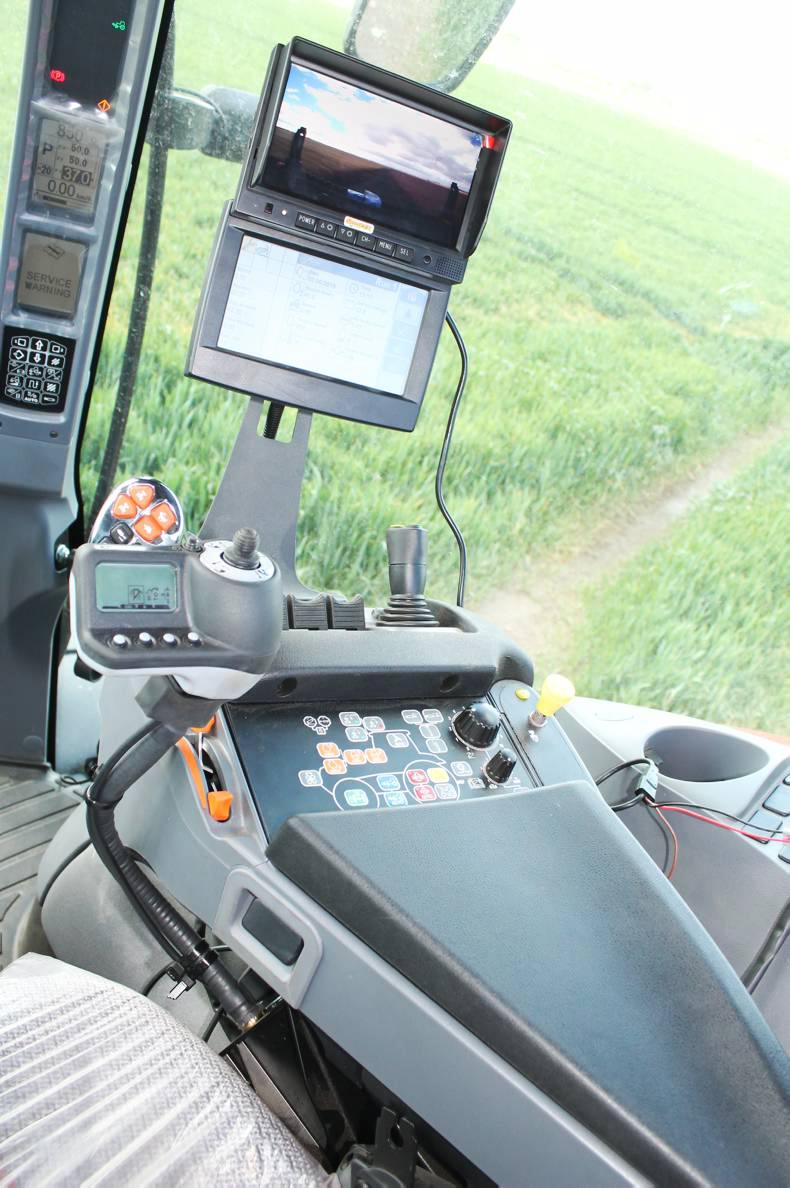
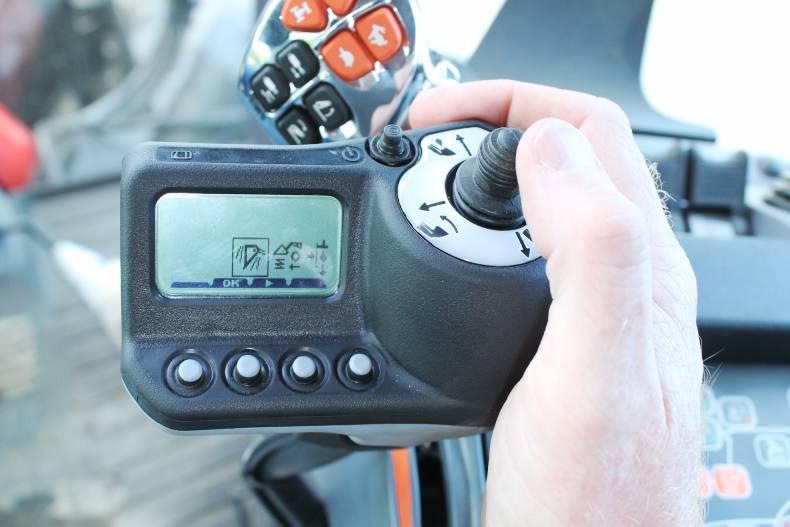
The loader incorporates Quicke’s loader control system (LCS), plus EasyDrive thumb-operated joystick. Quicke claims that LCS features the only valves in the world that have been specially developed for the specific functions and requirements of front loaders.
The joystick is easy to operate and is mounted on a flexible stalk, so it can be moved to suit different drivers.
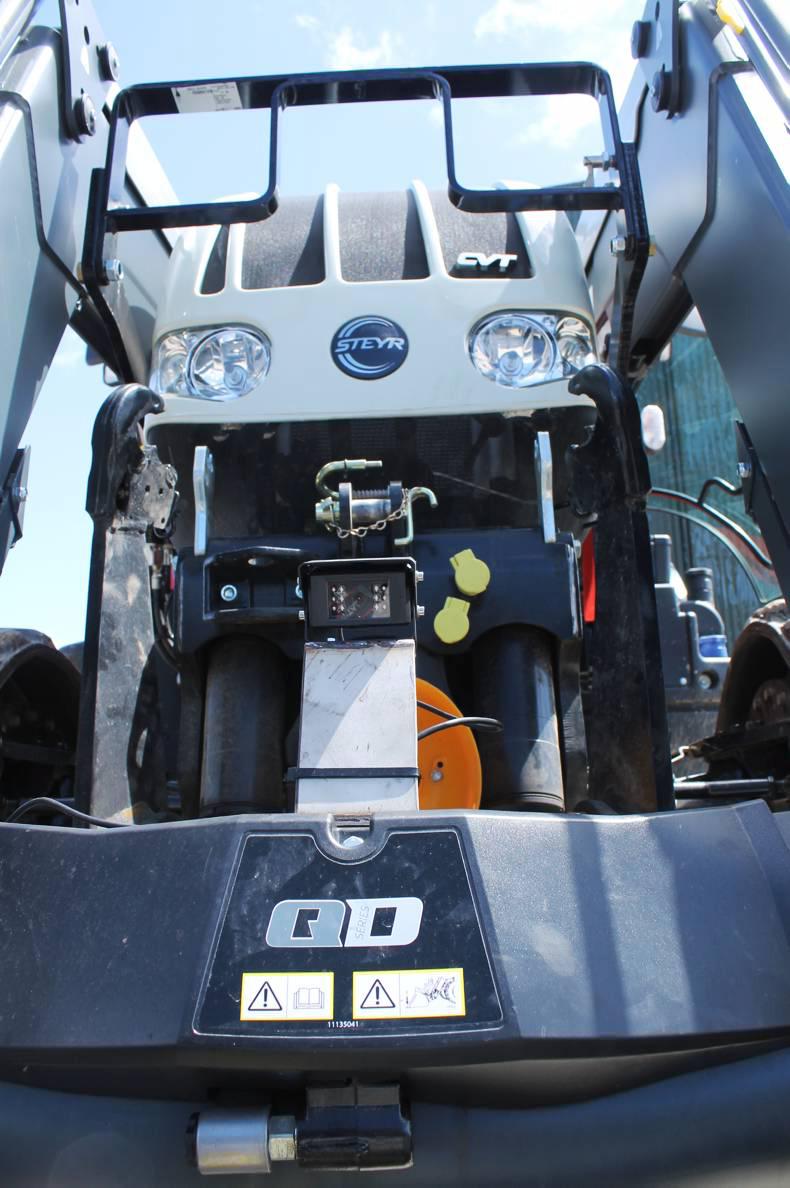
The 6230CVT’s large bonnet poses a problem when handling material at ground level. It’s very difficult to see pallet forks and guide them under a potato box without assistance.
Neil recognised this could be a problem on such a large tractor. To get around it, he sourced a camera system from Sparex. He fitted the camera on the loader’s front cross-beam, far enough away from potential harm, but still providing an excellent view of the loader implement.
In the cab, he mounted the camera screen just above the tractor’s own arm rest-mounted display and it all works perfectly.
Cost
The Zuidberg track system does not come cheap. The system fitted to the Steyr costs in the region of €85,000 plus VAT, according to Neil. There is light at the end of the tunnel for growers of vegetable produce in the form of a grant of up to 40%. This is apparently open only to vegetable growers and does not apply to potato or cereal growers.


SHARING OPTIONS