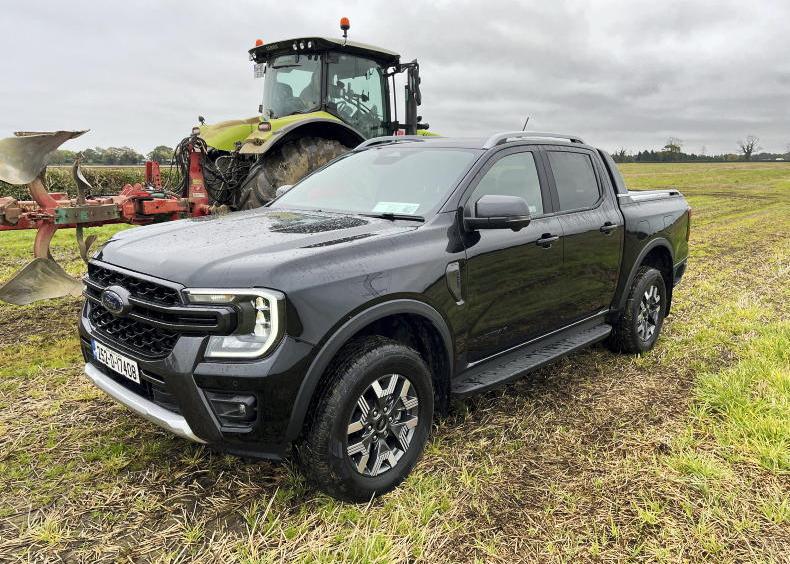
Are farmers and rural contractors ready to move away from diesel in their 4x4 pick-ups? That’s the question being posed by the arrival of Ford’s new Ranger as a plug-in hybrid electric vehicle (PHEV).
It is now an alternative option to diesel power for one of Ireland’s most popular 4x4 pick-ups.
Diesel power and strong towing ability have been synonymous with 4x4 pick-ups, loved for their towing ability, off-road prowess and general rugged build quality.
As motor companies struggle to meet their mandatory emission requirements, they are now offering more PHEVs and mild hybrid options to replace the original tried and tested diesel engines. But is that the direction that the 4x4 pick-up driver wants to go?
Ford is the first 4x4 pick-up supplier to offer the PHEV option in the latest Ranger models with a short-range, battery-powered system to back-up a lively petrol engine.
Toyota is now also offering a mild hybrid version of its diesel-powered Hilux.
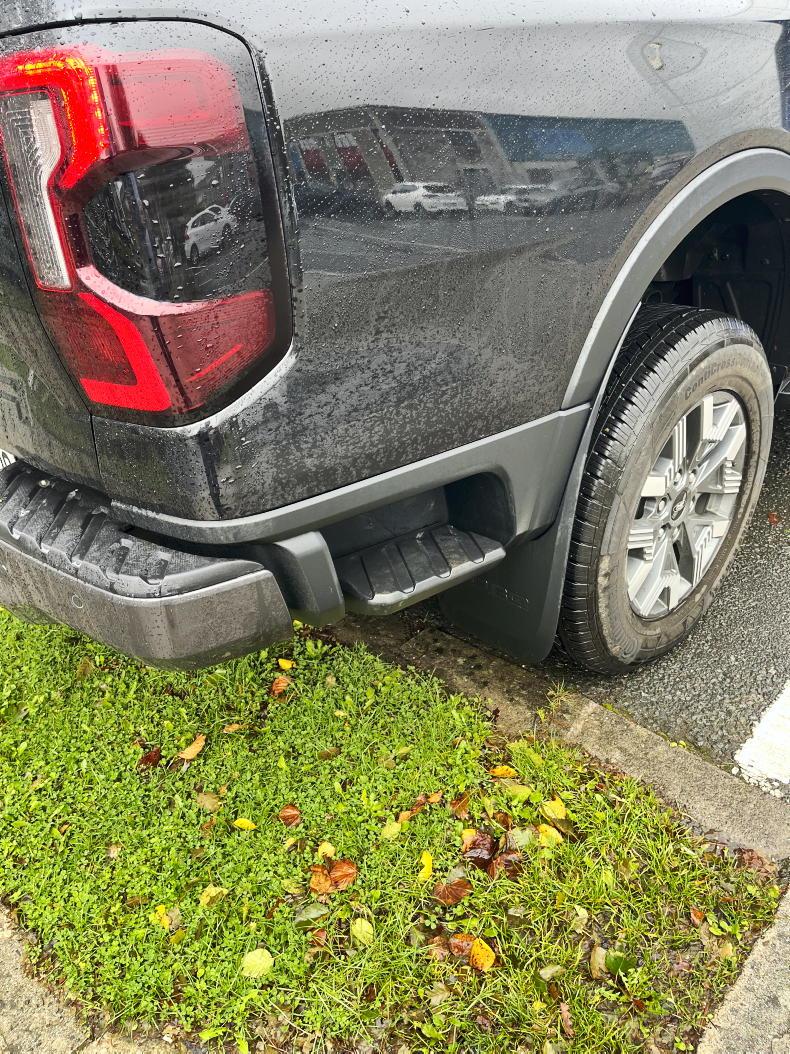
There are some new fresh styling features in the new Ranger, with a neat step built into the side of the pick-up body for easy access.
The internal styling is also modern, and the overall feel indicates a strong American influence in the attractive and modern design.
I’ve driven the new Ford Ranger PHEV in recent weeks, and I’ve compared it with the equivalent diesel engine model for comparison purposes.
This petrol engine gives an impressive power boost; then add the battery power from the plug-in system and you get massive power and torque, outperforming the diesel version at certain engine speeds.
This system combines Ford’s 2.3-litre Ford EcoBoost petrol engine and 10-speed automatic gearbox with a 75 kW electric motor (e-motor) and an 11.8 kWh (useable) lithium-ion battery.
The battery can be charged by plugging into an external power source, for about four hours, as well as by the petrol engine or by recovering energy when coasting.
You get to choose when and how to use battery power with Auto EV, EV Now, EV Later or EV Charge modes.
Out on the road, this was a very smooth 4x4 pick-up to drive, again compliments of the petrol/hybrid drive and the 10-speed automatic gearbox made for very pleasant and low revs cruising on the motorway and major roads.
But it is not enough to make it especially economical.
During almost 900km of driving, I failed to reach anywhere near the PHEV rated fuel economy figure of 16.1km/l or 6.2l/100km, so the range is very theoretical. I would be more confident with the 10 litres extra fuel tank capacity in the diesel version which I believe would get me closer to its rated figure.
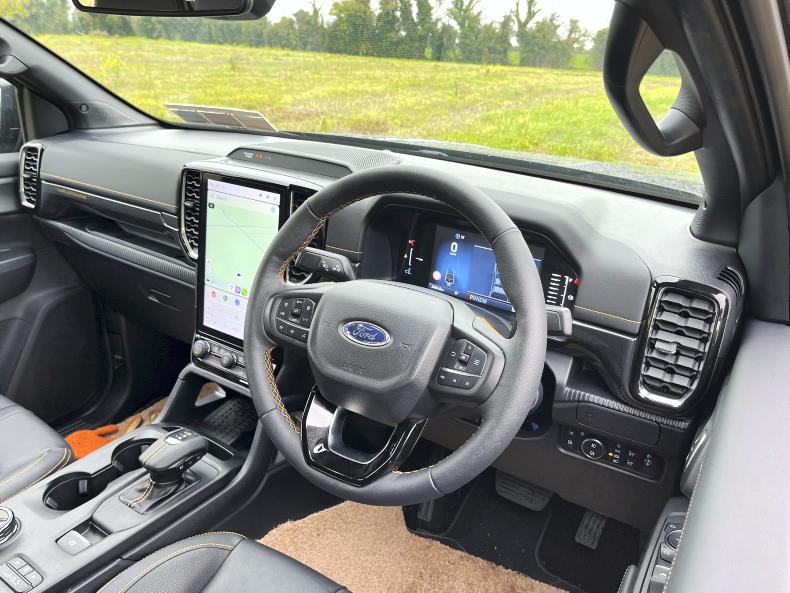
Ford ranger dash
And the 43km driving range from electric-only power wouldn’t do it for me, even when the purchase price is marginally lower.
Yes, it theoretically lowers the overall emission rating, and that’s probably good for Ford in reaching its emission targets, but I would guess that those who make the move to a Ranger PHEV will rarely plug it in for just 43km driving range.
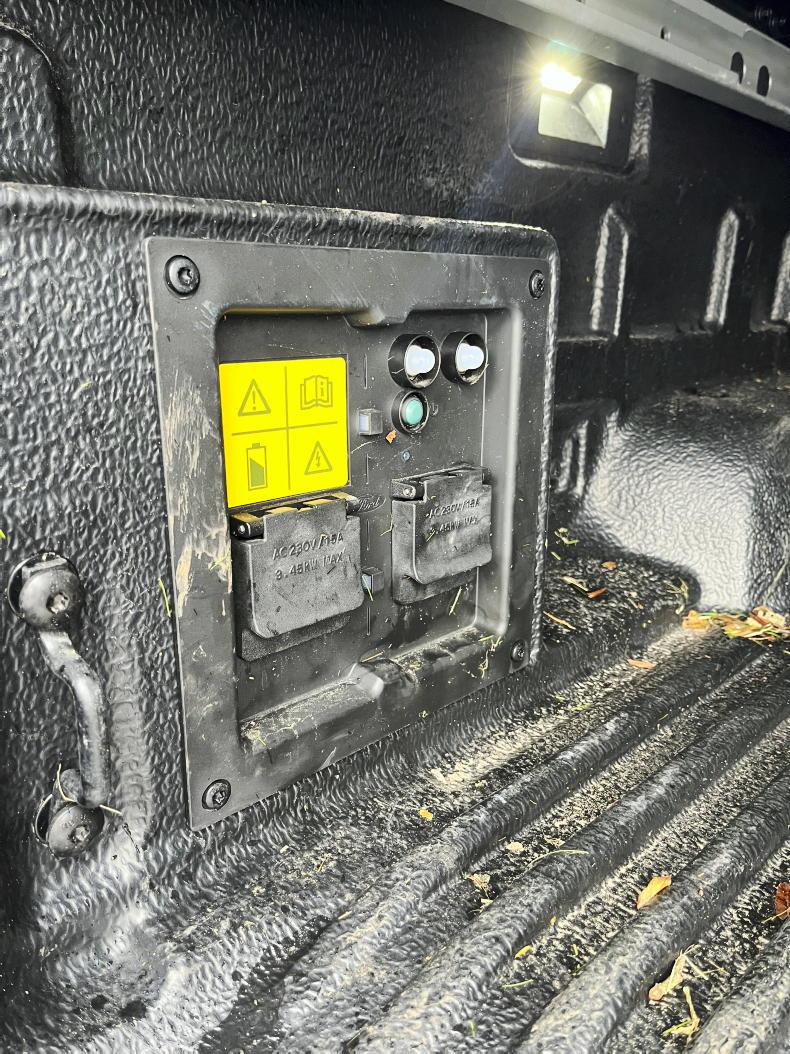
Ford Ranger
We must factor in the fact that the PHEV version is also 300kg heavier than its 3.0 litre diesel powered equivalent. That means that when not using the short-range electric power you will be asking your PHEV Ranger to carry an idle battery pack that weighs about the same as 12 bags of cement all the time while being powered by a 2.3-litre petrol engine. Figure that one out in terms of fuel economy!
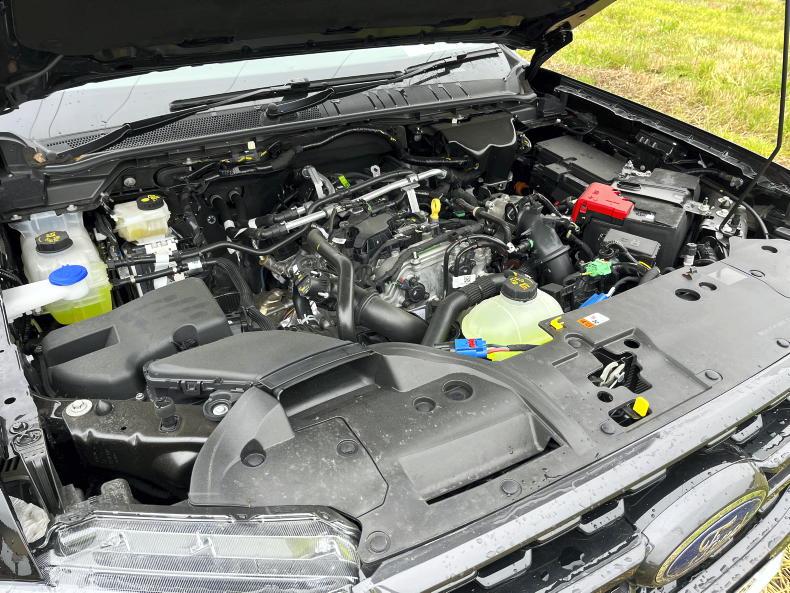
Ford
Ford is quoting a similar 3.5-tonne towing rating irrespective of the engine type used. I would have liked to put that to a real-world towing test to confirm something that I probably should not be doubting. But look at the torque figures and while the PHEV version boasts higher torque, like a typical petrol engine, it does so at higher engine revs.
At this stage you’ve guessed that I haven’t been won over by the PHEV claims. Ford has pitched the entry price for the Wildtrak version at €68,053 incl VAT (£55,409 plus VAT in Northern Ireland) and that’s marginally keener than 3.0 litre diesel version which is priced €69,452 incl VAT (£56,609 plus VAT in Northern Ireland).
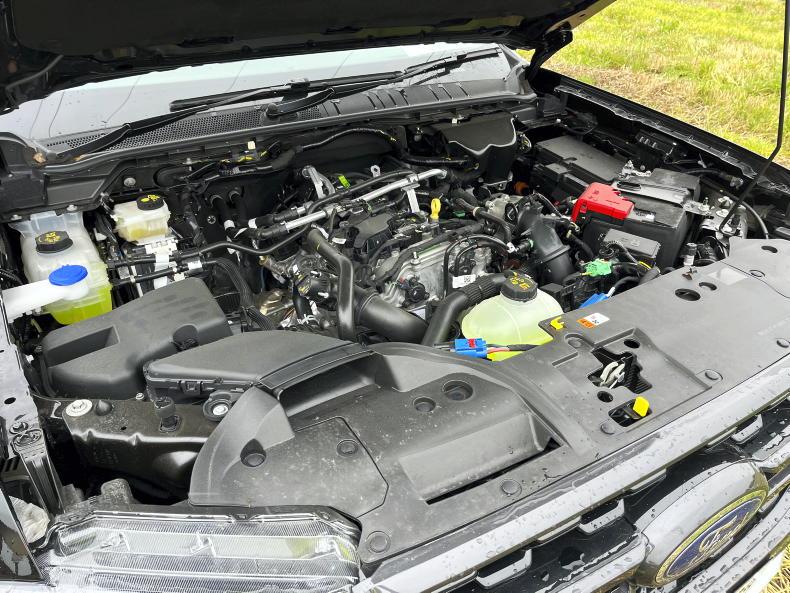
Ford
And then there are the taxation issues; diesel expenses can be VAT-claimed for business while petrol ones can’t. Take the diesel/petrol price difference this week at the pumps of 6c/l and the VAT refund, the fuel cost difference will be in the region of €1,300 more per year for the PHEV version, based on a 30,000km driving.
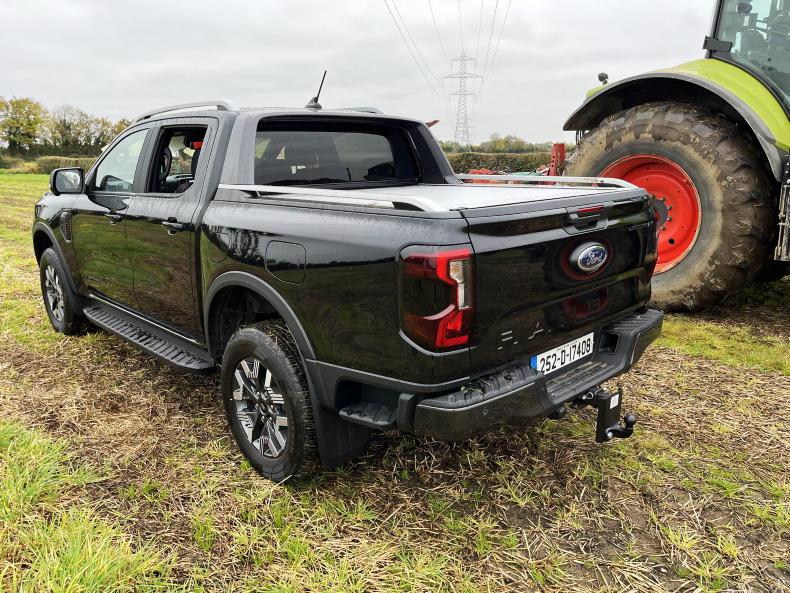
Ford
While Ford is no longer offering diesel-powered cars, then we have to question whether Ford in Detroit is disowning diesel power in the Ranger? I expect not just yet at least, while most farming 4x4 Ranger pick-up buyers will stick with diesel power for the foreseeable future, other than public funded buyers, who have mandatory emission lowering targets, may take the PHEV plunge.
Ford
Are farmers and rural contractors ready to move away from diesel in their 4x4 pick-ups? That’s the question being posed by the arrival of Ford’s new Ranger as a plug-in hybrid electric vehicle (PHEV).
It is now an alternative option to diesel power for one of Ireland’s most popular 4x4 pick-ups.
Diesel power and strong towing ability have been synonymous with 4x4 pick-ups, loved for their towing ability, off-road prowess and general rugged build quality.
As motor companies struggle to meet their mandatory emission requirements, they are now offering more PHEVs and mild hybrid options to replace the original tried and tested diesel engines. But is that the direction that the 4x4 pick-up driver wants to go?
Ford is the first 4x4 pick-up supplier to offer the PHEV option in the latest Ranger models with a short-range, battery-powered system to back-up a lively petrol engine.
Toyota is now also offering a mild hybrid version of its diesel-powered Hilux.
There are some new fresh styling features in the new Ranger, with a neat step built into the side of the pick-up body for easy access.
The internal styling is also modern, and the overall feel indicates a strong American influence in the attractive and modern design.
I’ve driven the new Ford Ranger PHEV in recent weeks, and I’ve compared it with the equivalent diesel engine model for comparison purposes.
This petrol engine gives an impressive power boost; then add the battery power from the plug-in system and you get massive power and torque, outperforming the diesel version at certain engine speeds.
This system combines Ford’s 2.3-litre Ford EcoBoost petrol engine and 10-speed automatic gearbox with a 75 kW electric motor (e-motor) and an 11.8 kWh (useable) lithium-ion battery.
The battery can be charged by plugging into an external power source, for about four hours, as well as by the petrol engine or by recovering energy when coasting.
You get to choose when and how to use battery power with Auto EV, EV Now, EV Later or EV Charge modes.
Out on the road, this was a very smooth 4x4 pick-up to drive, again compliments of the petrol/hybrid drive and the 10-speed automatic gearbox made for very pleasant and low revs cruising on the motorway and major roads.
But it is not enough to make it especially economical.
During almost 900km of driving, I failed to reach anywhere near the PHEV rated fuel economy figure of 16.1km/l or 6.2l/100km, so the range is very theoretical. I would be more confident with the 10 litres extra fuel tank capacity in the diesel version which I believe would get me closer to its rated figure.

Ford ranger dash
And the 43km driving range from electric-only power wouldn’t do it for me, even when the purchase price is marginally lower.
Yes, it theoretically lowers the overall emission rating, and that’s probably good for Ford in reaching its emission targets, but I would guess that those who make the move to a Ranger PHEV will rarely plug it in for just 43km driving range.

Ford Ranger
We must factor in the fact that the PHEV version is also 300kg heavier than its 3.0 litre diesel powered equivalent. That means that when not using the short-range electric power you will be asking your PHEV Ranger to carry an idle battery pack that weighs about the same as 12 bags of cement all the time while being powered by a 2.3-litre petrol engine. Figure that one out in terms of fuel economy!

Ford
Ford is quoting a similar 3.5-tonne towing rating irrespective of the engine type used. I would have liked to put that to a real-world towing test to confirm something that I probably should not be doubting. But look at the torque figures and while the PHEV version boasts higher torque, like a typical petrol engine, it does so at higher engine revs.
At this stage you’ve guessed that I haven’t been won over by the PHEV claims. Ford has pitched the entry price for the Wildtrak version at €68,053 incl VAT (£55,409 plus VAT in Northern Ireland) and that’s marginally keener than 3.0 litre diesel version which is priced €69,452 incl VAT (£56,609 plus VAT in Northern Ireland).

Ford
And then there are the taxation issues; diesel expenses can be VAT-claimed for business while petrol ones can’t. Take the diesel/petrol price difference this week at the pumps of 6c/l and the VAT refund, the fuel cost difference will be in the region of €1,300 more per year for the PHEV version, based on a 30,000km driving.

Ford
While Ford is no longer offering diesel-powered cars, then we have to question whether Ford in Detroit is disowning diesel power in the Ranger? I expect not just yet at least, while most farming 4x4 Ranger pick-up buyers will stick with diesel power for the foreseeable future, other than public funded buyers, who have mandatory emission lowering targets, may take the PHEV plunge.

Ford
SHARING OPTIONS