



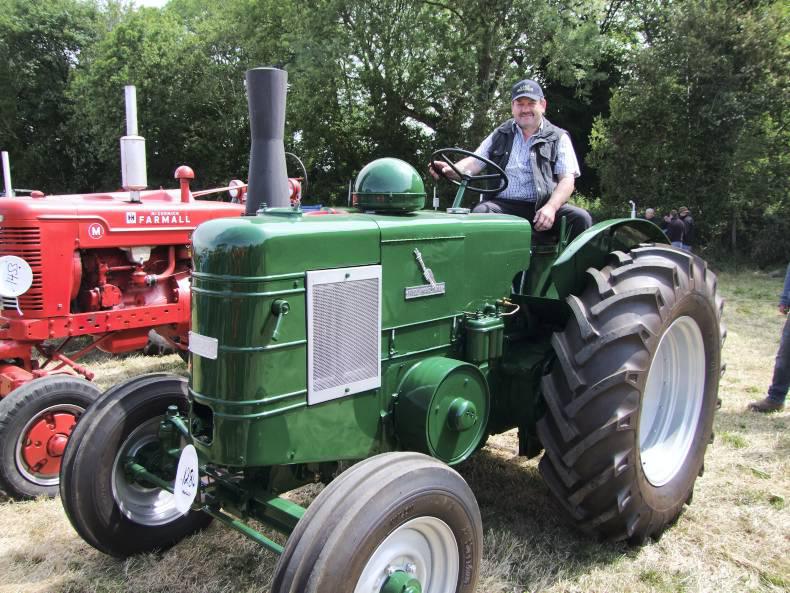
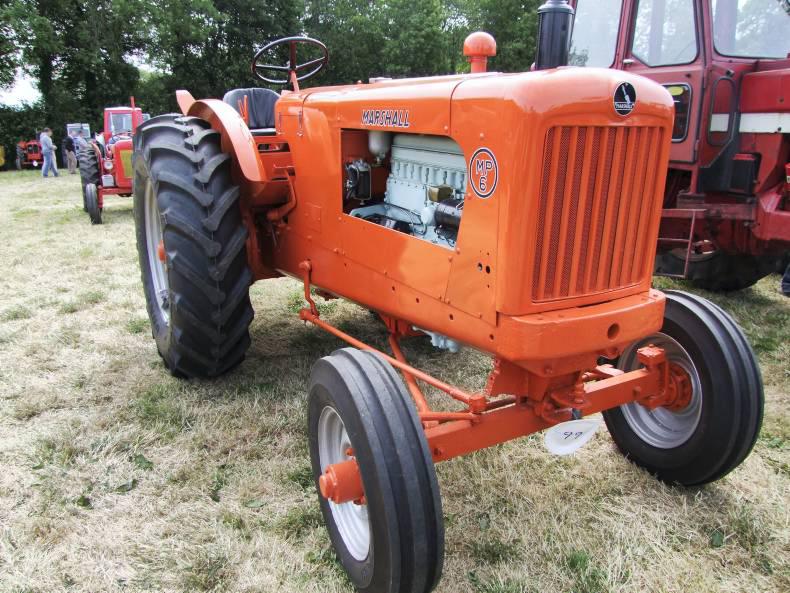
In recent weeks we looked at the impressive restoration work that Pat Kelly had carried out on his Marshall tractors, so it is interesting to take a brief look at the history of these British-built tractors.
Field Marshall tractors were manufactured by Marshall, Sons & Co of Gainsborough, Lincolnshire. These tractors were in production from 1945 to 1957. However, the first single-cylinder Marshall was built in 1930.
Marshall had an impressive history of manufacturing steam engines and boilers from the mid-1800s. As the steam market started to change around the 1920s with the advent of the internal combustion engine, Marshall had to move with the times. The decision to make tractors was also influenced by the depression in agriculture at the time, making tractors more cost-effective than heavy steam engines.
Historical reports show that Marshall applied to build the Lanz Bulldog in Britain but failed as another company, Clayton and Shuttleworth, was in ahead of them. Then the company decided to improve on the Lanz and bought some of these German tractors, dismantled them and set about making the Field Marshall, which was to be a full diesel engine, single-cylinder tractor.
By 1930, Marshall had made its first tractor, called the 15/30 model E. A single-cylinder engine of 8in bore by 10.5in stroke, running at 550rpm, using crankcase compression at a compression ratio of 15:5/8:1, formed the forward part of the frame, with the gearbox and axle housing to the rear.
Unlike many other tractors of this time, which required a hot bulb for starting and running, the 15/30 was started using ignition papers placed in a holder which protruded from the front of the combustion chamber. There are very few of these tractors surviving today and the 3.5 tonne weight 18/30 model that followed is equally scarce.
The Marshall 12/20 was launched in 1934 and it proved so popular and reliable that it continued unchanged for the next 22 years. Pneumatic tires as opposed to steels and cleats were now also available to cater for popular demand. The 12/20 was then renamed the M and featured refinements to the gearbox and engine castings.
The Field Marshall Series 1 followed with a more modern appearance in 1945 with almost the same engine but with speed increased from 700 to 750rpm. A starting cartridge was provided for easier power starting. The driving position was raised and the now characteristic exhaust was developed.
This design was successful and the Series 1 was further modified to become the Series 2, and later still the Series 3 and 3a and up until 1957. These tractors were replaced by the six-cylinder Marshall MP6 in 1956.
The name Marshall was resurrected in the 1980s. British Leyland sold the Leyland tractor business to a subsidiary company of Bentall Simplex, which also produced tracked Track Marshall tractors. The Leyland tractors were re-badged in corn yellow colour. Some Steyr tractors were re-badged as Marshalls for a period before the brand finally disappeared in 1986.
Marshall in Ireland
Marshall was supplying steam engines into Ireland at the start of the 1900s through a number of importers. There is little evidence of who the specific importers were until the arrival of Field Marshall tractors in 1945.
JH Eames & Son Ltd of Great Strand Street, Dublin, was the Irish importer for Field Marshall tractors from 1945 until it discontinued in the late 1950s. It had a number of dealers in place and seemed to have sold a large number of these tractors to county councils as well as to farms.
The tractors had high torque levels due to the use of a large flywheel, which provided belt-drive power. This was useful for driving threshing machines on farms and stone breakers with county councils. They were heavy and cumbersome in the field, compared with the Ferguson 20s that were appearing on farms and were not fitted with a three-point linkage.
The last tractor in the true Marshall range was the powerful MP6, which was rated at 70hp from its Leyland engine. A number of these tractors survive today, including some rare models that were sold here in Ireland.
Thurles hots up for tractor record challenge
The team behind the Tipperary world tractor challenge, which takes place on Sunday 3 May on the Cantwell farm at the Turnpike in Thurles, are counting down the days to the event, with numbers enlisting on the increase.
Michael Fahey (087-2712967) from Rahinch, Littleton, Thurles is heading the team behind the challenge. He is aiming to get in the region of 2,500 tractors into one farm area to qualify for the Guinness Book of Records world challenge. There will be no age restriction on the tractors to qualify, other than their ability to run the engine on the day.
Michael said that all clubs and groups around the country are welcome to join the attempt by Irish tractor enthusiasts to create a new world record for the most tractors running in a field.
Innishannon Rally presents €85,000 to cancer Society
The organisers of the Innishannon Steam and Vintage Rally presented a cheque for €85,000 to the Irish Cancer Society (ICS) from proceeds of the hugely successful 17th Innishannon Steam and Vintage Rally held over the June bank holiday weekend in 2014.
Over the past 17 years, the rally has raised over €1,245,000 for the ICS. The presentation was made on behalf of the committee by chairman Martin Desmond with joint treasurers PJ Ryan and Jim Finn.
The organisers of the rally are now aiming to break the €1.5m mark in the coming years as the rally gets bigger and with larger fundraising. This year’s rally takes place over the bank holiday from Sunday 31 May to Monday 1 June.
30-year-old tractor market
This week, I look briefly at the Irish tractor market of 1985, and compare some changes with today. The Central Statitics Office (CSO) figures back then showed that 2,286 new tractors were registered in Ireland, not far off today’s numbers.
Massey Ferguson was the market leader, followed by Ford, with Zetor being popular in third place. John Deere was ranked in sixth position on the market, compared with the leading position in recent years.
Tractor brands such as Fiat, Leyland and Universal were included in the top 10 back then, while modern tractor brands such as Claas, Tumosan and Valtra, were unheard of.
While Ireland’s biggest county Cork dominated the market with 318 new tractors registered back in 1985, Galway and Wexford tied for second place with 131 new tractors each. Cork also topped the tractor sales pole for brands such as Ford, Case, John Deere and Deutz-Fahr, that year.
18 April Tractor Run and Rally, Ballyhalbert Down 0044-7563779369
18 April Caledon Vintage Rally, Caledon Tyrone 028/048-85557515
19 April Battle of the Hills Vintage Run Cavan 087-6329362
19 April Durrow Vintage Club Show Laois 086-8860598
19 April Ballyeaston Church Farming Church Service Antrim 028/048-933323650
19 April Rod Iron Vintage Tractor Run, Mullinavat Kilkenny 086-8372607
19 April Durrow Vintage Club Show & Auto Jumble Laois 086-8860598
19 April Caim Vintage Club Road Run Wexford 087-6341532
19 April Rainbow Tractor Club Charity Run Cavan 086-2519285
25 April North West Classic Tractor Road Run Tyrone 0044-7740500458


SHARING OPTIONS