


As we begin 2016, I’ve looked back at the Irish Farmers Journal of 50 years ago, which was also a very memorable year for farmers as it was the year of the now-famous Farmers Rights campaign.
The Journal supported the campaign and published a special Tuesday edition on 18 October 1966 with a front page headline: “To make a firm stand for the future of farming” in support of the National Farmers Association (NFA).
This coincided with the arrival of thousands of farmers, some of whom had walked 217 miles from all corners of the country and were applauded by townspeople along the way.
The major concerns of the fledgling NFA included the development of small farms and the establishment of an authority that would control meat exports and help to provide a stable market for livestock. NFA was incensed with the fact that close to 100,000 small farming families had a weekly income that did not exceed £5.
The Farmers Rights march was described as “an appeal to public conscience, an appeal to the nation to tackle seriously and vigorously the issue of so many Irish people living at subsistence level”. The NFA protest began in Dublin’s Merrion Square at 12.30pm on Wednesday 19 October 1966.
In the farm machinery world, the progress towards new machines and systems was impressive. Farm safety was then a growing issue as the number of tractors on farms was increasing. During 1966, 17 farmers were killed in accidents involving tractors overturning.
Sweden had taken the lead in tractor safety at that time with tested tractor safety frames compulsory from 1959. Between then and 1966, only one Swedish farmer had died in a tractor overturning accident – that was enough proof of their worth.
An Foras Taluntais (now Teagasc) imported a Swedish tractor cab in 1966 to test how it would perform in Irish conditions. This was around the time that there were moves in Ireland and Britain to introduce a safety cab system and it came more than six years later. That year, Massey Ferguson introduced MF factory designed cabs for the new 100 Series tractors, a welcome move.
An Foras Talúntais had also looked at silage harvester power needs in 1966, comparing the power needed for a single chop with that for a double chop. They found little difference with machines of the same cutting width and the highest power recorded was 36hp, a far cry from today’s self-propelled machines which are getting ever closer to the 1,000hp mark.
The Department of Agriculture had a grant scheme to help farmers to buy silage harvesters in 1966. The scheme was a huge success, with over 2,950 single and double chops grant-aided in two years.
The grants were initially based on one-third of the price of the machines and in 1966 this changed to be based on the cutting width. The larger double chops cost from £450, while single chop prices ranged from around £250 and maximum grant aid was £150 for the double chops, 30% of the cost. That would be an attractive deal for modern contractors today, but I think they will have to dream on!
The bulk of the silage harvesters grant-aided were single chops and there was a large number of makes available, including Bamford, David Brown, Gyro, John Deere/Lundell, JF, Krone, Massey Ferguson, New Holland, Spragelse, Taarup and UG. Many of these brand names are no longer on the market.
The first silage wagon to be introduced to Ireland was a Krone machine shown at the 1966 Spring Show and imported by Farmhand, which remains Krone distributors 50 years later. This was a machine based on the Krone Optimat muck spreader with a moving floor and cost £530. PZ importers Murphy Machinery of Littleton, Co Tipperary, introduced the first four-drum Cyclomower rotary drum mower to the market and farmers marvelled at its features during the Spring Show of 1966.
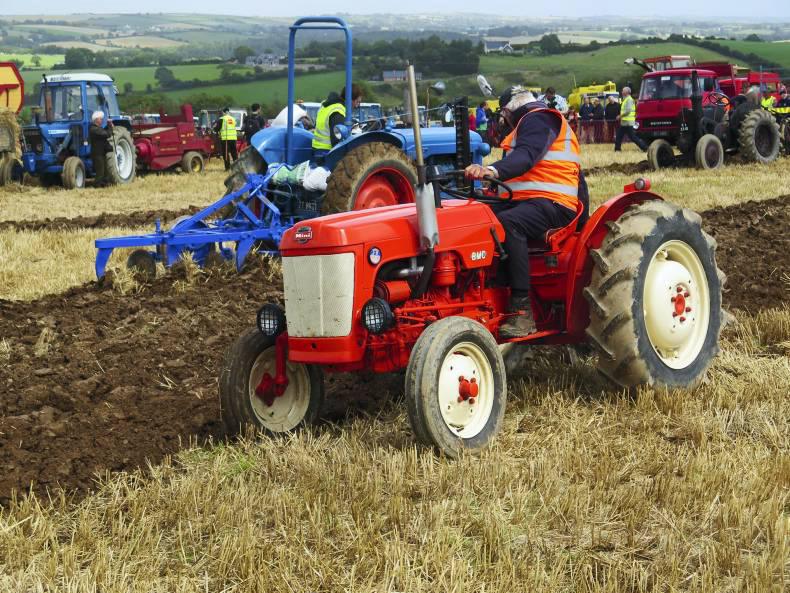
On the tractor front, David Brown introduced the white Selectamatic models. The 770 (36hp) 88 (46hp) and the 990 (55hp) were introduced that year. Nuffield, still a tractor brand name, introduced the 20hp BMC Mini tractor through Irish agents Booth Poole of Islandbridge, Dublin.
Fiat tractors were making strong inroads with the new 615 model imported by McCairn’s Motors of Santry in Dublin. This 66hp tractor came with Fiat’s Control-Matic hydraulic system for draft and position control as well as the Amplicouple synchromesh gearbox which allowed gear changes on the go, similar to a car.
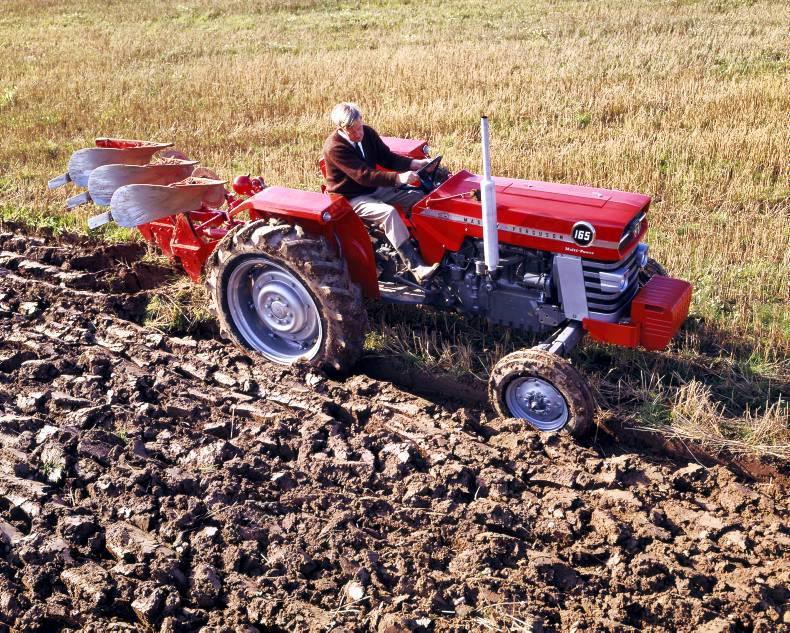
Massey Ferguson introduced the 100 Series tractors to Irish farmers at the 1966 Spring Show. They were promoting the Massey Ferguson Pressure Control system, which claimed to give a 90% increase in traction, 11hp extra at the drawbar, 37% less wheel spin and a 43% improvement in the tractor’s braking distance. This was designed for the MF135, 165 and 175 tractors but never really caught on.
That year saw John Deere establish John Deere UK in Nottingham for the distribution of John Deere tractors and machinery in the UK and Ireland. At that time, John Deere on the Irish market was served by a company called Power Farming, which was created by DH Sherrard Ltd and based at Farranlea, Victoria Cross, Cork.
Power Farming introduced a new high-capacity John Deere combine harvester in 1966 was as well as a new Lundell single and double chop silage harvester range, and a 56hp 710 tractor with dual clutch, two-speed PTO and 10 forward and three reverse-speed gearbox.
There were lots of different combine harvester brands available in Ireland 50 years ago. DH Sherrard was importing the Danish-built Dania range. They introduced a new Dania Great Dane combine in 1966 as a 10ft cut bagger/tanker combine harvester. It had hydraulic power steering, hydraulic control of forward speed, drum speed, header and reel, 10t/hour and weighed just 4.5t.
Other combine makes from that time included the Braud range imported through Vicon dealers, the Braud 405 combine, with 10ft or 12ft cut and a claimed output of 8t/hour, along with the Allis Chalmers Gleaner combine imported by McGee’s of Ardee.
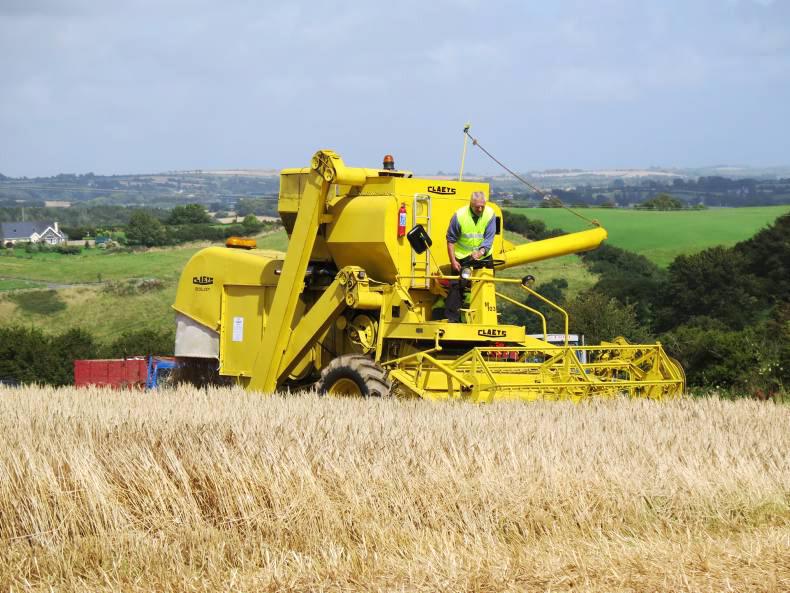
PA Pentony based in Swords was importing the Bautz range of combines, while IAM had the Activ combine range. The Clayson range, predecessors of the New Holland combines in Europe had new combines in 1966 from importer Booth Poole of Islandbridge, Dublin. These were the Clayson M89, M133 and M135, some of which are often seen in action at vintage events.
1 January Antrim Vintage Club rally, Allen Park Antrim 0044-7892938061
1 January Little Bob’s Memorial Tractor Run, Ballinamult Waterford 087-251 7844
2 January Cullybackey Tractor Run, Ballymena Antrim see Facebook
3 January Barney Greene Tractor Run, Lusk Dublin 086-081 3725
3 January Limerick Model Fair, Castletroy Hotel Limerick 0044-42670023
3 January Robert’s Cove Tractor Run Cork 086-102 4710
10 January Lakeland Vintage Autojumble, Abbeyshrule Longford 087-664 9069
23 January IVETA Annual Dinner Dance County Arms, Birr Offaly 087-266 6046
27 January Traction Engine Club of Ulster member’s night Antrim 0044-7739613193
30 January South Roscommon Autojumble Taughmconnell Ballinasloe 087-756 5147


SHARING OPTIONS