



Rainwater harvesting systems have been available in this country for many years. However, adoption by both farmers and industry has been slow.
While there are a raft of different systems available, many will have limitations or drawbacks. Some systems will require a pump which will significantly increase the cost involved, other systems have struggled to prevent water from going stagnant, which can be a major health concern whether the water is being consumed by people or by livestock.
The majority of rainwater harvesting systems which provide water of a drinkable quality may also require the regular addition of salts.
Des Glackin of Water Intercepted And Conserved (WIAC), based in Co Donegal, has developed a rainwater harvesting system that addresses all of these concerns. His system was developed to provide a constant supply of drinkable water that will not go stagnant and does not require a pump to work. This water has been independently tested by the HSE on numerous occasions and has been deemed fit for human consumption.
Figure one
Rainwater comes off the roof of the shed and is instantly filtered. It then enters a 70-litre WIAC sediment tank, here suspended solids settle at the bottom of the tank. This is known as the first wash tank. This first wash water from the sediment tanks can be used for power washing and spraying among other things.
When the first wash tank reaches 50% capacity, the water will begin to move to the next tank and through the rest of the system. There will be further filters in place between the tanks throughout the system.
Once the water leaves the sediment tank it enters the larger 161-litre WIAC tanks. A series of these larger tanks makes up the rest of the system. Throughout the rest of the system the water is continually moving. This physical movement keeps the water oxygenated and prevents it from going stagnant.
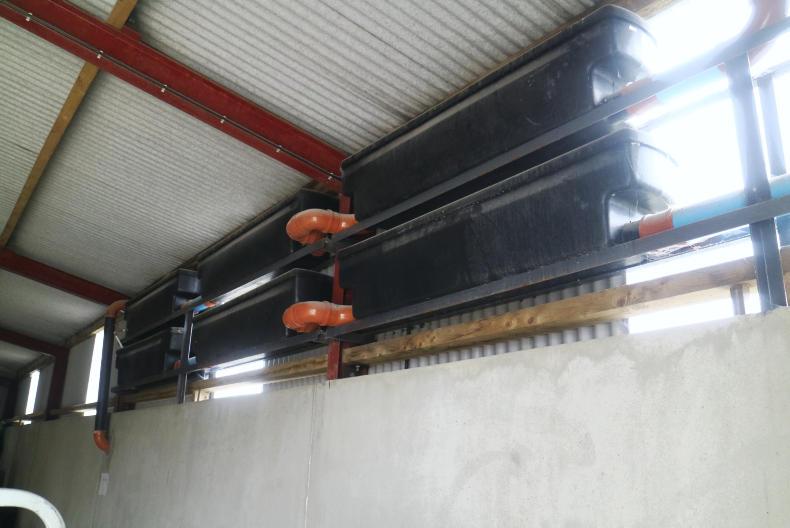
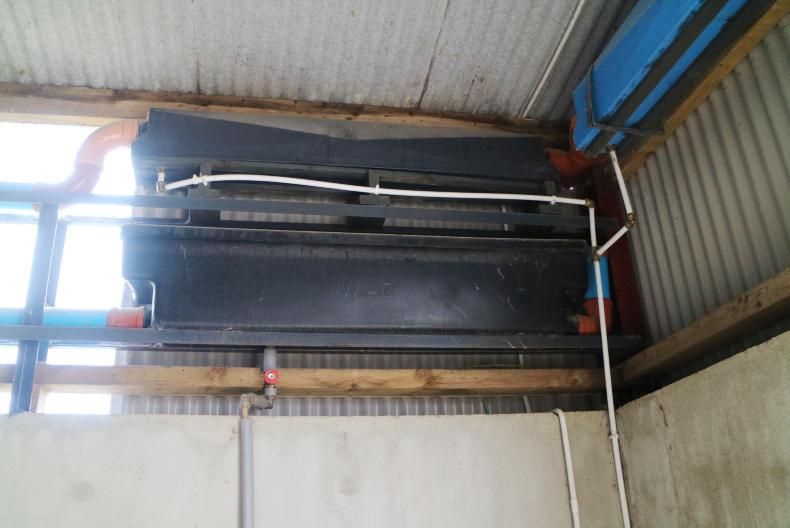
Pictures one and two
The system was installed on a four-bay sheep shed that is predominantly used at lambing as both drinking water and for washing. The roof area of the shed is approximately 120m2. With an average rainfall of 1,000mm throughout Ireland the roof of this shed has the potential to collect 120,000 litres of rainwater.
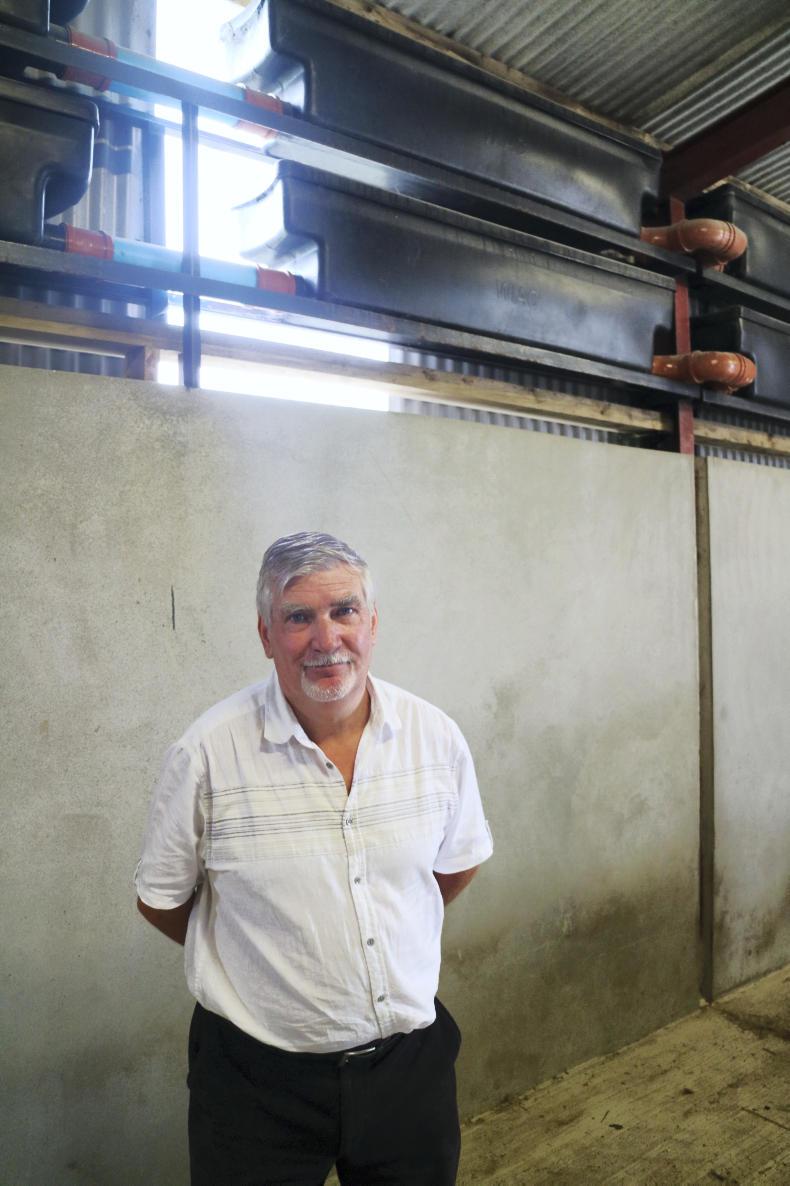
This elevated system is comprised of one 70 litre sediment tank and seven 161 litre tanks giving a full storage capacity of nearly 1,200 litres. The current storage takes up two of the four bays of the shed so there is the potential to easily double the capacity of the elevated storage. However, based on the enterprise run and the calculated demand of water, the current storage capacity is more than enough for this farm. There is no need for pumps as water will be carried to drinkers in the shed by gravity.
Another option for a farm which may have a higher demand for water is to have an exterior storage tank that is filled from the overflow pipe of the system. Water can then be pumped from this storage tank back into the system where it would be reoxygenated and filtered for a second time before it goes to drinkers. Animals are then drinking water completely free of chemicals and contaminants.
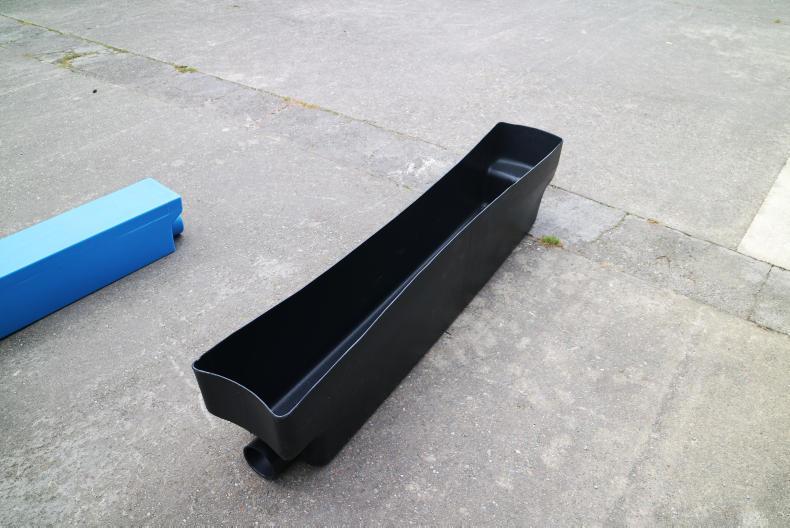
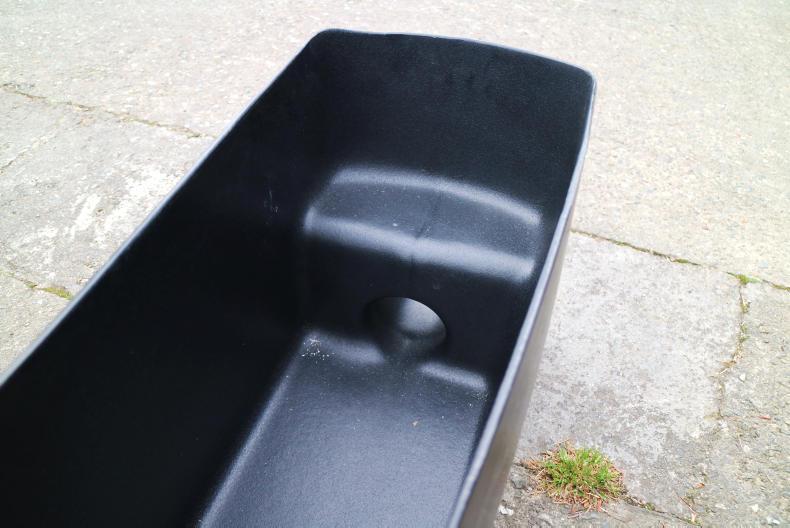
Pictures three and four
Des designed the tanks to ensure continual movement of water. The shape of the tanks will prevent water from flowing straight through the system and will cause the water to agitate itself, keeping it oxygenated.
Picture five
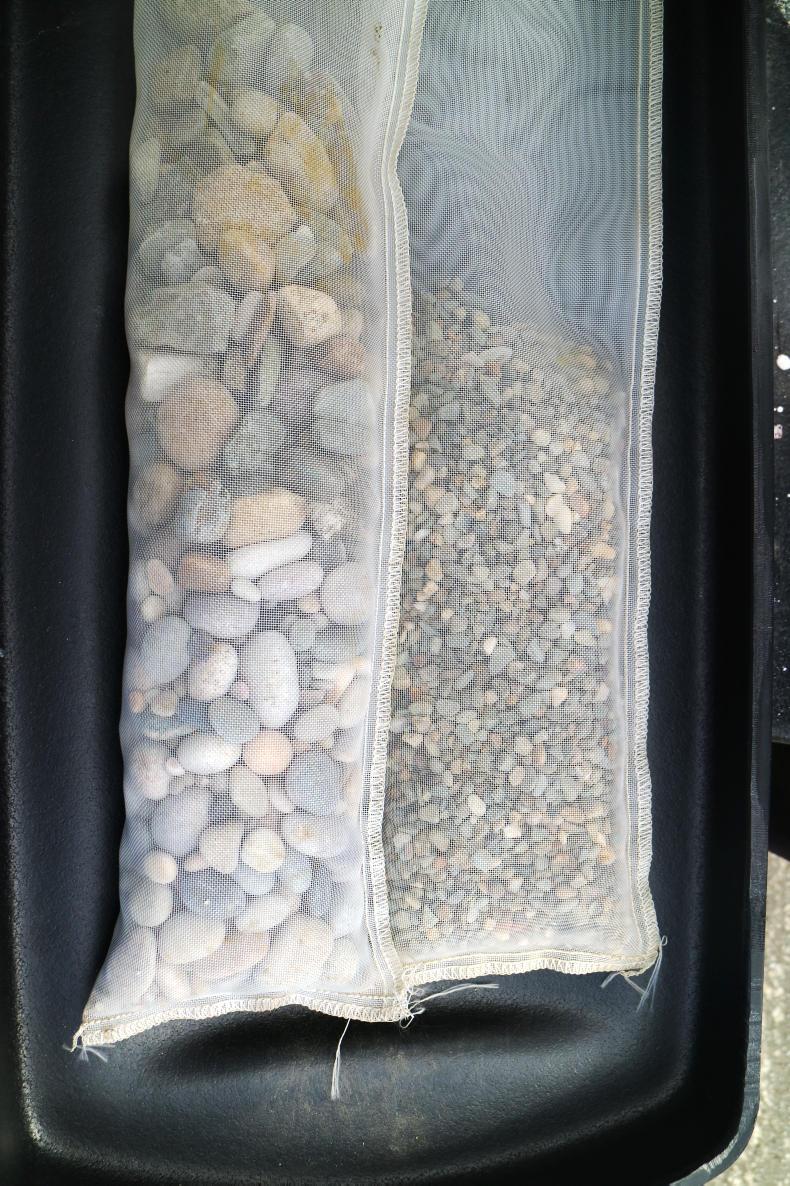
The filters used are generally 150-160 micron nylon sock filters. These sock filters can be filled with whatever filtering material you wish to use such as limestone, quartz and carbonated charcoal. Different size materials can be used in the nylon socks to ensure both coarse and fine material is filtered out of the water. Not only does this material filter the water, it can also add minerals to the water. If a farmer wanted to add certain minerals to the drinking water of livestock, it could be incorporated into these filters.
Advantages
Des says one of the main advantages of this system is in areas that are prone to flooding, where groundwater can remain contaminated for long periods of time requiring households to buy water for both drinking and cooking.
Human consumption
While the system fitted above was for livestock, it also provides water of high enough quality for human consumption, and WIAC has also fitted personal systems to houses providing not only drinking water but also water for use in washing machines, dishwashers, kettles etc.
Rainwater is naturally soft water which reduces maintenance costs associated with limescale build-up.
Cost
The system on this farm cost approximately €1,800 plus VAT installed.
WIAC has installed both larger and smaller systems to date and will design a system based on the calculated water requirements of each individual project.
For more information visit http://www.wiac.ie/


SHARING OPTIONS