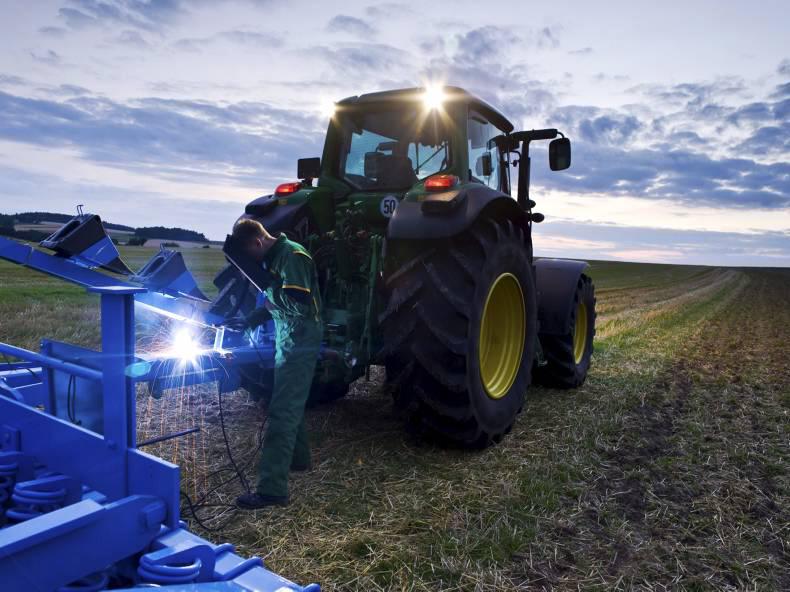
Often, being capable of carrying out your own repairs and making something useful for your farm can save you a significant amount of money. However, when it comes to working with steel and different materials, a certain amount of skill and know-how is required. Many farmers are interested in learning how to weld properly so that they can carry out small repairs on their farm without having to call in help. Some smaller farmers are also looking into welding courses because they could potentially lead to part- or full-time employment and help to subsidise low incomes.
Arcs and Sparks, a weld training school based on the Ballinagh Road outside Cavan town, provides training courses for people interested in learning the basics of welding as well as more advanced full-time courses that may lead to specialised full-time welding employment. The company was set up by Michael Farrell and Michael Doherty in spring 2015 and there has been a good uptake of its courses since.
Beginners’ course
Lots of farmers are interested in taking part in the beginners’ course in winter, according to Michael Farrell. “Usually, farmers want to learn the basics of welding so that they can confidently do their own light repairs on link boxes and silage grabs for example,” he says. “We run a part-time beginners course once a week for 10 weeks at night time that caters for farmers or anyone else interested in just basic repairs, which costs €400 to €450 in total,” he says.
A safety induction is given on the first night of the course. This is very important because there are numerous risks involved with welding including electrocution, burns and risks to people’s eyes that trainees have to be made aware of before they start welding themselves. Next, the instructors go through the welding machine, the cables and the rods to explain how they function.
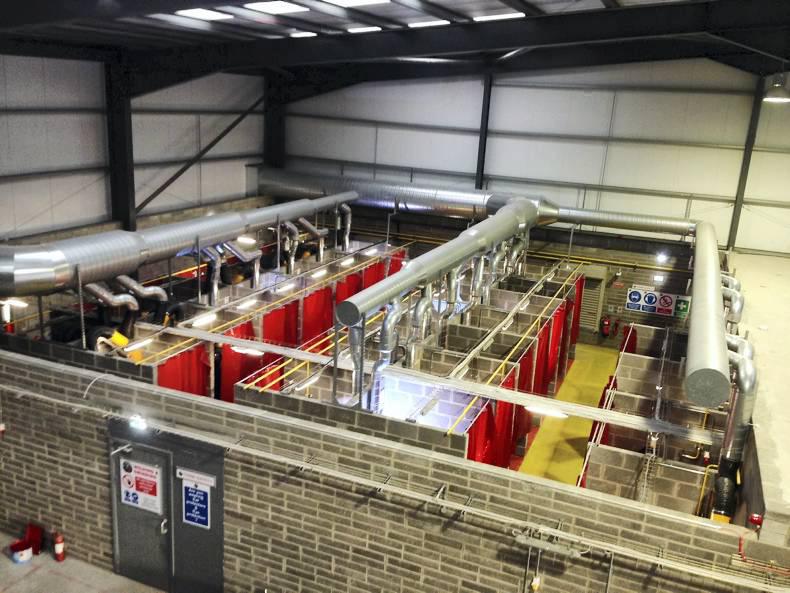
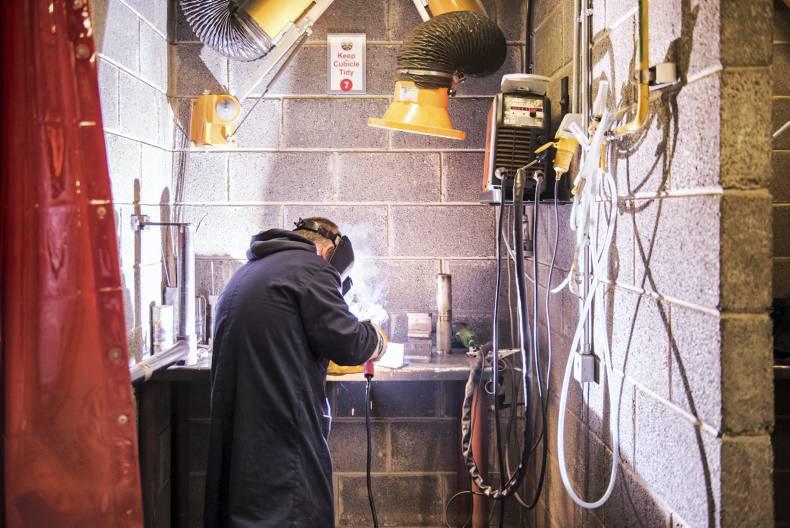
Clothing and safety ware is also important. Michael recommends that anyone welding should have a good welding helmet (€20 to €40) and proper gloves (€10). The instructors show the participants how to do some basic welding and then they are sent to individual booths to start work themselves. “Our course is very hands-on. Even in the beginners’ courses people can be at different levels, so by working individually we can go to each one and give them pointers no matter what stage they are at,” Michael says. Each session lasts for 2.5 hours, but Michael claims that students don’t feel the time pass and once they arrive in the door they never stop.
Students of this course are mainly taught how to do basic arc welding. Arc welding is a fusion process for joining metals. By applying intense heat, metal at the joint between two parts is melted and caused to intermix directly or, more commonly, with an intermediate molten filler metal. This form of welding, when done correctly, is ideal for carrying out basic repairs on the farm.
Advanced course
There are a variety of more advanced training courses available to people who want to make a career in welding. “Some participants are involved in community employment schemes and do one of our courses through that. Others may want a change from their current employment or want to upskill and decide to do a full-time or part-time course” he explains.
“The courses are flexible and work around what the student wants to learn,” he adds. Advanced courses include:
Ten-week beginners’/intermediate tungsten inert gas (TIG) welding course: TIG welding is an arc welding process that uses a non-consumable tungsten electrode to produce the weld. This is a full-time course from Monday to Friday. On completion of this course, trainees will have the required skills and confidence to seek employment as a TIG welder. They will also be suitable candidates for an advanced pipe welding course.Beginners’/intermediate two-week metal inert gas (MIG), metal active gas (MAG) welding course on Mondays: MIG-MAG welding is a welding process in which an electric arc forms between a consumable wire electrode and the workpiece metals, which heats the workpiece metals, causing them to melt and join. According to Michael, on completion of this course, trainees will have the required skills and confidence to seek employment as MIG welders in a factory or workshop environment.
Advanced coded pipe and plate welding: weld training available on demand. Part-time and full-time options available. Training will cover advanced TIG and arc welding in plate and pipe. Relevant certification will be available at the end of selected training.“People who successfully complete an advanced training course are suitable for high-end specialised jobs in pharmaceuticals, refrigeration, oil and gas, construction and engineering,” according to Michael. He says that farmers should consider doing a welding course if they want a new skill that will be useful on the farm. “It only costs around €300 for a basic welder that can be used for lots of different repairs and jobs when you have the know-how,” he adds.
In Table 1 we show a selection of welding courses provided around the country. This is not a complete list of providers. In the table, we focused on beginner and basic courses suitable for farmers who want to learn part-time in the evenings. The cost varies from €100 to €700. The big variation in cost is put down to the facilities provided in the centres, as well as the content of the courses. Most of the providers have more advanced courses available to participants that can be taken as they progress.
Often, being capable of carrying out your own repairs and making something useful for your farm can save you a significant amount of money. However, when it comes to working with steel and different materials, a certain amount of skill and know-how is required. Many farmers are interested in learning how to weld properly so that they can carry out small repairs on their farm without having to call in help. Some smaller farmers are also looking into welding courses because they could potentially lead to part- or full-time employment and help to subsidise low incomes.
Arcs and Sparks, a weld training school based on the Ballinagh Road outside Cavan town, provides training courses for people interested in learning the basics of welding as well as more advanced full-time courses that may lead to specialised full-time welding employment. The company was set up by Michael Farrell and Michael Doherty in spring 2015 and there has been a good uptake of its courses since.
Beginners’ course
Lots of farmers are interested in taking part in the beginners’ course in winter, according to Michael Farrell. “Usually, farmers want to learn the basics of welding so that they can confidently do their own light repairs on link boxes and silage grabs for example,” he says. “We run a part-time beginners course once a week for 10 weeks at night time that caters for farmers or anyone else interested in just basic repairs, which costs €400 to €450 in total,” he says.
A safety induction is given on the first night of the course. This is very important because there are numerous risks involved with welding including electrocution, burns and risks to people’s eyes that trainees have to be made aware of before they start welding themselves. Next, the instructors go through the welding machine, the cables and the rods to explain how they function.
Clothing and safety ware is also important. Michael recommends that anyone welding should have a good welding helmet (€20 to €40) and proper gloves (€10). The instructors show the participants how to do some basic welding and then they are sent to individual booths to start work themselves. “Our course is very hands-on. Even in the beginners’ courses people can be at different levels, so by working individually we can go to each one and give them pointers no matter what stage they are at,” Michael says. Each session lasts for 2.5 hours, but Michael claims that students don’t feel the time pass and once they arrive in the door they never stop.
Students of this course are mainly taught how to do basic arc welding. Arc welding is a fusion process for joining metals. By applying intense heat, metal at the joint between two parts is melted and caused to intermix directly or, more commonly, with an intermediate molten filler metal. This form of welding, when done correctly, is ideal for carrying out basic repairs on the farm.
Advanced course
There are a variety of more advanced training courses available to people who want to make a career in welding. “Some participants are involved in community employment schemes and do one of our courses through that. Others may want a change from their current employment or want to upskill and decide to do a full-time or part-time course” he explains.
“The courses are flexible and work around what the student wants to learn,” he adds. Advanced courses include:
Ten-week beginners’/intermediate tungsten inert gas (TIG) welding course: TIG welding is an arc welding process that uses a non-consumable tungsten electrode to produce the weld. This is a full-time course from Monday to Friday. On completion of this course, trainees will have the required skills and confidence to seek employment as a TIG welder. They will also be suitable candidates for an advanced pipe welding course.Beginners’/intermediate two-week metal inert gas (MIG), metal active gas (MAG) welding course on Mondays: MIG-MAG welding is a welding process in which an electric arc forms between a consumable wire electrode and the workpiece metals, which heats the workpiece metals, causing them to melt and join. According to Michael, on completion of this course, trainees will have the required skills and confidence to seek employment as MIG welders in a factory or workshop environment.
Advanced coded pipe and plate welding: weld training available on demand. Part-time and full-time options available. Training will cover advanced TIG and arc welding in plate and pipe. Relevant certification will be available at the end of selected training.“People who successfully complete an advanced training course are suitable for high-end specialised jobs in pharmaceuticals, refrigeration, oil and gas, construction and engineering,” according to Michael. He says that farmers should consider doing a welding course if they want a new skill that will be useful on the farm. “It only costs around €300 for a basic welder that can be used for lots of different repairs and jobs when you have the know-how,” he adds.
In Table 1 we show a selection of welding courses provided around the country. This is not a complete list of providers. In the table, we focused on beginner and basic courses suitable for farmers who want to learn part-time in the evenings. The cost varies from €100 to €700. The big variation in cost is put down to the facilities provided in the centres, as well as the content of the courses. Most of the providers have more advanced courses available to participants that can be taken as they progress.





SHARING OPTIONS