



Having heard about Beltex from a friend in the Netherlands (who had exported them to Northern Ireland), I decided to visit Castlewellen Show in 1995 to see some of the sheep for myself. There I met a Rouge breeder, Fred Coulter, who was showing Beltex sheep.
I remember commenting at the time that they may be ideal for a pet farm, but failed to see how this “little animal” could replace the likes of the mighty Oxford Down ram. Nonetheless, Fred persuaded me to run a Beltex with my Rouge flock, claiming the two breeds crossed extremely well. I was persuaded to give it a go.
In August 1995, I travelled to Drunhirk House in Monaghan town, where I purchased my first Beltex ram for £550. Later that year, I purchased two shearling in-lamb ewes at £1,000 each.
Then in spring 1996, I took a chance and entered four Beltex/Rouge lambs, just 10 weeks old, in the carcase competition at the sheep event in Athenry. To my surprise, I took home two rosettes. Both lambs killed at 60% liveweight.
Few had heard about the breed, but I knew the seeds had been firmly sown that day. The Beltex had made their mark. This was followed by a flight to Brussels, where we met Beltex contacts in Antwerp, Liege and Ghent. In the space of three days, 147 male and female breeding sheep were purchased.
In August 1996, a sale was held at Tuam Mart which saw 15 customers from around Ireland purchase Beltex sheep. Those who made purchases were asked to attend a meeting later that evening in the mart canteen. There, after much lively discussion, the Beltex Sheep Society was formed. Thankfully, some who attended that day are still active members.
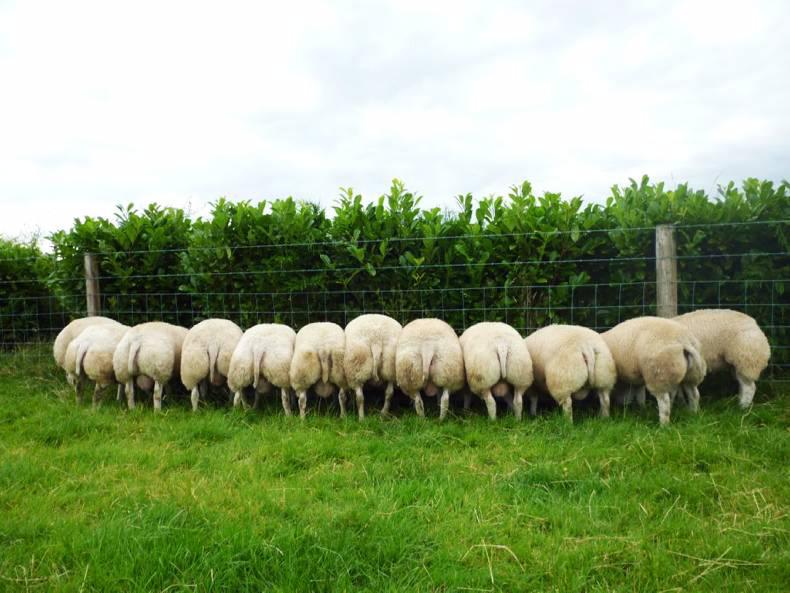
Initially, the Beltex breed in Ireland was slow to take off, mainly because of its size. Traditionally, farmers were reluctant to purchase a ram smaller than the ewes it was being put with. But this perception has changed. In my view, the Beltex breed is extremely docile and light-boned, with a large muscled backend and a light fat cover.
As Beltex cross lambs are usually lighter than other breeds when born, they are fit to be killed from 35kg onwards, with a kill-out varying between 52% and 60%.
While predominately a terminal breed, when crossed with breeds such as Mule, Rouge, Blue Demaine, Lleyn and Belclare, they can produce shapely, medium-sized, prolific females for further breeding. This is a big trend in the UK, where Beltex ram sales are a sellout. Large UK flock owners are now going for an easy-care ewe – Mule, Lleyn or Lanark – and serving them with a Beltex ram.
Well-known Mule breeder Tom Stanton from Tourmakeady in Mayo has been using this cross for many years and achieving a kill-out rate of 50%-53%.
In the sales ring, Irish breeders have left their mark not just here, but also across the water. Offaly breeder Brian Mathews from Tullamore recently recorded the second-highest priced Beltex ram lamb at a sale in Carlisle, receiving 10,000gns for his prize-winning ram lamb.
The Beltex are still not one of the main breeds selected in the Sheep Ireland Ovigen genomics project, but with traits like double-muscling, higher kill-out, lower feed intake and higher carcase classification, this breed undoubtedly has much to offer in future Irish genomics breed schemes.


SHARING OPTIONS