


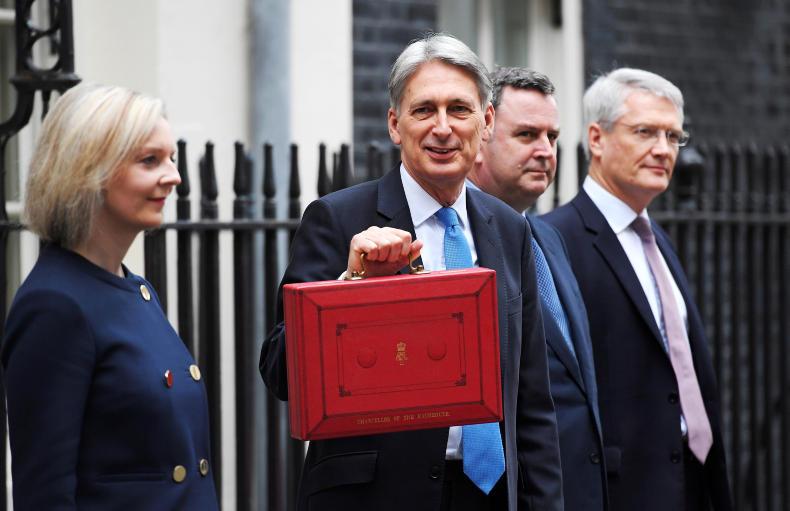
The crystal ball gazing is over, the die is cast. On Wednesday, Chancellor Phillip Hammond delivered his Autumn Budget. In truth, apart from a few headline-grabbing announcements like the abolition of Stamp Duty for first-time house buyers in England and Wales, and additional funding for the universal credit scheme, there was not very much to get excited about.
Income tax
The personal allowance threshold, within which income is tax free, will rise to £11,850 from April 2018, up from the current banding of £11,500. Additionally, the basic-rate tax threshold for 2018/2019 rises to £46,350. These were not unexpected increases, as bandings usually increases in line with inflation, or more.
What remains to be seen – but will be of keen interest to all taxpayers in Scotland– is the extent to which the Scottish Government chooses to differentiate tax rates or tax bandings from the rest of the UK.
The Scottish Government did issue a consultation paper recently in which several possible options were set out, but we won’t find out, until the budget for Scotland is presented to Holyrood on 14 December, which strategy the present administration wishes to pursue.
Diesel car supplement
Further moves to encourage the transition to greater use of hybrid or fully electric vehicles were announced, with additional funding for charging infrastructure.
As part of this strategy, measures are also in place to disincentivise the use of diesel vehicles. The existing diesel supplement of 3% applied to the benefit-in-kind tax charge employees pay when provided with a diesel vehicle by their employer will increase to 4% from April 2018.
Employees of farming businesses which provide them with diesel vehicles will be affected by this measure.
Corporation tax on capital gains
Where assets – including farmland and buildings – are owned within a corporate entity, and that entity sells them, an allowance for inflation (or indexation) is allowed as a deduction in calculating the gain.
The Chancellor has announced that this will cease on 31 December 2017, so gains on disposals thereafter will not attract indexation relief beyond that point. The impact of this change will be case-specific, but it may be worth considering the structure of asset ownership and also the extent to which values may increase in future.
Value-added tax
Changes to value-added tax (VAT) threshold or rates were trailed as possibilities before the Budget, but none came to pass. So the VAT registration threshold remains at £85,000 for the coming tax year, with standard-rate tax remaining at 20%.
Inheritance tax
Another tax to avoid any changes in the Budget was inheritance tax (IHT), but there was a potentially significant development on Budget day. Among the publications issued by The Treasury was a research and analysis paper into the influence of IHT reliefs and exemptions.
This document reports on research commissioned by the Government “to understand the motivations, behaviours and attitudes underlying individuals’ decision-making process on IHT matters and the use of reliefs and exemptions in that process”.
No changes have been introduced to the IHT regime, yet. The publication of this document puts us all on warning, however, that Government is looking at the reliefs currently available and whether or not they fulfil their objectives.
So, all in all, a relatively quite Budget in terms of specific changes that significantly affect farming businesses in Scotland.
Please take specific advice in relation to how the Budget affects your own circumstances.
*Graeme Davidson is a partner with EQ Accountants LLP in Forfar. EQ has a large team that looks after clients in the rural sector across Scotland. Visit www.eqaccountants.co.uk for more.


SHARING OPTIONS