Field surveys conducted by SRUC have thrown up warnings on leatherjacket damage to grass and crops this year. The loss of plant protection products containing chlorpyrifos means that farmers will have to focus on limiting the damage as opposed to eradicating the issue. Argyll, Ayrshire, Bute, Renfrewshire and Dunbartonshire are all singled out as areas most likely to be affected.
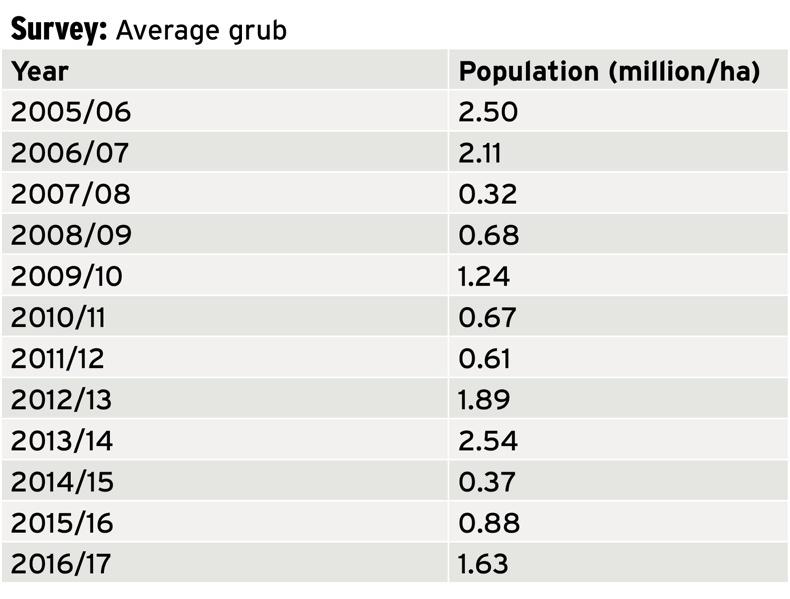
The warning comes from results of the annual grub density survey which has been running since the mid-1970s. Over the last 20 years the numbers of grubs have fluctuated, but overall there is a general growing trend. The latest results have shown that the average density in fields surveyed was 1.6 million grubs per hectare. Milder autumns and winters have been blamed for the grub number rise.

A density of over 1 million grubs per hectare in a grassland field is likely to markedly reduce grass growth along with crop damage. While a density of over 2 million grubs per hectare in a grassland field is likely to result in severe and visible damage to that sward in the spring. SRUC with support from the Scottish government sampled 162 fields between November 2016 and February 2017.
SRUC Ecologist Professor Davy McCracken, who undertook the survey, said ''The loss of reliable chemical controls last year and the high degree of risk this year means that it is even more important that farmers start planning now if they want to limit leatherjacket damage to crops and grassland on their farms. SRUC’s advice remains the same as we highlighted at the end of last summer – survey key fields now to know what densities are present so the results can inform spring management decisions.”
“Although chemical control is no longer feasible, farmers still have options if they establish the risk present in each field early enough. If high levels of grubs are found within a particular grassland field the farmer can then decide if it is worth continuing to use that land for spring crop or silage production, knowing that yields will be affected and damage likely to occur, or instead decide to concentrate efforts in another field with lower grub densities.”
Read more
Application for leatherjacket pesticide in the UK rejected
Leatherjacket control petition
Field surveys conducted by SRUC have thrown up warnings on leatherjacket damage to grass and crops this year. The loss of plant protection products containing chlorpyrifos means that farmers will have to focus on limiting the damage as opposed to eradicating the issue. Argyll, Ayrshire, Bute, Renfrewshire and Dunbartonshire are all singled out as areas most likely to be affected.
The warning comes from results of the annual grub density survey which has been running since the mid-1970s. Over the last 20 years the numbers of grubs have fluctuated, but overall there is a general growing trend. The latest results have shown that the average density in fields surveyed was 1.6 million grubs per hectare. Milder autumns and winters have been blamed for the grub number rise.
A density of over 1 million grubs per hectare in a grassland field is likely to markedly reduce grass growth along with crop damage. While a density of over 2 million grubs per hectare in a grassland field is likely to result in severe and visible damage to that sward in the spring. SRUC with support from the Scottish government sampled 162 fields between November 2016 and February 2017.
SRUC Ecologist Professor Davy McCracken, who undertook the survey, said ''The loss of reliable chemical controls last year and the high degree of risk this year means that it is even more important that farmers start planning now if they want to limit leatherjacket damage to crops and grassland on their farms. SRUC’s advice remains the same as we highlighted at the end of last summer – survey key fields now to know what densities are present so the results can inform spring management decisions.”
“Although chemical control is no longer feasible, farmers still have options if they establish the risk present in each field early enough. If high levels of grubs are found within a particular grassland field the farmer can then decide if it is worth continuing to use that land for spring crop or silage production, knowing that yields will be affected and damage likely to occur, or instead decide to concentrate efforts in another field with lower grub densities.”
Read more
Application for leatherjacket pesticide in the UK rejected
Leatherjacket control petition







SHARING OPTIONS