



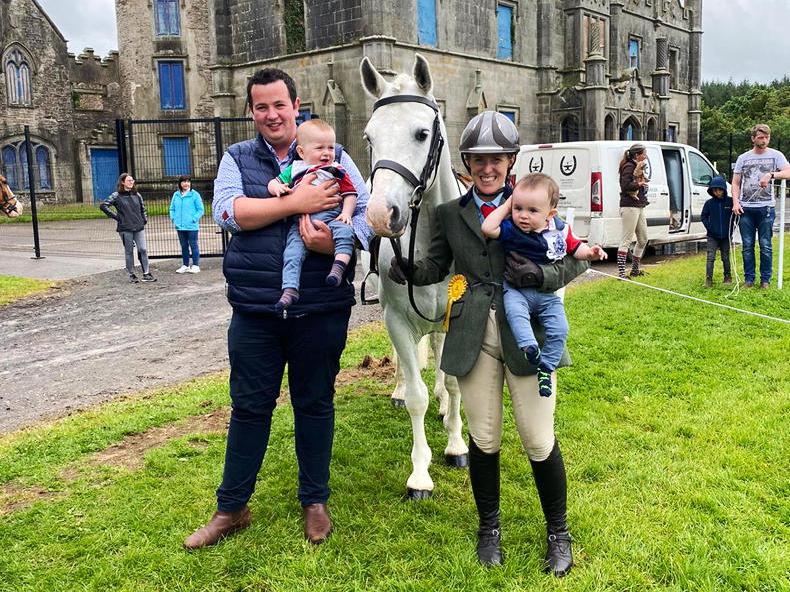
Sarah Taggart and her husband Killian run Kilderg Stables in Donegal where they have a small selection of well-produced Connemara ponies and homebred Irish Sports Horses for sale. Sarah also works full time as an equine dental technician.
“From my background of breaking and producing, I was always concerned about what was going on inside the horse’s mouth.
“I’d often be wondering if it was affecting their rideability. And perhaps there is something bothering them and that’s why they’re not in the condition they should be.
“I decided I wanted to educate myself about horses’ teeth and that’s when my journey began.”
A scenic route
The training and exam process to become qualified with the British Association of Equine Dental Technicians (BAEDT) is rigorous and intense. Sarah was fortunate to find an equine dental practice in Holland which offered her an apprenticeship after she had introductory training in America.
“The practice funded me to go to California to gain more experience, to train under the late Dr Richard Miller.
“Dr Miller was a pioneer in the field of equine dentistry and many of the techniques and equipment that we use today were implemented by him.”
When Sarah decided she wanted to return to Ireland, she was motivated to gain further qualifications despite the extensive work it would take.
I travelled over to the UK frequently for two years until I was ready to do the exams
“I wanted to get qualified with the BAEDT, as presently there are no associations in Ireland that offer a qualification and training like the BAEDT do. I got in contact with Shane Kitching – one of the founding members of the BAEDT – who kindly agreed to mentor me until I passed my exams.
“I travelled over to the UK frequently for two years until I was ready to do the exams.”
Sarah’s ambition to support horses through dentistry has remained her driving force and one she remains fiercely passionate about.
Young horses should be checked for wolf teeth before a bit is placed in their mouths
“We all know the saying, ‘No foot, no horse’. I like to alter it to, ‘No mouth, no horse’. We have changed the horse’s diet and eating patterns over the last few centuries through domestication and confinement.
“We expect more from our performance horses, often at a younger age, than ever before. Young horses should be checked for wolf teeth before a bit is placed in their mouths, it saves a lot of heartache for the horse and rider.”
Advice
Sarah’s advice is generous and clear when it comes to what the owner can do to support their horse. “Proper dental care for horses has clear rewards – they will be more comfortable, may perform better, eat better and it may even contribute to them living longer. Good forage such as hay fed regularly throughout the day really helps the horse’s mouth, saliva is stimulated when the horse is chewing. Saliva is needed to moisten and soften food, it also helps to clean the mouth.
“Feed from the ground, as if the horse is out grazing as this lessens the risk of abnormal wear to teeth.
“Keep an eye on your horses eating habits and check that they are not quidding (if teeth are damaged or missing, a horse will sometimes drop food from the mouth), as the sooner this is noticed, the better [the] chance of fixing it.
“Simply make sure your horse’s teeth are checked every six to 12 months, even if they are displaying no signs of dental pain – which is very normal as they are a stoic animal – a lot could be going on in there such as periodontal disease, infundibular and peripheral caries [destruction of dental tissue by bacteria], which all could lead to teeth fracture and/or tooth loss.”
Like so many working mums, Sarah is spinning many plates.
I run on coffee and sleep deprivation!
“It’s difficult as I spend a lot more time driving than doing dentistry. I run on coffee and sleep deprivation! We have great help from my friend Eleanor Boyle, who I met through horses, I would be lost without her! Our twins Senán and Kyran are 17 months-old and are early birds and rise at 5am most mornings; that leaves us a few hours before work starts to get everything organised, lunches, dinners, horses fed and sorting customer appointments all while the boys are buzzing around the house! Organised chaos, we wouldn’t have it any other way.”


SHARING OPTIONS