


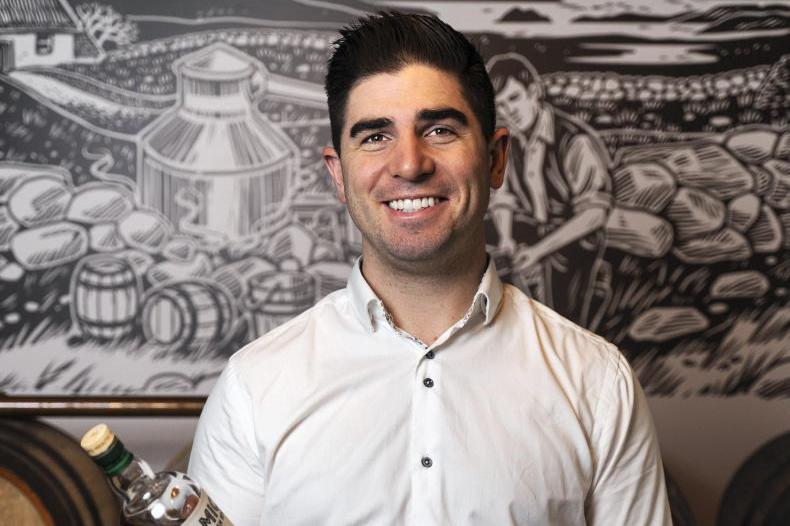
For Pádraic Ó Griallais, the road from farming to co-founding one of Galway’s best-known distilleries was not a straight one.
Micil Distillery was founded in Salthill, Galway in 2016, but its story stretches back much further. The business is built on a family distilling tradition dating back to 1848, when Pádraic’s great-great-great-grandfather, Micil Mac Chearra, began distilling poitín in Connemara.
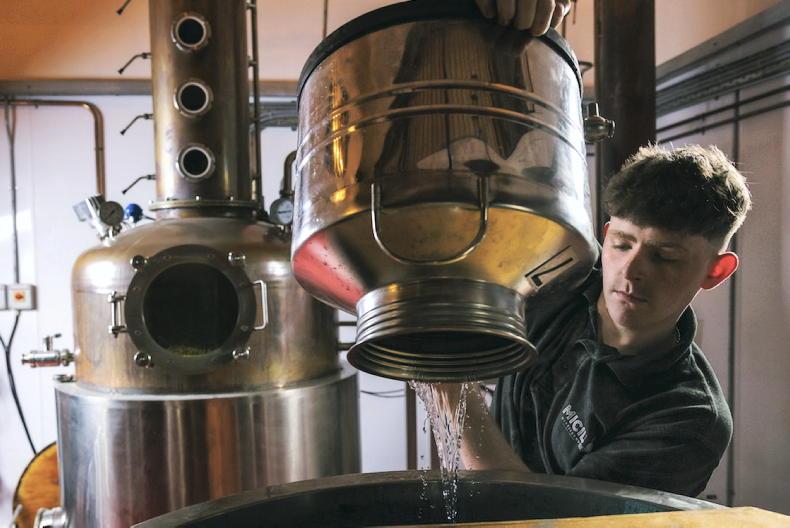
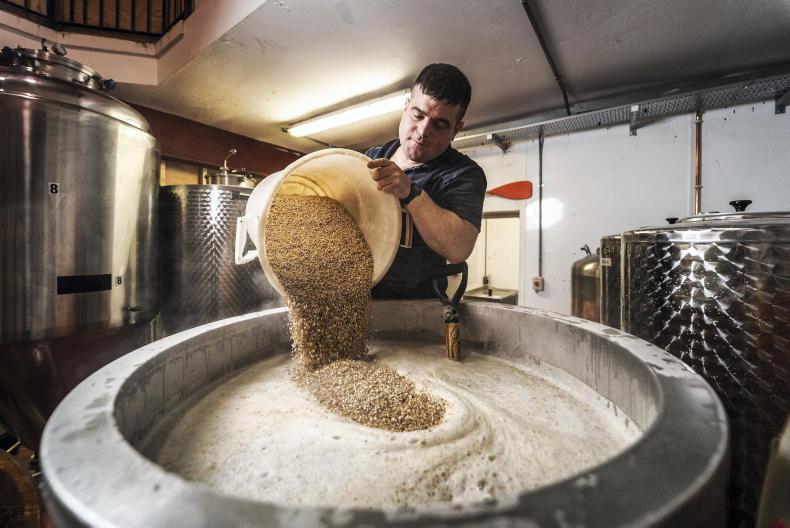
Today, Micil produces a range of Irish spirits, including poitín, gin, Irish cream liqueur and whiskey, combining six generations of family distilling knowledge with a focus on innovation.
Alongside that distilling heritage is another important influence: farming.
Pádraic grew up on the family farm, surrounded by livestock, the outdoors and the practical realities of agricultural life. He believes the experience gave him skills that have proved just as valuable in business.
“Growing up on a farm is a great thing. You’re really exposed to so much,” Pádraic says.
For Pádraic, farming was also about seeing things through, whether that meant watching livestock grow strong and healthy or bringing something to fruition.
“It transfers well into business, the fact that you have to be self-reliant, adaptable, resilient, resourceful,” Pádraic adds.
Farm life also meant learning that things do not always go according to plan: “There’s a lot of adversity – bad weather, storms, livestock getting sick,” Pádraic says.
That exposure to uncertainty, he believes, can be valuable preparation for starting a business.
“You are exposed to everything, and you have to be comfortable with a lot of uncertainty,” Pádraic says.
“I think it’s a great incubator for future business people, to come from a farming background,” Pádraic adds.
Lifelong learning
Pádraic’s own career path was far from predictable. He did not grow up knowing exactly what he would eventually do, but he knew he wanted independence and, ultimately, the opportunity to build something himself.
“I had no idea, being brutally honest, what I would end up doing. I knew I liked the idea of being independent... I loved the Irish language, that’s why I got into teaching. But I knew it was going to be a stepping stone for me,” Pádraic says.
Teaching gave Pádraic professional experience, but by 2015 he knew he had to decide whether or not he was going to pursue his business idea.
“As I got close to 2015, I was like, ‘Look, I’m either going to do this or I’m not.’ I developed enough of a basic understanding, but the only way to learn is actually by being in the industry. There are so many things that I would obviously do differently today if I was starting again. You have to live and learn,” Pádraic says.
That willingness to learn by doing remains central to Pádraic’s approach. Research and experimentation were important in developing Micil, and he believes people with an idea should test it rather than spend too long worrying about whether others think it will work.
“If it’s not terribly expensive to test it, then they should test it. If it is expensive to test it, then they should probably look at how to create a minimum viable product that you can pitch to customers or get people to try. You’d be surprised at how little it takes to get a sample, or something created. Go and try stuff. Some of the stuff won’t actually cost you that much money. I wouldn’t trust people’s answers when they say, ‘Oh, I wouldn’t buy that,’ Pádraic says.
That experimental approach also shapes how Pádraic thinks about innovation.
For Pádraic, innovation does not necessarily mean abandoning tradition. Instead, it can mean looking back at what previous generations did and finding ways to bring those ideas into the present.
“A lot of what we have done has been innovative, but it has also been leaning into what we would have been doing historically,” Pádraic says.
That means asking questions about the recipes and techniques that may have disappeared over time.
“What are the kind of forgotten recipes, what are the forgotten ways of doing things? Because it could be great kernels of truth or different flavors that have been forgotten,” Pádraic says.
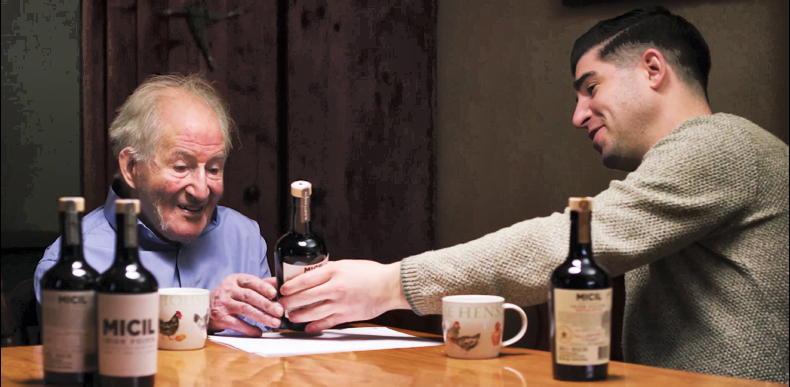
One example is Micil’s Irish cream liqueur, which came from a recipe belonging to Pádraic’s grandmother.
“Is Irish cream liqueur an innovative idea? Not really in itself. There’s an early Irish drink called scáiltí. But for us, bringing out a family recipe was innovative because nobody else that I’m aware of had a family Irish cream liqueur recipe,” Pádraic says.
Family recipe
Micil’s Irish cream liqueur demonstrates how a family tradition can be given a new life and introduced to a modern market.
“Sometimes that’s the best innovation when it comes to food or beverage – what did people do before?” Pádraic says.
The same principle, he believes, can be applied to agriculture.
For young farmers in particular, Pádraic says there is an opportunity to look beyond simply producing a commodity and accepting the price available and instead consider how more value can be created from what is already being produced.
“Young farmers in particular need to be thinking about ways to do things that are different to the way the last generation has done. There are obviously a few things they can leverage. How do you get more value out of that meat? Do you partner up with a butcher? Do you create a co-op amongst several farmers? How do you sell your own kind of beef together under a brand?” Pádraic says.
It is an approach that reflects his own experience with Micil: start with what you have, consider what else might be possible and be prepared to try something different.
That willingness to explore different possibilities also extends to careers. Pádraic does not believe young people need to commit themselves to one career path for life.
“Follow your gut. Try different things. Consider everything, really. People find their own path. Just because you’ve been doing something for 10 years or 20 years doesn’t mean you need to be doing it for the next five, 10, 20 years. Find what you love in that particular timeframe of your life. You can evolve. People need to figure out what they want to do themselves,” Pádraic says.
For the next generation of farmers, Pádraic believes there is an opportunity in looking differently at what they already have – whether that is livestock, land, knowledge, relationships or traditions – and asking how they might develop it further.
See micildistillery.com

