


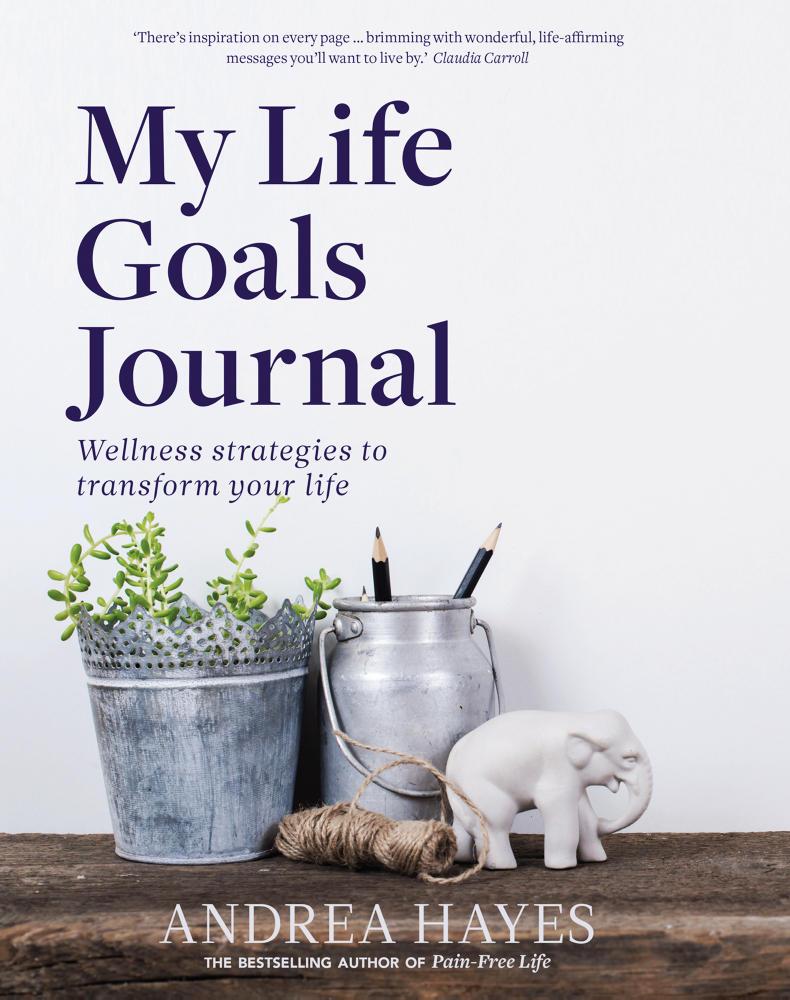
How are your New Year’s resolutions faring out for you? It’s nearly the end of January, are you still motivated and engaged with your plans or have they fallen by the wayside? If so, answer one simple question – did you write down your goals? Making a smart plan about your intentions – being specific about what you want to achieve, when you want to achieve them and the actions needed – is paramount to success. In her new book, My Life Goals Journal, Andrea Hayes shows that it requires a bit more time and work than simply announcing to the world that this year you are going to lose weight, climb a mountain or start a new course.
Focusing on Yourself
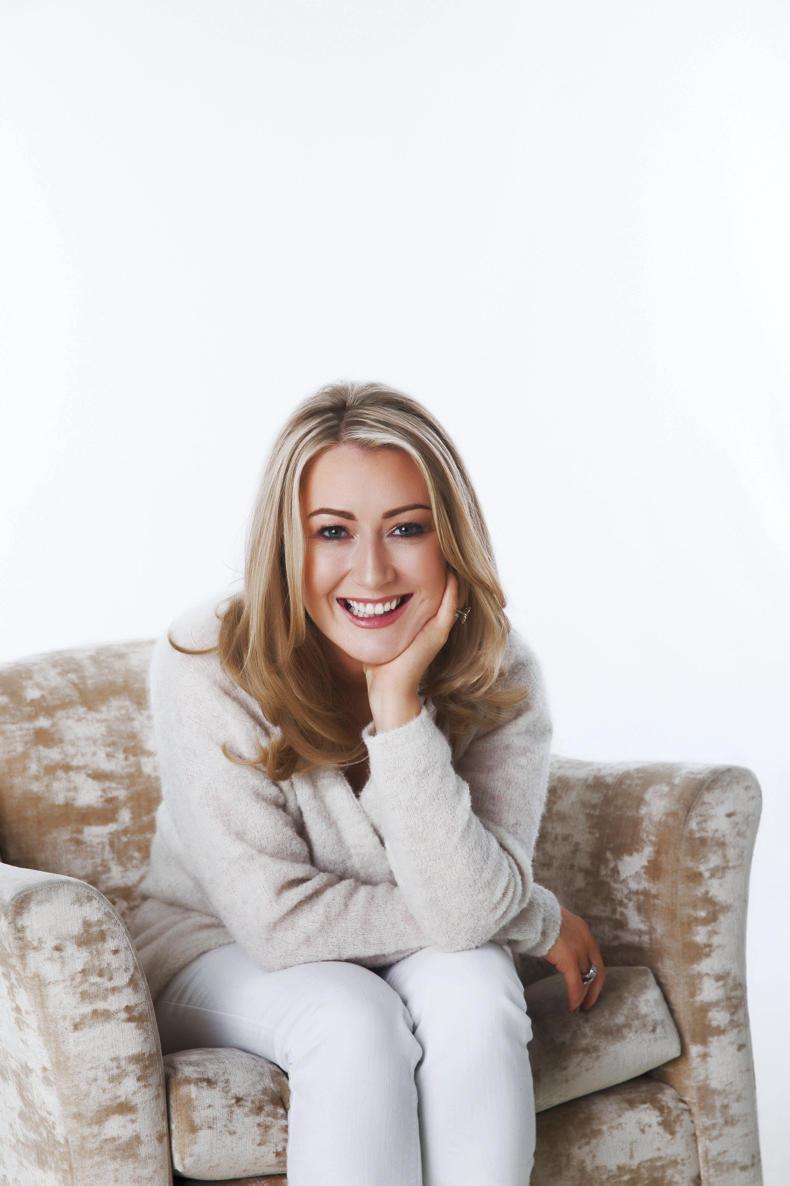
Andrea, who many know from TV3, is living proof that creating a solid plan and working on it every day can lead to a happy, healthier you. In her first book, Pain Free Life, she detailed the chronic pain she used live with every day. She knew something had to give and she took some time off to dedicate to herself.
“I ended up saying: ‘I’m going to give the same focus, discipline, attention and drive that I gave to my career all those years, to self-care and I’m going to be the best part of me.
“I looked at my life, really looked at it, and asked: was I caring for myself? Because if you are not caring for yourself, how can you care for those around you? I thought I was but when I critically assessed it, I wasn’t giving time to my pain management programme which involved stretching, walking, and relaxation. I might be only getting stretches in every second day, or watching TV, which is relaxing but not active relaxation the way meditation is, for example. This is a key chapter in the book – self love. So many people are running on empty, caring for other people the whole time. You have to prioritise yourself in order to achieve your goals, but it can be a massive mind shift.”
This is where journalling comes in. Andrea’s book is made up of chapters which encourage you to write down your thoughts and feelings. She inspires by challenging you to dares of the day and month to take you outside your comfort zone, accompanied with positive affirmations and even some of her own journal extracts to serve as examples.
Journalling
“When I embarked on my journey of self-discovery, I journalled all the time, every day. I didn’t plan to write a book, – that wasn’t my intent.”
After a year of writing though, and emerging from it a happier and more content person who significantly was medication free, she realised she had created a template for the year ahead, a template others could use.
“Journalling, the simple act of writing down your feelings, allows you to create an inner dialogue. For example, in order to care for myself and prioritise, I had to learn to love myself. This may sound hard and a bit cringy, but I had to write down that I wanted to love who I was. To do that I wrote: ‘How do I love myself? Why do I love myself?’ At the start I was staring at a blank page but I started to write: ‘I love myself because I am a good person.’ At the time, I didn’t even think I was a good mother so it was a real challenge, but I worked on it every day. It didn’t happen overnight, it took time but I started to believe it.
“These positive affirmations had a really positive affect. When you live with chronic pain, you don’t think you have a choice but I realised I did, I had control in how I dealt with it. I could choose to be happy. I could choose to feel gratitude. Yes, I was in pain, but there are people who are far worse off and I started to feel thankful for the body I had.”
Have a Rant
That’s not to say that your journal has to be all positive thoughts. In fact, every now and then it’s not a bad thing to have a good old rant.
“Sometimes, I find when I read back on the tough times that it actually gives me inspiration because I think, well, I got through that hard time, I can get through this.”
Andrea even puts in her own not-so-great experiences into the book.
“I’m not perfect. At times I found the journey hard and I wanted people to know they aren’t alone. For example, now I meditate every day but I remember going to my first meditation class and sitting there thinking I was such a con. I had a really stressful car journey to get there, I was late and there I was sitting cross-legged pretending to be all Zen, but, again, meditation is something that takes time.
“Find what works for you. I don’t meditate on a yoga mat, or even lie down. I meditate when I am walking the dog, concentrating on my breathing, being in the here and now. Often I don’t see people, even people I know like my neighbours, when I am out walking.
“My eyes are open but I am in another place in my brain. I just breathe and bring myself back to the present moment. I’m not thinking that I am not in pain now but I could be in the afternoon. I just repeat that all is well, concentrate on my breathing.
“I couldn’t do that a few years ago but from journalling and putting together this book, I am in a much better place and I hope that the lessons I learned will really benefit readers.”


SHARING OPTIONS