Four decades on from the horror of the Chornobyl* nuclear disaster, the words of ordinary people on the ground devastated by the catastrophe still hit Adi Roche hard.
You can see it etched on her face as she leafs through her book Chernobyl Heart – 20 Years On to read a poignant passage of personal testimony. It’s the words of a farmer who lost everything in the fallout from the explosion at the Chornobyl Nuclear Power Plant in the then Soviet Union on 26 April 1986 – 40 years ago this weekend.
“I remember one man kneeling down, and he picked up a fistful of the earth, and his tears drenched that earth, and he said to me, ‘This is the earth of my ancestors. The earth is my soul. If you take me from the earth, you take my soul.’
“That is a profound thing to say. A peasant farmer might not even be able to read or write, but he had that wonderful connection with the beauty of life and nature and the lifecycle,” says the humanitarian, slowly and sincerely.
It is this deep humility, care and spirit of volunteerism that led her to found Chernobyl Children International (CCI) in 1991, which has helped thousands of young people deal with the fallout. In the past 25 years it has helped deliver humanitarian and health programmes worth over €110m.
Adi remembers vividly another day filming and landing in a village that was being evacuated and everything was being bulldozed into the ground – about to disappear forever.
“Imagine it. The place of your ancestors no longer exists, even on a map. It’s as if they never existed. A woman said to me, ‘I have not only lost my home, my livestock, and my farm; I have lost life.’
“So Chornobyl is like a stone in my heart, always heavy, always present.”
Another farmer, also a beekeeper, reminded her of childhood visits to relatives on a farm in north Cork who had a hive. What he said makes her well up, even now, when he talked about the disappearance of the sound of his bees. “You see, they knew the bees. I mean, they knew something was wrong, but we didn’t, not until it was too late.”
Like it was yesterday, Adi remembers exactly where she was when she heard about Chornobyl for the first time – on a school stage in Midleton giving a talk about peace education. The principal came from the side of the stage to say there had been a “terrible accident in this place that none of us had ever heard of”.
The catastrophic effects of the nuclear explosion started to emerge despite the Soviet Union’s attempts to keep it under wraps. When the radiation levels were picked up in Sweden, the picture of devastation slowly began to be revealed.
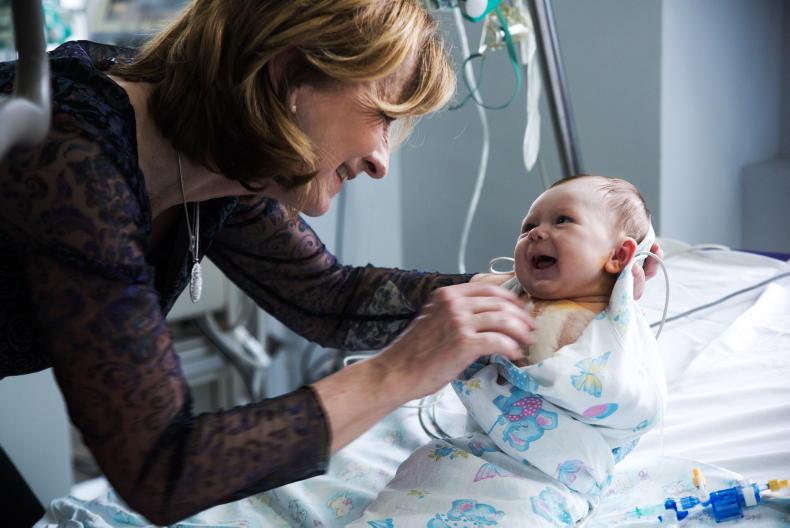
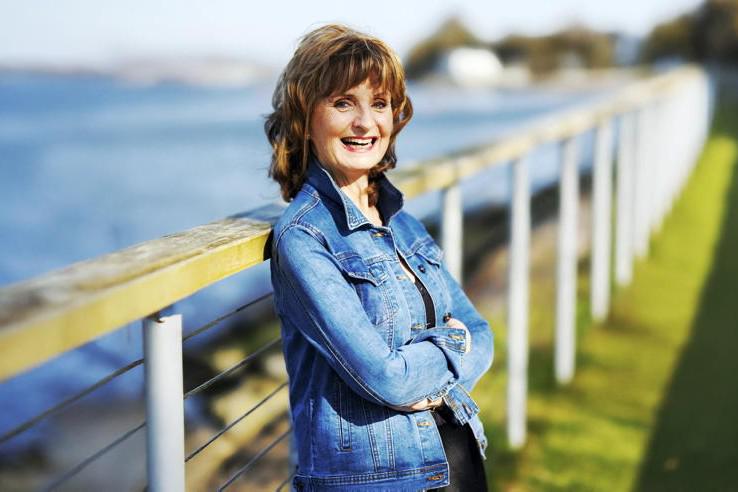
The smiling face of hope: Adi Roche has been working to support Chornobyl victims for almost 40 years.
Power of intervention
A peace and nuclear disarmament campaigner for many years, she traces her activism and interest in social justice back to her upbringing in Clonmel, Co Tipperary, and the involvement of her parents in St Vincent de Paul, Meals on Wheels and education programmes for the Traveller Community.
Adi learned young the “power of intervention” and that not everyone is equal. But she is quick to point out that this is not unique to her, adding that there is a “sense of compassion” in Irish people, which she is very proud of. It’s something that Adi believes is an integral part of us because of our history, particularly around the Famine.
What really activated her to set up CCI – she remains voluntary CEO – was a two-line fax sent by doctors to peace and environmental organisations around the world in 1991. It was headed “SOS appeal: For God’s sake, help us to get the children out.” She later learned that the doctors were seeing the full brunt of this disaster on the ground, and those paying the highest price were the growing children.
“They were the ones showing the cancer of the thyroid gland,” recalls Adi, along with immunity issues and heart defects, and then there was foetal damage to women who were pregnant at the time. Ongoing genetic damage in a third generation of people remains a major problem, even today, 40 years on.
While it took time to get in there, CCI were what Adi describes as the “first responders” to the worst affected areas. “We responded and reacted with our hearts, not with our heads” but in doing so inspired many others and they helped bring their first group of sick children to Ireland.
“We thought, well, that’s it now, like we’ve kind of done our bit. And of course, then we learned about them going back to that environment, sleeping, eating, breathing in that environment.
“All these children were from these tiny, little contaminated villages and were really sick,” she recalls. “Since then, we have managed to bring 26,500 children to Ireland for rest and recuperation holidays,” continues Adi, paying tribute to the many host families who participated.
At the same time, she knew they could not stop there. With the generosity of the Irish people and truckers, the group drove aid lorries across Europe hundreds of times.
“We have been guided, directed and taught by the stories of individual children, who have directed every single programme of work that we do,” points out Adi. During our long conversation she speaks movingly about the power of love and hope and this is what she constantly comes back to in her work.
Adi is proud of their first-ever baby hospice programme they designed and built in Belarus, the deinstitutionalisation programme they started to move children out of the orphanages or the cardiac programmes responsible for 4,000 life-saving surgeries.
Some children left a really strong imprint. One young boy (8) begged her in a hospital to take him to Ireland. “Please take me to your country. I will die if you leave me here,” he said. This led her to set up a programme to help to deal with ‘Chornobyl Heart,’ a cardiac defect.
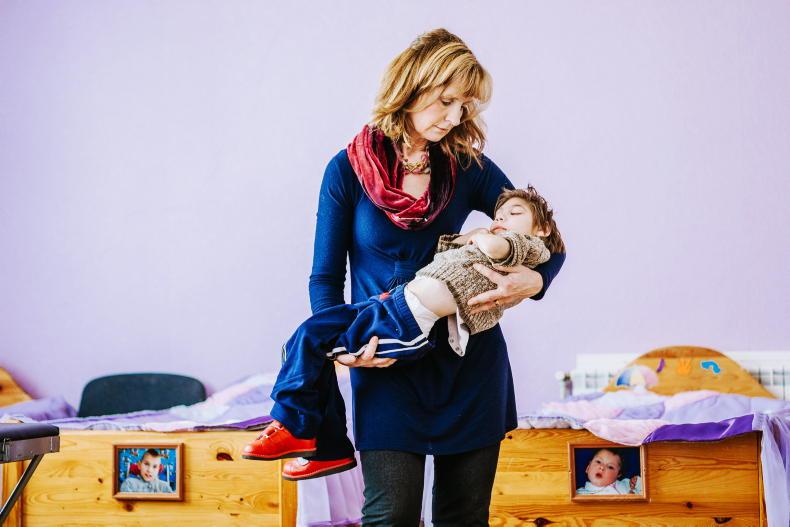
Cork's Adi Roche has been working to support Chornobyl victims for decades.
Developing from despair
With such desperate other scenes unfolding before her very eyes, how did Adi and her colleagues deal with it? She responds that doing something to help was her way of coping with the horror of it all.
“I’ll eventually cry the tears because I feel when I’m experiencing things there, like death, smelling it, seeing it, seeing the deprivation – I just feel. I don’t have the luxury to cry; that’s later, because my way of dealing with it is, ‘What can we do?’ Can we do it? When we see children, you know, languishing in homes for abandoned babies, for example, or in institutions, mental institutions, awful places that are like Dachau and Belsen or something.
While it was a “gargantuan task”, she is immensely proud of what CCI has accomplished and takes great pride in the contribution of the many volunteers and the generosity of the Irish people. Given it’s been her life’s work, what does she hope the legacy of CCI is?
“I suppose I would want people to know that we cared and that we loved enough, and that the umbilical cord that is stretched across from this small green island all the way to those affected regions will never be cut,” she replies. “Action is the antidote to despair. It’s like the dark and the light, the love and the hope versus the hatred and fears.”
Adi, who historically spoke at the UN General Assembly in 2016, urged countries not to forget the continuing suffering of the Chornobyl victims in a landmark address, which directly led to 26 April being recognised as an international remembrance day.
With several events around the 40th anniversary, most notably the unveiling of a sculpture entitled ‘Chornobyl Mother’ in Marina Park, Cork by Sandra Bell, and an event to honour volunteers in the Arás, that’s a drum she’ll continue to beat.
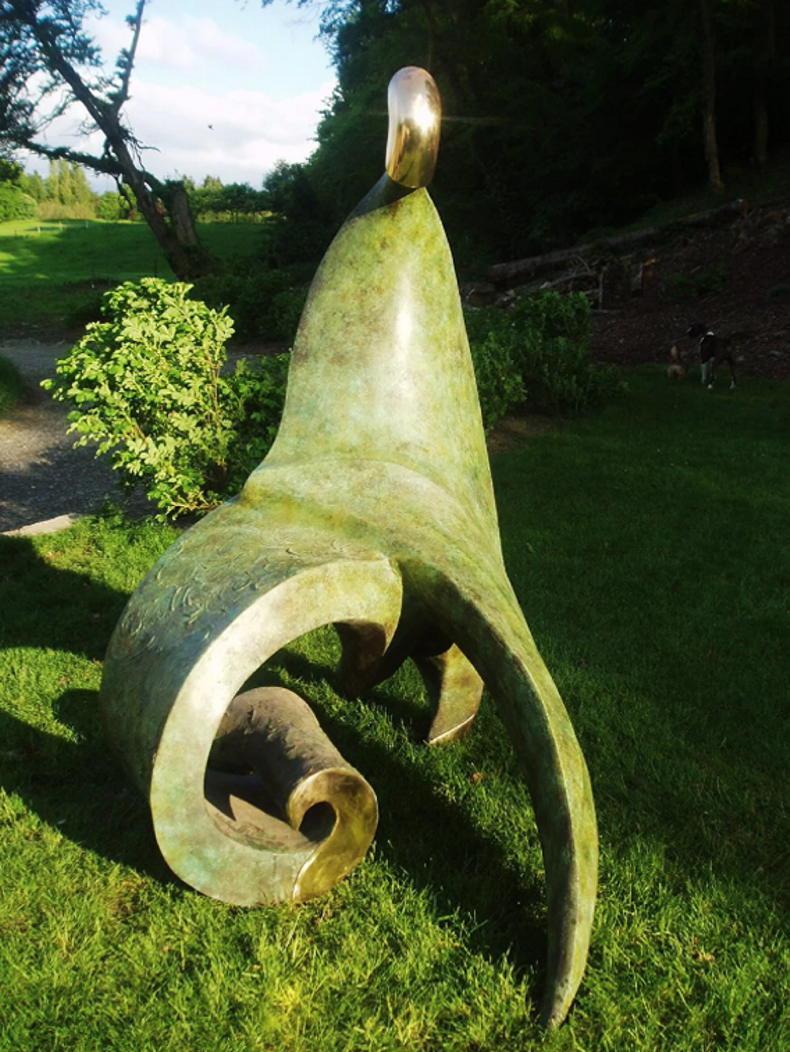
The Chornobyl Mother sculpture by Sandra Bell unveiled on April 21 in Marina Park, Cork.
The 1986 disaster may be a historic event for many, but it is “forever” for the victims, she says starkly.
“That radioactive footprint is embedded in the land, in the water; it’s everywhere, even in human DNA,” so the work to ensure they are not forgotten must continue, she vows.
*While the anglicised version has always been used (Chernobyl), the UN recently agreed that the Ukrainian and correct spelling of the area should be used in future, so CCI has accordingly adopted Chornobyl. The charity is the process of changing its name to reflect this.
See Chornobyl40.com
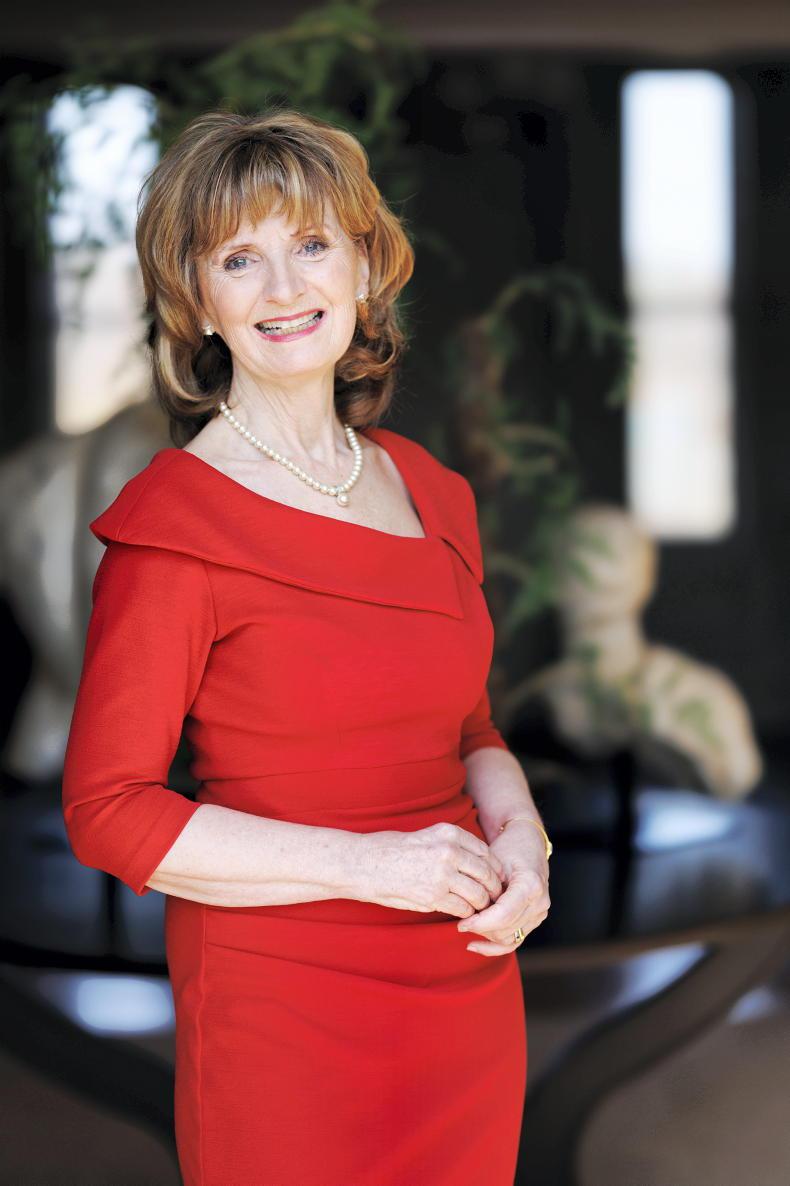
Adi Roche, Blackrock, Co Cork. \ Donal O' Leary
Four decades on from the horror of the Chornobyl* nuclear disaster, the words of ordinary people on the ground devastated by the catastrophe still hit Adi Roche hard.
You can see it etched on her face as she leafs through her book Chernobyl Heart – 20 Years On to read a poignant passage of personal testimony. It’s the words of a farmer who lost everything in the fallout from the explosion at the Chornobyl Nuclear Power Plant in the then Soviet Union on 26 April 1986 – 40 years ago this weekend.
“I remember one man kneeling down, and he picked up a fistful of the earth, and his tears drenched that earth, and he said to me, ‘This is the earth of my ancestors. The earth is my soul. If you take me from the earth, you take my soul.’
“That is a profound thing to say. A peasant farmer might not even be able to read or write, but he had that wonderful connection with the beauty of life and nature and the lifecycle,” says the humanitarian, slowly and sincerely.
It is this deep humility, care and spirit of volunteerism that led her to found Chernobyl Children International (CCI) in 1991, which has helped thousands of young people deal with the fallout. In the past 25 years it has helped deliver humanitarian and health programmes worth over €110m.
Adi remembers vividly another day filming and landing in a village that was being evacuated and everything was being bulldozed into the ground – about to disappear forever.
“Imagine it. The place of your ancestors no longer exists, even on a map. It’s as if they never existed. A woman said to me, ‘I have not only lost my home, my livestock, and my farm; I have lost life.’
“So Chornobyl is like a stone in my heart, always heavy, always present.”
Another farmer, also a beekeeper, reminded her of childhood visits to relatives on a farm in north Cork who had a hive. What he said makes her well up, even now, when he talked about the disappearance of the sound of his bees. “You see, they knew the bees. I mean, they knew something was wrong, but we didn’t, not until it was too late.”
Like it was yesterday, Adi remembers exactly where she was when she heard about Chornobyl for the first time – on a school stage in Midleton giving a talk about peace education. The principal came from the side of the stage to say there had been a “terrible accident in this place that none of us had ever heard of”.
The catastrophic effects of the nuclear explosion started to emerge despite the Soviet Union’s attempts to keep it under wraps. When the radiation levels were picked up in Sweden, the picture of devastation slowly began to be revealed.
The smiling face of hope: Adi Roche has been working to support Chornobyl victims for almost 40 years.
Power of intervention
A peace and nuclear disarmament campaigner for many years, she traces her activism and interest in social justice back to her upbringing in Clonmel, Co Tipperary, and the involvement of her parents in St Vincent de Paul, Meals on Wheels and education programmes for the Traveller Community.
Adi learned young the “power of intervention” and that not everyone is equal. But she is quick to point out that this is not unique to her, adding that there is a “sense of compassion” in Irish people, which she is very proud of. It’s something that Adi believes is an integral part of us because of our history, particularly around the Famine.
What really activated her to set up CCI – she remains voluntary CEO – was a two-line fax sent by doctors to peace and environmental organisations around the world in 1991. It was headed “SOS appeal: For God’s sake, help us to get the children out.” She later learned that the doctors were seeing the full brunt of this disaster on the ground, and those paying the highest price were the growing children.
“They were the ones showing the cancer of the thyroid gland,” recalls Adi, along with immunity issues and heart defects, and then there was foetal damage to women who were pregnant at the time. Ongoing genetic damage in a third generation of people remains a major problem, even today, 40 years on.
While it took time to get in there, CCI were what Adi describes as the “first responders” to the worst affected areas. “We responded and reacted with our hearts, not with our heads” but in doing so inspired many others and they helped bring their first group of sick children to Ireland.
“We thought, well, that’s it now, like we’ve kind of done our bit. And of course, then we learned about them going back to that environment, sleeping, eating, breathing in that environment.
“All these children were from these tiny, little contaminated villages and were really sick,” she recalls. “Since then, we have managed to bring 26,500 children to Ireland for rest and recuperation holidays,” continues Adi, paying tribute to the many host families who participated.
At the same time, she knew they could not stop there. With the generosity of the Irish people and truckers, the group drove aid lorries across Europe hundreds of times.
“We have been guided, directed and taught by the stories of individual children, who have directed every single programme of work that we do,” points out Adi. During our long conversation she speaks movingly about the power of love and hope and this is what she constantly comes back to in her work.
Adi is proud of their first-ever baby hospice programme they designed and built in Belarus, the deinstitutionalisation programme they started to move children out of the orphanages or the cardiac programmes responsible for 4,000 life-saving surgeries.
Some children left a really strong imprint. One young boy (8) begged her in a hospital to take him to Ireland. “Please take me to your country. I will die if you leave me here,” he said. This led her to set up a programme to help to deal with ‘Chornobyl Heart,’ a cardiac defect.
Cork's Adi Roche has been working to support Chornobyl victims for decades.
Developing from despair
With such desperate other scenes unfolding before her very eyes, how did Adi and her colleagues deal with it? She responds that doing something to help was her way of coping with the horror of it all.
“I’ll eventually cry the tears because I feel when I’m experiencing things there, like death, smelling it, seeing it, seeing the deprivation – I just feel. I don’t have the luxury to cry; that’s later, because my way of dealing with it is, ‘What can we do?’ Can we do it? When we see children, you know, languishing in homes for abandoned babies, for example, or in institutions, mental institutions, awful places that are like Dachau and Belsen or something.
While it was a “gargantuan task”, she is immensely proud of what CCI has accomplished and takes great pride in the contribution of the many volunteers and the generosity of the Irish people. Given it’s been her life’s work, what does she hope the legacy of CCI is?
“I suppose I would want people to know that we cared and that we loved enough, and that the umbilical cord that is stretched across from this small green island all the way to those affected regions will never be cut,” she replies. “Action is the antidote to despair. It’s like the dark and the light, the love and the hope versus the hatred and fears.”
Adi, who historically spoke at the UN General Assembly in 2016, urged countries not to forget the continuing suffering of the Chornobyl victims in a landmark address, which directly led to 26 April being recognised as an international remembrance day.
With several events around the 40th anniversary, most notably the unveiling of a sculpture entitled ‘Chornobyl Mother’ in Marina Park, Cork by Sandra Bell, and an event to honour volunteers in the Arás, that’s a drum she’ll continue to beat.
The Chornobyl Mother sculpture by Sandra Bell unveiled on April 21 in Marina Park, Cork.
The 1986 disaster may be a historic event for many, but it is “forever” for the victims, she says starkly.
“That radioactive footprint is embedded in the land, in the water; it’s everywhere, even in human DNA,” so the work to ensure they are not forgotten must continue, she vows.
*While the anglicised version has always been used (Chernobyl), the UN recently agreed that the Ukrainian and correct spelling of the area should be used in future, so CCI has accordingly adopted Chornobyl. The charity is the process of changing its name to reflect this.
See Chornobyl40.com
Adi Roche, Blackrock, Co Cork. \ Donal O' Leary





SHARING OPTIONS