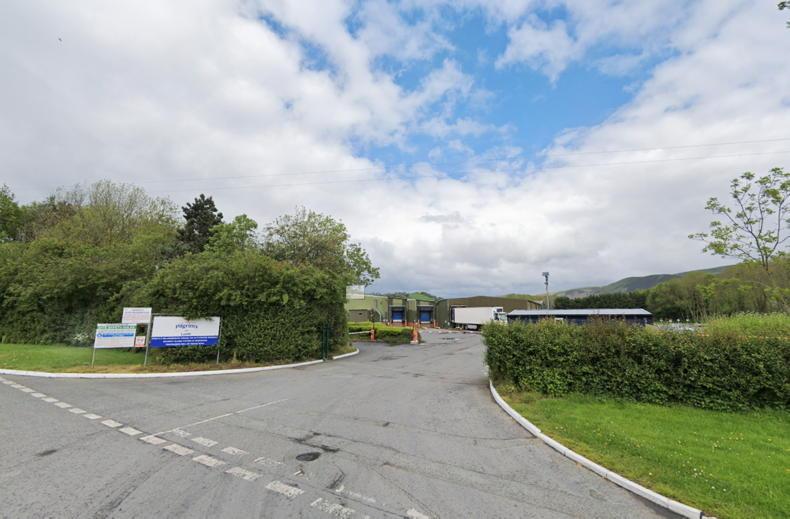
Last week, ABP announced the purchase of a sheep-processing factory located in Llanidloes, central Wales, from Pilgrims Europe (which is owned by JBS). It had acquired the factory in 2021 from Randal Parker Foods and it was reported to have capacity for processing up to 20,000 lambs and sheep per week.
The formalities of the deal are to be concluded in December, when the factory’s 140 employees will transfer over to become part of the ABP UK staff.
This acquisition in Wales means that ABP now has lamb-processing capacity in all regions of the UK, as well as the Irish Country Meats factories in Navan, Co Meath, and Camolin in Co Wexford.
In Northern Ireland, ABP processes lambs in Lurgan, Co Armagh, and at Linden Foods in Dungannon, Co Tyrone.
In Scotland, its lamb business operates from the former Scotbeef factory in Bridge of Allen, while in England its lamb factories are in the southwest at Yetminister and at Kingswinford in the midlands.
Lamb was an outsider in Pilgrim’s
Pilgrim’s Europe is a major food-processing business, with revenue of £4.12bn (€4.96bn) in 2025 and an operating profit of £267.7m (€322.5m).
The Moy Park poultry processing business, headquartered in Craigavon, Co Armagh, is a major part of Pilgrim’s Europe contributing £2.1bn (€2.5bn) of sales. The former meat and meals division of Kerry Group, which was acquired in 2021, is also part of Pilgrim’s Europe.
Included in this were the well-known Denny and Galtee brands, as well as the Richmond, Fridge Raiders and Oakhouse Foods – brands better known in Britain.
In commentary by Pilgrim’s around the announcement of its 2025 results on 1 October, reference was made to “expanding poultry farming capacity, increasing British pork export value, optimising pig procurement and progressing the proposed acquisition of Walker’s Deli & Sausage Company, subject to Competitions and Markets Authority (CMA) approval”. No mention was made of the lamb category.
Similar commentary accompanied its 2024 results, which suggests that lamb was an awkward fit in a business built on poultry processing supplemented by pigmeat. There was some surprise in industry circles when Pilgrim’s acquired the Llanidloes factory from Randal Parker in 2021. ABP was speculated on as a potential buyer then, and now its time has come.
ABP Sheepmeat timeline
The latest ABP acquisition adds to an increasing ABP presence in sheepmeat processing across both Britain and Ireland. Prior to its acquisition of the Yetminister factory in late 2011, the only sheep processing facility ABP had was at its Lurgan factory in Co Armagh, and even it was primarily a beef-processing factory.
The joint venture with Fane Valley opened the door for ABP into sheepmeat processing in a more serious way through Irish Country Meats, (ICM) which handles around 40% of sheep processed in the Republic of Ireland, plus Linden Foods in Co Tyrone. ICM also have a factory in Belgium.
ABP acquired full ownership of these businesses in 2021. By that stage, it had also added Kingswinford to its portfolio in 2020, and a further acquisition was to follow in 2023 with the purchase of Scotbeef in Scotland – where both cattle and sheep are processed at the factory in Bridge of Allen.
With the addition of the Llanidloes factory, it will mean that ABP has moved from marginal involvement in sheepmeat processing a decade and a half ago, to now being one of the two dominant processors in Ireland and the UK.
Dawn made similar journey
Like ABP, Dawn meats was primarily a beef-processing company. It is only comparatively recently that it became major sheepmeat processors on both sides of the Irish sea. Prior to entering a joint venture with Dunbia in 2017, its involvement in sheep processing was confined to the Ballyhaunis factory in Co Mayo. The Dunbia beef and sheep business was built up by Jack and Jim Dobson, starting from a butcher’s shop in Co Tyrone in the 1970s, into a group with several factories across the entire UK, plus a beef factory in Slane, Co Meath. With the retirement of Jim Dobson, Dawn acquired full ownership of the Dunbia group, and with that, substantial sheep-processing capacity in Britain, where it continues to trade as Dunbia. This was further added to in 2023 with the acquisition of Kildare Chilling and its interest in sheepmeat processing was turbo-charged this time last year, when Dawn took control of the Alliance group in New Zealand.
In an interview with the Irish Farmers Journal at the time, Niall Browne, CEO of Dawn, spoke of Alliance having the capacity to process 6m sheep annually.
When this is added to the 3.5m it handles within the Dawn/Dunbia business, in less than a decade it has also become a major player in sheep processing.
Sheepmeat superpowers
Both ABP and Dawn meats are primarily known as major beef processors in Ireland, the UK and, in the case of ABP, Poland – where it now has three factories – plus one in Germany, added earlier this year.
Between them, they control 100% of sheep processing in Northern Ireland, while south of the border they now handle over two thirds of all sheep processed in the Republic of Ireland.
The ABP acquisition of the factory in mid Wales adds a potential further sheep-processing capacity of 1m head annually and means that it and Dunbia are now the dominant players in Britain, as well as the island of Ireland.
Back to the future for Irish sheepmeat processing
A decade ago, Irish Country Meats, which prior to ABP involvement was jointly owned by Linden Foods and Slaney, was in the vanguard of adding value to sheepmeat.
Dunbia too was moving into breaking up carcases to service its expanding supermarket customer base in Britain. Historically, lambs and older sheep slaughtered on the island of Ireland were shipped as carcases, primarily to France, but also to Britain.
This practice continued long after beef carcases were mainly deboned and boneless beef shipped.
However, an anomaly in recent years has been a return to the exporting of sheepmeat carcases. In 2025, Bord Bia data shows that Irish carcase exports were 28,355t compared with just 15,387t in 2015 – and that is with overall Irish sheepmeat exports being 1,000t less in 2025 than they were in 2015.
The ownership of the sheepmeat processing industry may have been transformed in the past decade, but the nature of the business is returning to its traditional format.