



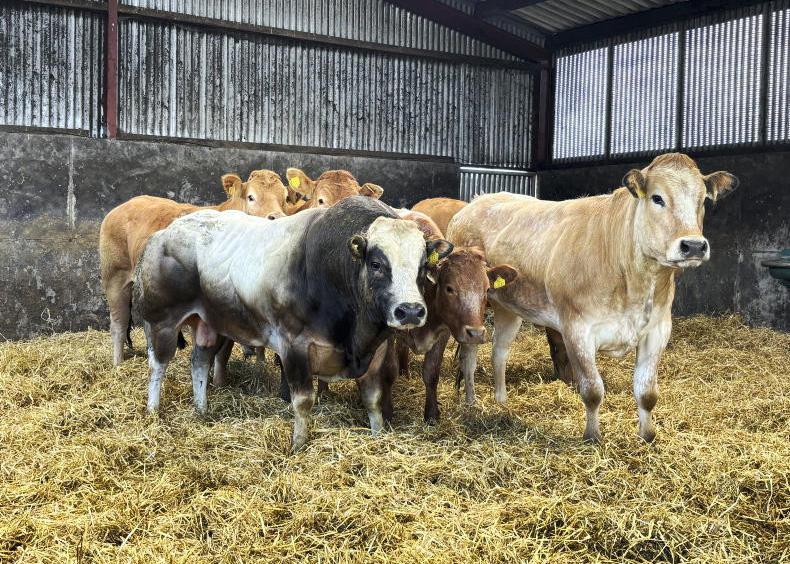
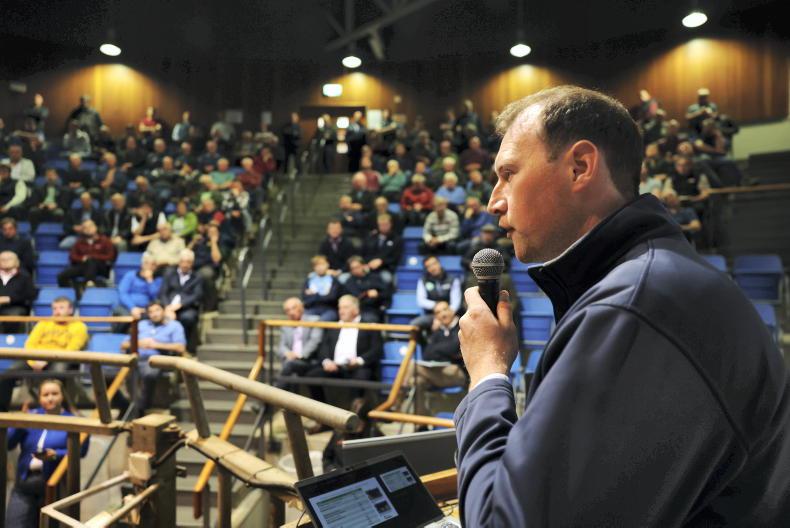
Attendees at the farm walk held on the farm of Thomas Carroll on Wednesday (6 May) couldn’t but be impressed by the quality cattle being turned out by the Laois farmer, albeit it with different breeds to the norm.
Thomas was one of Ashbourne Meats winners of the ICBF Beef Quality Awards, picking up the suckler farmer finisher title.
Along with the primary sponsor FBD, Ashbourne and five other meat processors were part of the inaugural Beef Quality Awards. Four individual categories were selected; dairy beef finisher, dairy farmer finisher, suckler beef finisher and suckler farmer finisher.
Each processor selected a regular producer of animals that excelled in producing in spec animals with high Commercial Beef Value (CBV) figures.” While many farmers will argue that figures on paper do not marry through to quality and performance on the ground, Thomas’ herd and farm was a perfect example of the figures ringing true.
Farming outside Ballybrophy, Co Laois, Thomas operates a full-time beef and tillage farm, with 45 acres of the 200-acre farm in barley (a mix of malting and feeding barley), with the remainder in grass.
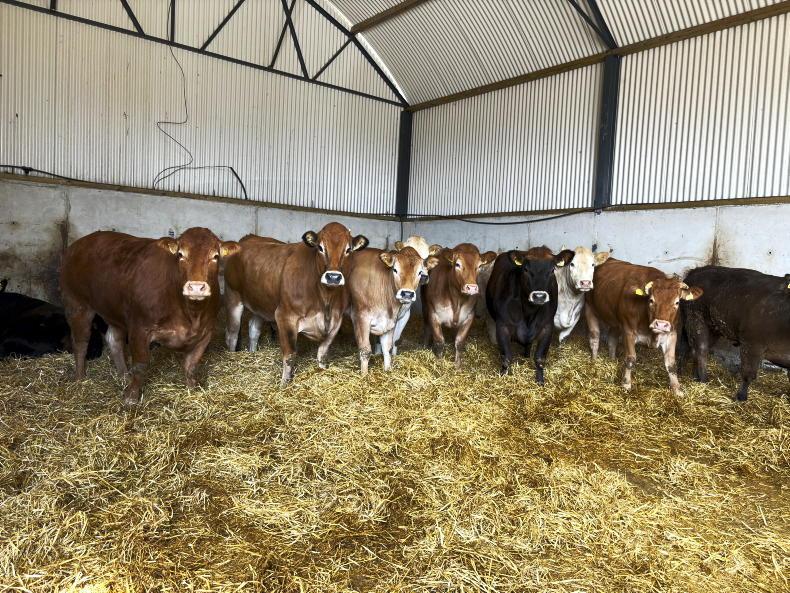
Forty suckler cows are calved down in spring, with all mature cows being bred to the Parthenaise bull, while heifers are bred to a Piedmontese bull. A mixture of homebred and purchased heifers are used for replacements.
The Parthenaise breed was introduced to the farm in recent years, with the herd now consisting of mainly Limousin-cross and Parthenaise-cross cows.
The breed suits Thomas’ system; calves are easily born and lively at birth and develop in to quality cattle as they mature. Similarly, Thomas noted that the Piedmontese bull was extremely easy calving, “Angus like”, while calves are still developing conformation as they mature.
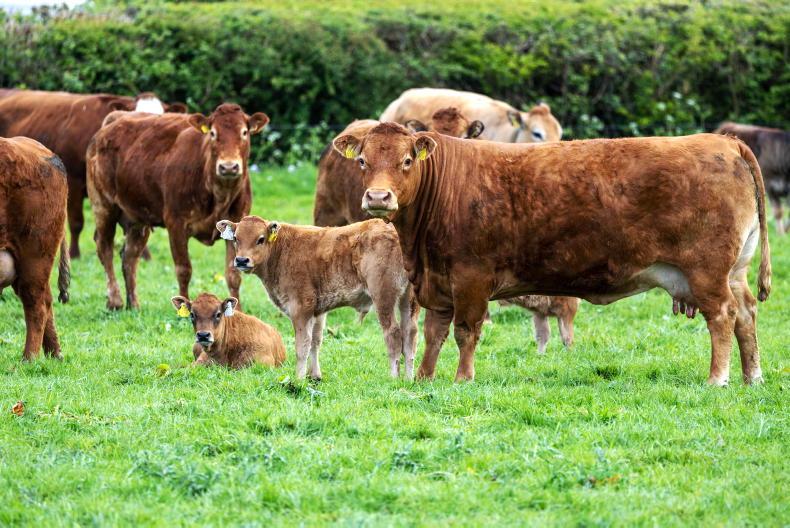
Operating an under 20-month bull beef system with these home bred Parthenaise weanlings works well, with Thomas noting that it is primarily in the post-weaning and yearling phase in which cattle really thrive.
Both the Parthenaise and Piedmontese breeds are a lean, hard muscling animal.
Thomas has never experienced significant difficulty in hitting fat score on wither bulls or heifers, with a mix of the home-grown barley and a barley balancer ration used.
While we primarily see maize meal being used for high energy finishing diets of young bulls in particular, Thomas’ set up is a great example of how we can utilise native grown grain and still hit carcase specs.
In addition to bringing all his own cattle through to finish, Thomas also purchases 50 weanlings each year from marts such as Roscrea and Ballinakill, with his preference being to purchase Charolais, Limousin and Parthenaise cattle that have “potential rather than the finished article, with the aim of feeding them in to U grades”.
These weanlings are vaccinated for pneumonia and dosed on arrival and allowed to settle back on to grass before housing for their first winter.
Teagasc cattle specialist David Argue relayed the importance of hitting weight parameters with any bull beef system, noting that it is highly specialised in comparison to a steer or heifer system.
Thomas has built up a relationship with Ashbourne Meats, which has customers for under-20-month bull beef, with Holland being a primary outlet for these types of carcass. Ashbourne Meats is also well known for its pedigree Limousin stock bull bonuses, pedigree Limousin cull cow competition and additional Limousin-cross bonuses, which shows the demand they have from customers for high confirmation in carcases.
Argue outlined the target live weights and weight gains that a farmer needs to hit to make a young bull beef system work.
Calves require an average daily gain (ADG) of 1.2kg/head/day at grass, with a winter store gain of 0.6kg/head/day over a four-month winter.
This would see bulls hit grass at their second grazing at 390kg, with a target of 1.25kg/head/day for the four months spent at grass for the second summer.
They are then rehoused at 16-17 months old at 540kg where they enter their finishing period. The target gain is 1.5kg/head/day to ensure they finish with 720kg liveweight and 418 kg carcass weight.
For Thomas, his most recent figures showed an average carcass weight of 461kg at 22.8 months.
Carcase grade came in at an impressive average U=, combined with carcase fat score of 3=. At a price/kg of €7.38, Thomas saw an average factory price of €3,041/head realised.
After Thomas, Teagasc’ Peter Doyle was also on hand discussing the importance of grass utilisation for finishing systems such as Thomas, with clover being a critical element. Research on the Derrypatrick herd is showing significant benefits including the reduced use and cost of chemical N combined with increased liveweight and carcase gains.
It’s something that Thomas has been doing in recent years himself, undertaking to reseed a portion of the farm annually in the late summer/ back end of the year. Swards are sprayed off, power harrowed and sowed with perennial ryegrasses and clover.”

The grazing infrastructure is good on farm, with Thomas’ high level of management seeing a paddock system in place for the various goups of stock. Suckler cows post calving are primarily the first stock turned out in spring, with store heifers following. ‘’They’re probably one of the last batches to hit grass.
“You need good weather and everything has to be settled; they can wreck your land at times. When they do settle, they’re the easiest bunch of cattle to mind [at grass]’’ noted Thomas.
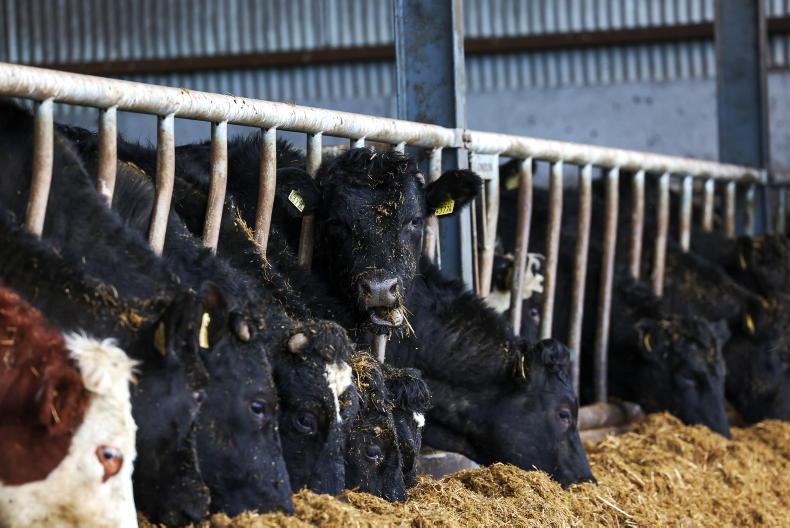
Bulls go back into the shed in late August/early September for an intensive finishing period. The diet consists of a mix of homegrown barley and barley balancer.”
High-quality home-grown silage is fed at the start as bulls build up their concentrate intake levels.
Bulls finished in 2024 recorded an average CBV of €427, while heifers averaged €411, reflecting the strong alignment between on farm cattle quality and genetic indexes.”
The Commercial Beef Value (CBV) is a genetic index provided by ICBF that shows how an animal is expected to perform for beef production over its lifetime. It is essentially the Terminal Index minus the calving traits.” Carcase weight, feed intake, factory spec, carcase confirmation and finishing age all feed in to the index, with the percentage that each trait contributes labelled in figure 1.
According to ICBF, the key benefit is identifying animals with stronger beef potential, with higher CBV cattle proven to finish earlier, use feed more efficiently and deliver better carcass results.”
For someone purchasing stock to finish through for beef, it’s essentially an additional trump card to have in your deck; there may be high CBV animals to be got at a similar value to low CBV animals would should yield a better return on investment. As always, the eyes are the first guide, and phenotype (physical animal attributes) should be assessed first.
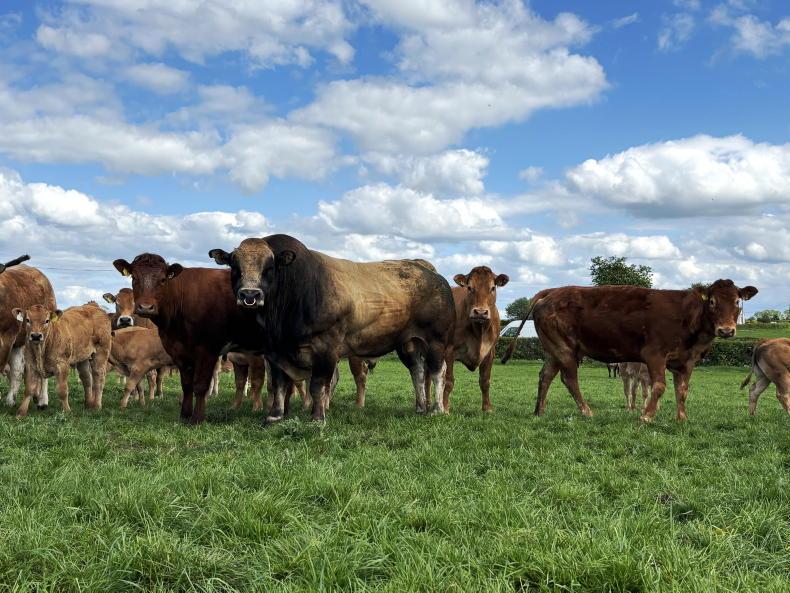
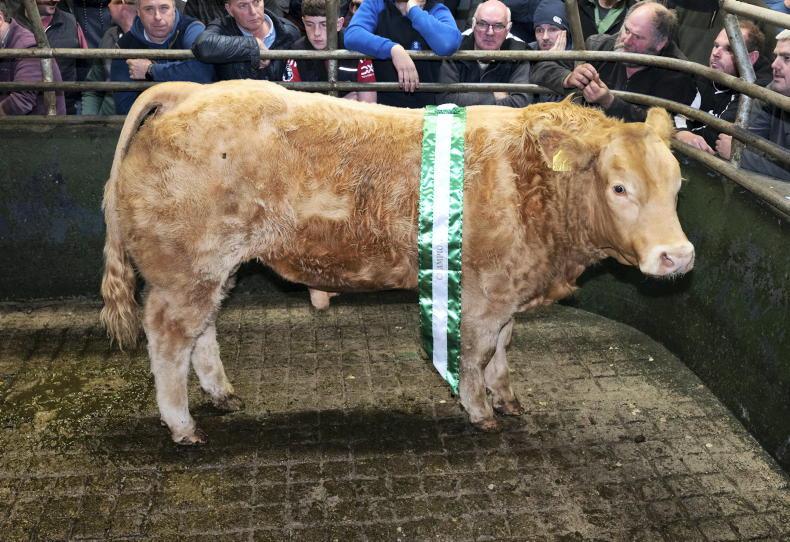
An example of the disparity between two animals with varying CBV can be seen in table 1. Both animals were born on the same day (20th February 2024) on Thomas’ farm and both were sired by the same stock bull.
Interestingly, both are ranked five stars withing suckler breed type, meaning the lower index heifer is by no means a low CBV animal, though there is still a difference of €78 between the two animals.
The net result is a liveweight difference of 154kg. The quality of these heifers would put them at the upper end of the scale price wise, so giving a rough guide of €4.30/kg liveweight, I would see a difference of €662.20 between the heavier and lighter heifer. Nothing to be scoffed at.
In my opinion, CBV is something that farmers will increasingly have to consider when going out purchasing animals, wiht the two heifers on display at the Carroll farm a prime example of varying CBVs.
Willie McCormack, agent with Ashbourne Meats, was also on hand, highlighting how heifers produced by Thomas with carcase weight of 380-410kg is a ‘’very suitable carcase’’. Bulls with a 450-460kg carcase is a ‘’specialised job’’ according to McCormack.
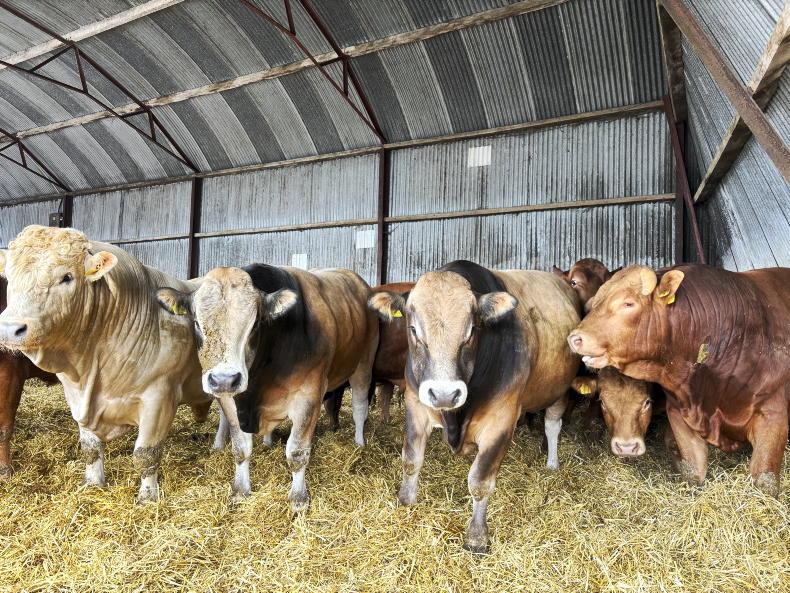
‘’You need to talk to your factory agent on that, we have a job for the likes of these bulls in Holland.
A mixture of slatted and straw accommodation is used for finishing animals on the Carroll farm, with McCormack noting the preference by many finishers to use straw bedding for the final finishing period.
Home grown straw is used on the Carroll farm with dung going back out on tillage or low index grassland.
Speaking to the Irish Farmers Journal at the event, McCormack said that current throughput in factories was stable, with a portion of farmers that had a delayed turn out to grass deciding to hold forward cattle indoors and finish in the coming weeks as opposed to turning them back out to grass.




SHARING OPTIONS