



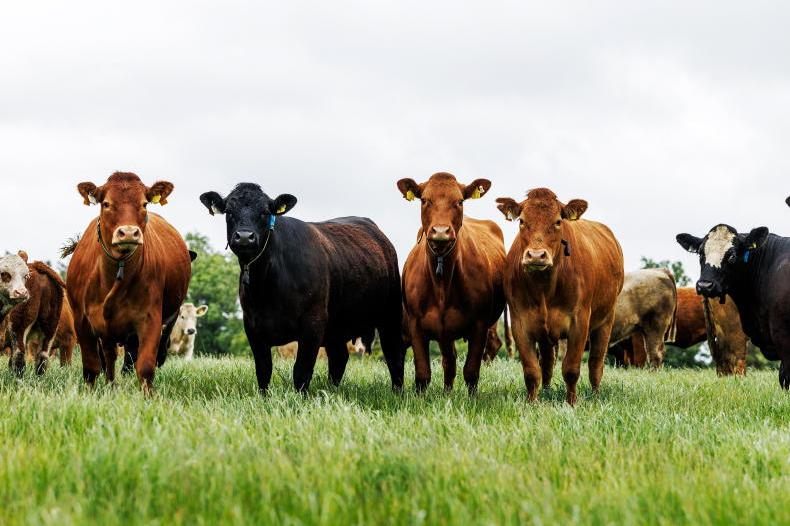
Tullamore Farm is currently in a good position regarding grass supplies heading into autumn, with breeding set to commence in our sheep flock by mid-October. The current average farm cover sits at 1,066kg/DM/ha with recorded growth rate of 44kg/Dm/ha.
Heavy rainfall last week has certainly had an effect on ground conditions on the home farm which is made up of a heavier type soil.
That being said through tactical use of back fences and strip wires and using sheep to graze the heaviest land, we have been able to move through heavy covers of 1,800-2,000kg/DM/ha fairly OK and utilisation has been good.
When we look at the year as a whole, it has been a really good one for grass growth on the farm with a mild spring allowing early turnout of livestock and ground conditions being exceptional up until now.
Rainfall came just when it was needed and likewise with sunshine, when silage or haylage was to be made.
The farm has recorded 838mm (32 inches) of rainfall this year so far with 83mm (3.2inches) falling since the start of September.
The farm has grown just over 10t/DM/ha (including silage ground) this year so far. The stocking rate on the farm currently sits 1.94/LU/ha and spiked to 3.15 Lu/ha when silage ground was closed for first and second cut. The average artificial nitrogen use for 2025 sits at 104kg/N/ha, including nitrogen spread on silage ground.
This relatively low level of N used on a relatively high stocking rate system, highlights the potential for cost effective growth of a paddock system and the incorporation of clover, especially in a year of exceptional growing conditions.
Weaning
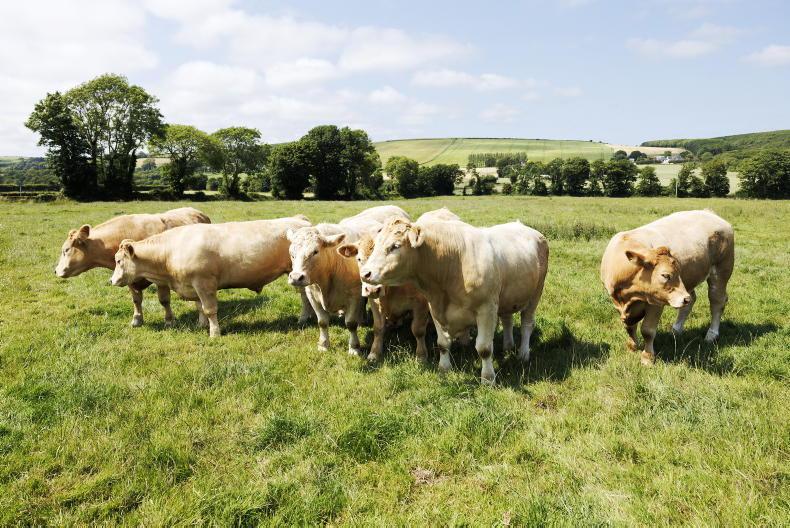
The plan around weaning is to identify calves belonging to cull and empty cows this weekend, anti-suckle nose paddles will be put on these calves, mothers removed within seven days and these cows then housed to be finished indoors on silage and meal. We will most likely hope to have the remaining bull calves weaned by 10 October.
The creep feeder has been out with these bull calves for three weeks now and are consuming on average 3kg/head. Feeding 3kgs per head at this stage may seem excessive but in my mind, given current weanling prices, is a no brainer this year.
With weanling ration costing €330/tonne and bull calves consuming 3kgs or €1/head/day in meal plus 7kg of dry matter in grass form at €0.12c/kg, a bull weanling is consuming €1.84 in feed costs per day. A weanling price of €6/kg is achievable this autumn a weanling gaining 1.3kg/day is returning €7.80/day compared to feed costs of €1.84/day.
Creep feeding satisfies us for the Beef Welfare Scheme and also helps break the bond between cow and calf pre-weaning. Heifer calves are being offered around 1.5kg of meal and will be weaned using anti-suckle paddles also with the hope to keep them out to early November, weather permitting.
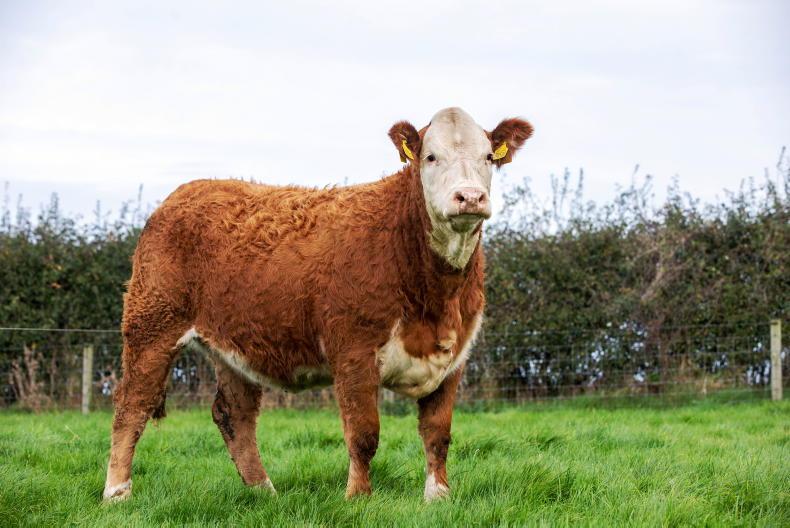
We plan to return to selling in-calf heifers this year with approximately 15 heifers being earmarked for sale along with five maiden heifers. These heifers are in calf to easy calving AI limousin bulls. The heifers are bred out of top AI limousin and Simmental bulls and the average Eurostar value of our 2024-born heifers is €141, with the majority of these being SCEP eligible.
Winter health plans
The opportunity will be taken to ensure our weanlings are completely up to date with all vaccines before weaning. All calves are due to get a booster against pneumonia and Pi3 virus, this will be the third shot given to them in their lifetime.
Standard protocol would be a two-shot vaccination course, given the farm has had issues with pneumonia in years gone past; two shots are given before calves reach three months of age and a third shot going in pre weaning as an insurance policy. A booster against IBR will be given also with the first being received at about eight weeks of age.
A small bit of coughing has returned in the weanlings this past week, indicating a lungworm burden, calves were treated six weeks ago against lungworms but given the mild damp conditions in the past month the contamination on pasture has most likely been high. Farm vet Donal Lynch will be contacted to prescribe the best form of treatment at this time of year.
Sheep
Breeding season is just around the corner in our ewe flock with ewes being put to flush in the coming week. We plan to join rams around 17 October for a projected start date around 10 March, 2026.
Ewes are in really good condition this year, with thin ewes and yearling hoggets that reared lambs now pulled out of the bunch for preferential treatment. Sixty-five ewe lambs have been identified for breeding this year and have received a pre breeding vaccination against enzootic and toxoplasmosis abortion.
Fifty of these ewe lambs have been home bred and are a mixture of Texel/mule, Suffolk/Mule, Suffolk/Easycare and purebred Easycare. Fifteen Purebred Easycare ewe lambs where bought in this year at an average price of €180/head. Ewe lambs will join with rams 10-12 days after the mature flock.
Around 40 factory lambs remain on farm with 20 of these being male lambs, who are now being offered a higher level of concentrate to help flesh cover and speed up the finishing process before breeding commences.



SHARING OPTIONS