



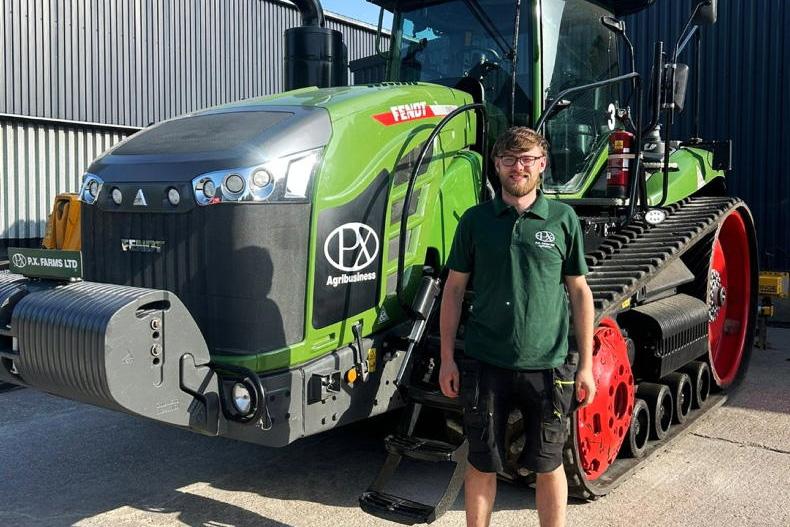
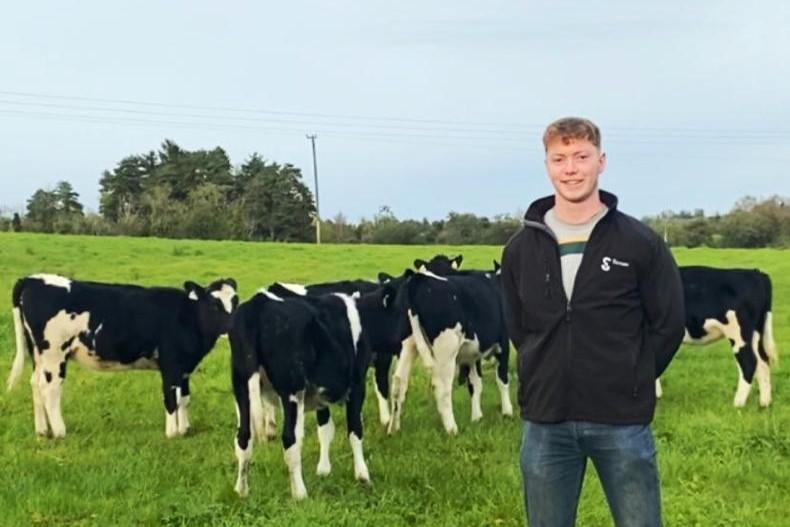
Growing up on a tillage and vegetable farm in Ardee, Co Louth, Shane Halpenny has always known he wanted a career in agriculture. Now entering his final year of the BSc (Hons) Sustainable Agriculture programme at Dundalk Institute of Technology (DKIT), he has taken that ambition overseas through a placement with one of England’s largest arable farming businesses.
For Shane, the placement offered an opportunity to experience first-hand how technology, precision farming and careful planning combine to manage thousands of acres of crops while maintaining a strong focus on sustainability.
“I grew up on the family farm, which my father and uncle run, so I developed an interest in crop production from a young age. I went on to study sustainable agriculture at DKIT, where I was able to build on that practical experience through laboratory work, hands-on farm sessions and placements with Ballyhaise College.
“The course covers everything from soil science and crop and livestock production to food processing and digital agriculture. It gave me a strong understanding of modern farming and the different skills needed to build a career in the industry.”
As part of his third-year placement, Shane travelled to Cambridgeshire to join PX Farms Ltd, an arable business founded by James Peck in 2003.
The business harvests approximately 12,500 ac of cereal crops across Cambridgeshire, Lincolnshire, Bedfordshire and Hertfordshire.
Alongside crop production, it operates its own grain storage, processing and cleaning facilities, a haulage division with 12 lorries, an on-site laboratory and a construction department, which is responsible for maintaining and developing farm infrastructure.
PX Farms also embraces public engagement through its YouTube channel, giving viewers an insight into the day-to-day running of a modern farming business.
A range of cereal and break crops are grown across the farm, including wheat, barley, oats, beans, peas and mustard. These form part of a planned crop rotation designed to improve soil health while helping to reduce pest and disease pressure.
Unlike many family farms in Ireland, PX Farms operates as a large agribusiness with different departments working together throughout the year.
Seeing crop production, grain handling, transport and infrastructure managed within one business has given Shane a greater appreciation of the planning, organisation and teamwork required to run an operation of this scale.
Precision agriculture
One of the biggest learning experiences has been seeing precision agriculture used as part of everyday farm management.
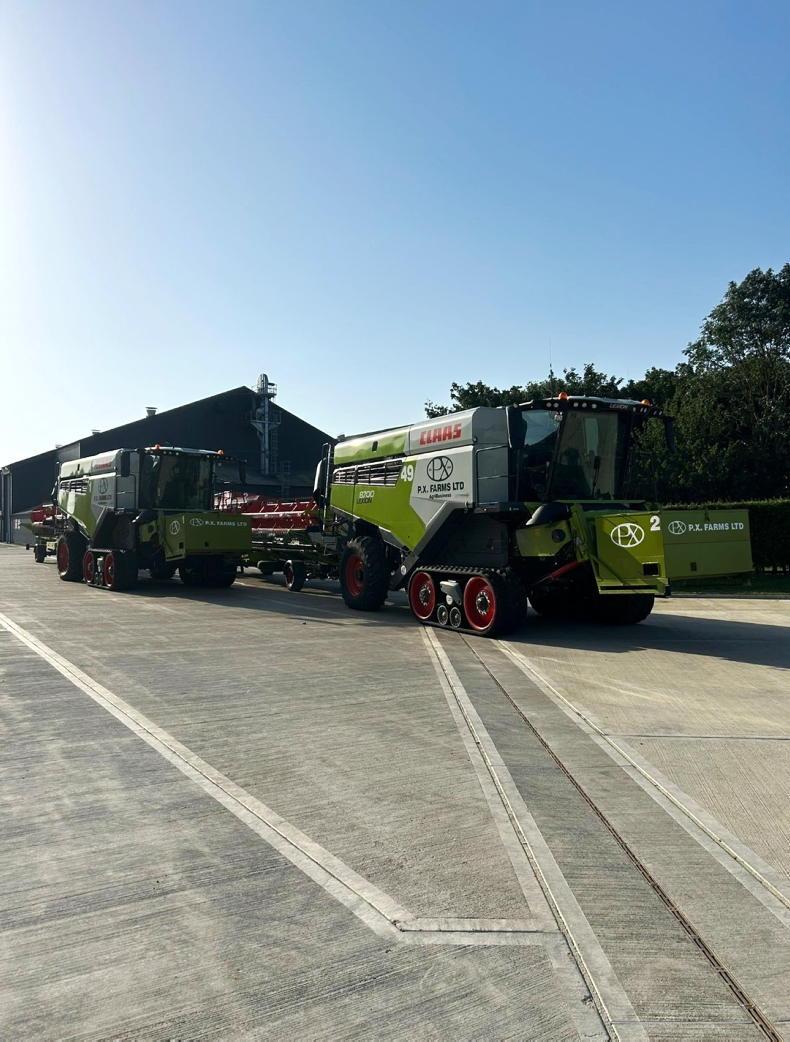
PX Farms operates a 12m controlled traffic farming system, where all machinery follows the same permanent wheel tracks throughout the season. Restricting machinery to these lanes helps reduce soil compaction, protect soil structure and improve growing conditions for crops.
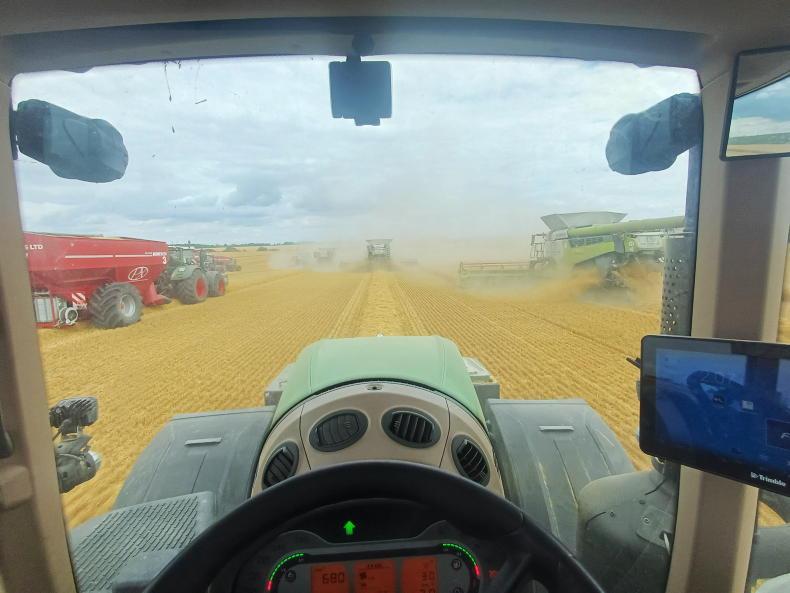
“It has been really rewarding to see how what we learned in lectures is put into practice on the farm,” Shane tells Irish County Living. “Using GPS guidance systems, precision technology and careful field planning helps improve efficiency and cuts down on unnecessary overlap, making better use of fuel, machinery and time.
“It’s all about producing crops more efficiently while also looking after the soil for future generations.”
The business also uses modern machinery throughout its operations, including Fendt tractors, CLAAS combines, Horsch cultivation equipment and Trimble precision farming technology.
Although still in the early stages of his placement, Shane has already been involved in preparing machinery and yards ahead of harvest.
During harvest, his main responsibility is operating one of the farm’s Fendt 942 tractors with a Horsch chaser bin, transporting grain from the combines to waiting lorries to keep harvesting running efficiently. Once harvest is complete, he will move on to cultivation work, preparing seedbeds for the growing season.
Bringing new ideas home
Working alongside experienced staff has also given Shane an insight into the planning, communication and teamwork needed to manage such a large farming business.
“Beyond the practical farming experience, living and working abroad has really helped me become more independent and confident,” says Shane. “Moving over with another DKIT classmate made the transition much easier, as we were able to settle into a new country and experience a different farming system together.
“Working in England has also given me the chance to learn from people with a wealth of experience and to see first-hand how technology is being used to improve efficiency on large-scale tillage farms.
“As I head back to DKIT for my final year, I know the placement will help me connect what I’ve learned in lectures with practical experience on the farm.
“I’ve come away with a much better understanding of precision agriculture, soil management and crop production, and hopefully I can bring some of those ideas into my studies and my future career.”
While the scale of PX Farms is much larger than most Irish businesses, Shane believes many of the principles behind the operation, including careful planning, efficient machinery use and protecting soil health, are relevant across the agricultural sector.
Over the last 12 years, the Agricultural Science Association (ASA) has teamed up with the Irish Farmers Journal to support agricultural science students looking to expand their knowledge abroad. The €1,000 scholarship aims to provide students with financial support, allowing them to travel to different countries to complete this placement and gain a more global understanding of agri food production.




SHARING OPTIONS