Professionals working across agriculture, horticulture, and related industries who are eager to upskill and align their expertise with the growing focus on sustainable and regenerative farming, now have an opportunity to do so via two Master’s programmes offered by South East Technological University (SETU) in Waterford.
The part-time, two-year postgraduate courses have been designed to bridge specific scientific and practical skills gaps in sustainable farming, biological systems, and environmental management.
The programmes, a MSc in Organic and Biological Horticulture and a MSc in Organic and Biological Agriculture, were developed in response to a growing demand for advanced knowledge in organic and biological agriculture, ensuring graduates are equipped to apply sustainable principles effectively in the field.
A central aim is to develop graduates’ ability to implement biological approaches to soil, crop, and livestock management, while also building expertise in policy design related to agroforestry, biodiversity, and sustainable production systems.
The courses place strong emphasis on professional and research development, preparing graduates for advisory, developmental, and academic roles.
The MSc pathway comprises of six 10-credit taught modules and a 30-credit research dissertation, while the Postgraduate Diploma includes the taught modules only.
For those seeking a more flexible option, individual modules can also be taken as standalone Level 9 certificates, allowing students to gradually build towards a qualification.
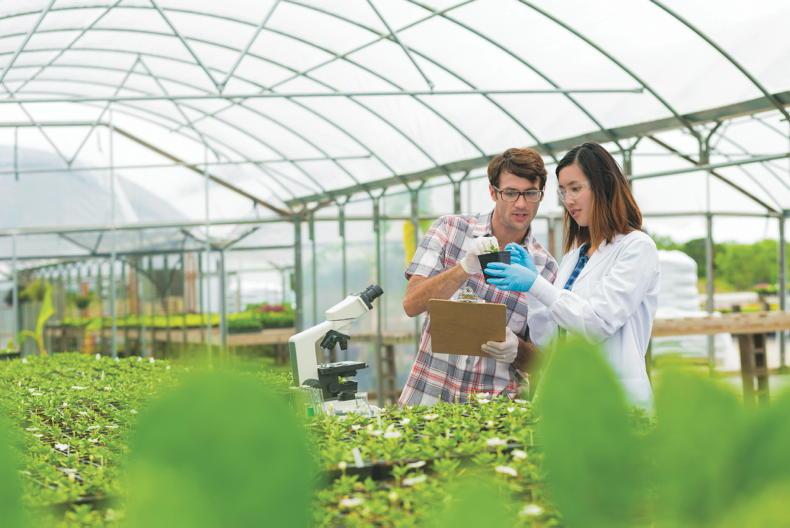
The courses are designed with flexibility in mind, combining lectures, tutorials, laboratory sessions, and fieldwork.
Students attend SETU for a maximum of 12 days per academic year, with online lectures and materials supporting distance learners. Each participant’s coursework and research projects are based on their own farms or on farms that are nearby.
Entry requirements
Entry to the programmes requires an honours bachelor’s degree (Level 8) in agriculture, land sciences, or a related field, as well as at least two years of relevant professional experience.
Graduates leave the course well-prepared to advance sustainable farming practices, carry out applied research, and contribute to policy development in areas vital to food security, environmental protection, and rural resilience.
SETU currently offers two related programmes – the MSc/PG Diploma in Organic and Biological Agriculture and the MSc/PG Diploma in Organic and Biological Horticulture. Both are delivered part-time over two years and were developed to address a growing need for innovation and advanced research capability within the organic sector.
These courses are particularly suited to professionals already working in primary production, the public sector, or private enterprise – who wish to upskill or diversify into the expanding fields of organic and biological farming systems.
Participants will explore how farming can be both productive and environmentally regenerative, learning about soil health, nutrient cycling, pest management, and sustainable food production.
“The National Organic Training Skillnet (NOTS) will provide partial funding to qualifying participants,” a SETU spokesperson confirmed, highlighting the programme’s accessibility for those already working within the sector.
SETU graduate profile
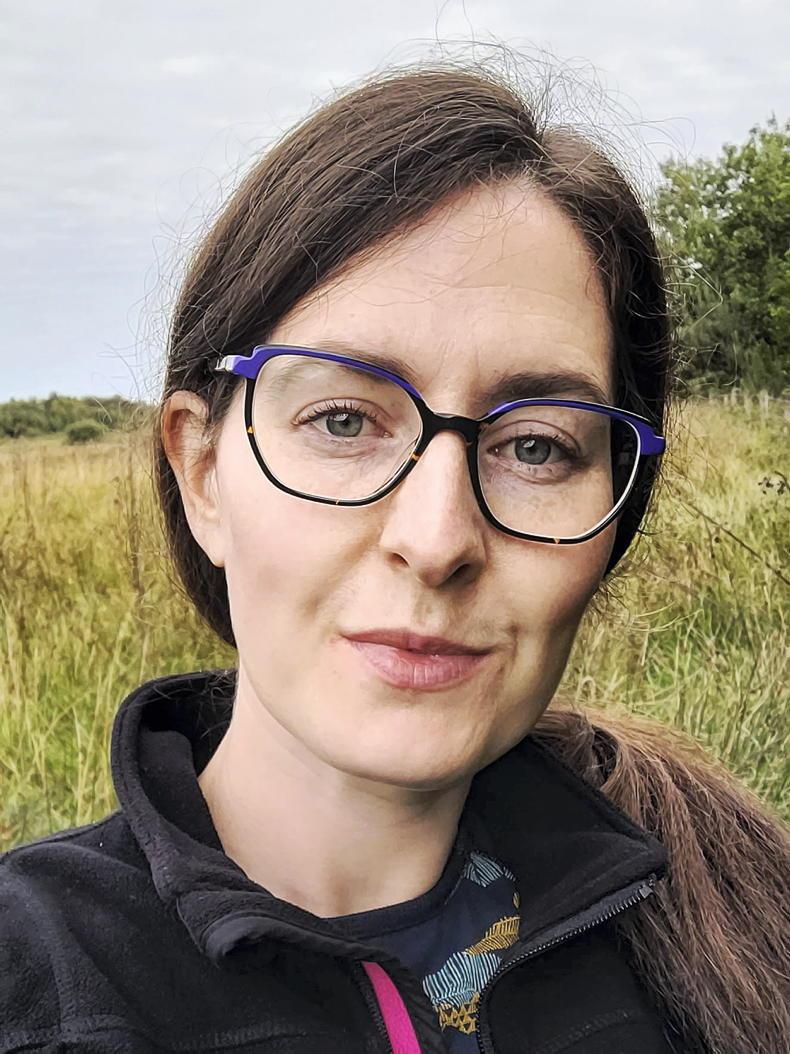
Sheila Murphy, Biodiversity officer, Mayo County Council and part-time farmer
‘I grew up on our family farm in Shrule, Co Mayo, located near the Mayo-Galway border. I am currently farming part-time with my parents; we have a mix farm of lowland sheep and dry stock cattle. I’ve always had an interest in working outside, which led to my career as an ecologist.
Ecology has a lot of crossovers in topics that work very well with farming such as soil management and habitat plans. It also helps knowing how nature can support your farm, now more so than ever, with current agri environmental schemes such as ACRES in place.
“I originally studied Environmental Science in University of Galway, focusing on botany and habitat management. I enjoyed science in school and liked the practical element of ecology. My undergrad gave me a great basis in plant science, but also practical field skills in plant and mammal identification and habitat mapping.
"I enjoyed working outside and field work gave me a great opportunity to work in nature, develop strong field skills while also contributing to the development of infrastructural projects across the country.
Sheila Murphy, Biodiversity officer, Mayo County Council and part-time farmer and alum of the Level 9 Masters in Organic and Biological Agriculture in SETU, Co Waterford
“I was always interested in agriculture and how we manage our land and soils for better productivity, for grass growth and finishing animals. I was aware how important protecting the soil was, but the course gave me a great opportunity to learn about implementing simple but extremely beneficial measures.
"I initially signed up for the soil and water management module, but as I continued into the course, I could see how useful the MSc in Organic and Biological Agriculture in SETU would be to how we farmed. Although our farm is not organic, I think the course provided a lot of measures a conventional farm could incorporate.
“It was a two-year distance learning course, with lectures online in the evening and field trips on weekends throughout each semester. This gave great flexibility while working, and online lectures could be easily caught up on if missed. The field trips were fantastic; it allowed us to see a variety of interesting ways other farmers were farming.
"It also gave an opportunity to meet the rest of the class in person. The course coordinator and lectures were incredibly helpful and supportive, acknowledging most people were working and studying at the same time.”
Professionals working across agriculture, horticulture, and related industries who are eager to upskill and align their expertise with the growing focus on sustainable and regenerative farming, now have an opportunity to do so via two Master’s programmes offered by South East Technological University (SETU) in Waterford.
The part-time, two-year postgraduate courses have been designed to bridge specific scientific and practical skills gaps in sustainable farming, biological systems, and environmental management.
The programmes, a MSc in Organic and Biological Horticulture and a MSc in Organic and Biological Agriculture, were developed in response to a growing demand for advanced knowledge in organic and biological agriculture, ensuring graduates are equipped to apply sustainable principles effectively in the field.
A central aim is to develop graduates’ ability to implement biological approaches to soil, crop, and livestock management, while also building expertise in policy design related to agroforestry, biodiversity, and sustainable production systems.
The courses place strong emphasis on professional and research development, preparing graduates for advisory, developmental, and academic roles.
The MSc pathway comprises of six 10-credit taught modules and a 30-credit research dissertation, while the Postgraduate Diploma includes the taught modules only.
For those seeking a more flexible option, individual modules can also be taken as standalone Level 9 certificates, allowing students to gradually build towards a qualification.
The courses are designed with flexibility in mind, combining lectures, tutorials, laboratory sessions, and fieldwork.
Students attend SETU for a maximum of 12 days per academic year, with online lectures and materials supporting distance learners. Each participant’s coursework and research projects are based on their own farms or on farms that are nearby.
Entry requirements
Entry to the programmes requires an honours bachelor’s degree (Level 8) in agriculture, land sciences, or a related field, as well as at least two years of relevant professional experience.
Graduates leave the course well-prepared to advance sustainable farming practices, carry out applied research, and contribute to policy development in areas vital to food security, environmental protection, and rural resilience.
SETU currently offers two related programmes – the MSc/PG Diploma in Organic and Biological Agriculture and the MSc/PG Diploma in Organic and Biological Horticulture. Both are delivered part-time over two years and were developed to address a growing need for innovation and advanced research capability within the organic sector.
These courses are particularly suited to professionals already working in primary production, the public sector, or private enterprise – who wish to upskill or diversify into the expanding fields of organic and biological farming systems.
Participants will explore how farming can be both productive and environmentally regenerative, learning about soil health, nutrient cycling, pest management, and sustainable food production.
“The National Organic Training Skillnet (NOTS) will provide partial funding to qualifying participants,” a SETU spokesperson confirmed, highlighting the programme’s accessibility for those already working within the sector.
SETU graduate profile
Sheila Murphy, Biodiversity officer, Mayo County Council and part-time farmer
‘I grew up on our family farm in Shrule, Co Mayo, located near the Mayo-Galway border. I am currently farming part-time with my parents; we have a mix farm of lowland sheep and dry stock cattle. I’ve always had an interest in working outside, which led to my career as an ecologist.
Ecology has a lot of crossovers in topics that work very well with farming such as soil management and habitat plans. It also helps knowing how nature can support your farm, now more so than ever, with current agri environmental schemes such as ACRES in place.
“I originally studied Environmental Science in University of Galway, focusing on botany and habitat management. I enjoyed science in school and liked the practical element of ecology. My undergrad gave me a great basis in plant science, but also practical field skills in plant and mammal identification and habitat mapping.
"I enjoyed working outside and field work gave me a great opportunity to work in nature, develop strong field skills while also contributing to the development of infrastructural projects across the country.

Sheila Murphy, Biodiversity officer, Mayo County Council and part-time farmer and alum of the Level 9 Masters in Organic and Biological Agriculture in SETU, Co Waterford
“I was always interested in agriculture and how we manage our land and soils for better productivity, for grass growth and finishing animals. I was aware how important protecting the soil was, but the course gave me a great opportunity to learn about implementing simple but extremely beneficial measures.
"I initially signed up for the soil and water management module, but as I continued into the course, I could see how useful the MSc in Organic and Biological Agriculture in SETU would be to how we farmed. Although our farm is not organic, I think the course provided a lot of measures a conventional farm could incorporate.
“It was a two-year distance learning course, with lectures online in the evening and field trips on weekends throughout each semester. This gave great flexibility while working, and online lectures could be easily caught up on if missed. The field trips were fantastic; it allowed us to see a variety of interesting ways other farmers were farming.
"It also gave an opportunity to meet the rest of the class in person. The course coordinator and lectures were incredibly helpful and supportive, acknowledging most people were working and studying at the same time.”
SHARING OPTIONS