



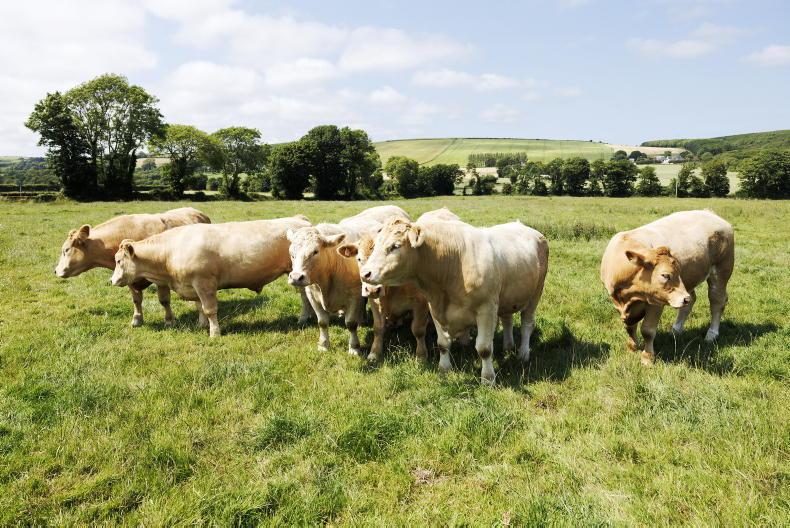
When reviewing the factory prices for the previous year, the usual starting point is how big a difference there is in prices paid between factories. However, for 2025 all factory prices increased to levels unimaginable a year ago, with the highest price paid at €8.10/kg paid in one isolated example. The highest price paid in 2024 was €5.70/kg.
A better barometer for measuring the movement in price is comparing the national average across the grades, as highlighted in the tables.
To pick one example, the R3 steer, the average price paid in 2024 was just over €5.38/kg, which is €2.12/kg lower than was paid on average last year.
When this is applied to the average steer carcase weight, it works out at €734 per head more paid by factories in 2025 than they paid in 2024.
Having noted the exceptional beef prices achieved last year, the factory leagues as usual show that there remains a huge gap in what is paid by the highest and lowest paying factory in each grade. This applies across all grades in all categories of cattle processed in Irish factories.
There are, of course, reasons why some factories report a much higher price than others.
New for 2025
One of the most common explanations for outlying prices paid is the fact that some factories may have reported for only one or two weeks – this is particularly common in the top quality grading cows, for example.
To address this, when the Irish Farmers Journal calculated the price spread between highest and lowest paying factories in each category, a minimum of 10 weeks reporting has been introduced for 2025.
An additional column has been added to each table this year reporting the number of weeks each factory reported as well as the average price they paid and their position in the table compared with last year.
Where a factory didn’t report any cattle at all for a grade, they are excluded from the table.
This is most common with U=3= cows – very few cows achieve this grade and this explains why this table has the fewest factories listed for reporting in this category last year.
It is also notable that just six factories had these type of cows for more than ten weeks during the year.
Otherwise the leagues are based on four main grade categories, U=3=, R=3=, O=3= and P+3= for steers, heifers, young bulls and cows. The national average paid for each grade is also included in the table and highlighted.
Factors influencing price
The factory leagues are based on the prices paid by each factory and reported to DAFM and published each week in the Irish Farmers Journal. This annual snapshot is the average of all the figures reported during the year. As it is based on statistics, it doesn’t reflect the full story behind the prices paid.
For example the premium paid for Aberdeen Angus cattle will mean that factories that concentrate on these cattle will be reporting higher prices and the same applies for other breed bonuses and organic cattle.
With prices increasing sharply last year, there was more flat rate buying of cattle and where this happens it usually reflects higher prices paid for lower grades and correspondingly lower prices paid for higher grades.
Also, some factories have tweaked the grid and introduced premiums for cattle that for example meet a narrower weight range.
There is also the issue of what type of cattle factories prefer to target. For example, some factories particularly outside the larger groups target cows and this is reflected in higher prices paid.
Making the most of the leagues
Even though factory beef prices reached what most would consider to be a satisfactory level in 2025, farmers can use the league tables to benchmark the performance of their factory against their competitors.
By introducing a minimum requirement of 10 weeks reporting to calculate the price spread for each grade, the final figure better reflects the real trading picture.
When the average slaughter weights for 2025 are applied to the highest and lowest price paid in each category by factories reporting ten weeks or more, we find that the gap between highest and lowest is €223/head. This is for the R3 cow category where the numbers are relatively small, but it is worth noting that O=3= steers and heifers which are among the most common grades of cattle have a price spread of almost €150 per head.
Full details for each of the 16 categories assessed across steers, heifers, young bulls and cows are in the tables below.



SHARING OPTIONS