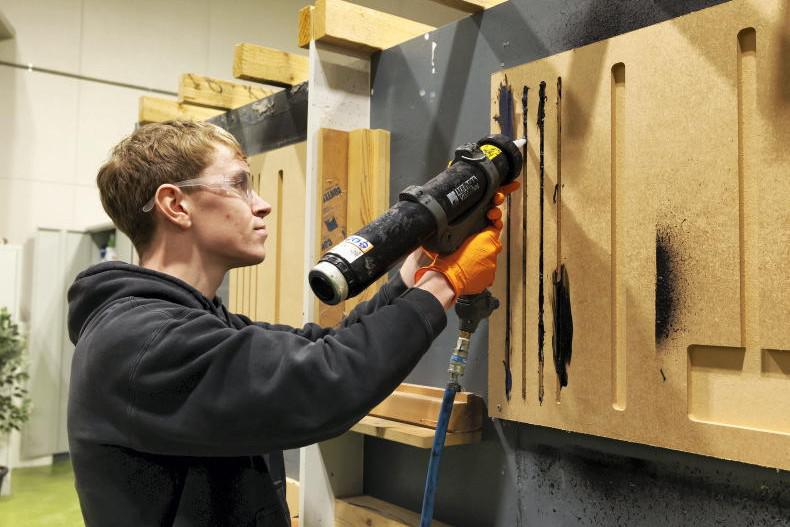
Retrofitting courses are critical for upskilling construction professionals, tradespeople, suppliers and design engineers to transform existing building stock into energy-efficient, sustainable, and comfortable environments.
They directly address the growing demand for ‘green skills’ required to meet national climate action goals like Ireland’s target to retrofit 500,000 homes to B2 BER standards by 2030.
Nearly Zero Energy Building (NZEB) refers to buildings that are highly energy-efficient, with very low energy demand, of which is met through renewable sources. NZEB standards have been a legal requirement for all new buildings in Ireland since 2019.
This means for domestic buildings the equivalent of a 60% improvement in energy performance is required. When renovations are more than 25% of the surface area, the building must be upgraded to include high-efficiency, low-carbon heating, improved insulation and airtightness to achieve a B2 BER or better.
Retrofitting involves upgrading existing buildings to improve their energy performance. This can include measures like insulation, window replacement, and renewable heating systems. Together, NZEB standards and retrofit are key to reducing carbon emissions and creating healthier, more sustainable homes and workplaces.
The first NZEB training centre in Ireland was set up in 2018 in Enniscorthy, Co Wexford. Since then, 5,200 learners have undertaken NZEB and green skills training courses with Waterford Wexford Education Training Board (WWETB). There are other training facilities in Dublin, Cork and Offaly.
Mark Dunphy, NZEB instructor with WWETB, says the courses provide critical skills and knowledge needed to meet the mandatory energy efficiency standards.
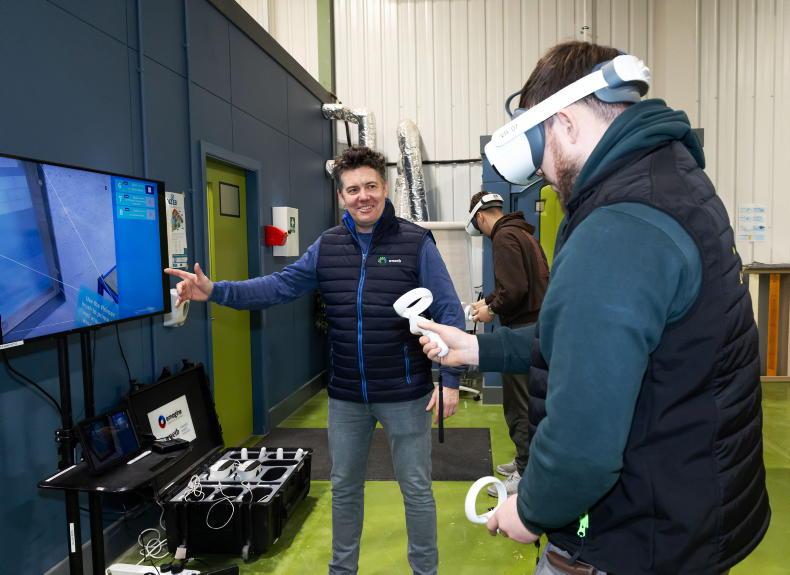
Students trying out the virtual reality in the NZEB training with Mark Dunphy WWETB instructor. \ Mary Browne
Practical training
“Every day, through the delivery of NZEB training, we see how rapidly the construction landscape is changing and how critical skills development is to meeting Ireland’s climate and housing ambitions.
“We offer a wide range of courses, including entry-level options such as the fundamental awareness and retrofitting courses, which require no previous construction experience,” he explains.
In order to do the two-day retrofitting course, the one-day fundamental course must be completed. Both courses are fully funded once the learner supplies a valid Irish PPS number. The training is designed as a starting point for anyone who wants to understand more about energy-efficient buildings.
“It is particularly useful to those planning to build a new home or retrofitting an older house,” explains Mark.
The course content covers NZEB principles, regulations, and standards through interactive sessions with industry-experienced trainers. They introduce the small groups to theoretical, practical, and virtual reality examples, providing learners with a holistic approach to retrofitting.
“The building’s fabric and the physics associated with it are thoroughly explained in relation to reducing energy demand and emissions. Building services, such as ventilation, cooling, and heating systems are also introduced, and the basics of renewable and smart technology are discussed,” explains Mark.
A mock-up of a retrofitted house to demonstrate the ‘Blower Door’ test required to measure a building’s air permeability is utilised.
“Here, learners can feel air infiltration and leakage from a dwelling, and this practice provides a sensory guide to where heat is lost and energy is wasted,” points out Mark.
The course also uses virtual reality as part of the training, to simulate internal and external wall insulation, roof installation and bead insulation in the cavity. Along with enabling attendees to see the workings of the different ventilation systems, it reduces the need to use traditional materials and provides a fun way to break up the theory.
“From these courses, learners will understand the principle of a ‘fabric-first approach’, which is where air and thermal layers should be surveyed before incorporating renewable technology such as a heat pump installation or mechanical ventilation systems,” says Mark.
“The interest from industry to date has been good, particularly considering the demand on these professionals in this sector to meet national and EU housing and sustainability targets,” he adds.
Oisin Connolly and Colm Corbett both recently completed the NZEB retrofitting course and share their own experiences.
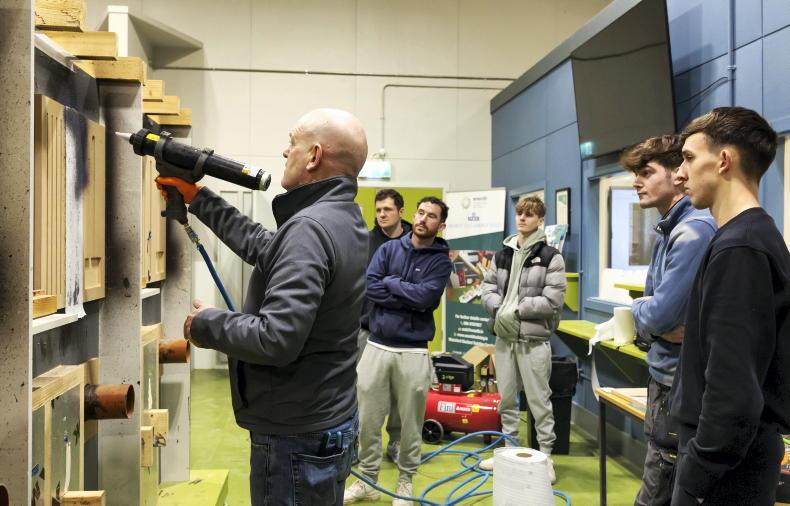
Dermot Redmond industry expert at the retrofitting course provided by Wexford Waterford Education Trraining Bord (WWETB) at Waterford Industrial Park, Co Waterford. \ Mary Browne
Colm Corbett, sustainable
energy engineering student
“I’m from Waterford originally, and I’m doing sustainable energy engineering in South East Technological University. A lot of what we do is also around retrofits and new homes, designing energy-efficient systems, your PV systems, ventilation, everything. The NZEB course is really relevant to the field of study that we’re doing at the moment. I completed the course as part of my college programme, and found it brilliant.
“The engagement between personal examples and the coursework itself made it more interesting. It’s applicable to anyone who is building a house or in the construction industry – whether you’re a plasterer, carpenter or electrician, or the person building the house.
“Having the break with a bit of practical work and seeing what is involved with the air tightness brings home what you are learning. You gain a basic understanding of what is involved and how to do it. The NZEB course brought everything we had learned on heating upgrades and other modules together to give you a broad understanding. I was surprised by the wide range of information spanning across the different parts of a retrofit.
“It drove home the little things that you don’t really see the importance of until it’s spelt out for you. I would encourage anyone who is building their own house or buying a new house to do the course as it’s important to understand how the house works and how to use it to your needs in terms of running the electricity, etc.”
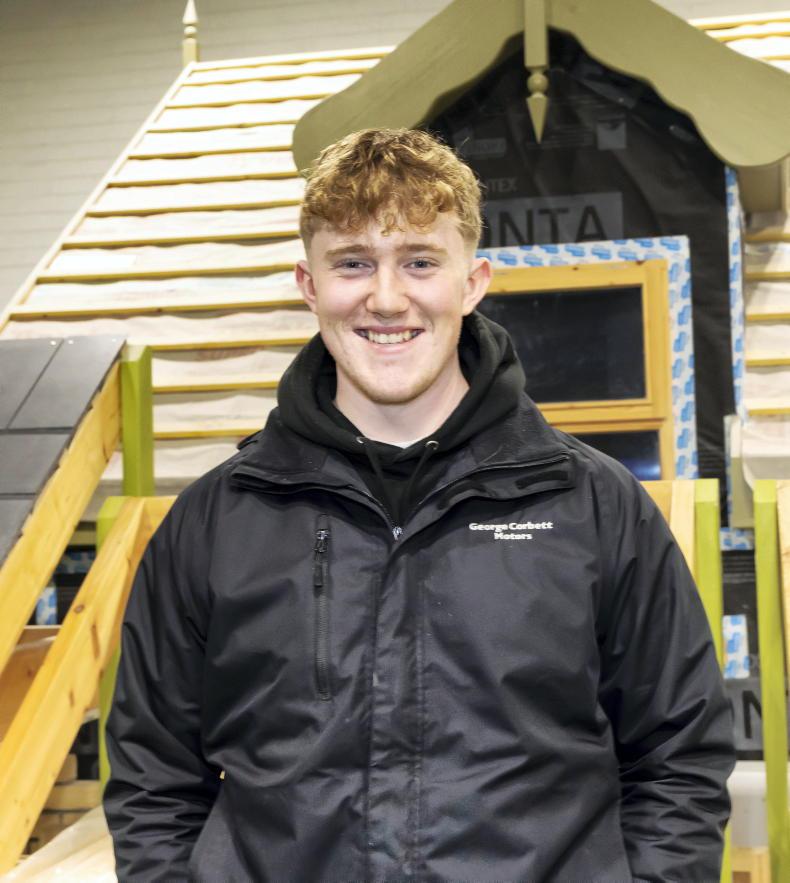
Colm Corbett a sustainable energy engineer student from SETU. / Mary Browne. \ Mary Browne
Oisin Connolly,
apprentice plasterer
“I’m from Portarlington in Co Offaly. I am doing the plastering apprenticeship in WWETB and have just finished the first phase in college. I always wanted to do a trade. I got an offer to do a plastering apprenticeship, and I always wanted to try it out. The NZEB is becoming a big part of the building sites now, and a lot of the energy efficiency, like air tightness, will fall on us, so it’s important to know what you’re at. I did the fundamental and retrofitting courses, and they are becoming a big part of the regulations for building; everyone should really know about them.
“We went through the regulations and different cases of how to prevent mould and air tightness in situations. We used the Virtual Reality (VR) and got to practice doing the air tightness tape, plastering, insulating and putting in windows. I was surprised at how realistic it was, and I’d say it would be good for training people who have no experience on a building site.
“The retrofitting course was two days, with a lot of information being outlined. We learned about houses that were built and needed their rating improved with insulation or air tightness. They ran through what you could do and the different options. It’s becoming a massive part of building for efficiency and saving electricity. I would recommend the course to any tradesperson or someone working on a site or building their own house to get an idea of what is involved."
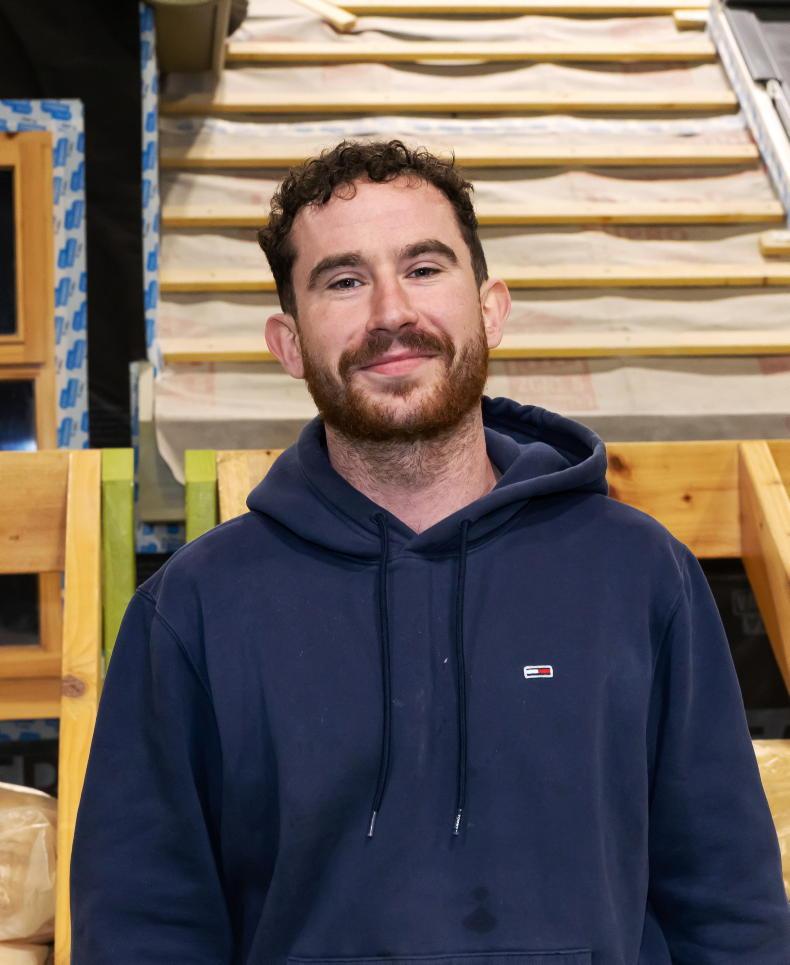
Oisín Connolly from Portarlington, Co Offaly. \ Mary Browne
See wwetbtraining.ie/nzeb or email
nzeb@wwetb.ie
Retrofitting courses are critical for upskilling construction professionals, tradespeople, suppliers and design engineers to transform existing building stock into energy-efficient, sustainable, and comfortable environments.
They directly address the growing demand for ‘green skills’ required to meet national climate action goals like Ireland’s target to retrofit 500,000 homes to B2 BER standards by 2030.
Nearly Zero Energy Building (NZEB) refers to buildings that are highly energy-efficient, with very low energy demand, of which is met through renewable sources. NZEB standards have been a legal requirement for all new buildings in Ireland since 2019.
This means for domestic buildings the equivalent of a 60% improvement in energy performance is required. When renovations are more than 25% of the surface area, the building must be upgraded to include high-efficiency, low-carbon heating, improved insulation and airtightness to achieve a B2 BER or better.
Retrofitting involves upgrading existing buildings to improve their energy performance. This can include measures like insulation, window replacement, and renewable heating systems. Together, NZEB standards and retrofit are key to reducing carbon emissions and creating healthier, more sustainable homes and workplaces.
The first NZEB training centre in Ireland was set up in 2018 in Enniscorthy, Co Wexford. Since then, 5,200 learners have undertaken NZEB and green skills training courses with Waterford Wexford Education Training Board (WWETB). There are other training facilities in Dublin, Cork and Offaly.
Mark Dunphy, NZEB instructor with WWETB, says the courses provide critical skills and knowledge needed to meet the mandatory energy efficiency standards.

Students trying out the virtual reality in the NZEB training with Mark Dunphy WWETB instructor. \ Mary Browne
Practical training
“Every day, through the delivery of NZEB training, we see how rapidly the construction landscape is changing and how critical skills development is to meeting Ireland’s climate and housing ambitions.
“We offer a wide range of courses, including entry-level options such as the fundamental awareness and retrofitting courses, which require no previous construction experience,” he explains.
In order to do the two-day retrofitting course, the one-day fundamental course must be completed. Both courses are fully funded once the learner supplies a valid Irish PPS number. The training is designed as a starting point for anyone who wants to understand more about energy-efficient buildings.
“It is particularly useful to those planning to build a new home or retrofitting an older house,” explains Mark.
The course content covers NZEB principles, regulations, and standards through interactive sessions with industry-experienced trainers. They introduce the small groups to theoretical, practical, and virtual reality examples, providing learners with a holistic approach to retrofitting.
“The building’s fabric and the physics associated with it are thoroughly explained in relation to reducing energy demand and emissions. Building services, such as ventilation, cooling, and heating systems are also introduced, and the basics of renewable and smart technology are discussed,” explains Mark.
A mock-up of a retrofitted house to demonstrate the ‘Blower Door’ test required to measure a building’s air permeability is utilised.
“Here, learners can feel air infiltration and leakage from a dwelling, and this practice provides a sensory guide to where heat is lost and energy is wasted,” points out Mark.
The course also uses virtual reality as part of the training, to simulate internal and external wall insulation, roof installation and bead insulation in the cavity. Along with enabling attendees to see the workings of the different ventilation systems, it reduces the need to use traditional materials and provides a fun way to break up the theory.
“From these courses, learners will understand the principle of a ‘fabric-first approach’, which is where air and thermal layers should be surveyed before incorporating renewable technology such as a heat pump installation or mechanical ventilation systems,” says Mark.
“The interest from industry to date has been good, particularly considering the demand on these professionals in this sector to meet national and EU housing and sustainability targets,” he adds.
Oisin Connolly and Colm Corbett both recently completed the NZEB retrofitting course and share their own experiences.

Dermot Redmond industry expert at the retrofitting course provided by Wexford Waterford Education Trraining Bord (WWETB) at Waterford Industrial Park, Co Waterford. \ Mary Browne
Colm Corbett, sustainable
energy engineering student
“I’m from Waterford originally, and I’m doing sustainable energy engineering in South East Technological University. A lot of what we do is also around retrofits and new homes, designing energy-efficient systems, your PV systems, ventilation, everything. The NZEB course is really relevant to the field of study that we’re doing at the moment. I completed the course as part of my college programme, and found it brilliant.
“The engagement between personal examples and the coursework itself made it more interesting. It’s applicable to anyone who is building a house or in the construction industry – whether you’re a plasterer, carpenter or electrician, or the person building the house.
“Having the break with a bit of practical work and seeing what is involved with the air tightness brings home what you are learning. You gain a basic understanding of what is involved and how to do it. The NZEB course brought everything we had learned on heating upgrades and other modules together to give you a broad understanding. I was surprised by the wide range of information spanning across the different parts of a retrofit.
“It drove home the little things that you don’t really see the importance of until it’s spelt out for you. I would encourage anyone who is building their own house or buying a new house to do the course as it’s important to understand how the house works and how to use it to your needs in terms of running the electricity, etc.”

Colm Corbett a sustainable energy engineer student from SETU. / Mary Browne. \ Mary Browne
Oisin Connolly,
apprentice plasterer
“I’m from Portarlington in Co Offaly. I am doing the plastering apprenticeship in WWETB and have just finished the first phase in college. I always wanted to do a trade. I got an offer to do a plastering apprenticeship, and I always wanted to try it out. The NZEB is becoming a big part of the building sites now, and a lot of the energy efficiency, like air tightness, will fall on us, so it’s important to know what you’re at. I did the fundamental and retrofitting courses, and they are becoming a big part of the regulations for building; everyone should really know about them.
“We went through the regulations and different cases of how to prevent mould and air tightness in situations. We used the Virtual Reality (VR) and got to practice doing the air tightness tape, plastering, insulating and putting in windows. I was surprised at how realistic it was, and I’d say it would be good for training people who have no experience on a building site.
“The retrofitting course was two days, with a lot of information being outlined. We learned about houses that were built and needed their rating improved with insulation or air tightness. They ran through what you could do and the different options. It’s becoming a massive part of building for efficiency and saving electricity. I would recommend the course to any tradesperson or someone working on a site or building their own house to get an idea of what is involved."

Oisín Connolly from Portarlington, Co Offaly. \ Mary Browne
See wwetbtraining.ie/nzeb or email
nzeb@wwetb.ie
SHARING OPTIONS