Growing up in Gorey, Co Wexford, Dylan Hendy did not come from a farming background. Instead, his interest in agriculture developed while helping on a neighbouring beef and suckler farm, where he discovered a passion for livestock production and farm management.
That early experience ultimately led him to study Animal and Crop Production at University College Dublin. This year, supported by the ASA/Irish Farmers Journal Professional Work Experience Bursary, Dylan travelled to Scotland and Canada, gaining first-hand experience of two very different farming systems and seeing agriculture on a scale rarely encountered in Ireland.
“I chose agricultural science because I believed it would provide a wide range of opportunities within the agricultural sector,” Dylan says.
“My interest in agriculture began at an early age when I was working for a neighbouring beef and suckler farmer. From then on, I developed a strong interest in livestock production and farm management, which motivated me to pursue a career in agriculture.”
Heading abroad
The first seven weeks of Dylan’s placement brought him to Port William in south-west Scotland, where he joined Dourie Farming Company, managed by Rory Christie.
The farm milks 1,280 cows on a grass-based, spring-calving system across a 728ha grazing platform. While Irish dairy farms often operate on an impressive scale, Dylan says the experience of working within such a large commercial business gave him a new appreciation for planning, labour efficiency and grassland management.
My interest in agriculture began at an early age when I was working for a neighbouring beef and suckler farmer. From then on, I developed a strong interest in livestock production and farm management
Compact calving was a major feature of the system, with around 80% of the herd calving within the first six weeks. Cows were turned out to grass immediately after calving whenever weather conditions allowed, while the business focused heavily on maximising the number of grazing days each year.The experience also introduced Dylan to different breeding and replacement strategies, with sexed semen used during the opening weeks of the breeding season before Aberdeen Angus sires were introduced for the remainder of the herd.
Beyond the technical aspects of the system, he says the placement demonstrated the importance of organisation and teamwork when managing a large dairy enterprise.
“The scale and efficiency of the operation gave me valuable insight into large-scale dairy production,” he says.
After returning home briefly, Dylan travelled to Kincaid in Saskatchewan, Canada, where he completed the second stage of his placement on Dustin Hawkin’s beef and tillage enterprise.
Placement highlight
If Scotland had shown him large-scale dairy farming, Canada introduced him to agriculture on an entirely different level.
The business spans approximately 29,000ac with a 750-cow suckler herd made up primarily of Angus and Simmental cattle.
He says, “Calving takes place across multiple locations, with some cows remaining on the home farm while others are transported to grazing ground up to two hours away. Managing livestock over such large distances required a level of planning unlike anything I’ve seen.”
Alongside the beef enterprise, the farm grows barley, durum wheat, mustard, canola, lentils, peas and fall rye using a cereal, oilseed and pulse rotation.
It gave me the opportunity to experience two very different farming systems and provided me with a much broader understanding of how agriculture operates on a large scale in different countries
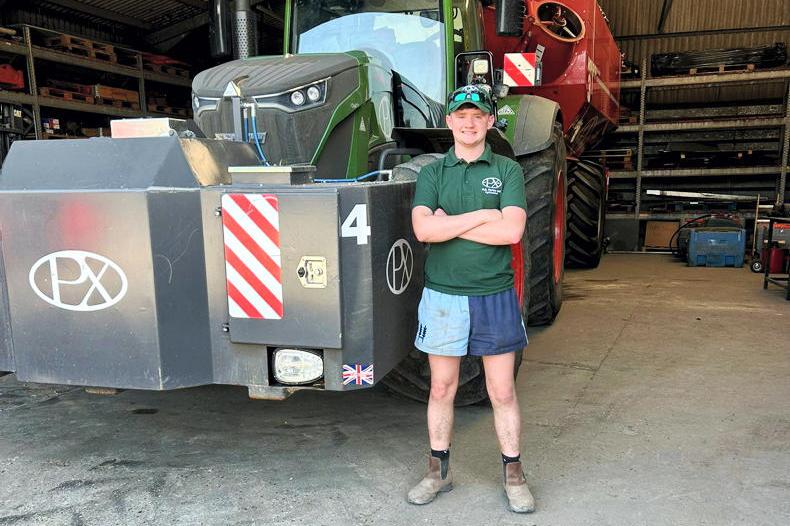
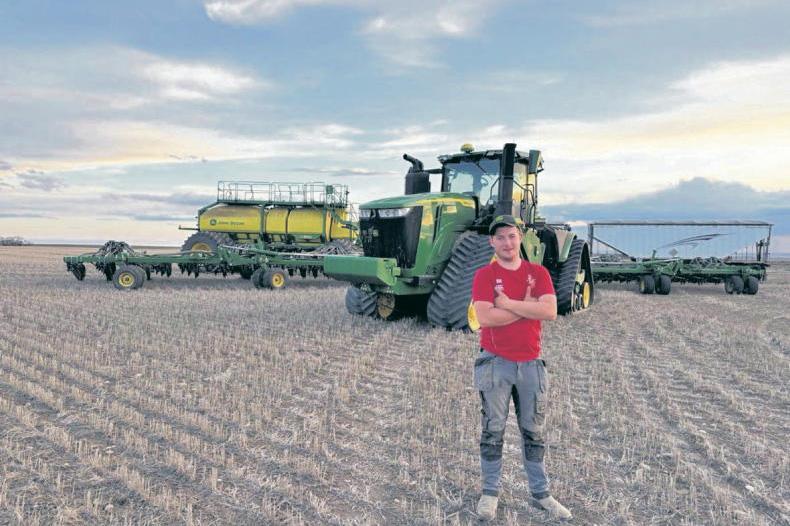
One of the highlights of the placement was working with machinery on a scale rarely seen in Ireland.
During spring planting, the business regularly sows close to 800ac in a single day using minimum tillage systems. Dylan was given the opportunity to operate a range of machinery throughout the placement, helping him build confidence while developing practical skills that will benefit him throughout his career.
Bringing experience home
Looking back on both placements, Dylan believes the opportunity has strengthened not only his practical farming skills but also his confidence and understanding of agriculture as a global industry.
“Working across dairy, beef and tillage enterprises meant I was exposed to different management systems, production methods and ways of solving everyday challenges.
“The experience also demonstrated how the principles studied in lectures are applied on commercial farms, helping bridge the gap between classroom learning and practical agriculture.
“It gave me the opportunity to experience two very different farming systems and provided me with a much broader understanding of how agriculture operates on a large scale in different countries,” says Dylan.
He believes the knowledge gained will prove invaluable as he enters his final year at UCD, particularly in areas such as grassland management, breeding, livestock handling and machinery operation.
More importantly, the experience reinforced the reasons he chose agricultural science in the first place.
“Overall, this placement has been one of the most rewarding parts of my college experience so far,” he says.
“It has increased my motivation for my final year and provided me with practical insight and experience that will benefit me greatly in both my studies and my future career within the agricultural sector.”