



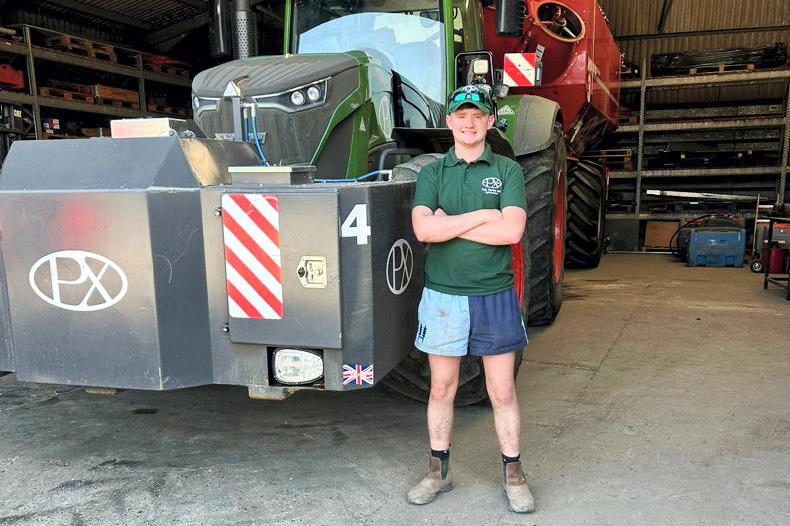
Growing up near his uncle’s dairy, beef and poultry farm in Kingscourt, Co Cavan, gave Max Kelly an early insight into agriculture and food production.
Now preparing to enter the fourth and final year of a BSc (Hons) in sustainable agriculture at Dundalk Institute of Technology (DkIT), Max has gained experience across farm enterprises and agricultural businesses in Ireland and the UK.
“My interest in farming came from working on my uncle’s dairy, beef and poultry farm from a very young age,” he says.
“Growing up near the family farm allowed me to see aspects of food production that inspired me to pursue a degree combining agricultural science, environmental sustainability and business management.”
Max chose sustainable agriculture because the course examines the environmental and economic challenges facing the sector. His studies have covered livestock and crop production, environmental management, business economics and sustainability.
“As agriculture continues to evolve, future industry leaders need to understand not only how to produce food, but how to do so efficiently, sustainably and in a way that meets consumer expectations,” he says.
Harvesting at scale
As part of his degree, Max is completing his work placement with PX Farms Ltd in Cambridgeshire, England.
Owned and managed by James Peck, the company farms approximately 12,500 acres across several counties. Its operations include crop production, grain storage, haulage and laboratory services.
“The professionalism and scale of the organisation made it an ideal environment in which to gain experience and broaden my understanding of commercial agriculture,” Max says.
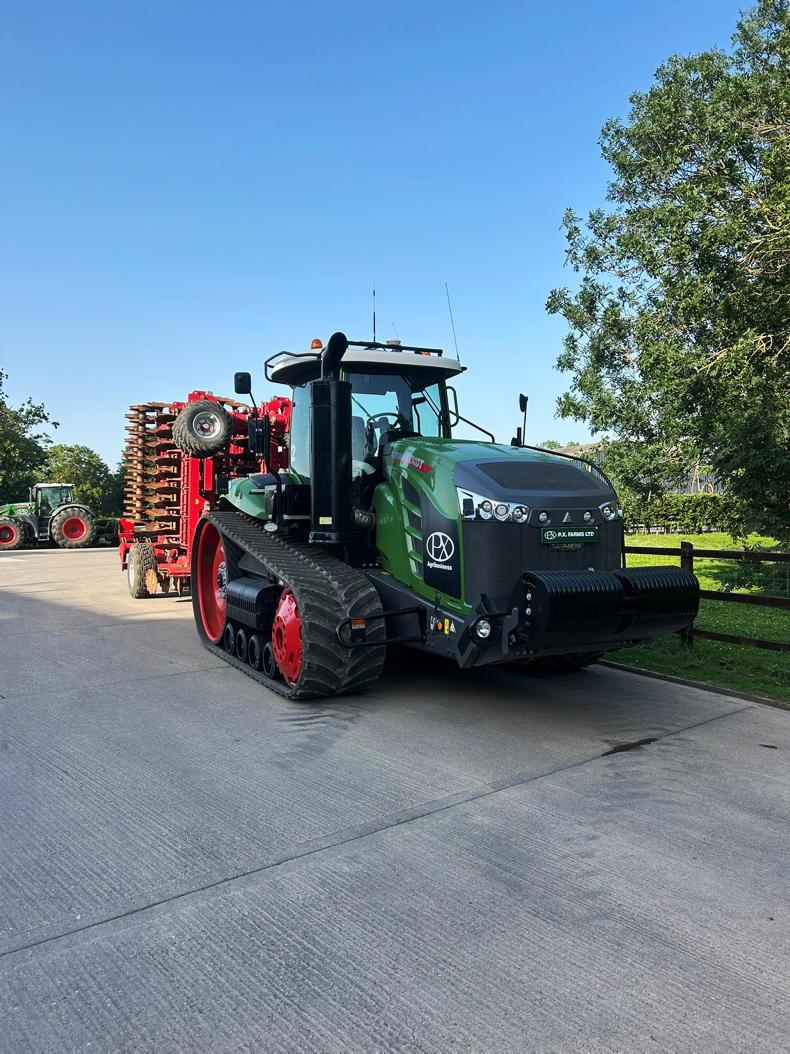
During harvest, his main role is operating one of four Fendt 924 tractors with a Horsch chaser bin. Each tractor works alongside one of four CLAAS Lexion 8700 combines fitted with 35ft headers.
The grain is transferred from the combines to one of 12 lorries operated by the company’s haulage division and transported to storage facilities.
“This creates an extremely efficient system, as it ensures the combines can continue harvesting without stopping,” he explains.
After harvest, Max will join the cultivation team and take part in seedbed preparation, giving him a broader understanding of how a large-scale arable business manages crop production from one stage to the next.
One of the systems he has encountered is controlled traffic farming, or CTF.
PX Farms operates a 12m system, meaning machinery travels along permanent traffic lanes throughout the year.
This concentrates soil compaction within designated areas, leaving most of the field undisturbed by heavy machinery.
“This helps to improve soil structure, root development and yields,” Max says.
Cultivating, drilling, spraying, harvesting and chaser-bin traffic all follow the same lanes.
“This investment in machinery further reduces field compaction and helps to produce a more sustainable and higher-yielding crop,” he says.
The placement has also exposed Max to the technology and data-led decision-making involved in managing a large agricultural business.
PX Farms uses GPS guidance, machinery-performance monitoring and detailed field records to support decisions across its operations.
“One of the most valuable aspects of my placement has been gaining exposure to technology and data-driven decision-making within a large-scale agribusiness,” Max says.
Managing land across several counties requires precise planning and quick decisions. This includes deciding when crops should be harvested, how quickly work can be completed and how different parts of the business can work together.
My time at PX Farms has strengthened my understanding of large-scale crop production, precision agriculture, supply-chain management and the economic decisions involved in a large operation
“Communication is extremely important in ensuring that all areas of the business are working together and that operations run smoothly,” he says.
Max believes the experience has strengthened his teamwork, organisational and problem-solving skills.
He has also gained a better understanding of the wider supply chain after crops leave the field. Harvested grain must meet quality specifications, be stored correctly and eventually marketed.
“Learning about quality assurance, traceability and logistical management has given me a much broader understanding of the journey the product takes to reach the consumer,” he says.
“It has shown me the importance of maintaining high standards at every stage of the process.”
Much larger scale
Undertaking the placement in the UK has brought personal as well as professional benefits. Max travelled with his DkIT classmate Shane Halpenny, which made the prospect of moving abroad less daunting.
“Living and working in the UK challenged me to become more independent and confident in an unfamiliar environment,” he says.
“It allowed me to work with experienced professionals and gain valuable knowledge, while also giving me the opportunity to experience a business operating on a much larger scale than would typically be found at home.”
As Max prepares to return to DkIT for his final year, he believes the placement will benefit both his studies and his future career.
“I have developed a greater appreciation of how important effective sustainability and business management are within a successful company,” he says.
“My time at PX Farms has strengthened my understanding of large-scale crop production, precision agriculture, supply-chain management and the economic decisions involved in a large operation.”
He thanked James Peck and the staff at PX Farms for the opportunity and hopes to apply what he has learned to sustainable and innovative food-production systems throughout his career.
Over the last 12 years, the Agricultural Science Association (ASA) has teamed up with the Irish Farmers Journal to support agricultural science students looking to expand their knowledge abroad. The €1,000 scholarship aims to provide students with financial support, allowing them to travel to different countries to complete this placement and gain a more global understanding of agri food production.



SHARING OPTIONS