


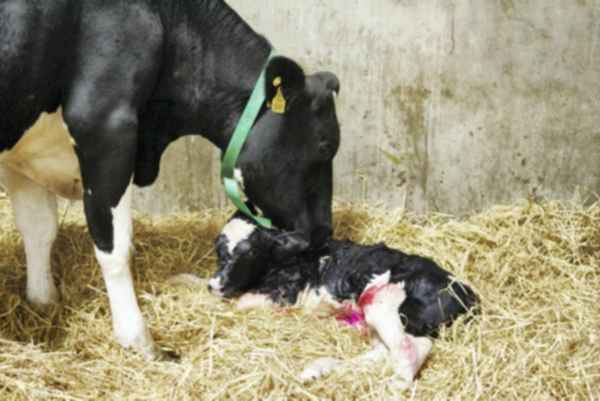
Milk fever, or hypocalcaemia, occurs around calving time. Clinical signs of milk fever occur when blood levels of calcium fall below 2mmol/l in the affected animal.
Calcium is needed for muscle contractions and the normal function of nerve cells. Normal calcium levels are maintained in the blood by dietary calcium and calcium resorption from bones. Calcium is excreted in the faeces, urine and milk.
As milk production increases, the demand for calcium greatly increases, thus leading to a depletion of calcium reserves around the time of calving.
Cows that are at risk of milk fever are typically over-conditioned cows (BCS>3.5), older cows, especially high-yielders, and cows on an inappropriate diet. It is a worthwhile exercise for farmers to identify at-risk cows and to administer a calcium bolus at calving.
Milk fever should typically affect less than 5% of your herd. A greater percentage highlights a problem within the herd. There may be numerous cows not showing clinical signs but who are low in calcium (sub-clinical hypocalcaemia).
These cows are at an increased risk of mastitis, displaced abomasums, retained foetal membranes, endometritis, ketosis and uterine prolapse.
Transition cows should be fed a diet restricted in calcium in the lead-up to calving – this mobilises sufficient skeletal calcium to meet the increase in demand as a newly-calved cow cannot absorb enough dietary calcium to meet the demands of milk production.
Cows should also be fed a diet supplemented with magnesium, as this increases the metabolism of calcium from bone.
Clinical signs include restlessness, excitability, muscle tremors, weakness and eventually recumbency.
Cows that are standing but showing signs of milk fever should be put on a straw bed and administered 400ml of calcium borogluconate subcutaneously or alternatively given an oral calcium bolus. A recumbent cow, whether milk fever is suspected or not, requires prompt veterinary assistance, as the first few hours are critical.
* Padraic Kilmartin works at Glen Veterinary Clinic, Blind St, Tipperary. Glen Vet Clinic is part of XLVets, a group of practices working together to achieve a better future for agriculture and veterinary in Ireland. Visit www.xlvet.ie.




SHARING OPTIONS