Most grassland farmers would see soil fertility, grass species and how they manage grass as being the key ingredients for growing a lot of pasture. Because they are not looking at it every day, many farmers underestimate the importance of soil structure when it comes to achieving high yields of grass.
Step forward Giulia Bondi from Teagasc Johnstown Castle who has just completed a research project called Square, where soil quality was assessed in Irish soils. In the study, 181 sites were evaluated using a number of different methods to assess soil quality. Her findings suggest that, in general, soil quality in Ireland is good, but there are things that farmers need to be more aware of.
As expected, wetter soils are less resilient and are more prone to damage if they are grazed or machinery worked in them at the wrong times. Poor soil structure reduces grass yield, typically by 10% to 20% but it can be up to 100% in badly affected spots such as around water troughs and paddock entrances.
Effects
Poor and uneven yields are obvious effects. The less obvious effects are the impact on biodiversity, nutrient cycling and carbon sequestration. These are probably the reasons why grass growth suffers when the soil structure is poor. Basically, compacted soils have shallow root mass, lower levels of organic matter and fewer air pores so less oxygen is available for soil microbes.
Another big problem with poor soil structure is the effect on water regulation. One of the primary functions of soil is to filter and purify the water that flows through it. Where soil structure is damaged, more water will run off as opposed to run through the soil leading to erosion, flooding and nutrient and sediment loss.
Assessing quality
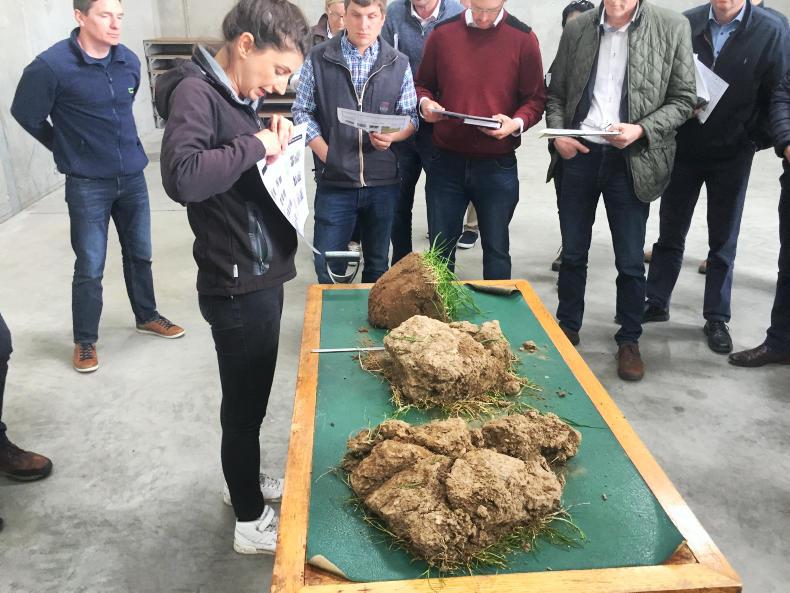
Giulia Bondi and David Wall from Teagasc demonstrated how to assess soils for soil structure. In the Square study, they dug out test pits and carried out bulk density measurements across the various horizons to assess the level of compaction. However, that’s not a practical method for most farmers or advisers. Therefore, an easier method called GrassVESS has been developed.
GrassVESS stands for visual evaluation of soil structure in grassland. The only tools needed are a 20cm spade, a knife and a flow chart diagram to help you with the assessments. The flow chart can be downloaded from the Teagasc website.
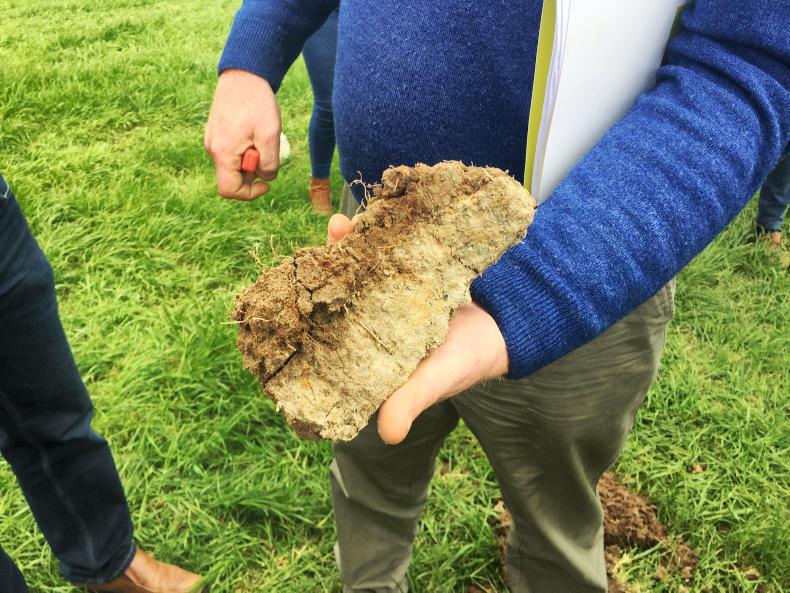
To begin, a sod of soil is dug up using the spade. This sod should be about two spade widths and square at the top but sloped in at the bottom so the sod can be removed easily and kept intact. This section of soil is then opened in half and the visual assessment can begin.
GrassVESS involves two assessments, one in the root mat which is generally in the top few inches and the other in the lower portion.
In the lower portion, the first thing to ask yourself is if the soil is highly porous. Highly porous soils have lots of roots and will probably have earthworms also. By answering yes or no to the flow chart it will guide you to your final assessment of the soil.
The next thing is to look at aggregate size. The aggregates are the cluster of soil particles or lumps of clay in layman’s language. The lower portion should be broken up gently to assess the aggregate size. Very porous soils will have small aggregate size whereas more compacted soils will have larger aggregates.
The shape of the aggregates tells a lot about the soil also. Good-quality soils will have mostly round aggregates whereas poor quality soils will have much sharper or angular-type aggregates. The aggregates in good-quality soils will crumble easily between your fingers, whereas aggregates in poorer-quality soils are difficult to break up. Based on your findings, a score is allocated to the soil from one to four, with soils with very good soil structure scoring one, and soils with very poor structure scoring four.
The root mat should also be assessed for soil structure. To assess the root mat, break it away from the lower portion, turn it upside down and gently prise it apart with your thumbs. Soils with a good structure will have lots of roots growing throughout the section and will have small aggregates of less than 1cm. Soils with poor structure will have larger aggregates that are angular or blocky in shape and have limited porosity.
Actions
David Wall said that by carrying out the GrassVESS assessment, farmers will be able to see where, if any, soil structure issues exist. He suggests carrying out the test in a number of locations across a field, knowing where you are in the landscape. The participants on the course carried out five tests on a field in the beef unit at Johnstown Castle. The approximately 3ac paddock is gently sloping from top to bottom. Walking into the field you would think that the soil’s structure would be uniform – it was anything but.
The first two tests revealed generally good, if not optimal, structure. There was some evidence of mottling, or orange/yellow-type colours through the lower portion suggesting that water might be sitting in the soil for prolonged periods. The next test was carried out near a water trough and this showed that soil structure was only moderate, with the soil compacted from animals gathering around the trough.
Another test was carried out in the middle of the field and this presented the most surprising results. The lower portion was extremely compacted and grey in colour, while the root-mat section was relatively porous.
The diagnosis here was that the water table is higher in this point in the field and this section is wet for longer. Looking at the grass in this section, more older-type weed grasses were present compared with the rest of the field, indicating more poaching here.
The Teagasc experts said that where the root-mat and lower portion structure is optimal or good, no management changes are necessary. Where moderate soil structure was diagnosed, it was suggested that animals shouldn’t graze these fields, or machinery travel on them in wet conditions and allow the soil to recover naturally. The advice for fields with poor structure was to intervene with ploughing and reseeding.
The general consensus was that heavy intervention with subsoilers or the like can do more damage with smearing being a big risk. The other thing is to only subsoil to just below the level that is compacted as there’s no benefit to going any deeper. Spiking tends to help shallow compaction such as that caused by sheep, but according to the experts has limited benefit outside of that.
Compaction
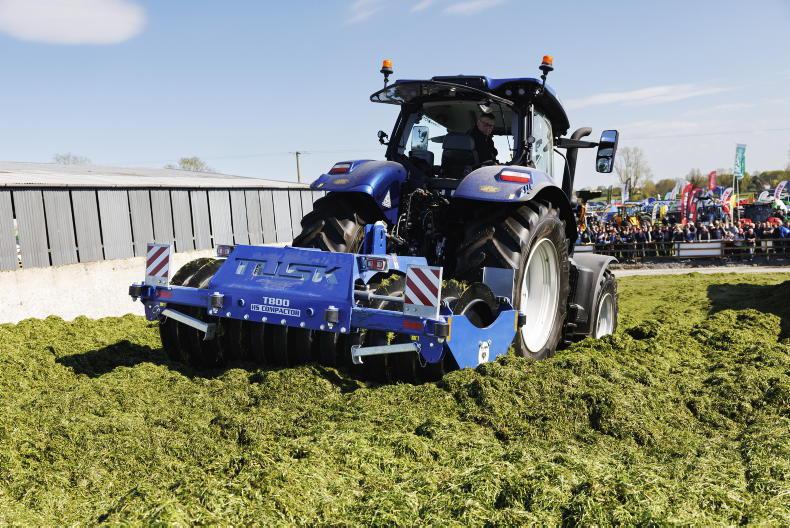
The biggest cause of compaction is machinery.
Dermot Forristal said that vintage tractors such the Ferguson 20 with tyres that are only 9in-wide have over twice the tyre capacity of modern tractors because the newer tractors are so much heavier.
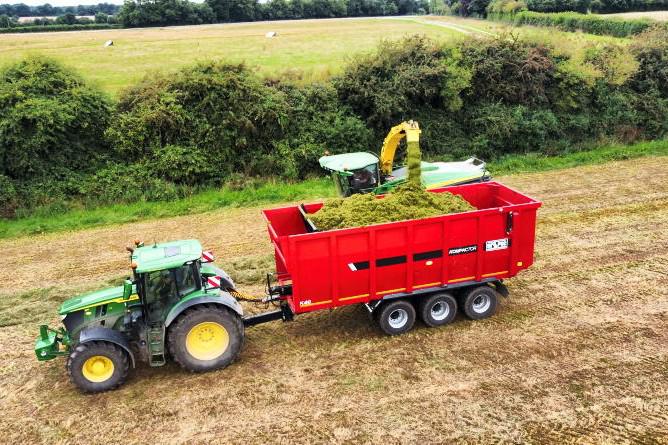
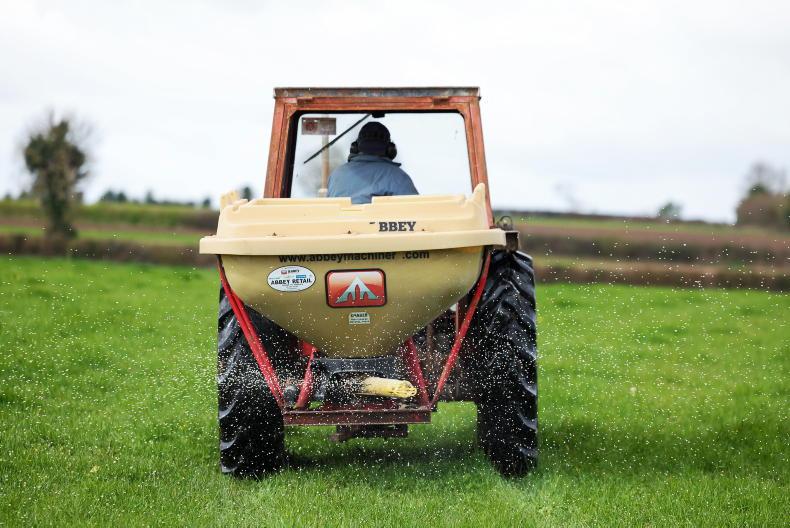
Slurry and fertiliser spreading is the biggest issue and the main cause of compaction on grass farms because they tend to go out when soil is most vulnerable and the weight of slurry tanks continues to increase while ground pressure has not changed.
Read more
Identifying and managing soil compaction in agricultural soils
Top 10 practices of biological farming
Most grassland farmers would see soil fertility, grass species and how they manage grass as being the key ingredients for growing a lot of pasture. Because they are not looking at it every day, many farmers underestimate the importance of soil structure when it comes to achieving high yields of grass.
Step forward Giulia Bondi from Teagasc Johnstown Castle who has just completed a research project called Square, where soil quality was assessed in Irish soils. In the study, 181 sites were evaluated using a number of different methods to assess soil quality. Her findings suggest that, in general, soil quality in Ireland is good, but there are things that farmers need to be more aware of.
As expected, wetter soils are less resilient and are more prone to damage if they are grazed or machinery worked in them at the wrong times. Poor soil structure reduces grass yield, typically by 10% to 20% but it can be up to 100% in badly affected spots such as around water troughs and paddock entrances.
Effects
Poor and uneven yields are obvious effects. The less obvious effects are the impact on biodiversity, nutrient cycling and carbon sequestration. These are probably the reasons why grass growth suffers when the soil structure is poor. Basically, compacted soils have shallow root mass, lower levels of organic matter and fewer air pores so less oxygen is available for soil microbes.
Another big problem with poor soil structure is the effect on water regulation. One of the primary functions of soil is to filter and purify the water that flows through it. Where soil structure is damaged, more water will run off as opposed to run through the soil leading to erosion, flooding and nutrient and sediment loss.
Assessing quality
Giulia Bondi and David Wall from Teagasc demonstrated how to assess soils for soil structure. In the Square study, they dug out test pits and carried out bulk density measurements across the various horizons to assess the level of compaction. However, that’s not a practical method for most farmers or advisers. Therefore, an easier method called GrassVESS has been developed.
GrassVESS stands for visual evaluation of soil structure in grassland. The only tools needed are a 20cm spade, a knife and a flow chart diagram to help you with the assessments. The flow chart can be downloaded from the Teagasc website.
To begin, a sod of soil is dug up using the spade. This sod should be about two spade widths and square at the top but sloped in at the bottom so the sod can be removed easily and kept intact. This section of soil is then opened in half and the visual assessment can begin.
GrassVESS involves two assessments, one in the root mat which is generally in the top few inches and the other in the lower portion.
In the lower portion, the first thing to ask yourself is if the soil is highly porous. Highly porous soils have lots of roots and will probably have earthworms also. By answering yes or no to the flow chart it will guide you to your final assessment of the soil.
The next thing is to look at aggregate size. The aggregates are the cluster of soil particles or lumps of clay in layman’s language. The lower portion should be broken up gently to assess the aggregate size. Very porous soils will have small aggregate size whereas more compacted soils will have larger aggregates.
The shape of the aggregates tells a lot about the soil also. Good-quality soils will have mostly round aggregates whereas poor quality soils will have much sharper or angular-type aggregates. The aggregates in good-quality soils will crumble easily between your fingers, whereas aggregates in poorer-quality soils are difficult to break up. Based on your findings, a score is allocated to the soil from one to four, with soils with very good soil structure scoring one, and soils with very poor structure scoring four.
The root mat should also be assessed for soil structure. To assess the root mat, break it away from the lower portion, turn it upside down and gently prise it apart with your thumbs. Soils with a good structure will have lots of roots growing throughout the section and will have small aggregates of less than 1cm. Soils with poor structure will have larger aggregates that are angular or blocky in shape and have limited porosity.
Actions
David Wall said that by carrying out the GrassVESS assessment, farmers will be able to see where, if any, soil structure issues exist. He suggests carrying out the test in a number of locations across a field, knowing where you are in the landscape. The participants on the course carried out five tests on a field in the beef unit at Johnstown Castle. The approximately 3ac paddock is gently sloping from top to bottom. Walking into the field you would think that the soil’s structure would be uniform – it was anything but.
The first two tests revealed generally good, if not optimal, structure. There was some evidence of mottling, or orange/yellow-type colours through the lower portion suggesting that water might be sitting in the soil for prolonged periods. The next test was carried out near a water trough and this showed that soil structure was only moderate, with the soil compacted from animals gathering around the trough.
Another test was carried out in the middle of the field and this presented the most surprising results. The lower portion was extremely compacted and grey in colour, while the root-mat section was relatively porous.
The diagnosis here was that the water table is higher in this point in the field and this section is wet for longer. Looking at the grass in this section, more older-type weed grasses were present compared with the rest of the field, indicating more poaching here.
The Teagasc experts said that where the root-mat and lower portion structure is optimal or good, no management changes are necessary. Where moderate soil structure was diagnosed, it was suggested that animals shouldn’t graze these fields, or machinery travel on them in wet conditions and allow the soil to recover naturally. The advice for fields with poor structure was to intervene with ploughing and reseeding.
The general consensus was that heavy intervention with subsoilers or the like can do more damage with smearing being a big risk. The other thing is to only subsoil to just below the level that is compacted as there’s no benefit to going any deeper. Spiking tends to help shallow compaction such as that caused by sheep, but according to the experts has limited benefit outside of that.
Compaction
The biggest cause of compaction is machinery.
Dermot Forristal said that vintage tractors such the Ferguson 20 with tyres that are only 9in-wide have over twice the tyre capacity of modern tractors because the newer tractors are so much heavier.
Slurry and fertiliser spreading is the biggest issue and the main cause of compaction on grass farms because they tend to go out when soil is most vulnerable and the weight of slurry tanks continues to increase while ground pressure has not changed.
Read more
Identifying and managing soil compaction in agricultural soils
Top 10 practices of biological farming






SHARING OPTIONS