


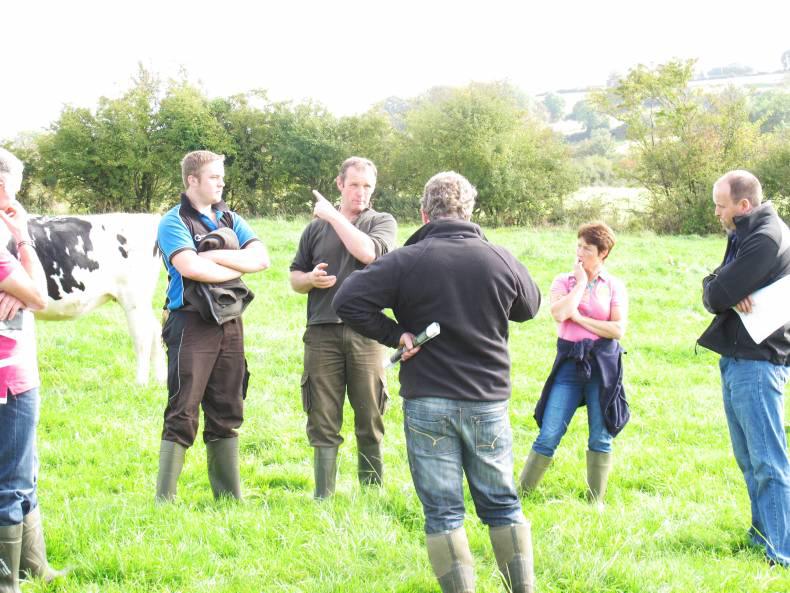
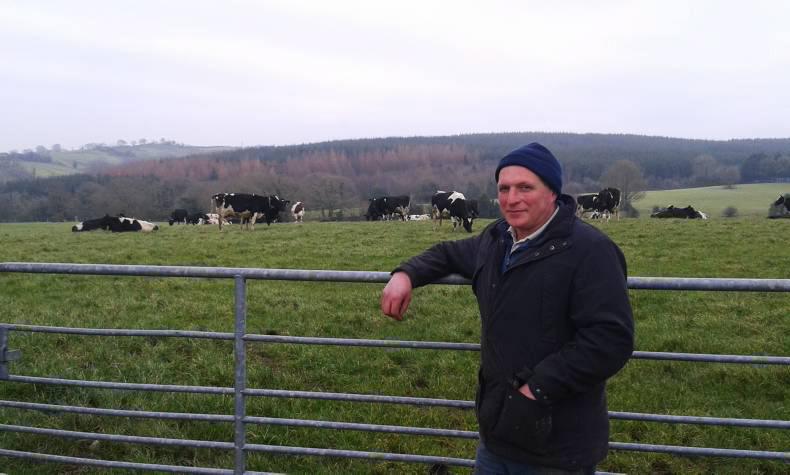
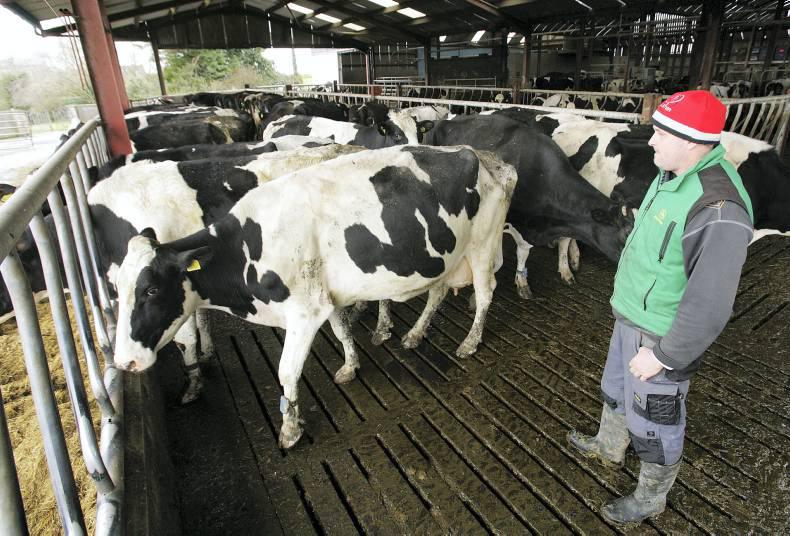
Good weather has allowed grazing to get started on most project farms. Nigel Corbett got cows out for the first time this week, with wet ground conditions holding back grazing. Like many farms, grass covers are high and difficult to graze for the first time on the farm. For this reason, Nigel selected a dry paddock with a low average grass cover for the first grazing.
The paddock is 1.4ha, herd demand is 420kg DM/day, with cows only grazing during the day. The average cover on this paddock is 900kg DM available, allowing just short of three grazing allocations in this paddock assuming cows eat off 6kg DM/cow each day. This paddock was selected for the first grazing because of its low average grass cover, allowing cows to get acclimatised to grazing before moving on to the heavier covers on the farm. While cows are still only out for few hours during the day, the intention is to get them out for longer if the better weather continues and ground conditions improve.
Cows are held back for an hour after milking in the morning without access to silage. This is to help build an appetite in the cows ensuring they get busy grazing and not galloping around the edges once they enter the paddock. Ground conditions are still soft on the farm and only suitable paddocks which are largely located close to the parlour will be grazed first.
With urea relatively cheaper, Nigel opted for it to get growth kicked off on the farm. Thirty kilos of urea per acre have been applied on the farm, with generally cold conditions still holding back the response from this fertiliser, but with increasing temperature grass will soon start to move.
No slurry has been applied on the farm, with ground conditions holding back progress on this front.
E coli mastitis
Two project farms are having difficulty with E coli mastitis in milking cows. On both farms, cows affected are still within the first 100 days of lactation.
While both farmers are aware the bacteria causing this mastitis survive in the cows’ environment, and therefore this environment is the most likely and primary source of infection, the milking routine with emphasis on good hygiene and milking procedures will also play a role in facilitating the entry of this bacteria through the teat canal. Robin Clements and Bill Brown have taken steps to improve environment hygiene.
Robin had some concerns about the moisture content of the bedding material he was using potentially stemming from inadequate storage space for the material. This has been solved by ordering a smaller bulk load which requires less storage and is used faster. Robin has also introduced hydrated lime to the bedding. A small dusting of this is applied to the cubicle once a day to help kill bacteria. The bedding material is then applied over the top of the lime. Robin is also using a cubicle sweeper to reduce manual cleaning of cubicles and he has found the sweeper provides a much better clean for cubicle beds. The sweeper can also apply the bedding material as it passes each cubicle, reducing the workload and effort required for this job.
Changes
Bill has made changes to the milking routine on the farm. Cows are now pre-dipped with a sodium chlorite-based dip and wiped before clusters are attached. This is another job in the milking parlour but if it helps restrict the spread of bacteria from cow to cow it is worth it. Bill pre-dips five cows, then wipes, then attaches clusters, and repeats until all clusters are on.
Another step is to submerge any cluster used to milk a mastitis treated cow in a strong broad-spectrum environmental disinfectant based on peracetic acid/hydrogen peroxide. The product Bill uses is Sorgene 5. This is Bill’s form of cluster flush and will not take long if a bucket of the acid/water mix is sitting in the pit ready.
Spraying
On the cubicle end, Bill has increased the frequency of spraying the cubicles with a peracetic acid-based product called Zal Perax. He now sprays cubicles every two days. Cubicles are hand-cleaned twice each day, with fresh sawdust applied twice a week. Lime is mixed with kiln-dried sawdust.
In general, both farmers have placed significant emphasis on preventing E coli with simple improvements in routine and hygiene. While these additional changes to routine add to the overall workload on the farm, attempting to stamp out the threat environmental bacteria can pose to a dairy herd is much more effective than only focusing on curing each individual case as it arises.



SHARING OPTIONS