



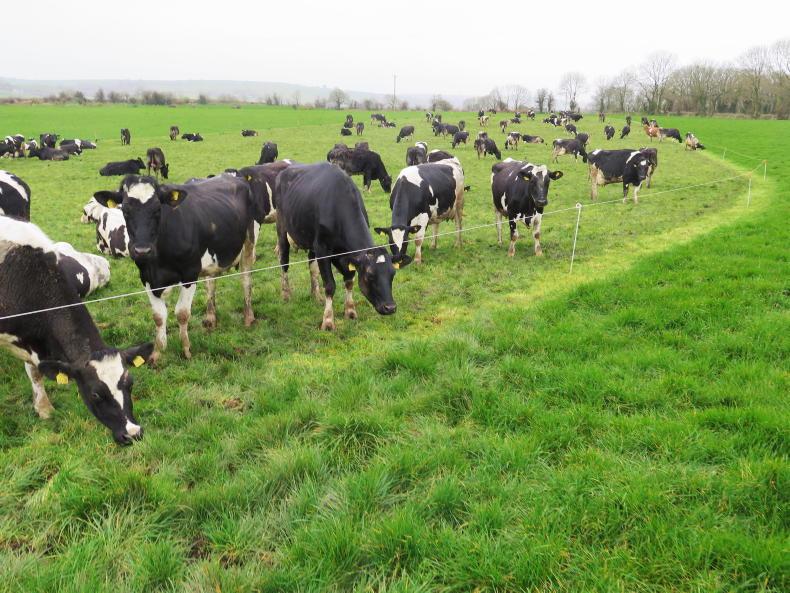
Drying-off is well underway now in most spring-calving herds as the countdown to Christmas continues. The dry period gives both the farmer and the cows time to rest up and recuperate before the storm of calving begins again.
It’s well publicised though, that drying-off is a big risk time for herds and if not done well, can have serious consequences in the next lactation.
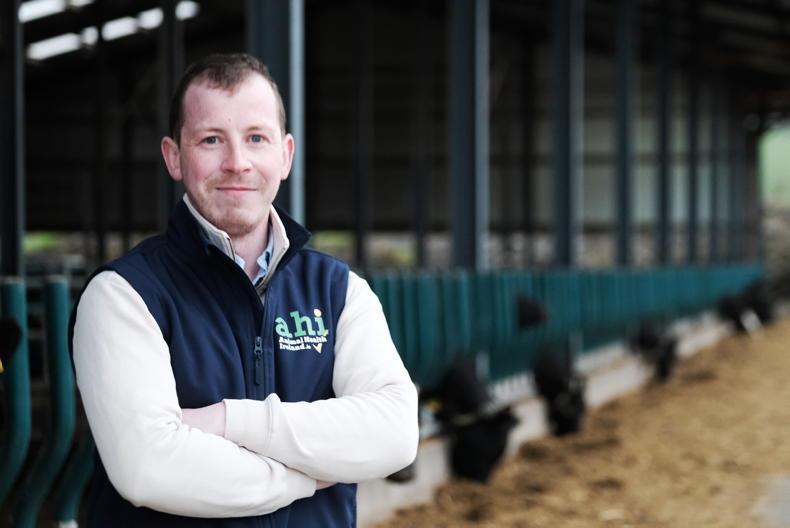
On a recent AHI CellCheck webinar, Finola McCoy programme manager at CellCheck said “Most clinical mastitis cases can be traced back to the process of drying-off, the first two weeks of the dry period and the last two weeks of the dry-period before calving”.
This is because the teat-end is most exposed to high levels of bacteria in sheds and on cubicles in this period. On top of this there is no regular milking or teat-spraying to move the bacteria away from the udder.
“Bacteria enter the quarter through the open teat end. These bacteria multiply and the infection starts” Finola said.
There are several steps to avoid this problem, all of which can be found in the CellCheck ‘Top 10 tips for a successful dry period’ manual which can be found on the Animal Health Ireland website.
Practical steps
On the recent webinar David and Laura Hannon, dairy farmers in Meath, alongside their local vet Frank O’ Sullivan discussed the practical steps they’re taking on the farm towards a successful dry period.
The father and daughter duo were unhappy with the cell count of the herd throughout this year and say it was caused by a couple of key factors.
Summer mastitis cases were up with the dry weather and more flies according to Laura. On top of this, a previous TB issue also meant keeping on some older cows with cell count issues that ordinarily would be culled out of the herd.
With cell count for the year hovering around 130,000 cells/ml and the target to be under 100,000 cells/ml, there was even more focus around this winter’s dry off-period.
“Planning started back in March really, with the first milk recording. We do five milk recordings a year and this dictates a lot of what’s done at dry-off” David said.
Selective dry cow therapy is something the Hannon’s have been practicing for the last five years. Any animals that were under 80,000 cells/ml in all five milk recordings with no previous mastitis issues will receive teat sealer only.
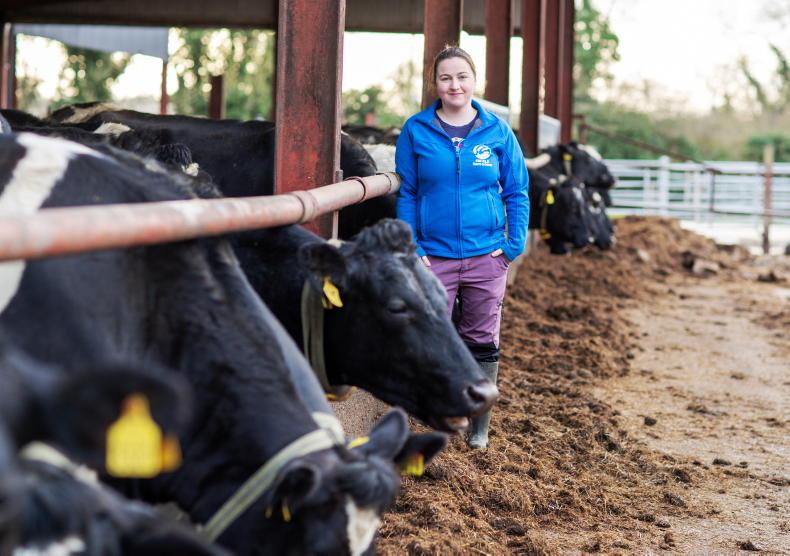
On the webinar, Frank O’ Sullivan filtered the herd according to the above criteria through ICBF HerdPlus. The result was that 72% of the cows were eligible for teat-sealer only and the remaining 28% of the cows would receive an antibiotic dry cow tube.
Aside from milk recording body condition scoring (BCS), was an important tool when planning for dry-off.
“All the cows are body condition scored at the end of October. Any cow that’s low BCS at that stage will be milked once-a-day from then on and they’ll be dried off earlier” Laura said.
Other practical steps the Hannon’s take throughout the year include power-hosing all sheds before housing. The cubicles are limed twice-a-day and heifers are teat sealed in early December to try and stay ahead of infections.
The process
For the actual process of drying off, the Hannon’s have a strict regime which is followed every year. Firstly, a list of cows is assembled from the BCS and milk recording results. The date of dry-off is determined and the cows are marked based on potential antibiotic use or not.
The cows to be dried off in that week are separated from the main herd and milked separately. This allows the Hannon’s to drop the meal-feeding in these cows and reduce dry matter intake over the week.
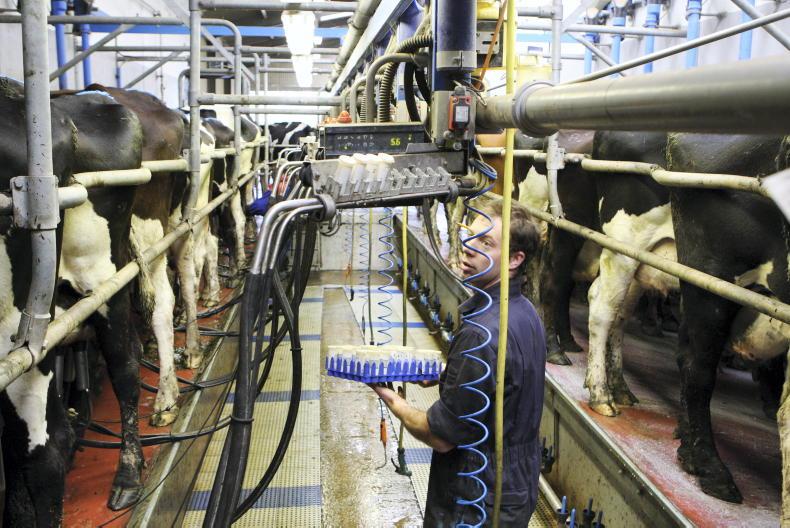
The cows’ tails are clipped and udder hair singed carefully. On the day of dry-off, the main herd is milked first and the parlour washed down. Breakfast is then had, before the cows to be dried are brought into the parlour.
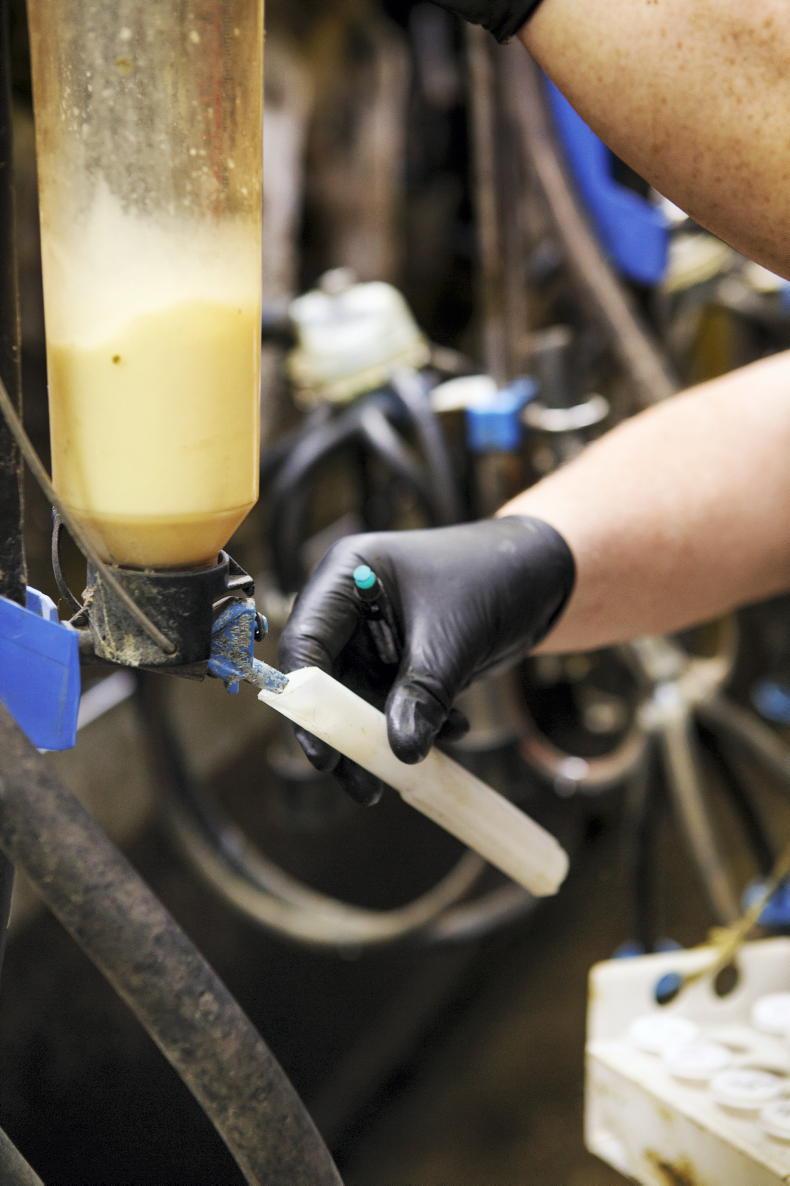
Those cows are milked and a California milk test (CMT) is completed to identify any infections that have cropped up since the last milk recording. Ideally, there would be just one row of cows dried off at a time.
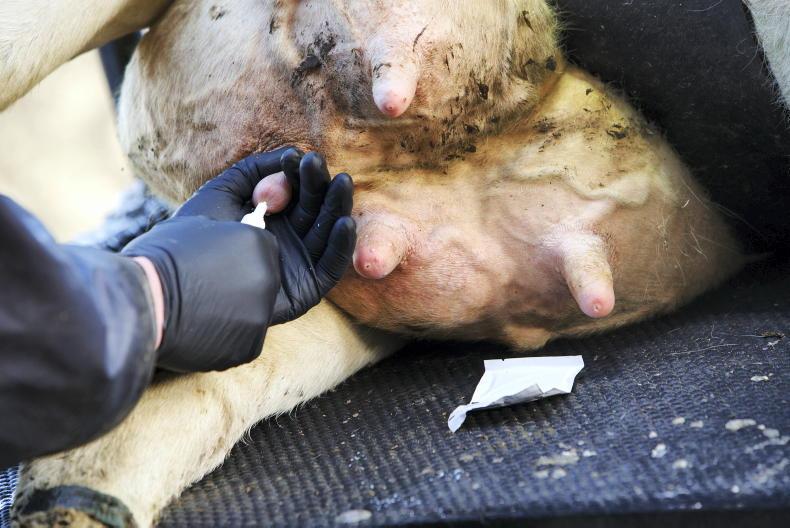
The cow’s udders are cleaned thorouhgly. At this stage the antibiotic dry cow tube is administered to those that require it, followed by the teat sealer. Patience and hygiene is a big part of the process and this is non-negotiable for the Hannon’s.
After dry-off the cows are let stand for an hour in the yard to let the teat ends close before being sent to the cubicles.
“Clean cubicles are a big priority in those first few days in particular for us to prevent infections after drying” Laura said.
In the following days cows are watched carefully to spot any potential issues or infections. Only once have the Hannon’s had a clinical case after drying off which is testament to their detailed process.
To view the ‘Top 10 tips for a stress-free and successful dry period’ booklet or to watch the recorded webinar with the Hannon’s, visit CellCheck at https://animalhealthireland.ie.



SHARING OPTIONS