All of the processors bar one dropped milk price for the month of July, with price cuts ranging from 3c to 14c/kg MS. Arrabawn Tipperary was the only co-op to not cut the price for July.
The biggest cuts to milk price for July came from the four west Cork co-ops supplying Carbery, followed by Boherbue, Dairygold, Kerry, Lakeland and North Cork, that each took between 13c and 14c off the price per kilo of milk solids. Tirlán and Centenary Thurles dropped by 7c/kg MS, while Aurivo dropped by 3c/kg MS.
Collectively, we’re seeing milk prices back by an average of around 25c/kg MS from the peak prices two to three months ago. In terms of market conditions, there has been a weakening of the market for butter and cheese.
The latest prices from the European trade puts butter at €6,815/t, down from the June price of €7,385/t.
The fall in prices for cheddar has been more gradual, with cheese trading for over €4,400/t, down about €200/t on the June price. Skim milk powder remains unchanged, while whole milk powder is back about €150/t on the June price.
The question remains, does the weakening in the market justify the price cuts announced by the Irish co-ops? Looking at Europe, the same price cuts have not been evident. The Friesland Campina price for July is actually 3% higher than its April price, while the Arla price for July is marginally ahead of its April price.
Some analysts are saying that the European co-ops are paying over the odds for milk, as they can’t afford to lose suppliers to competitors. That’s one of the consequences of a shrinking milk pool and while milk suppliers might be benefiting from that now, it’s not a good position to be in over the long term.
Product mix among Irish co-ops is becoming more evident now also. Casein prices are back about €550/t on their peak, with the imposition of US tariffs and the weakening of the euro affecting the EU to US trade. There is talk of some EU producers switching away from casein towards cheese, which would increase cheese supply.
Despite all of this it has to be acknowledged that the dairy trade is remarkably stable. The GDT is flat and demand remains strong. Supply in Europe is weak, even if it is picking up in New Zealand and the US.
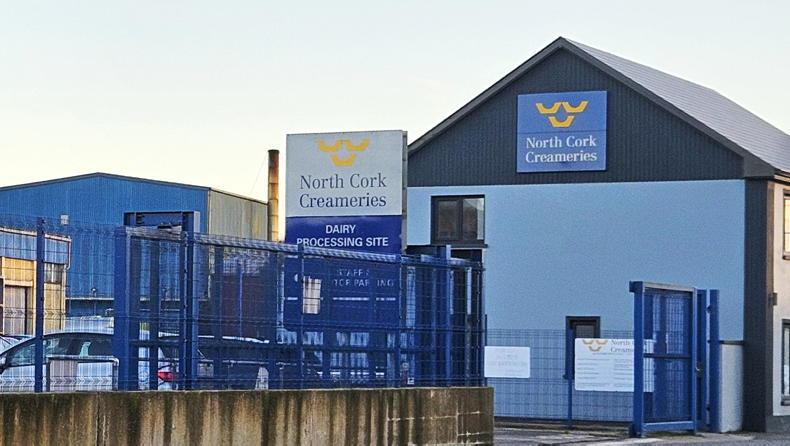
Back to the milk league, North Cork finds itself at the bottom of the pile for July along with Dairygold and Lakeland Dairies.
All of the processors bar one dropped milk price for the month of July, with price cuts ranging from 3c to 14c/kg MS. Arrabawn Tipperary was the only co-op to not cut the price for July.
The biggest cuts to milk price for July came from the four west Cork co-ops supplying Carbery, followed by Boherbue, Dairygold, Kerry, Lakeland and North Cork, that each took between 13c and 14c off the price per kilo of milk solids. Tirlán and Centenary Thurles dropped by 7c/kg MS, while Aurivo dropped by 3c/kg MS.
Collectively, we’re seeing milk prices back by an average of around 25c/kg MS from the peak prices two to three months ago. In terms of market conditions, there has been a weakening of the market for butter and cheese.
The latest prices from the European trade puts butter at €6,815/t, down from the June price of €7,385/t.
The fall in prices for cheddar has been more gradual, with cheese trading for over €4,400/t, down about €200/t on the June price. Skim milk powder remains unchanged, while whole milk powder is back about €150/t on the June price.
The question remains, does the weakening in the market justify the price cuts announced by the Irish co-ops? Looking at Europe, the same price cuts have not been evident. The Friesland Campina price for July is actually 3% higher than its April price, while the Arla price for July is marginally ahead of its April price.
Some analysts are saying that the European co-ops are paying over the odds for milk, as they can’t afford to lose suppliers to competitors. That’s one of the consequences of a shrinking milk pool and while milk suppliers might be benefiting from that now, it’s not a good position to be in over the long term.
Product mix among Irish co-ops is becoming more evident now also. Casein prices are back about €550/t on their peak, with the imposition of US tariffs and the weakening of the euro affecting the EU to US trade. There is talk of some EU producers switching away from casein towards cheese, which would increase cheese supply.
Despite all of this it has to be acknowledged that the dairy trade is remarkably stable. The GDT is flat and demand remains strong. Supply in Europe is weak, even if it is picking up in New Zealand and the US.
Back to the milk league, North Cork finds itself at the bottom of the pile for July along with Dairygold and Lakeland Dairies.






SHARING OPTIONS