




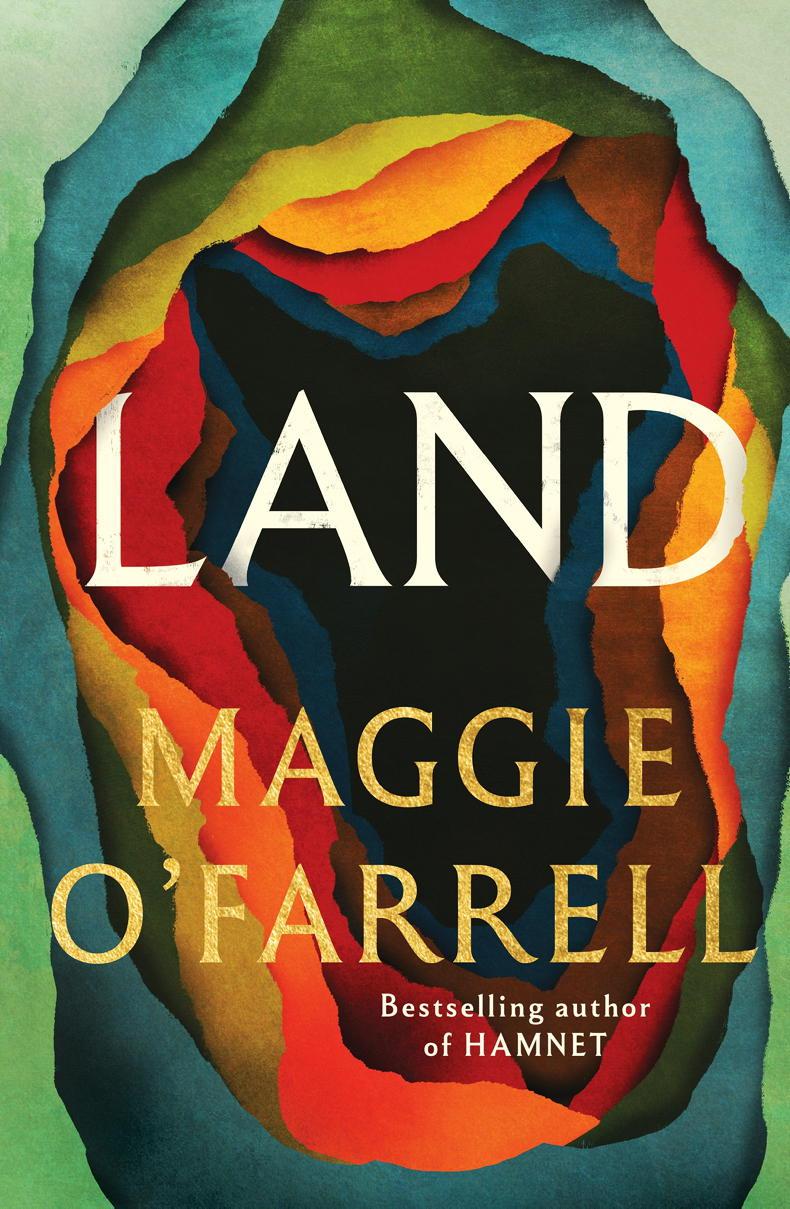
Land, by Maggie O’Farrell. Published by Tinder Press, €29
We are barely over the publishing and cinematic phenomena that was Hamnet, Maggie O’Farrell’s most successful work to date, but here we have her latest, and impressive, tenth novel, Land. Like its predecessor, and The Marriage Portrait before it, this is a work that combines history and fable, the latter filling gaps in a story that records fail to relate.
Land also holds a special place I am sure in O’Farrell’s heart, as an ancestor worked for the Ordnance Survey back in the 19th century. This was a personal driving force for the author, yet this book is not a family saga. It is a multi-storied work, highly immersive, and begins at a time about two decades after the famine, or the Great Hunger.
One feels that O’Farrell put her heart and soul into Land. She is reported to have said that she “never felt more Irish” than when she refused to accept an OBE for her contribution to literature, based on the fact that the infamous Charles Trevelyan had also been honoured in his day, and had written that the famine was a “punishment from God for an idle, ungrateful, and rebellious country”.
Born in Ireland, O’Farrell and her family left these shores when she was two, and she has since lived in Wales, Scotland and England. Her Irish roots have kept on drawing her back to write stories with an Irish theme, and tackling a difficult theme such as the famine was no doubt a very daunting task. Thankfully, her extensive research and reading have resulted in a gripping and satisfying tome.
The themes of sadness and trauma in the book are overcome by sheer resilience. Mapping is a key theme within the novel, which opens on the western coast of Ireland with Tomás.
He has enlisted the help of his son Liam, just 10 years of age, as they document features of the land they are surveying for the British. There is a ghostly aspect to the story. Liam loses a boot in a copse, and Tomás goes in search of it. He vanishes overnight, and when he returns he is a changed man. The tough father is now incapacitated, forcing his young son to finish the mapping. The new Tomás is loving, requiring care by his wife Phina. The family must now adjust to their changed circumstances.
A life of courage
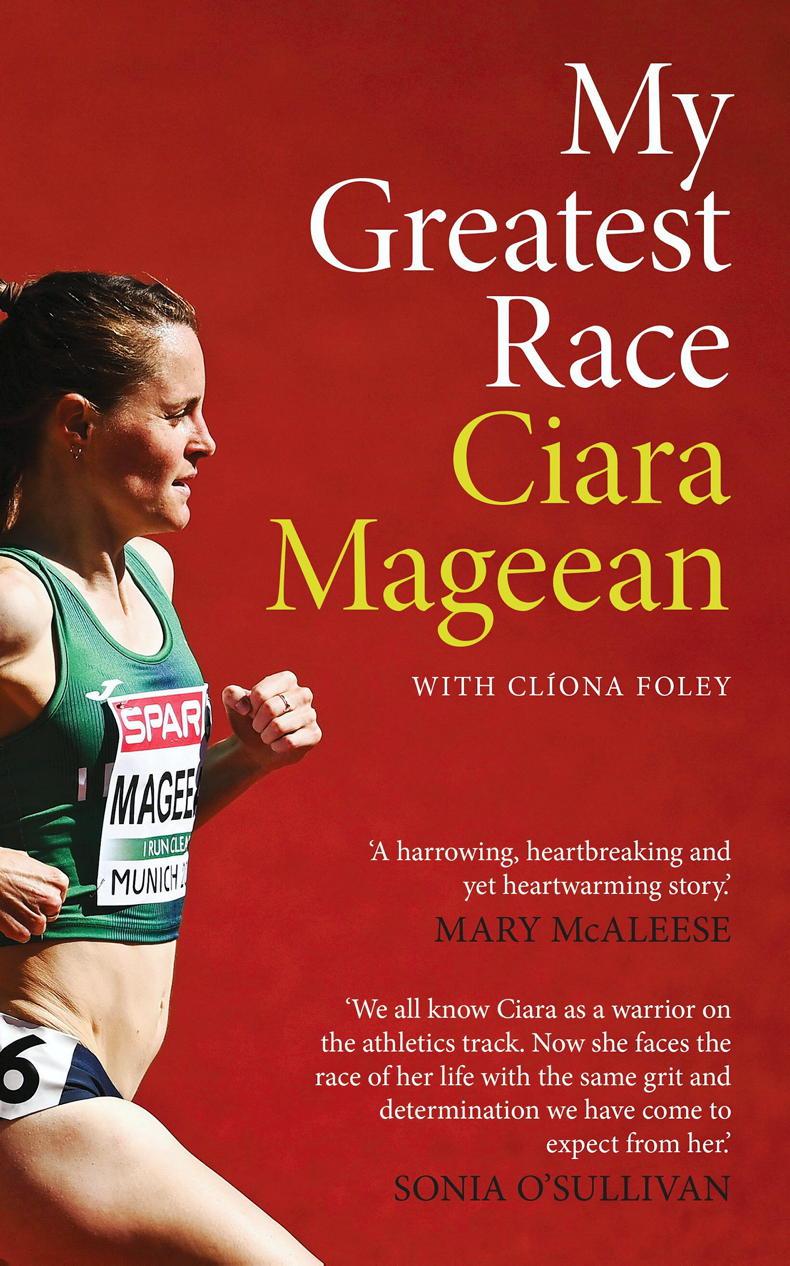
My Greatest Race, by Ciara Mageean. Published by Gill Books, €21.99
Ciara Mageean is in a race against time. One of Ireland’s best-ever runners, she has stage four bowel cancer. She is in the one percent profile of people likely to get such a diagnosis, and maybe even a smaller cohort given the exceptionally active and healthy life she has lived.
A European champion middle-distance runner, the first female to be called so since the glory days of Sonia O’Sullivan, Mageean’s future planning was for the 2028 Olympic Games, her third, where she hoped to make amends for missing out on Paris with an injury. She would be 36 then, perhaps at the peak of her powers.
My Greatest Race is not a book to be afraid of reading, detailing as it does her outstanding athletic career, while she writes about it alongside the story of her cancer diagnosis and treatment. Instead, this book is a must-read for anyone, cancer patient or not, and will inspire you to focus on what is important.
Pure escapism
John of John, by Douglas Stuart. Published by Picador, €25
Gay authors often write about gay characters, but this does not mean that the stories are only for one audience. Anyone who loves a story well told will derive joy from reading the latest novel by Booker Prize winner Douglas Stuart.
He was arguably on a sticky wicket with his third work, John of John, given that his first two books were both critically acclaimed; Shuggie Bain in 2020 and Young Mungo in 2022. The first, the Booker winner, is extraordinary. Both books concern themselves with gay, working-class Scottish life.
John of John is set in the Outer Hebrides, among farmers and fishermen in a Free Presbyterian society that is very tight-knit. Twenty-two-year-old John Calum Macleod, known as Cal, is summoned home by his father, also John, a man for whom scripture is everything. Cal has to look after his ailing grandmother Ella. He is gay, unable to come out to his father, while his mother, Ella’s daughter, left her family and set up home with John’s brother.
A timeless read
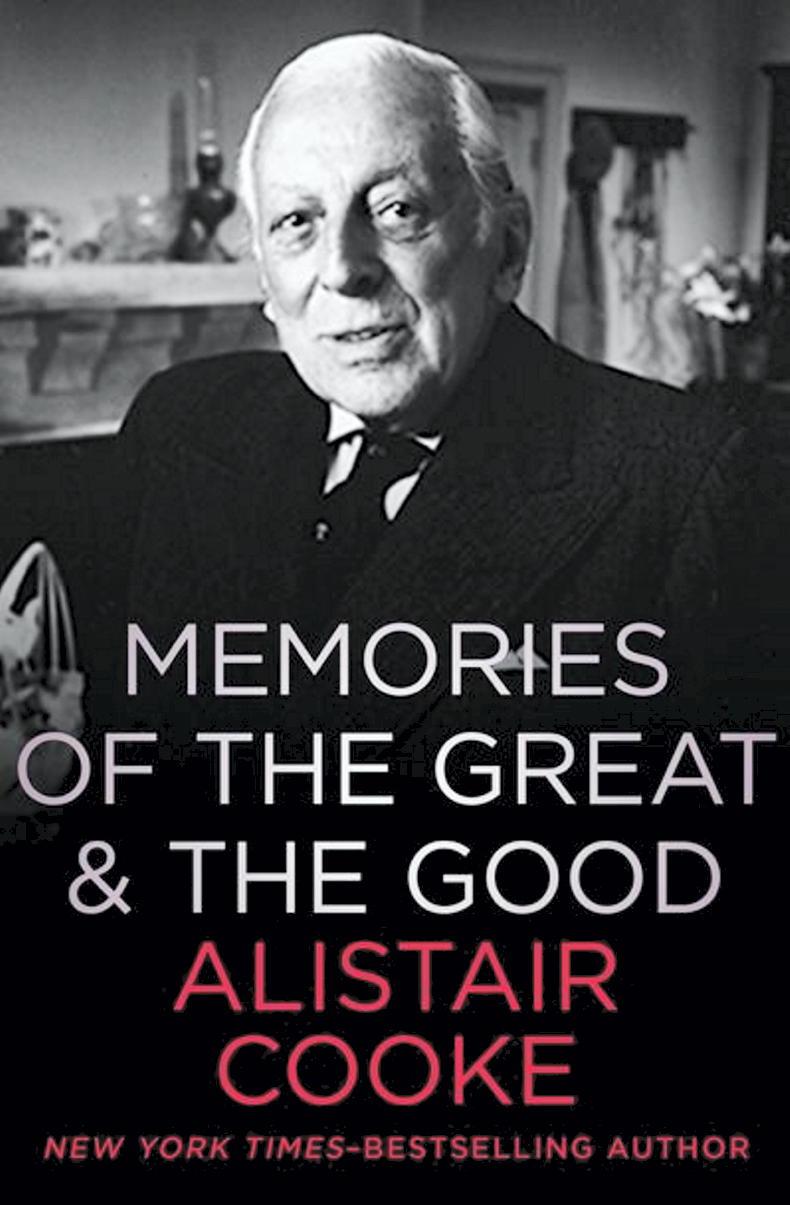
Memories of the Great and the Good, by Alistair Cooke. Published by Harper Collins, €10
One of the joys of my young life was listening to the BBC World Service late at night, and I was an avid fan of the weekly Letter from America. Alistair Cooke broadcast it for an incredible 58 years, the world’s longest-running, spoken-word radio programme. Though his voice was to a large degree his principal calling card, and claim to fame, he was a gifted writer and an accomplished journalist. By contrast with today’s personality journalism, largely about minor celebrities, writers of Cooke’s generation, and before him, were responsible for absorbing profiles that were well crafted and thoughtful.
In this volume of 23 such profiles, Cooke celebrates “a variety of people I have met, known, ‘covered’, admired or liked throughout 60-odd years of journalism”.
They range in scope from Duke Ellington to Winston Churchill, George Bernard Shaw to Eleanor Roosevelt, Gary Cooper to P.G. Wodehouse.



SHARING OPTIONS