


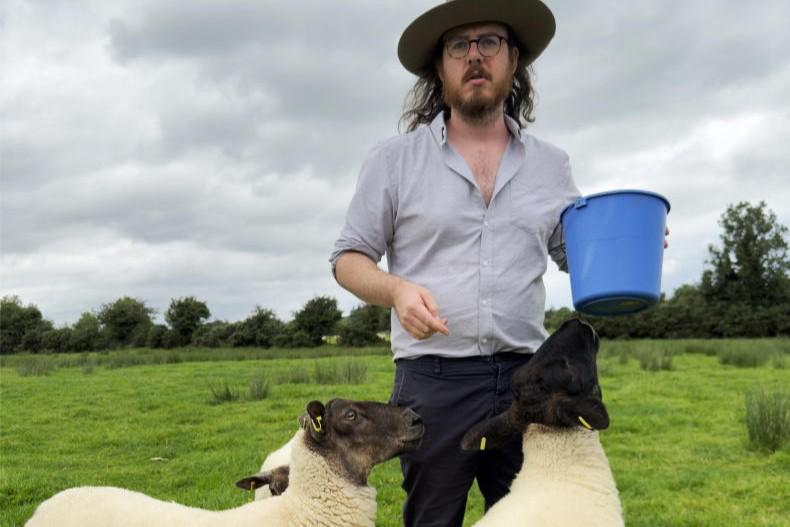
We are closer to our past than we might think. It was not so long ago that we were all farmers. It was not so long ago, that the land philosophy was in all our minds. Our work now is to bridge that chasm and link that cognitive gap once more.
To know your history is a thought from the land philosophy. It is one we can all do well to remember. Memory and landscape are two things that can combine; a field, an image, a childhood, a generation. All of them connect to make a pallet of civilisation.
We must know where we came from in order to understand where we are going. We are closer to the past than the present. I learned this lesson recently on a field trip to the very edge of Europe. It was a field trip that connected ancient Iran and ancient Ireland. It was a trip into history. History is a connector. It is part of the land philosophy because it links the first farmers of yesterday to us all here in the present. The links are long but closer than we might imagine. We are closer to the first farmers than we might initially conceive.
On the edge of Europe, that civilisation is both above and below the ground. It is a terra firma and a terra incognita. To understand the roots of the land philosophy, we need far-seeing eyes, ones that can go back in history and ones that can also imagine a future.
The Céidi Fields
The Céidi Fields, as they are known, occur in a quiet corner of western Ireland in the county of Mayo, where the land meets the sea. Where on a good day, one can see the north of Ireland to some of the highest sea cliffs in Europe.
The area is covered in a dense layer of heather and grasses below, which is bog, at places metres deep. It does not seem like a place where the ancients have been and yet the sparsely peopled landscape connects around the world.
The fields began out of noticing. In 1934, a school teacher in the region of Belderg was cutting turf, (a peat that is made by the remains of partially decayed plant matter laid down over centuries and burned for heat). Patrick Caulfield wrote to the director of the National Museum of Ireland to say that there was something interesting in the bogs. Below the metres of bog were stone walls. The walls were, Caulfield reasoned, older than the bog itself as it had grown over them.
It was Patrick’s son Seamas who, decades later, in 1971, now an archaeologist himself, began to work with colleagues on uncovering these walls. As the work began, fragments of pottery were found too and dated the site to 3,500 BC, some 5,500 years ago. Seamas could not have known it, but he had begun his life’s work and discovered the most ancient field systems in the world.
On a cold winter’s day, I accompanied Seamas with a small group to the townland of Belderg, and it was here that he began to unfurl the story of the walls and the fields.
As we began the day, it was Seamas, now in his 80s, who explained that memory and landscape connect. He could look over his townland and see back 80 years to when he was a boy, but using his archaeology eye, he could see back thousands of years.
The wall builders were the first farmers. They had travelled from the fertile crescent over thousands of years to get to this edge of Europe. They brought with them the skills of the first farmers, from domesticated plants to farming animals. They brought with them the skills of wall-building and the land philosophy in its earliest form.
Part of one of the ancient Céidi Field walls have been excavated. But why build a wall, you might ask? It was done to contain their animals. The pottery that Seamas and his colleagues had found has recently been tested and discovered to contain milk lipids, which indicates that these first farmers were dairy farmers.
That in short, the walls were built to contain their dairy cows. The first fields were dairy fields.
Seamas and his son Declan brought us around a small field in Belderg to show that under the cutaway bog were the remains of the stone walls. As we walked, I got the sense that I was on sacred ground, ancestral ground. It was a direct link back to the first farmers. The cows and sheep I work on my farm were connected back to this place, to these people. The past was, in that moment, so much closer to me.
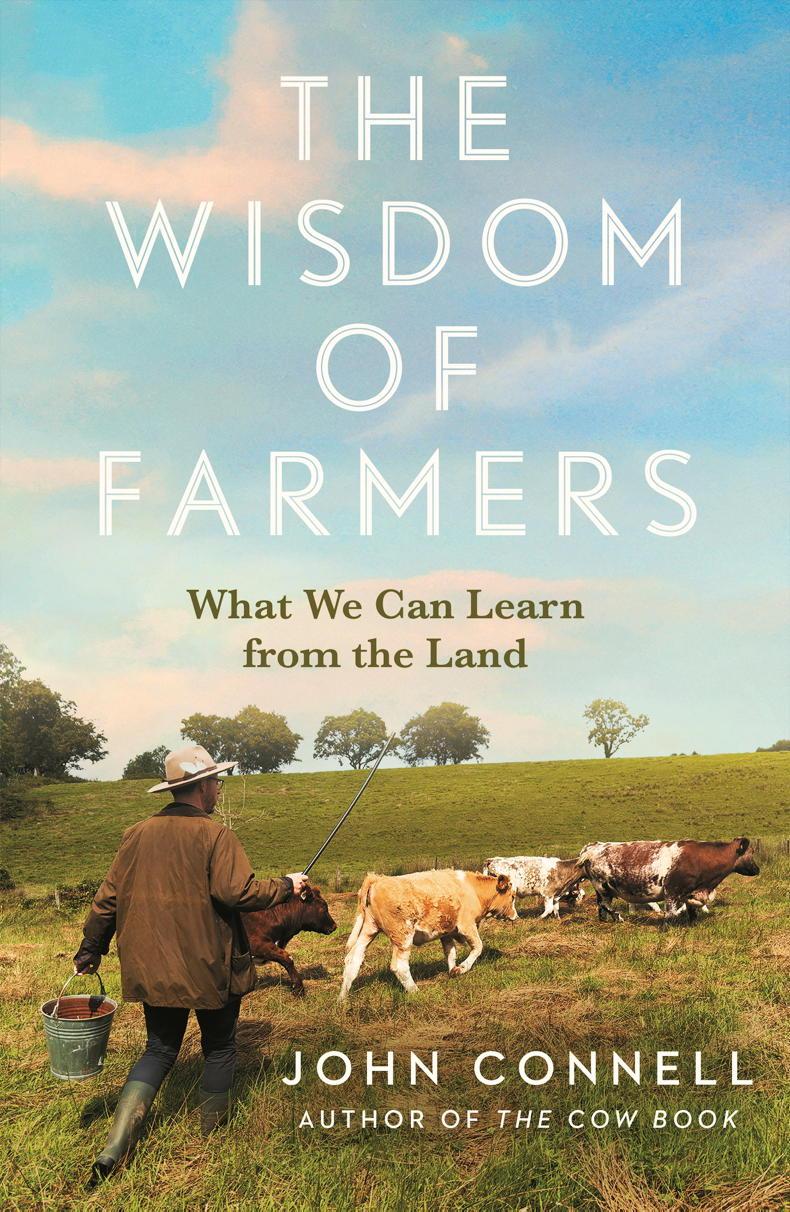
This is an extract from The Wisdom of Farmers: What We Can Learn from the Land by John Connell. Published by Allen & Unwin UK, €12.99

