

While Noel and Liam Gallagher of Oasis were the main event on Jones’ Road recently – for a vocal constituency some still take umbrage with the GAA’s split season bringing inter-county activity to an end by late July.
This column however, will not be a relitigation of that, though we will note that a survey in Cork last year found that around 90 percent of club players preferred the clarity provided by the new scheduling. Also, the regular lamentation from the split-season opponents that the GAA is depriving itself of ‘promotional opportunities’ is belied by the way that county players are mobbed by young supporters after games in which they have lined out for their clubs.
What was interesting to read recently was a columnist using the fact that the split-season was a by-product of the COVID-19 pandemic as a stick with which to beat it. Obviously, COVID was a bad thing; however, it does not automatically follow that anything which occurred as a result of it was bad. For instance, employers realising that their workers could still be productive at home has been beneficial; equally, nice restaurants offering takeaway dinners has been a welcome development.
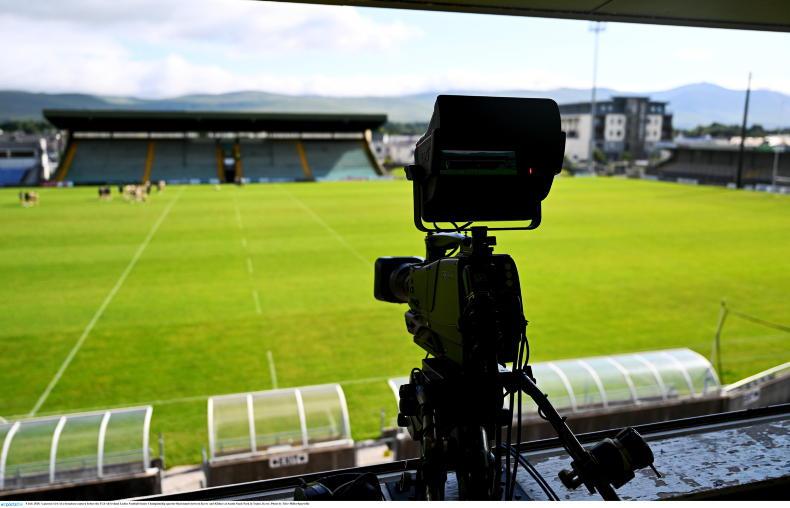
The moratorium on spectators attending matches in 2020 created the opportunity to provide the broadcasting of club games via streaming services. It might have been thought to be something of a temporary measure but the success of such ventures has led to them becoming part of the furniture.
At inter-county level, the GAA/RTE partnership GAAGO gave way to GAA+ when the association took full ownership of the service. Reception has been mixed – as one might expect when pay-per-view is involved, but longevity helps the normalisation process and it’s now more than a decade since Sky’s introduction to the GAA market first signalled such a change.
Beyond the more high-profile action, though, club coverage has benefited from the exposure, with almost all county boards now having a streaming partner.
Currently, the most well-known and widest-reaching provider is Clubber, something underlined by the recent acquisition of a large stake in the company by Mediahuis, which owns the Irish Independent among many other newspapers and radio stations. In addition to club games from around the country, Clubber also broadcast schools’ and colleges’ fixtures.
Targeting those niches and managing to do so on a low-cost basis has been a key factor in the company’s growth, says chief operating officer, Lar Doyle.
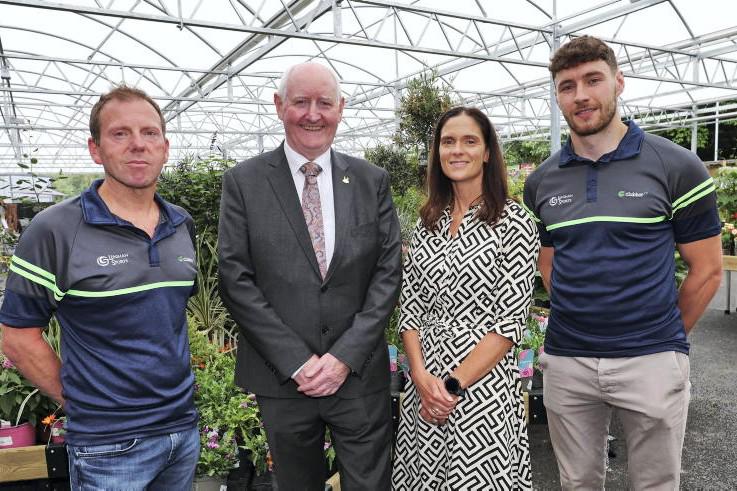
From left to right; Lar Doyle, COO and co-owner of Clubber, Pat Horgan, chairperson Cork GAA County Board, Sinéad O'Keeffe, commercial director Cork GAA & SuperValu Páirc Uí Chaoimh and Paul Walsh, marketing lead at Clubber, at the Co Op Superstores 2025 Cork Club Hurling Championship launch, at Co Op Superstore, Mallow, Co. Cork. / Jim Coughlan.
“There are so many games there that fans haven’t been able to access before and that’s just the way this whole IP [internet protocol] video is going,” he says.
“There’s going to be more coverage of lower-tier games and we’re able to do it without breaking the bank, which is great.
“Whether you’re at home, you could be living in Dublin or Castlehaven or Sydney or wherever – we give the games free to nursing homes, so it is all about the community.
“We have 12 full-time employees and we have a huge ecosystem of videographers, commentators, co-commentators. What really surprised us was that there are so many people that are mad to do commentary.
“In keeping with the GAA ethos, the videographers, commentators and the like, they all have day jobs and work Monday to Friday but they love GAA.
“What better way to see a game is go behind the mic, if you’re an extrovert!”
Set up by Lar and Jimmy Doyle, Clubber’s roster of counties has grown quite quickly, essentially a series of votes of confidence in its offerings, and now the reach is spreading across the Irish sea.
“It came out of COVID, when people couldn’t go to games,” Lar says, “and then, what sprung from that was that there were so many games that weren’t being covered by traditional broadcasting models.
“Then technology’s always advancing and we’re in a disruptive phase right now. Where we can go and where other broadcasters can’t go, is the volume and concurrency of games we can cover – purely by using technology that we did ourselves.
“Last year, we did 77 games over a weekend and that was purely limited to the access of games we could get our hands on. Now, we’re hoping to maybe do 100 games on a weekend over the busy season, when we get into August and September, and we’ve started to operate in the UK now as well, covering non-league football.
“It’s all built on technology and the economics of being able to cover a game with low viewership and community-based fans. When you’re covering round-one games, compared to quarter-finals, semi-finals, you don’t expect a large volume of games, but we’re giving fans what they want.
“They want to see every game, be it from round one to the finals, and that’s what we’re there to do.
“Like, last year we did around a thousand games, this year we’re going to do 1,500 games across 14 counties and two provinces.
“You go back to when Netflix came to the fore and it disrupted Xtra-Vision – Nokia were on top and then Apple came along. It’s constantly changing and evolving.”
While Noel and Liam Gallagher of Oasis were the main event on Jones’ Road recently – for a vocal constituency some still take umbrage with the GAA’s split season bringing inter-county activity to an end by late July.
This column however, will not be a relitigation of that, though we will note that a survey in Cork last year found that around 90 percent of club players preferred the clarity provided by the new scheduling. Also, the regular lamentation from the split-season opponents that the GAA is depriving itself of ‘promotional opportunities’ is belied by the way that county players are mobbed by young supporters after games in which they have lined out for their clubs.
What was interesting to read recently was a columnist using the fact that the split-season was a by-product of the COVID-19 pandemic as a stick with which to beat it. Obviously, COVID was a bad thing; however, it does not automatically follow that anything which occurred as a result of it was bad. For instance, employers realising that their workers could still be productive at home has been beneficial; equally, nice restaurants offering takeaway dinners has been a welcome development.
The moratorium on spectators attending matches in 2020 created the opportunity to provide the broadcasting of club games via streaming services. It might have been thought to be something of a temporary measure but the success of such ventures has led to them becoming part of the furniture.
At inter-county level, the GAA/RTE partnership GAAGO gave way to GAA+ when the association took full ownership of the service. Reception has been mixed – as one might expect when pay-per-view is involved, but longevity helps the normalisation process and it’s now more than a decade since Sky’s introduction to the GAA market first signalled such a change.
Beyond the more high-profile action, though, club coverage has benefited from the exposure, with almost all county boards now having a streaming partner.
Currently, the most well-known and widest-reaching provider is Clubber, something underlined by the recent acquisition of a large stake in the company by Mediahuis, which owns the Irish Independent among many other newspapers and radio stations. In addition to club games from around the country, Clubber also broadcast schools’ and colleges’ fixtures.
Targeting those niches and managing to do so on a low-cost basis has been a key factor in the company’s growth, says chief operating officer, Lar Doyle.

From left to right; Lar Doyle, COO and co-owner of Clubber, Pat Horgan, chairperson Cork GAA County Board, Sinéad O'Keeffe, commercial director Cork GAA & SuperValu Páirc Uí Chaoimh and Paul Walsh, marketing lead at Clubber, at the Co Op Superstores 2025 Cork Club Hurling Championship launch, at Co Op Superstore, Mallow, Co. Cork. / Jim Coughlan.
“There are so many games there that fans haven’t been able to access before and that’s just the way this whole IP [internet protocol] video is going,” he says.
“There’s going to be more coverage of lower-tier games and we’re able to do it without breaking the bank, which is great.
“Whether you’re at home, you could be living in Dublin or Castlehaven or Sydney or wherever – we give the games free to nursing homes, so it is all about the community.
“We have 12 full-time employees and we have a huge ecosystem of videographers, commentators, co-commentators. What really surprised us was that there are so many people that are mad to do commentary.
“In keeping with the GAA ethos, the videographers, commentators and the like, they all have day jobs and work Monday to Friday but they love GAA.
“What better way to see a game is go behind the mic, if you’re an extrovert!”
Set up by Lar and Jimmy Doyle, Clubber’s roster of counties has grown quite quickly, essentially a series of votes of confidence in its offerings, and now the reach is spreading across the Irish sea.
“It came out of COVID, when people couldn’t go to games,” Lar says, “and then, what sprung from that was that there were so many games that weren’t being covered by traditional broadcasting models.
“Then technology’s always advancing and we’re in a disruptive phase right now. Where we can go and where other broadcasters can’t go, is the volume and concurrency of games we can cover – purely by using technology that we did ourselves.
“Last year, we did 77 games over a weekend and that was purely limited to the access of games we could get our hands on. Now, we’re hoping to maybe do 100 games on a weekend over the busy season, when we get into August and September, and we’ve started to operate in the UK now as well, covering non-league football.
“It’s all built on technology and the economics of being able to cover a game with low viewership and community-based fans. When you’re covering round-one games, compared to quarter-finals, semi-finals, you don’t expect a large volume of games, but we’re giving fans what they want.
“They want to see every game, be it from round one to the finals, and that’s what we’re there to do.
“Like, last year we did around a thousand games, this year we’re going to do 1,500 games across 14 counties and two provinces.
“You go back to when Netflix came to the fore and it disrupted Xtra-Vision – Nokia were on top and then Apple came along. It’s constantly changing and evolving.”
SHARING OPTIONS