



Recently, I have been writing a series of articles for GAA programme publishers DBA about the origins of county colours and their evolution.
It’s interesting to note how, given how much is known about the effort – on and off the pitch – involved in winning, teams can still proffer shamanistic powers on factors that should not logically influence the outcome of games.
Roscommon wear primrose and blue because they had to switch from their Tipperary-like design for the 1943 All-Ireland final against Cavan – a first Sam Maguire win ensured the new pattern remained.
Donegal used to be clad the same as Kerry but had to change for the 1992 semi-final against Mayo and kept the revised version for the final win over Dublin and beyond.
More recently, Sligo swapped mainly white jerseys for black ones following a 2001 qualifier victory against Kildare in Croke Park. In 2022, Derry were forced to change from their white with a red hoop to red with white for Ulster SFC wins over Tyrone and Monaghan.
They opted to stick with the alternative style for the provincial final against Donegal – securing the Anglo-Celt Cup for the first time since 1998 meant that a reversal of the primary and second kit order was franked, especially after a disappointing All-Ireland quarter-final loss to Galway back in the white.
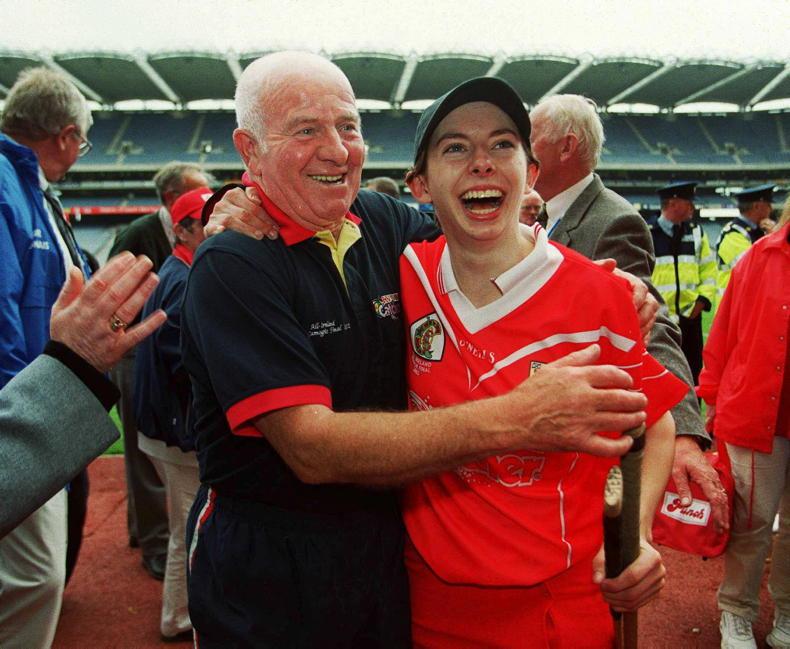
Twenty years previously, another team enjoyed success after taking a similar sartorial journey. When former Cork hurler Pa Finn was appointed as the county’s camogie manager for 2002, one of his first objectives was to alter the strip. At the time, the Rebels wore white jerseys with red skorts but that didn’t sit well with Finn. “Cork are red,” he said, “and the girls should be wearing the traditional Cork red jersey, same as the hurlers and footballers.”
When Cork won the O’Duffy Cup in 2002, the change was made permanent. However, Finn’s comment about the jerseys being the same as the hurlers and footballers was probably a bit too accurate: while the design differed, back then there was no such thing as a ‘women’s fit’ in terms of camogie or ladies football gear.
Brand new sportswear
Things have, thankfully, improved in that regard among the mainstream manufacturers, though the focus remains as much on form as function. Even when camogie’s ‘skorts v shorts’ debate raged, what should have been a no-brainer in terms of aiding players’ ability to perform was blocked by elements who feared a loss of uniformity. Now, for the first time, a brand has emerged that has put the comfort of female players front and centre.
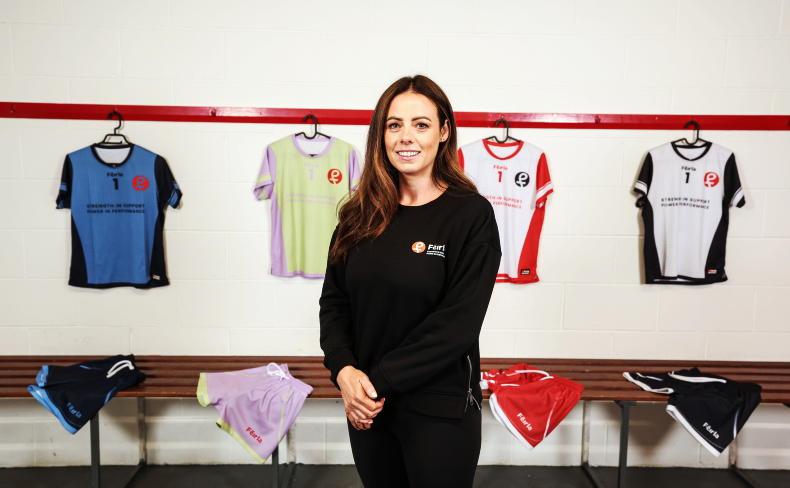
Féirla is the brainchild of physiotherapist Margaret Walsh, who is a Meath native now living and working in Louth.
The name is a compound – ‘f’ for female, ‘éir’ the Irish goodess and the ‘la’ from Neala, a symbol of strength and the name of Margaret’s daughter.
She has logged more than two decades in and around Gaelic games as a player and physio and, having completed courses and training in the area of women’s health, is a major advocate for the topic.
Currently undertaking a post-graduate programme in DCU which focuses on the female athlete across the lifespan, she also delivers educational talks to clubs, schools and sporting organisations on the importance of supporting adolescent girls to stay in sport as well helping older women to remain active.
While the rate of one in five girls dropping out of sport between primary and secondary school could be classed as natural attrition, data that shows that just 7% of girls aged 14-15 meet recommended physical activity levels is somewhat startling.
There are of course many reasons for that, but among them is the fact that the kit is not always fit for purpose – as Féirla’s launch puts it: “sportswear that was designed for a male body – sized down and minimally adapted”.
Having undertaken research with manufacturers over a three-year timeframe, Margaret has now brought a range of four different models of shorts – from period-proof lining to high-waist support – to the market, all approved by the Ladies’ Gaelic Football Association. She is also in the process of securing a similar agreement with the Camogie Association.
“For far too long, girls and women have stepped on to pitches feeling exposed, self-conscious or uncomfortable,” Margaret said at the launch.
“Not because of a lack of talent or ability but because nobody ever designed sportswear with them in mind. At Féirla we believe women and girls deserve sportswear built specifically for them. That’s why we have created a range designed to support players at every stage of their sporting journey.
“Our goal is simple: to empower every woman and girl to play football and camogie without discomfort or hesitation. The response from players has been overwhelming. They’ve told us they finally feel heard, comfortable and protected.
“When women and girls can focus on the game instead of adjusting their shorts, everyone wins. We can’t wait to get Féirla shorts into the hands of players and clubs across the country.”
See feirla.com


SHARING OPTIONS